Tiny details, real reasons
What is that tiny hole, bump, tab, pocket, or patch for?
Search the small thing you noticed: the hole in a pen cap, the ridges on a coin, the tiny pocket on jeans, or the bumps on F and J. Get the quick answer first, then the story behind it.
Start here
Things people notice first
Quick answers. No trivia fog.
Everyday Objects
Why Do QR Codes Have Three Big Squares?
The three large squares in a QR code are called finder patterns. Their job is to help a scanner immediately locate and orient the code. When a camera points at a QR code, it does not know where the code begins or which way is up. The three finder patterns give the scanner three known reference points. By detecting them, the scanner can calculate the exact position, size, tilt, and rotation of the entire code. Only three corners have finder patterns — not four. That asymmetry is intentional. It tells the scanner which corner is which and prevents reading the code upside down or mirrored.

Everyday Objects
Why Do Soda Bottles Have Bumpy Bottoms?
The bumpy, petal-shaped bottom on a plastic soda bottle is a structural design called a petaloid base. Its job is to resist the internal pressure created by carbonation. A flat plastic bottom would bow outward under the gas pressure inside, making the bottle wobble and become unstable. The petaloid lobes distribute that pressure across a curved shape, which is far stronger than a flat surface. The same principle is why arches hold more weight than flat beams. The shape does the structural work so the plastic itself does not have to be thick — keeping the bottle light and cheap.

Everyday Objects
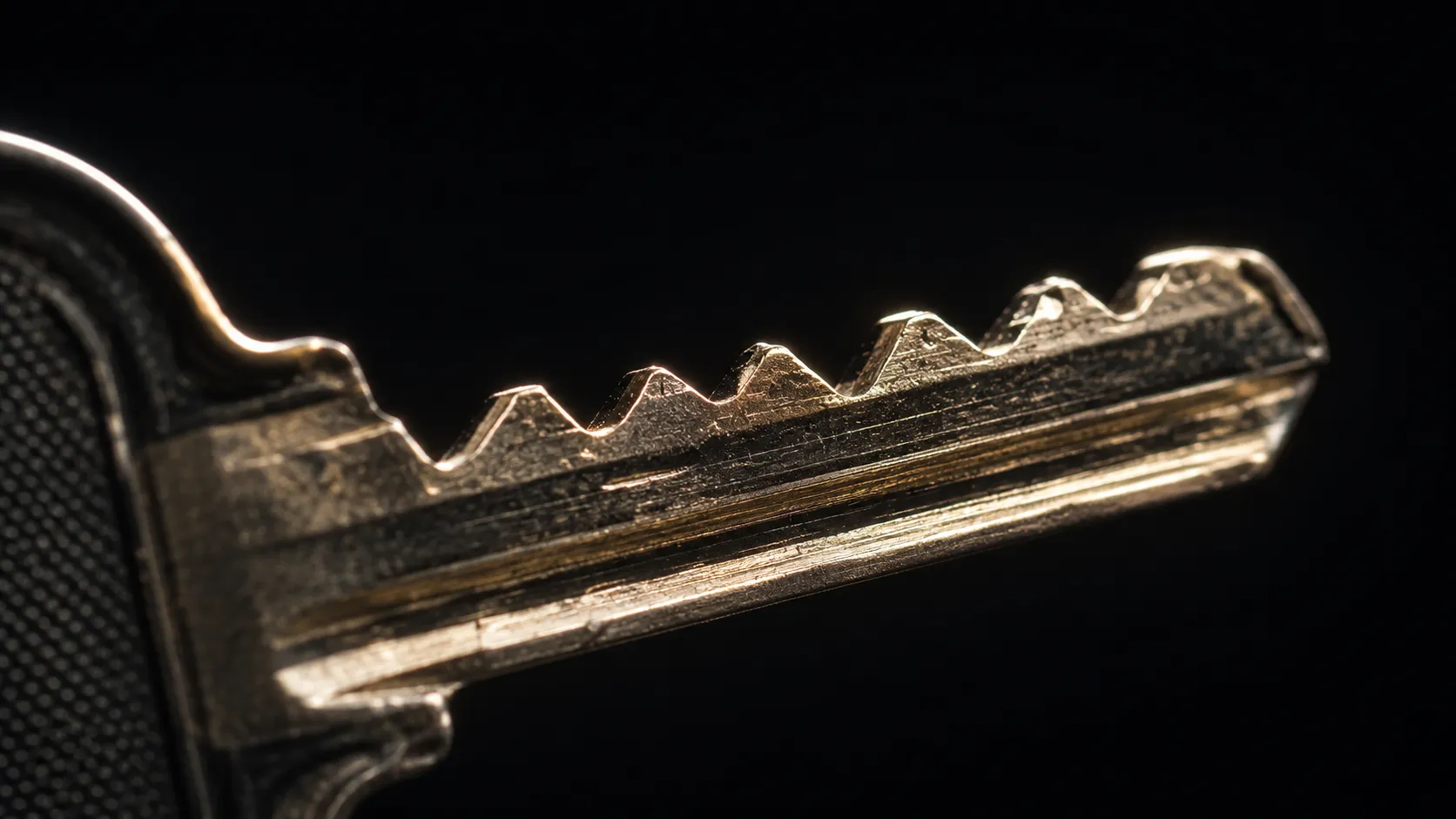
Why Do Keys Have Jagged Edges?
The jagged profile of a key corresponds to a row of pins inside the lock cylinder. Each pin is a small spring-loaded rod that sits at a different height depending on the key inserted. When the wrong key is inserted, the pins end up at the wrong heights and block the cylinder from rotating. When the correct key is inserted, every pin is pushed to exactly the right height — called the shear line — and the cylinder turns freely. The specific pattern of cuts on a key is essentially a mechanical password. The more possible cut depths a lock uses, the harder it is to guess or duplicate.
Everyday Objects
Why Do Clocks Move Clockwise?
Clock hands move clockwise because early mechanical clocks were designed to imitate sundials, and sundials in the Northern Hemisphere cast shadows that move in that direction. As the sun travels across the sky from east to west, shadows rotate from west to north to east — what we now call clockwise. When mechanical clocks were developed in medieval Europe, clockmakers built them to match the direction of shadow movement that people already read as the passage of time. If clocks had been invented in the Southern Hemisphere, where sundial shadows move in the opposite direction, clockwise might be the reverse of what it is today.

Everyday Objects
Why Do Cereal Boxes Have Bags Inside?
Cereal uses a two-layer system because cardboard and plastic solve different problems. The inner plastic bag creates a sealed barrier that keeps moisture and air away from the cereal. Without it, cereal would absorb humidity from the air and go stale within days. The bag also keeps the cereal from absorbing odours or flavours from the cardboard. The outer cardboard box protects the bag from being crushed, provides a rigid structure for stacking on store shelves, and gives a large flat surface for branding, nutrition information, and graphics.

Everyday Objects
Why Do Books Have Blank Pages?
Books are not printed page by page. Large sheets of paper are printed with multiple pages on each side and then folded into sections called signatures. A common signature size is 16 pages — eight pages on each side of a sheet. The total page count of a book must be a multiple of the signature size. If the actual content fills, say, 250 pages but the nearest multiple of 16 is 256, the last six pages are simply left blank. Publishers sometimes use those pages for notes, credits, or an index — but often they leave them empty because there is nothing practical to put there.
Browse by detail
What tiny thing caught your eye?
Start with the small clue you noticed: a hole, ridge, dent, tab, dot, or hidden feature. TinyThat turns that little “wait, why?” into a clear answer.
All object questions
Explore the full object shelf
73 pages found

Everyday Objects
Why Do QR Codes Have Three Big Squares?
The three large squares in a QR code are called finder patterns. Their job is to help a scanner immediately locate and orient the code. When a camera points at a QR code, it does not know where the code begins or which way is up. The three finder patterns give the scanner three known reference points. By detecting them, the scanner can calculate the exact position, size, tilt, and rotation of the entire code. Only three corners have finder patterns — not four. That asymmetry is intentional. It tells the scanner which corner is which and prevents reading the code upside down or mirrored.

Everyday Objects
Why Do Soda Bottles Have Bumpy Bottoms?
The bumpy, petal-shaped bottom on a plastic soda bottle is a structural design called a petaloid base. Its job is to resist the internal pressure created by carbonation. A flat plastic bottom would bow outward under the gas pressure inside, making the bottle wobble and become unstable. The petaloid lobes distribute that pressure across a curved shape, which is far stronger than a flat surface. The same principle is why arches hold more weight than flat beams. The shape does the structural work so the plastic itself does not have to be thick — keeping the bottle light and cheap.

Everyday Objects
Why Do Keys Have Jagged Edges?
The jagged profile of a key corresponds to a row of pins inside the lock cylinder. Each pin is a small spring-loaded rod that sits at a different height depending on the key inserted. When the wrong key is inserted, the pins end up at the wrong heights and block the cylinder from rotating. When the correct key is inserted, every pin is pushed to exactly the right height — called the shear line — and the cylinder turns freely. The specific pattern of cuts on a key is essentially a mechanical password. The more possible cut depths a lock uses, the harder it is to guess or duplicate.

Everyday Objects
Why Do Clocks Move Clockwise?
Clock hands move clockwise because early mechanical clocks were designed to imitate sundials, and sundials in the Northern Hemisphere cast shadows that move in that direction. As the sun travels across the sky from east to west, shadows rotate from west to north to east — what we now call clockwise. When mechanical clocks were developed in medieval Europe, clockmakers built them to match the direction of shadow movement that people already read as the passage of time. If clocks had been invented in the Southern Hemisphere, where sundial shadows move in the opposite direction, clockwise might be the reverse of what it is today.

Everyday Objects
Why Do Cereal Boxes Have Bags Inside?
Cereal uses a two-layer system because cardboard and plastic solve different problems. The inner plastic bag creates a sealed barrier that keeps moisture and air away from the cereal. Without it, cereal would absorb humidity from the air and go stale within days. The bag also keeps the cereal from absorbing odours or flavours from the cardboard. The outer cardboard box protects the bag from being crushed, provides a rigid structure for stacking on store shelves, and gives a large flat surface for branding, nutrition information, and graphics.

Everyday Objects
Why Do Books Have Blank Pages?
Books are not printed page by page. Large sheets of paper are printed with multiple pages on each side and then folded into sections called signatures. A common signature size is 16 pages — eight pages on each side of a sheet. The total page count of a book must be a multiple of the signature size. If the actual content fills, say, 250 pages but the nearest multiple of 16 is 256, the last six pages are simply left blank. Publishers sometimes use those pages for notes, credits, or an index — but often they leave them empty because there is nothing practical to put there.

Everyday Objects
Why Do Doors Usually Open Inward?
Most residential interior doors open inward for a few practical reasons: security, usability in tight spaces, and protection from weather. An inward-opening door is harder to force from outside because the frame supports the door against outward pressure. The hinges are also on the inside, making them inaccessible to an intruder. However, public building exits are typically required by safety codes to open outward. In an emergency evacuation, a crowd pressing against an inward-opening door can trap people inside. Outward-opening doors give way under crowd pressure rather than resisting it.

Everyday Objects
Why Do Tape Measures Have a Loose Metal Hook?
The metal hook is loose so the tape measure can stay accurate in two different situations: when you hook it over an outside edge and when you push it against an inside surface. The hook moves by roughly the same distance as the thickness of the metal hook itself. When you pull the tape from an outside edge, the hook slides outward. When you push the hook against a wall or inside corner, it slides inward. That tiny movement compensates for the hook's thickness. So the hook is not supposed to be rigid. If it were fixed in place, one type of measurement would be slightly wrong.

You noticed the tiny hole
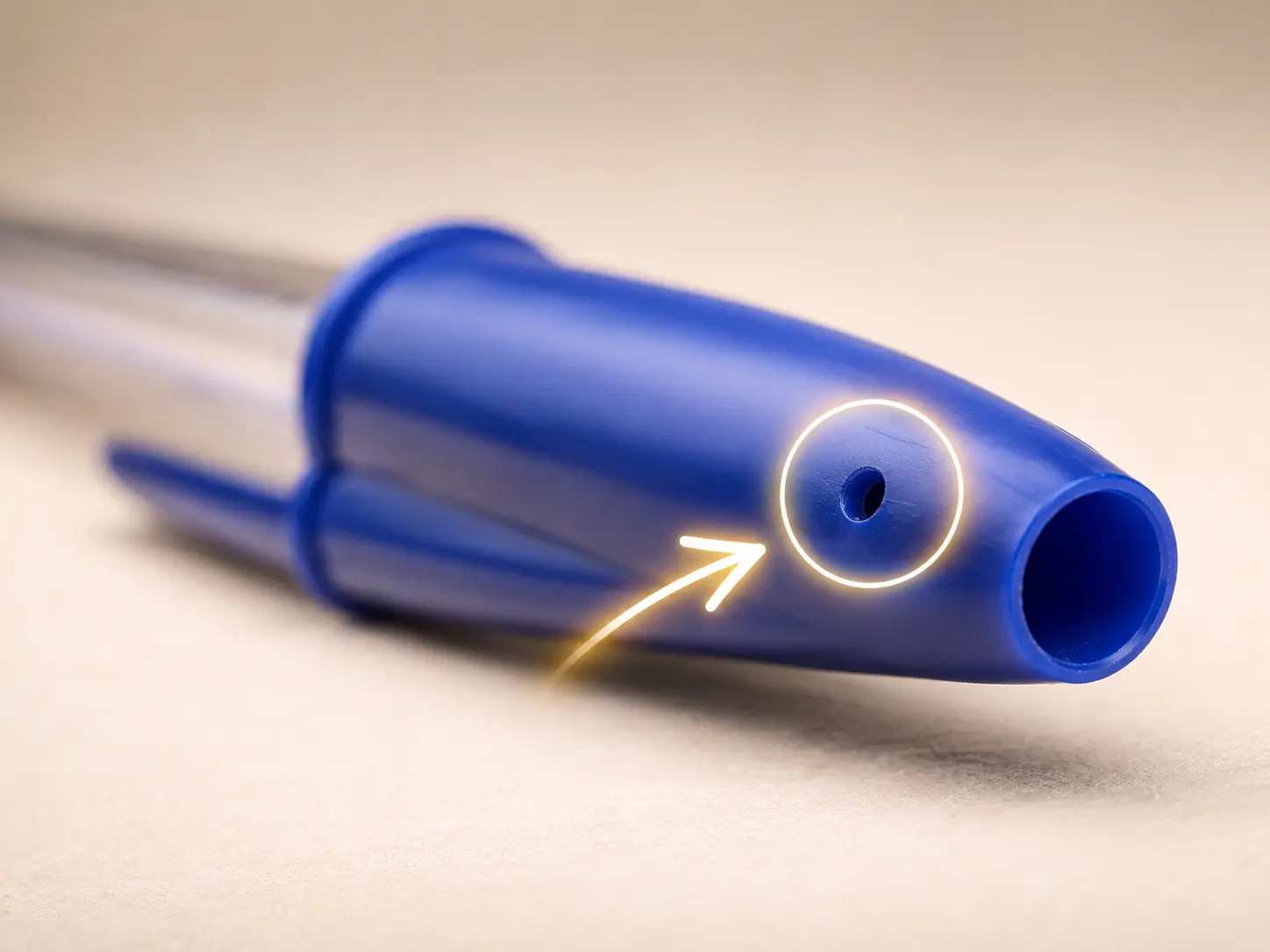
Why Do Pen Caps Have Holes?
Pen caps have holes mainly for safety. If someone accidentally inhales a cap and it gets stuck in the airway, the hole can allow limited airflow and buy time until help arrives.

You noticed the little bumps
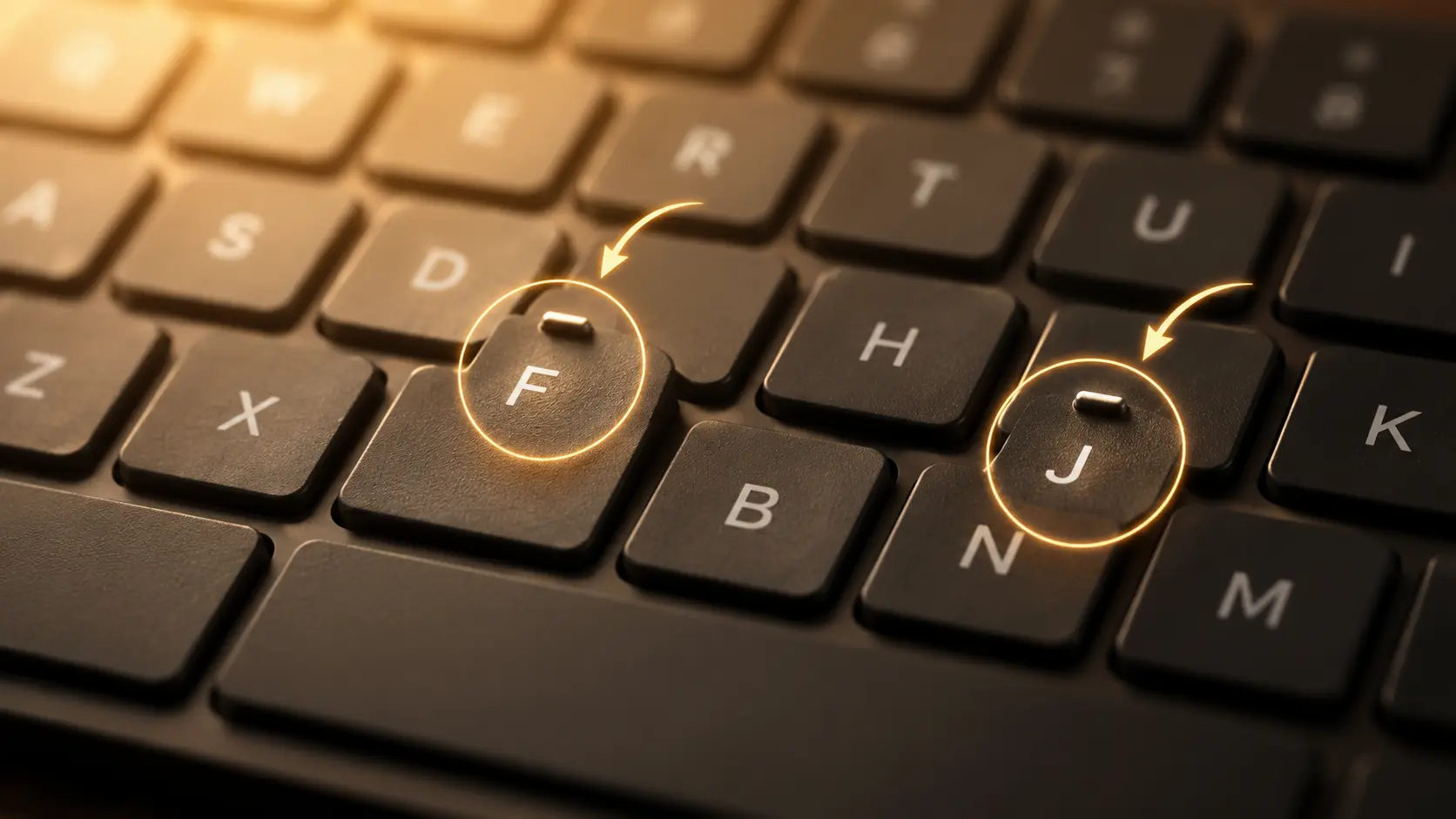
Why Do Keyboards Have Bumps on F and J?
The bumps on F and J help your fingers find home row without looking down. Your left index finger rests on F, your right index finger rests on J, and the rest of the keyboard becomes easier to navigate by touch.
You noticed the tiny pocket
What Is the Tiny Pocket on Jeans For?
The tiny pocket on jeans was originally made for a pocket watch. It kept the watch snug and protected when jeans were workwear. Pocket watches mostly disappeared, but the little pocket stayed.

You noticed the can tab
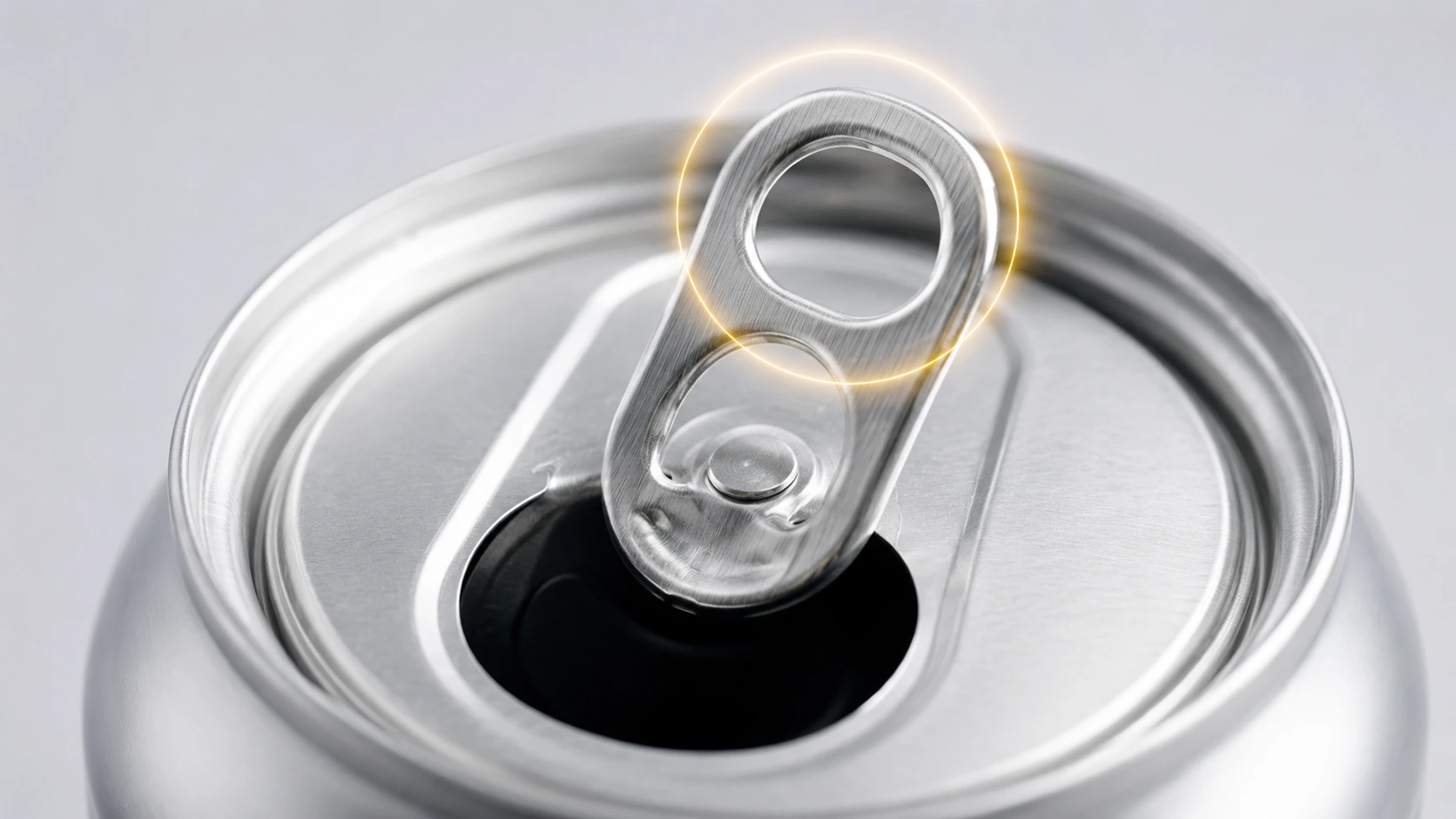
Why Do Soda Can Tabs Have Holes?
The hole in a soda can tab gives your finger a place to grip and helps the tab work as a tiny lever. When you lift the tab, it pivots around the rivet and pushes the scored part of the lid open.
You noticed the backpack patch
What Is the Diamond Patch on Backpacks For?
The diamond patch is a lashing square. It lets you thread cord, straps, or clips through the two slits so you can attach light gear to the outside of a backpack.

You noticed the extra holes
What Are the Extra Holes on Shoes For?
Those extra eyelets near the top of your sneakers are for a heel lock, also called a runner’s loop or lace lock. They help hold your heel in place so your foot does not slide around inside the shoe.

That famous interview question — answered properly
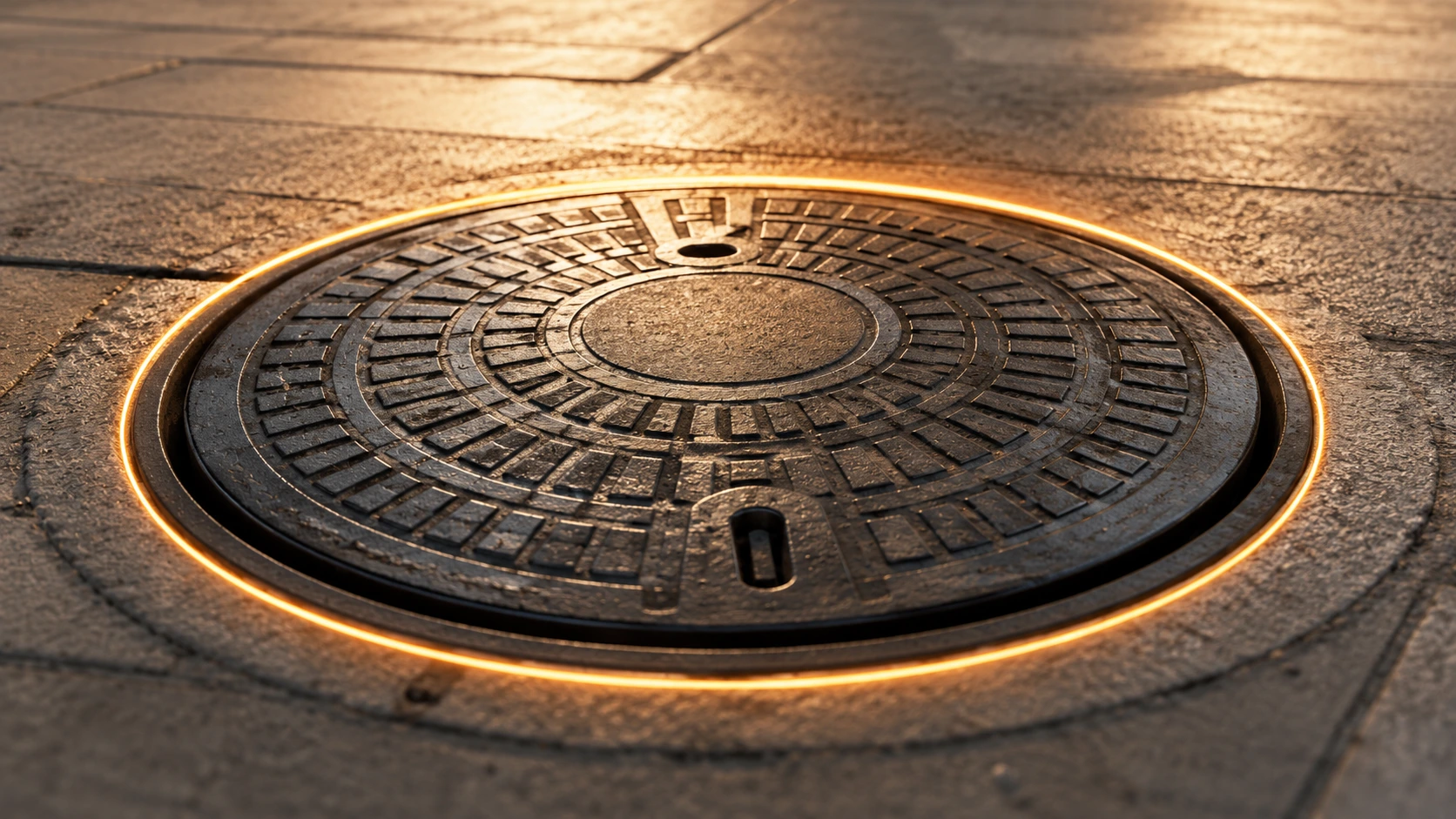
Why Are Manhole Covers Round?
A round cover can never fall through its own opening, no matter how you tilt it. That's the safety reason. But there are three more: the shaft underneath is round because round tubes handle soil pressure best, a circle is the cheapest shape to cast in iron, and workers can roll it instead of carrying it. It's four good reasons, not just one.
That weird mark you've been ignoring
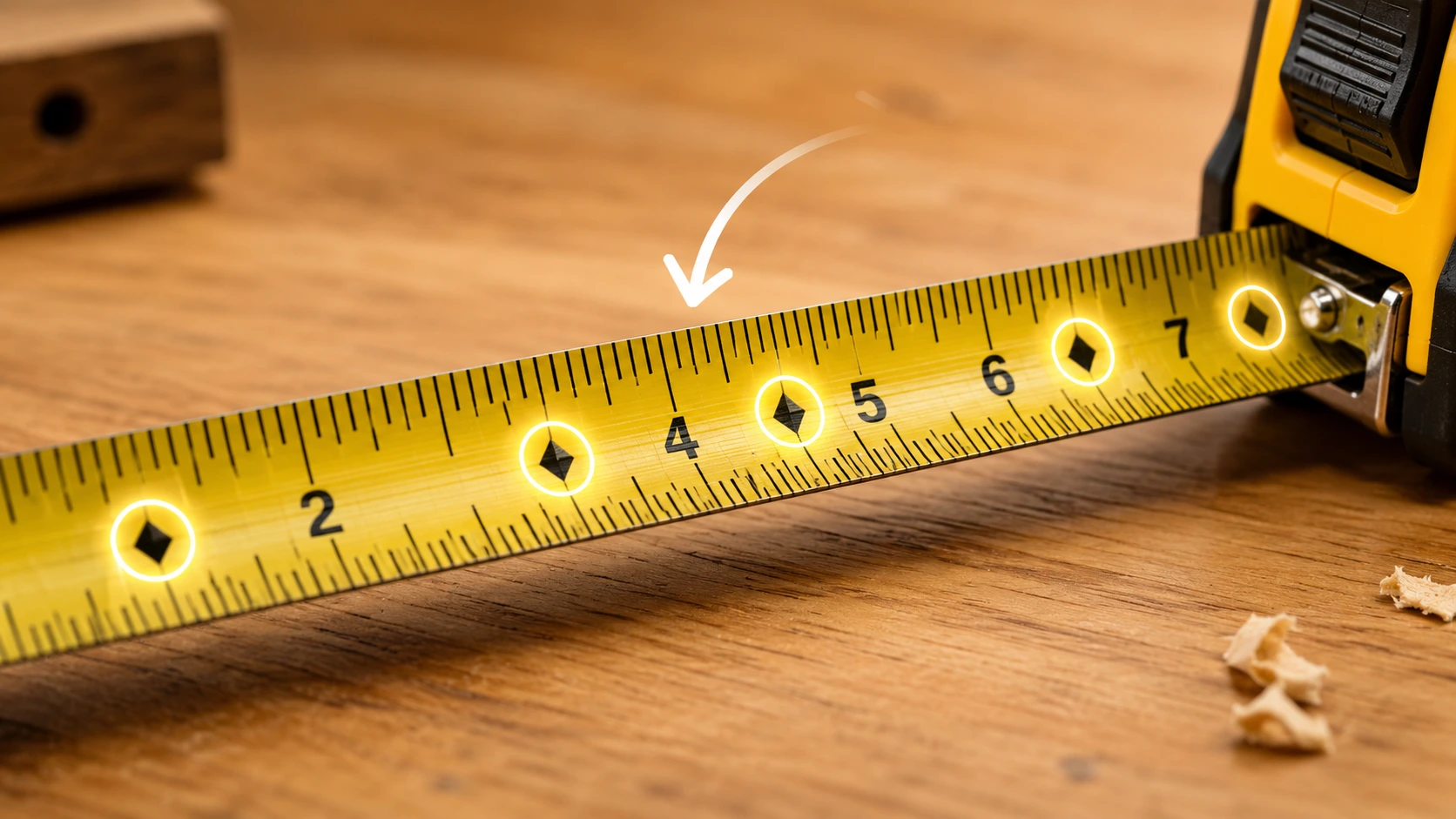
What Are the Black Diamonds on a Tape Measure For?
Those black diamonds are spacing shortcuts for builders. They appear every 19.2 inches because 96 inches — one 8-foot sheet — divided by 5 equals exactly 19.2. That lets framers lay out five evenly spaced floor joists or roof trusses across a standard sheet without pulling out a calculator. If you're measuring furniture or shelves, you don't need them at all.

That little hole in every prong
Why Do Electrical Plugs Have Holes in the Prongs?
Originally, the holes lined up with small bumps inside the outlet, gripping the plug and stopping it from sliding out. Old outlets had those bumps — modern ones don't. Today the holes survive mainly because manufacturers use them to hold prongs in place during molding, and because you can thread a safety tag or lockout clip through them to prevent a device from being plugged in until it's safe. The holes look vestigial. They're mostly not.

That pinprick you spotted mid-flight
Why Do Airplane Windows Have a Tiny Hole?
That hole is called a bleed hole, and it's doing an important job. Airplane windows have three layers. The outer pane is the structural one — it takes the full force of cabin pressure against the thin air outside. The bleed hole sits in the middle pane and lets cabin air slowly seep into the gap between panes, so the pressure hits the outer layer gradually rather than all at once. Less sudden load means less risk of cracking. It also vents moisture and keeps your window from fogging up. It's not a flaw. It's engineered.
Those tiny copper dots on your pockets
Why Do Jeans Have Rivets?
Pocket corners were the weak point on work pants. They'd rip under the weight of tools, gold, and hard labor. In 1871 a tailor named Jacob Davis started hammering copper rivets into those corners to stop them tearing. It worked so well that he partnered with Levi Strauss, patented the idea in 1873, and created what we now call blue jeans. Modern denim is stronger and doesn't need rivets the way it used to — but they stayed because they still add reinforcement at stress points, and because they've become the visual identity of jeans.

Those tiny grooves on the edge
Why Do Coins Have Ridges?
Coin ridges were invented to fight a specific crime called coin clipping — shaving metal off the smooth edges of gold and silver coins to steal the metal. Once you added ridges, any shaved coin was instantly obvious. Isaac Newton pushed the design at the Royal Mint in the late 1600s. Today's coins aren't made of precious metal, so clipping isn't a risk — but ridges stuck around because they still deter counterfeiting, help vending machines tell coins apart, and let visually impaired people identify denominations by touch.

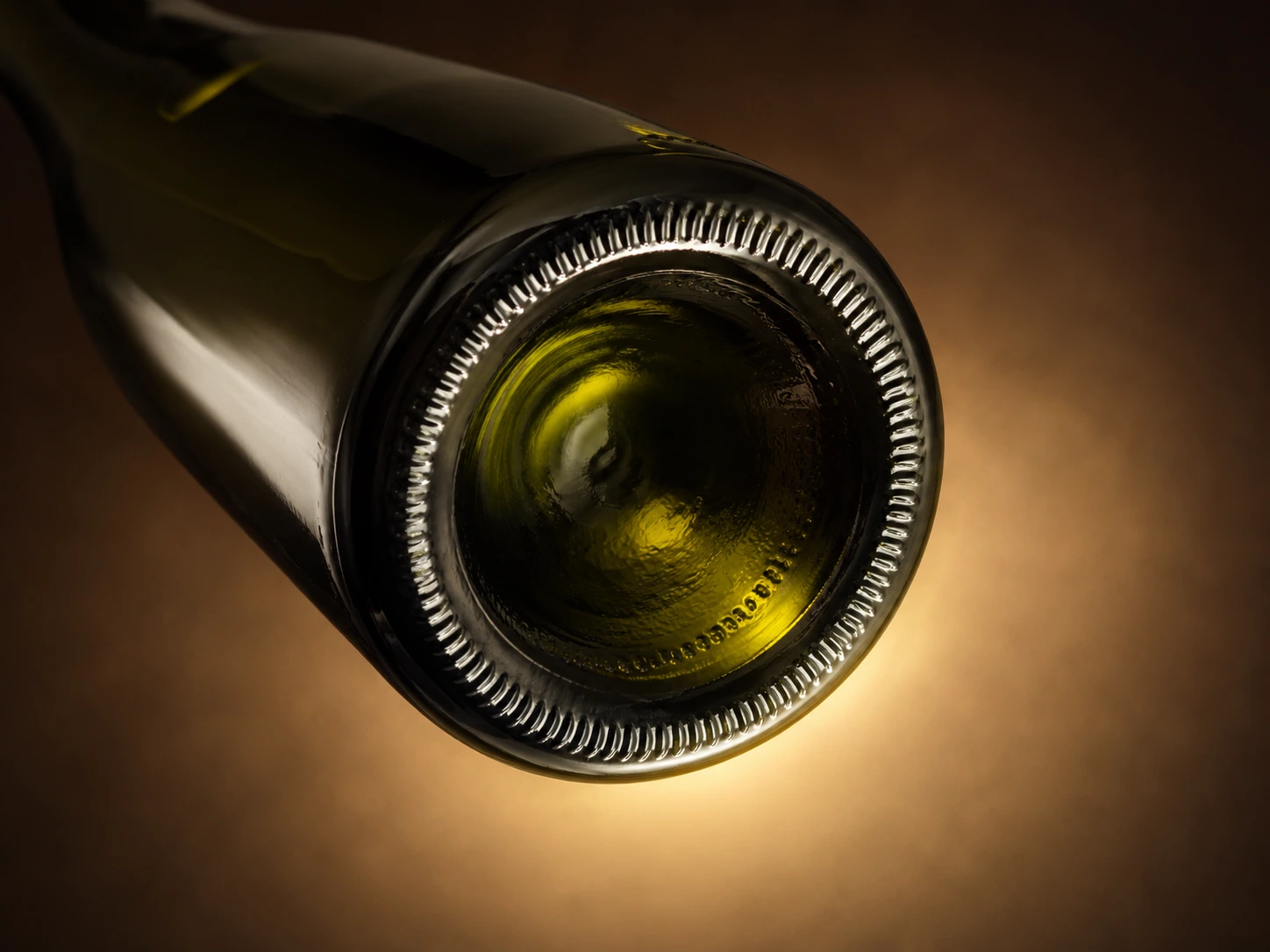
That deep dent in the bottom
Why Do Wine Bottles Have a Punt?
The indentation at the bottom of a wine bottle is called a punt. When bottles were hand-blown, glassblowers pushed the seam inward to stop a sharp point of glass from forming on the base — a punt let the bottle stand flat and safely. Modern machines don't have that problem, so today the punt mainly adds structural strength to sparkling wine bottles (which hold serious pressure), helps trap sediment away from the pour, and gives you a natural thumb grip when serving. Deep punt does not mean better wine. It's mostly tradition.
You see them every time you drive
What Are the Black Dots on Car Windshields For?
Those black dots are called frit — a ceramic paint baked permanently into the glass. The solid black band at the edge protects the adhesive that holds your windshield to the car frame from UV rays (UV destroys the glue over time). The dots fade into smaller and smaller spots toward the center, creating a gradient that smooths the visual jump from black to clear, reduces edge glare for the driver, and — here's the part most people miss — prevents optical distortion that happens during manufacturing when the glass is bent at high heat.

That pinhole you never noticed
Why Do Padlocks Have a Tiny Hole in the Bottom?
That hole is a drain hole — also called a weep hole. Padlocks used outdoors on gates, sheds, and fences are constantly exposed to rain. Without a way out, water sits inside the lock body and rusts the internal pins, springs, and tumblers until the lock jams or fails completely. In freezing weather, trapped water expands as ice and can crack the mechanism. The hole lets water drain out before any of that happens. As a bonus: you can squeeze a few drops of lubricant into it to revive a stiff or stuck lock.

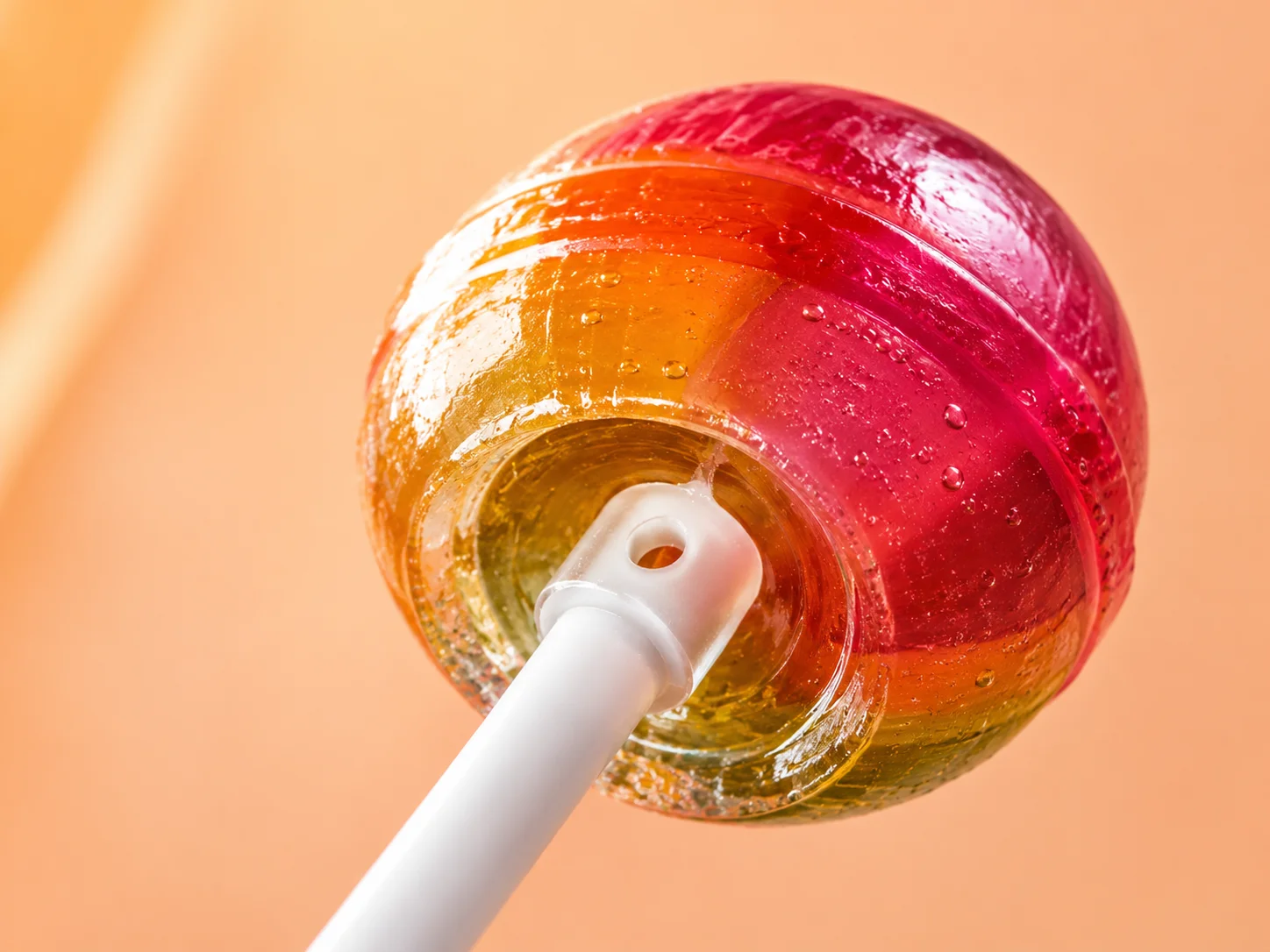
That hole in your candy stick
Why Do Lollipop Sticks Have Holes?
Three reasons. First — and most important — the candy anchor. When lollipops are made, hot liquid candy is poured around the stick. It flows through the hole and hardens inside it, locking the candy head to the stick so it can't slide off. Second, safety: if a child swallows the stick, the hollow center lets air pass through, reducing choking risk. Third, manufacturing — a thin rod is inserted through the holes of many sticks at once to hold them in alignment while the candy sets.

The thing on your foil box you never pressed
What Are the Tabs on Aluminum Foil Boxes For?
They're called end locks. Push the perforated tab on each end of the box inward and it pokes into the hollow cardboard core of the roll, pinning it in place like an axle. The roll can still spin freely — but it won't slide out of the box when you pull the foil. Reynolds Wrap even prints 'Press Here to Lock Roll' on the tab in plain text. Almost nobody reads it.

You thought it was just for draining
What Is the Hole in a Spaghetti Spoon For?
Two things. First: it drains excess water when you scoop pasta out of the pot. That part most people know. Second — and this is the one that went viral — on spoons with a single center hole, the hole is sized to hold one serving of dry spaghetti. Push a bundle of raw spaghetti through the hole until it fills the opening, and that's one adult portion. Some spoons have multiple holes purely for drainage and won't work as a measure. But if yours has one center hole, you've had a portion gauge in your drawer the whole time.

That hole you've been using as a hook
Why Do Pans Have Holes in the Handle?
The official reason is hanging — you can put the pan on a hook or pot rack to save drawer space. That's real and works well. But there's a second function most people never use: rest the handle of your wooden spoon or spatula through the hole while you're cooking. The spoon sits angled over the pan with the bowl hovering above it. Nothing on the counter, no sauce dripping onto the stove, no balancing act. It works especially well with thin-handled wooden spoons.

Those mysterious holes at the exact same spot
Why Do Shirts Get Tiny Holes Near the Belly Button?
It's friction — specifically the metal hardware on your jeans and belt rubbing against thin shirt fabric at the waist. Every time you sit, lean, or move, your shirt is pressed between your body and the rivet, button, or buckle of your pants. Repeat that thousands of times and the fabric wears through in tiny pinpricks, always in the same spot. Kitchen countertop edges at waist height do the same thing. It has nothing to do with moths, the washing machine, or cheap fabric alone — though cheap thin fabric makes it happen faster.

That hole in the same spot every time
Why Do Shoes Get Holes Above the Big Toe?
Your foot is the culprit, not the shoe. About one in five people have a gait pattern where the big toe lifts slightly upward during toe-off — the moment when you push off the ground with each step. At that exact moment, the tip and nail of the big toe press against the mesh directly above it. Repeat that over tens of thousands of steps per week and the mesh gets abraded until it wears through. Toenails that are too long or curved act like tiny cutting blades and speed up the process. A shoe that's too tight in the toe box compresses the toe upward and makes it worse.

Everyday Objects
Why Do Utility Knives Have Snap-Off Blades?
The snap-off blade solves a simple problem: cutting edges dull with use. Rather than stopping to sharpen or discard the whole blade, the segmented design lets you snap off just the dulled tip and expose a factory-sharp edge underneath. The blade is pre-scored with evenly spaced grooves. Each segment is a complete, sharp edge. When the front section dulls, you break it off at the nearest score line using the plastic cap at the back of the knife. The next segment is immediately ready. The design was invented in Japan in 1956 by Yoshio Okada, a box factory worker who observed that chocolate and glass snap cleanly and predictably along pre-cut lines — and realised steel could do the same.

Everyday Objects
Why Do Glue Sticks Dry Out?
Glue stick adhesive is a water-based polymer mixture. The active ingredient — usually polyvinyl alcohol or a similar compound — only works as an adhesive when it contains enough moisture. In that hydrated state it is soft, tacky, and able to bond paper fibres together. When the cap is left off, water evaporates from the exposed surface. The polymer stiffens and eventually becomes a hard, crumbly solid that no longer bonds anything. Even a capped glue stick dries slowly over months because water vapour gradually permeates through plastic packaging. The cap dramatically slows the process — but does not stop it entirely.

Everyday Objects
Why Do Whiteboards Stain Over Time?
Whiteboards stain because their surface physically degrades with use. Most whiteboards are coated with melamine, porcelain, or painted steel — a smooth, non-porous layer that dry erase ink sits on top of rather than soaking into. Dry erase ink contains a release agent that prevents pigment from bonding permanently. On a smooth surface, the eraser lifts both the pigment and the release agent cleanly. But repeated erasing — especially with abrasive erasers, paper towels, or fingernails — creates microscopic scratches in the coating. Ink settles into those grooves. After the solvent evaporates, the pigment is lodged below the eraser's reach, leaving the characteristic grey ghost image that accumulates with every use.

Everyday Objects
Why Do Chip Bags Have Air in Them?
The gas inside a chip bag is not regular air — it is nitrogen. Nitrogen is used because it is inert, meaning it does not react with the chips the way oxygen does. Oxygen causes two problems. First, it reacts with the oils in chips through a process called oxidation, making them rancid and stale. Second, moisture in regular air softens the chips and ruins the texture. Nitrogen does neither of those things. It also serves a second purpose: it inflates the bag into a rigid cushion that protects fragile chips from being crushed during shipping, stacking, and handling. Remove the gas and the chips would arrive as crumbs.

Everyday Objects
Why Do Permanent Markers Smell Strong?
Permanent marker ink is dissolved in chemical solvents — typically xylene, toluene, or similar compounds. These solvents are what carry the pigment onto the surface and then rapidly evaporate, leaving the pigment behind. The strong smell is those solvents evaporating. They are volatile organic compounds (VOCs), which means they turn to vapour at room temperature and travel easily through air to your nose. The solvent is also why the ink is permanent. It dissolves slightly into the surface — whether plastic, glass, or fabric — allowing the pigment to bond at a deeper level than water-based inks do. Water-based markers smell mild because water evaporates without producing a strong VOC signature.

Everyday Objects
Why Are Car Tires Black?
Car tires are black because of a material called carbon black. It is a fine powder produced by burning hydrocarbons in limited oxygen, and it is added to rubber during the manufacturing process. Natural rubber is weak, sticky, and degrades quickly. Carbon black dramatically improves it. When carbon black particles bond with rubber polymer chains, they reinforce the material at a molecular level — dramatically increasing tensile strength, resistance to tearing, and heat dissipation. The colour is simply a side effect of the carbon. Early tires in the 1800s were indeed off-white or cream, and experimental coloured tires exist today — but they wear out much faster without the carbon black additive.

Everyday Objects
Why Are School Buses Yellow?
School buses are painted a specific hue called National School Bus Glossy Yellow, standardised at a conference held by Frank Cyr at Columbia University in 1939. The colour was chosen deliberately for visibility. Yellow is detectable in peripheral vision faster than almost any other colour. It is also highly visible in low-light conditions — at dawn, dusk, and in bad weather — when children are most commonly boarding or leaving buses. Cyr convened the conference specifically to create a uniform standard. Before 1939, school buses came in a wide variety of colours and designs. The goal was to make school vehicles instantly recognisable to all drivers regardless of state or region.

Everyday Objects
Why Do Train Tracks Have Stones Under Them?
The stones under train tracks are called ballast. They are not just decorative fill — they are a precisely engineered structural layer. Ballast does four things. It distributes the enormous weight of passing trains across a wide area of ground rather than concentrating it on two narrow rails. It drains rainwater away from the track bed, preventing waterlogging that would cause the ground to shift. It locks the wooden or concrete sleepers (the crosspieces holding the rails) in place, resisting the lateral forces that try to push tracks sideways. And it absorbs vibration, reducing noise and wear. The stones are deliberately angular and sharp-edged, not rounded. Angular stones interlock with each other, while smooth rounded ones would shift and slide.
Everyday Objects
Why Do Hoodies Have Metal Tips on Strings?
The metal or plastic tips at the end of hoodie drawstrings are called aglets. The word comes from the Latin 'acus,' meaning needle. Aglets do two things. First, they bind the end of the cord, preventing it from fraying or unravelling when pulled. A raw fabric cord end fluffs and splits with repeated use, quickly becoming impossible to thread. Second, they act as a threading tool. When a drawstring is pulled out — especially during washing — you need to feed it back through the narrow channel inside the hood. The rigid, tapered aglet acts exactly like the eye of a needle, making this easy. Without it, threading a soft cord end through a tight fabric tunnel is genuinely difficult.

Everyday Objects
Why Do Batteries Have Plus and Minus Signs?
The plus (+) and minus (−) signs on a battery mark its positive and negative terminals. Electricity flows in a specific direction through a circuit — from the negative terminal, through the device, and back to the positive terminal. If you insert a battery the wrong way, current flows backwards. In most consumer electronics this simply means the device does not work. In some, reversed polarity can damage or destroy components. The symbols exist so you can match the battery's orientation to the markings inside the device's battery compartment, ensuring current always flows the right way.

Everyday Objects
Why Are Ties Shaped Like Arrows?
Neckties are cut on the bias — diagonally across the grain of the woven fabric rather than straight along it. This diagonal cut is what gives ties their characteristic taper and pointed end. Bias-cut fabric behaves differently from straight-cut fabric. It stretches slightly, has natural elasticity, and drapes in a smooth curve rather than hanging stiffly. These properties are exactly what a tie needs: it must hold a knot snugly without bunching, spring back to shape after being tied and untied repeatedly, and hang in a clean line down the chest. The wider end (the blade) holds the knot and provides the visual front of the tie. The narrower end (the tail) sits behind the collar and under the blade. The point at the bottom is simply where the bias-cut shape terminates.

Everyday Objects
Why Do Washing Machines Shake?
Washing machines shake because of imbalance. During the spin cycle, the drum rotates at high speed — often between 1,000 and 1,600 RPM. If the wet laundry distributes unevenly inside the drum, the heavier side creates a centrifugal force that is not offset by the opposite side. This off-centre mass rotates rapidly, generating a rhythmic shaking force. The faster the drum spins, the greater the force — which is why shaking intensifies during the high-speed spin. Modern washing machines use counterweights, suspension springs, and dampers to absorb this vibration before it reaches the floor. But a heavily unbalanced load — one large item like a duvet, or tangled clothes — can overpower those systems and walk the machine across the room.

Everyday Objects
Why Does Soap Make Bubbles?
Soap makes bubbles by doing two things: lowering water's surface tension and forming a flexible molecular film that can stretch around trapped air. Water molecules are strongly attracted to each other. This attraction creates surface tension — a tendency for the water surface to contract and resist being stretched. Pure water cannot form stable bubbles because the film is too rigid and thin. Soap molecules have a unique structure: one end is attracted to water (hydrophilic) and the other repels it (hydrophobic). When soap is added to water, the molecules line up with their water-repelling ends pointing away from the water. This arrangement creates a sandwich — soap molecules on the outside, water in the middle, soap molecules on the inside — around any trapped air. That flexible, elastic film is a bubble.

Philosophy & Thinkers
Why Didn't Socrates Write Any Books?
Socrates believed real knowledge came from live questioning, not silent reading. A text cannot notice your confusion, challenge your assumption, or change its explanation for the person in front of it. The irony is that we know this argument because Plato wrote it down.

Philosophy & Thinkers
Why Did Diogenes Live in a Barrel?
Diogenes lived in a jar because he believed happiness required far less than society claimed. By stripping life down to almost nothing, he turned simplicity into a provocation. The jar was not a home in the normal sense. It was a weapon aimed at status, comfort, and social performance.

Philosophy & Thinkers
Why Did Confucius Become So Influential?
Confucius became influential because his ideas solved a governing problem: how to hold a large society together without constant force. Ritual, education, relationships, and moral leadership gave later empires a durable operating system. His lifetime looked like failure. His afterlife became one of the most successful political philosophies ever built.

Philosophy & Thinkers
Why Did Darwin Wait Years Before Publishing Evolution?
Darwin waited because he knew the theory would be socially explosive, scientifically attacked, and personally painful. He spent two decades building a case strong enough to survive. He may have waited even longer if Alfred Russel Wallace had not independently found the same idea.

Philosophy & Thinkers
Why Was Nietzsche Misunderstood by So Many People?
Nietzsche was misunderstood because his sister controlled and distorted his archive, his aphoristic style made selective quotation easy, and his most provocative concepts were ripped away from their context. The people who claimed him often represented exactly the mass politics he despised.

Philosophy & Thinkers
Why Was Einstein Fascinated by a Compass as a Child?
The compass revealed an invisible field acting through space. Einstein's lifelong work kept returning to that problem: what invisible structures make visible things move? General relativity can be read as the adult version of the compass question: space itself has structure.

Science & Discovery
Why Did Human Knowledge Explode After the Printing Press?
The printing press made ideas cheap to copy, harder to suppress, and easier to correct. Knowledge became cumulative because many readers could work from the same text. Printing did not just spread knowledge. It changed what knowledge could become.

Science & Discovery
Why Did the Periodic Table Change Science?
The periodic table changed science because it revealed that elements follow deep repeating patterns. It turned chemistry from memorization into prediction. When missing elements were discovered and matched his predictions, the table became a map of matter, not a classroom chart.

Science & Discovery
How Did Vaccines Transform Human History?
Vaccines transformed history by training immune memory before disease arrived. They turned the immune system from a reactive defense into a prepared one. Vaccines did not invent immune memory. They learned how to trigger it safely.

Science & Discovery
Why Was Penicillin Such a Breakthrough?
Penicillin was the first widely useful antibiotic: a drug that could kill bacteria inside the body without killing the patient. The discovery was famous, but the breakthrough required the Oxford team that purified and produced it.

Science & Discovery
How Did the Steam Engine Change Civilization?
Steam power gave humans portable, scalable mechanical energy independent of rivers, wind, and muscle. Factories, railways, mines, and cities could grow around fuel rather than geography alone. Industrialization began with a mundane problem: flooded coal mines.

Science & Discovery
Why Was Electricity Hard to Understand for Centuries?
Electricity was hard because charge, current, voltage, resistance, and fields have no simple everyday equivalent. Scientists had to invent the instruments and the concepts at the same time. The wrong fluid analogy was useful enough that we still talk about current flowing.

Science & Discovery
Why Did the Internet Spread So Quickly?
The internet spread quickly because its core standards were open, non-proprietary, and permissionless. Anyone could connect, build, and make the network more valuable for everyone else. A network designed for resilience became a platform no single company could fully own.

Inventions & Technology
Why Are Rockets Launched Near the Equator?
Rockets launch near the equator to borrow Earth's rotational velocity. That free speed reduces the fuel needed to reach orbit and can increase payload capacity. Europe launches from French Guiana partly because Europe itself is at the wrong latitude.

Inventions & Technology
Why Are GPS Satellites So Accurate?
GPS is accurate because it measures signal travel time from atomic-clock satellites. Nanosecond timing becomes meter-level positioning, after correcting for relativity, atmosphere, and satellite geometry. Without relativistic corrections, GPS would drift by kilometers per day.

Inventions & Technology
How Do Undersea Cables Connect the World?
Undersea cables send data as pulses of laser light through glass fibers. Repeaters amplify the light across ocean distances, allowing enormous capacity at low latency. The global internet feels wireless, but its backbone is physical glass lying on the seafloor.

Inventions & Technology
Why Are Data Centers Built in Specific Locations?
Data centers are built where electricity is cheap, cooling is efficient, network links are strong, and risk is manageable. Different workloads trade off latency against energy cost. The cloud's geography is shaped by rivers, cold weather, fiber routes, tax policy, and the electric grid.

Inventions & Technology
Why Did Nikola Tesla Die Poor?
Tesla died poor because he gave up or lost the financial upside of his most valuable inventions, failed to commercialize later projects, and pursued visions that exceeded available technology and business models. Tearing up his Westinghouse royalty contract may have saved AC power and cost him a fortune.

Art & Philosophy
Why Does Plato Point Up and Aristotle Point Down?
Plato points upward because he believed that ultimate reality exists in an invisible realm of perfect, eternal Forms - the physical world is just a shadow of that higher truth. Aristotle points downward because he believed reality lives here, in the physical world, observable and measurable. The gestures are Raphael's brilliant shorthand for the deepest split in Western philosophy. Raphael likely never studied philosophy formally. He was a painter. Yet he managed to compress 2,000 years of intellectual debate into two pointing fingers.

Art & Mystery
Why Is the Mona Lisa Smiling?
The Mona Lisa's smile is ambiguous by design. Leonardo used sfumato - blurred transitions especially around the mouth - so the expression shifts depending on focus, angle, and light. Neuroscientists have confirmed that the smile triggers the same kind of processing loop as reading an ambiguous social situation in real life.

Art & History
Why Are Statues Missing Their Noses?
Statues lose noses through deliberate defacement, structural vulnerability, religious iconoclasm, political erasure, and souvenir vandalism. Time explains some damage, but intentional destruction explains much more than people think. In ancient Egypt, a statue without a nose was a statue that could not breathe - spiritually dead.

History & Engineering
Why Did Roman Buildings Last for Thousands of Years?
Roman buildings lasted because of pozzolanic concrete chemistry, arches and vaults that distribute weight, overbuilding, and the lucky preservation of structures that were buried, reused, or maintained. Volcanic ash and seawater can form minerals inside cracks, strengthening Roman concrete over centuries.

History & Symbolism
Why Are Crowns Associated With Kings?
Crowns became royal symbols because they evoke solar radiance, vertical status, circular eternity, and divine sanction. Corona literally means crown in Latin, which is why the sun's outer atmosphere is called the corona.

History & Games
Why Are Chess Pieces Named After Medieval Roles?
Chess pieces are named after medieval roles because the game was adapted to fit European feudal society as it moved from India through Persia and the Islamic world into Europe. The queen was originally the weakest major piece. In the 15th century she became the most powerful, possibly under the influence of Queen Isabella I.

Economics & History
Why Is Gold Associated With Wealth?
Gold became associated with wealth because it is durable, rare but available, divisible, portable, recognizable, and hard to counterfeit with pre-industrial tools. Out of all elements, gold is close to the only one that passes the monetary Goldilocks test.

History Myths
Did Nero Really Fiddle While Rome Burned?
No. Nero almost certainly did not fiddle while Rome burned. He was reportedly in Antium, returned to Rome, and organized relief. The fiddle would not exist for more than a millennium. The plausible kernel is that Nero may have sung about the fall of Troy, later reframed as monstrous indifference.

History Myths
Was Napoleon Actually Short?
Napoleon was about 5 feet 6 or 7 inches in modern measurements, average or slightly above average for a French man of his era. His nickname le petit caporal meant the little corporal affectionately, not necessarily physically short.

History Myths
Did People in the Middle Ages Think the Earth Was Flat?
No. Medieval Europeans broadly accepted a spherical Earth. It was Greek science, university curriculum, Church astronomy, and standard educated knowledge. The myth was largely popularized in the 19th century by writers arguing that religion had suppressed science.

History Myths
Was Marilyn Monroe Really the Beauty Standard of Her Era?
No. Monroe was not plus-sized by modern standards. Her documented measurements suggest roughly a modern US size 6 to 8, with an unusually small waist and dramatic hourglass proportions. The confusion comes partly from 1950s dress sizing, where a size 12 is closer to a modern size 6 or 8.

History Myths
Did Edison Really Invent the Light Bulb?
No, not simply. Joseph Swan demonstrated a practical incandescent bulb before Edison's patent. Edison made electric lighting commercially viable by building the full system around it. Edison and Swan merged British operations into the Edison and Swan United Electric Light Company, nicknamed Ediswan.

History Myths
Was Columbus Trying to Prove the Earth Was Round?
No. Columbus was trying to find a western route to Asia. His opponents knew Earth was round and correctly argued he had underestimated its size. Columbus died believing he had reached Asia and never accepted that he had found a new continent.
Connected hubs
Tiny details outside objects
Some tiny questions start with a thing in your hand. Others start with your body doing something strange. Both hubs use the same quick-answer pattern.
Still looking?
Can’t find the tiny thing you noticed?
Some object details are too specific for normal articles: a small hole, a loose hook, a strange bump, a hidden tab. TinyThat is built to explain those little “why is this here?” moments one by one.
Good next questions to add
Why do keyboards have bumps on F and J?
Why do tape measures have loose hooks?
Why do soda can tabs have holes?
What are the extra holes on shoes for?
Why do backpacks have diamond patches?
FAQ
Object questions FAQ
What is TinyThat objects?
It is a collection of simple explanations for tiny design details on everyday objects, like holes, dents, ridges, tabs, dots, and hidden features.
Are these object details always intentional?
Not always. Some are intentional design features, some come from manufacturing, and some are side effects that became useful over time.
Why do so many everyday objects have tiny holes?
Tiny holes often solve boring but important problems: drainage, pressure, hanging, grip, measuring, ventilation, airflow, or manufacturing.
How are these pages different from normal trivia articles?
Each page gives the simple answer first, then explains the real purpose, common myth, and what people usually get wrong.