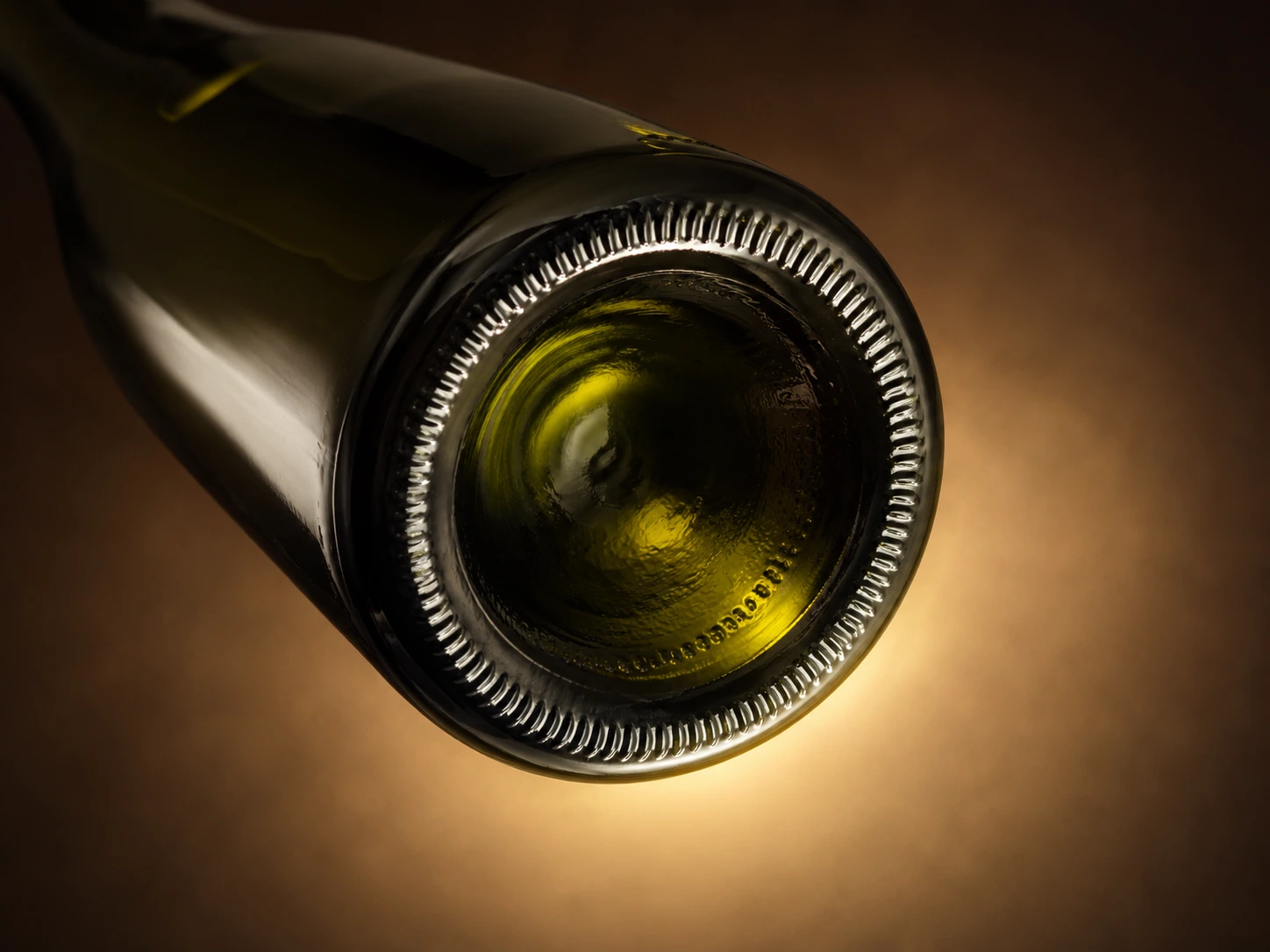
That deep dent in the bottom

Why Do Wine Bottles Have a Punt?

That dent in the bottom of a wine bottle seems mysterious today. It began as a practical glassmaking feature that helped bottles stand safely.

Quick answer

The indentation at the bottom of a wine bottle is called a punt. When bottles were hand-blown, glassblowers pushed the seam inward to stop a sharp point of glass from forming on the base — a punt let the bottle stand flat and safely. Modern machines don't have that problem, so today the punt mainly adds structural strength to sparkling wine bottles (which hold serious pressure), helps trap sediment away from the pour, and gives you a natural thumb grip when serving. Deep punt does not mean better wine. It's mostly tradition.

A deep punt is not a quality indicator. Some manufacturers use exaggerated punts purely to make bottles look more impressive.

Bottom view of a wine bottle showing the deep indentation called a punt

What it's called

A punt

Original reason

Glassblowing seam fix

Still useful for

Sparkling wine pressure

Quality signal?

No — it's a myth

It started with glassblowers, not winemakers

Before industrial manufacturing, wine bottles were made one at a time by glassblowers. The tool used to shape the bottom left a small scar — a rough protrusion of glass right at the base.

A flat-bottomed bottle with that scar couldn't sit squarely on a table. So glassblowers started pushing the bottom inward, creating a recessed base. The bottle rested on the ring around the punt instead of the scar.

Modern machines produce perfect flat bases with no scars. The original reason for the punt is gone. But for sparkling wine especially, the shape stuck around for legitimate structural reasons.

Myth vs Reality

Myth

A deeper punt means better, more premium wine.

For a long time this held up — fine wines tended to have punts and cheap table wine didn't. Consumers learned to associate the shape with quality.

Reality

Manufacturers figured that out and exploited it.

Once people associated deep punts with prestige, cheaper producers started exaggerating the indentation purely for appearance. Today the punt tells you nothing reliable about what's inside the bottle.
When the punt actually does something vs when it doesn't

Sparkling wine (Champagne, Prosecco)
The punt genuinely helps. Internal pressure from carbonation is significant. The curved base distributes it more evenly.
Still wine with sediment (aged reds)
The punt's ring helps hold sediment away from the pour. Useful for older bottles.
Young, filtered still wine
No pressure to manage, no sediment to collect. The punt is tradition and aesthetics only.
Boxed wine, cheap bottles
Often flat-bottomed. No punt needed and slightly cheaper to produce.

Quick answers

Common questions

What is the dent in the bottom of a wine bottle called?

It's called a punt. The term comes from glassblowing and has been used for centuries.

Why do wine bottles have a punt?

Originally to fix a glassblowing production issue. Today it adds structural strength to sparkling wine bottles, traps sediment, and serves as a grip point when pouring.

Does a deeper punt mean better wine?

No. This was once loosely true as a correlation — fine wines had punts, cheap ones didn't. Producers figured that out and now use deep punts for marketing. The depth tells you nothing about quality.

How does the punt help with sparkling wine?

Sparkling wine bottles are under continuous internal pressure. The curved bottom distributes that force more evenly across the glass, reducing the chance of the bottle cracking or failing.

What is the correct way to hold a wine bottle when pouring?

Place your thumb in the punt and wrap your fingers around the base. This is the classic sommelier grip and gives stable control when pouring.

Do all wine bottles have a punt?

No. German Riesling bottles are often flat-bottomed. Many everyday wines don't have one. It's common but not universal.

Does the punt make the bottle look bigger than it is?

Yes. The punt displaces space that could be liquid, so a punted bottle can appear larger while holding the same volume. Some producers deliberately exaggerate this.