Science & Discovery

How Did the Steam Engine Change Civilization?

For all of human history, the only energy sources were muscle, wind, and water. Then everything changed. The steam engine began as a mine pump and became the machine that broke the old energy ceiling.

Quick answer

Steam power gave humans portable, scalable mechanical energy independent of rivers, wind, and muscle. Factories, railways, mines, and cities could grow around fuel rather than geography alone. Industrialization began with a mundane problem: flooded coal mines.
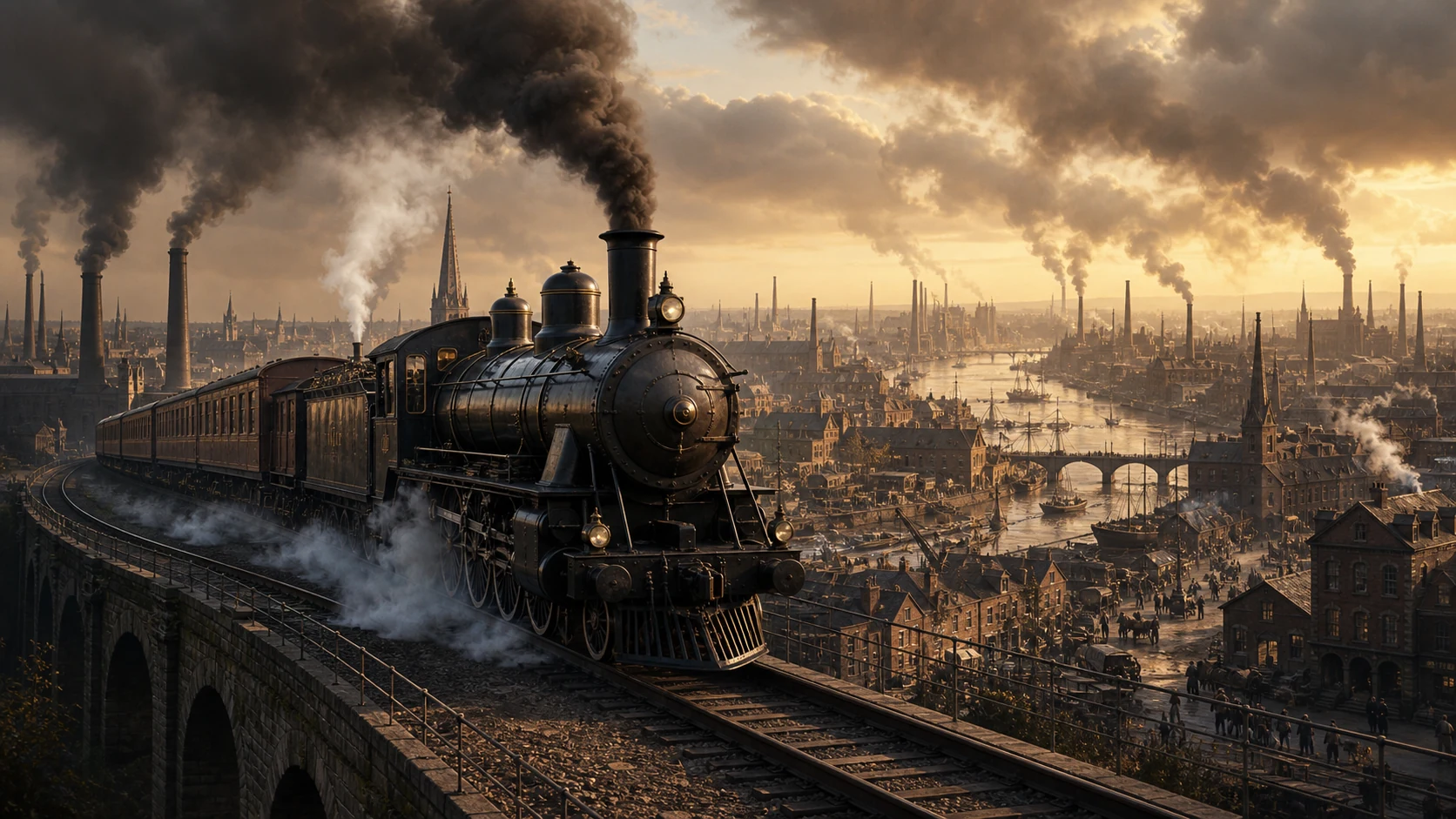
How Did the Steam Engine Change Civilization? hero image

The hook

Newcomen's engine pumped water from mines.

The hidden mechanism

Watt's separate condenser made steam power far more efficient.

The twist

Steam decoupled factories from rivers.

Common mistake

The climate cost came from the same coal that powered the gain.

The Energy Ceiling Before Steam

Pre-industrial economies were limited by muscle, wind, water, and annual plant growth. That constrained manufacturing, transport, mining, and food production.

Coal contained ancient stored sunlight, but deep coal mines flooded. Pumping water out was the immediate bottleneck.

What Changed When Geography Loosened

Before steam, factories needed rivers. Steam let factories move toward labor, ports, coal, and markets.

Railways compounded the change by making inland transport cheap enough for national markets and industrial specialization.

How Steam Changed Society

The engine moved more than machines; it reorganized human life.

1

Urbanization

Factories concentrated work in cities and pulled people from rural labor patterns.

2

Standardized time

Railways required consistent schedules, pushing local solar time toward time zones.

3

Wage labor at machine pace

Factory work trained punctual, repetitive, scheduled labor around machines.

The Deeper Change: Spending Ancient Sunlight

Coal let society draw on energy stored over geological time rather than only annual solar flows.

That inheritance powered modern prosperity and created the carbon problem that defines the next era.

The Common Misunderstanding

Myth

Watt invented the steam engine after watching a kettle.

It is an easy explanation because it makes the story simpler than it really was.

Reality

Watt improved existing engines through systematic instrument-making and experimentation.

The real explanation is more interesting because it shows the system, pressure, and tradeoffs behind the event.

Why It Mattered

Immediate effect
Steam raised productivity beyond the limits of human and animal labor.
Long-term effect
It enabled industrial cities, rail transport, and modern manufacturing.
Modern echo
Most electricity generation still uses steam turbines in some form.
Best way to remember it
The steam engine changed civilization by breaking the energy limit that had held for thousands of years.

Worth noting

Key Takeaway

The steam engine changed civilization by breaking the energy limit that had held for thousands of years.

Quick answers

Common questions

Is steam still used today?

Yes. Steam turbines generate a large share of the world's electricity.

Why did the Industrial Revolution start in Britain?

Coal, mining demand, engineering culture, patents, ports, and markets converged there.