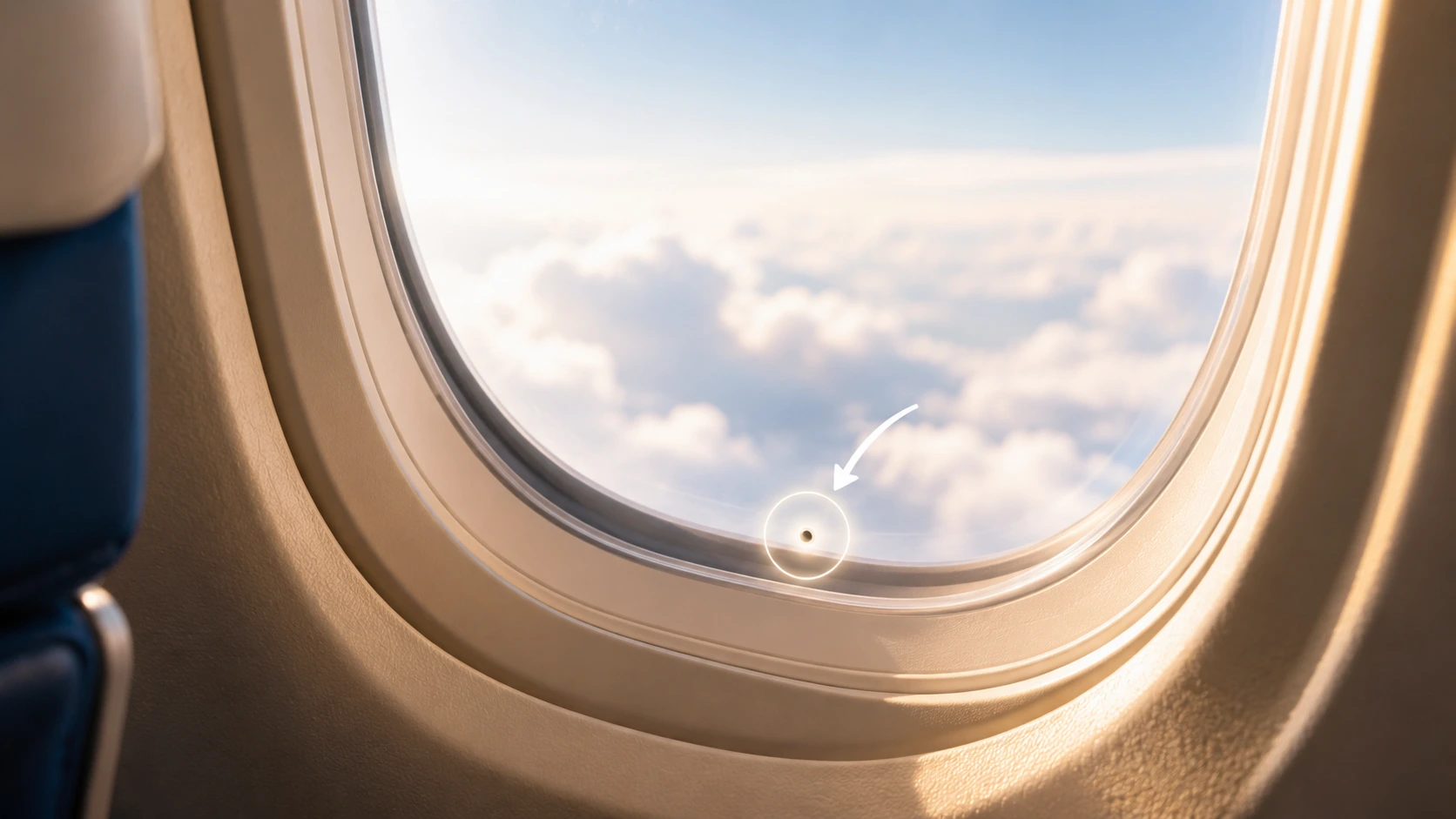
That pinprick you spotted mid-flight

Why Do Airplane Windows Have a Tiny Hole?

A hole in an airplane window sounds alarming. It is actually a pressure-management feature that helps the window layers handle cabin pressure safely.

Quick answer

That hole is called a bleed hole, and it's doing an important job. Airplane windows have three layers. The outer pane is the structural one — it takes the full force of cabin pressure against the thin air outside. The bleed hole sits in the middle pane and lets cabin air slowly seep into the gap between panes, so the pressure hits the outer layer gradually rather than all at once. Less sudden load means less risk of cracking. It also vents moisture and keeps your window from fogging up. It's not a flaw. It's engineered.

The hole does not mean the window is leaking or unsafe. It is intentionally placed there on every commercial aircraft.

View from a plane window seat showing the tiny bleed hole at the bottom of the inner pane

Official name

Bleed hole or breather hole

Which pane

The middle pane

Main job

Pressure load management

Safe?

Yes — it's by design

The hole controls how pressure reaches the outer pane

At cruising altitude, the air pressure outside a plane is a fraction of what it is inside the cabin. That gap in pressure pushes outward on every part of the aircraft — including the windows.

Airplane windows have three acrylic layers. The outer one is the structural layer built to handle that pressure load. But if all three panes were sealed airtight, the air trapped between them would expand and compress with every climb and descent, putting extra stress on the wrong layers.

The bleed hole in the middle pane solves this. It keeps the pressure in the gap between panes matched to cabin pressure, which means the outer pane alone bears the full load — which is exactly what it was designed to do. The hole also lets a tiny flow of warm cabin air through the gap, which prevents condensation from building up and fogging your view.

Myth vs Reality

Myth

The hole is a manufacturing defect or damage.

Passengers who notice it mid-flight sometimes get alarmed. It looks like something went wrong.

Reality

It's on every commercial window on purpose.

Every passenger cabin window on every commercial aircraft has one. It's a required engineering feature, not a flaw. If the outer pane ever failed, the middle pane would take over — and the tiny bleed hole would leak slightly but nowhere near enough to matter.
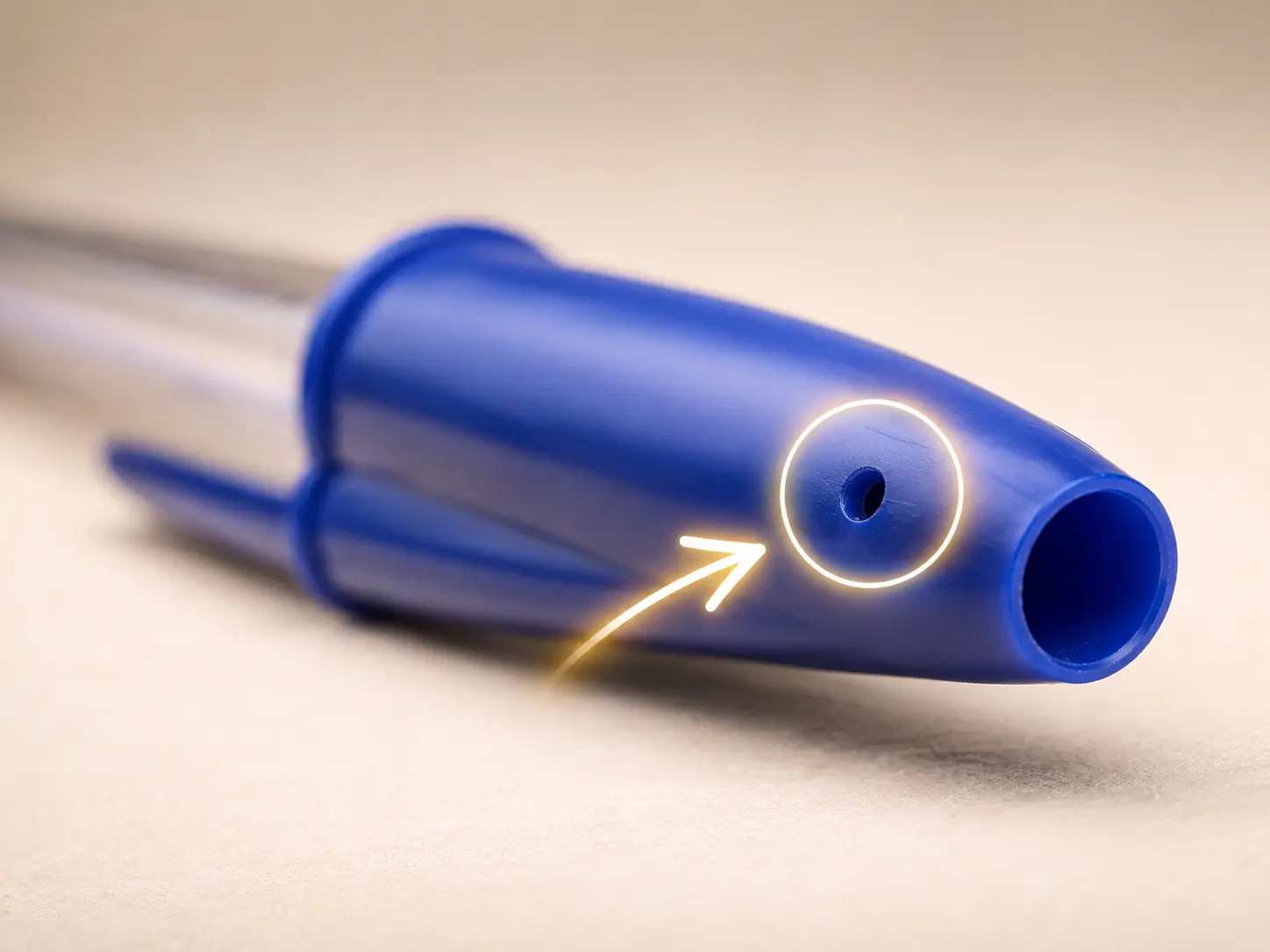
The two jobs the bleed hole does

Pressure load management (main job)
Equalizes pressure between the cabin and the inter-pane gap. Forces the outer pane to carry the structural load gradually instead of all at once — like placing a weight versus dropping it.
Moisture control (secondary job)
Allows warm, dry cabin air to circulate through the gap between panes, preventing condensation and frost from forming on the inside surfaces and blocking the view.

Good to know

The outer pane is the one doing the heavy lifting

In the extremely unlikely event the outer pane cracks, the middle pane serves as a backup. The bleed hole would mean a slight air leak from the gap — but aircraft pressurization systems are designed to handle that easily. It's a layered safety design.

Quick answers

Common questions

What is the tiny hole in an airplane window?

It's called a bleed hole or breather hole. It sits in the middle pane of a three-layer window and regulates pressure between the panes so the outer layer takes the full structural load.

Is the hole in airplane windows dangerous?

No. It's intentionally designed into every commercial aircraft window. It's a safety feature, not a defect.

Which layer of the window has the hole?

The middle pane. Not the outer structural pane, and not the inner scratch pane you can touch — the one in the middle.

Why does condensation sometimes form around the bleed hole?

The outside air at cruising altitude can be around minus 60 to minus 70 degrees Fahrenheit. The tiny airflow through the hole creates a cold contact point, and moisture from inside the cabin can freeze there. It's normal.

What would happen if airplane windows had no bleed holes?

Pressure differences between the sealed pane layers would stress the wrong layers during climbs and descents. Rapid pressure changes — like an emergency descent — could crack the inner or middle panes rather than the outer pane designed for load.

Does the bleed hole also prevent window fogging?

Yes, that's a secondary benefit. Warm cabin air flowing through the hole keeps moisture from building up between the panes, which helps maintain a clear view.

Has a window ever failed on a commercial flight?

Window-related failures are extremely rare on modern aircraft. The three-pane system with bleed holes was partly developed in response to structural failures in early pressurized aircraft in the 1950s. The design has a strong safety track record.