History Myths

Did Edison Really Invent the Light Bulb?

He did not. And the people who did were not who you think. Thomas Edison is so tied to the light bulb that it feels like one secure fact of popular history. But Edison did not invent the light bulb in the simple sense. He made a practical lighting system that could scale. The true story involves Joseph Swan, a legal fight, and a company called Ediswan.

Quick answer

No, not simply. Joseph Swan demonstrated a practical incandescent bulb before Edison's patent. Edison made electric lighting commercially viable by building the full system around it. Edison and Swan merged British operations into the Edison and Swan United Electric Light Company, nicknamed Ediswan.
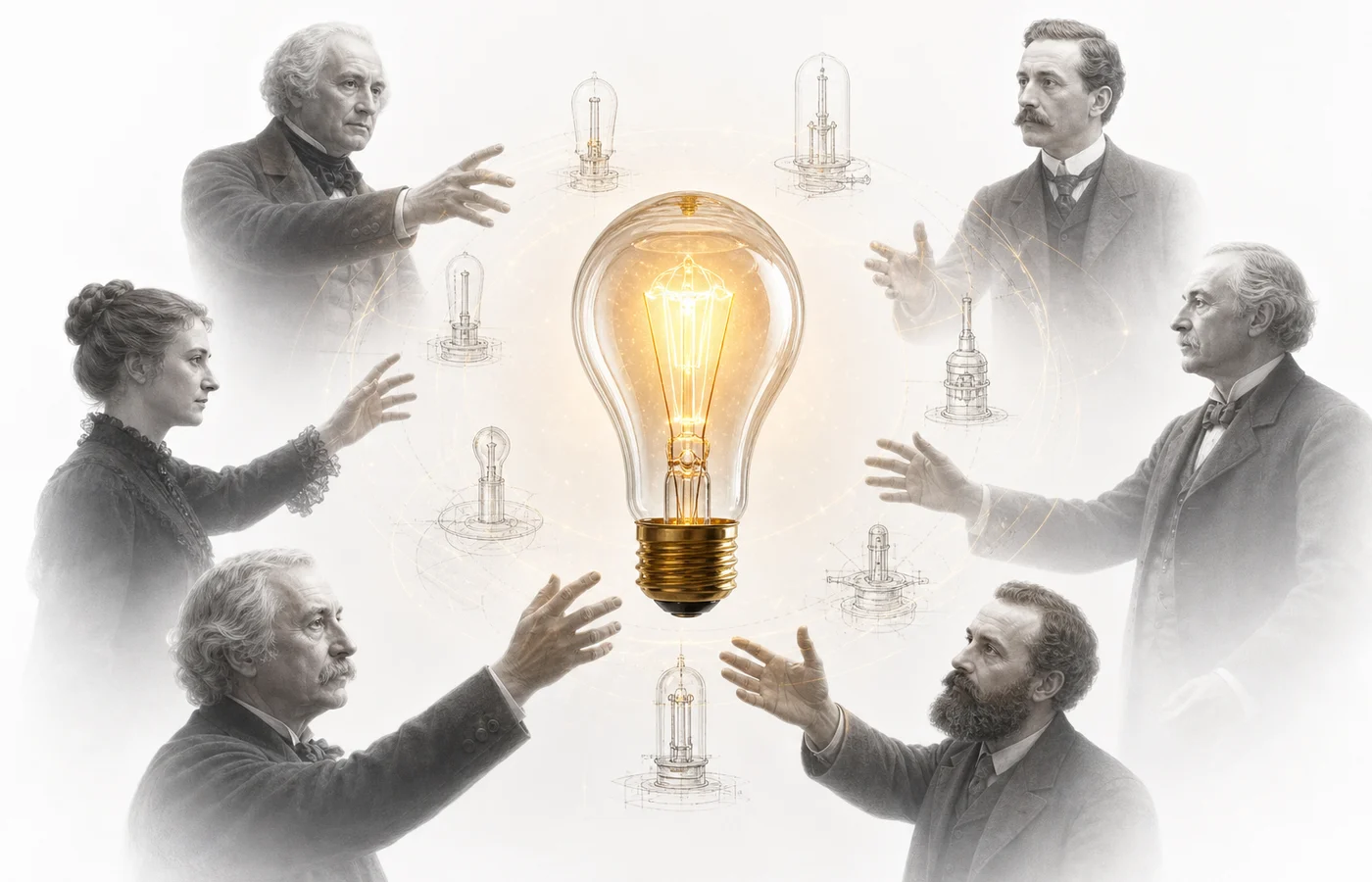
Did Edison Really Invent the Light Bulb? hero image

The mystery

The true story involves Joseph Swan, a legal fight, and a company called Ediswan.

The short answer

No, not simply. Joseph Swan demonstrated a practical incandescent bulb before Edison's patent. Edison made electric lighting commercially viable by building the full system around it.

The twist

Edison and Swan merged British operations into the Edison and Swan United Electric Light Company, nicknamed Ediswan.

Common mistake

People argue Edison deserves sole credit because his bulb was practical.

The real history of the light bulb

The incandescent bulb was not a single invention but a long chain of improvements.

Twenty years before Edison

Humphry Davy demonstrated incandescence in 1802, and many later inventors tried to make it practical.

Joseph Swan worked on the problem for decades and publicly demonstrated a carbon-filament bulb in 1879.

Joseph Swan demonstrated a working light bulb to a standing ovation in Newcastle in 1879.

What Edison actually did

Edison understood that a bulb alone was not enough. Customers needed generators, cables, switches, meters, sockets, and a business model.

Pearl Street Station in 1882 made electric light a commercial infrastructure.

Edison did not invent the light bulb. He invented the industry that made the light bulb worth inventing.

The legal battle and Ediswan

Swan's British patent claims were strong enough that Edison could not simply ignore him.

Their companies merged in Britain, preserving both names in the Ediswan brand.

The company Edison created to beat Swan had Swan's name on it.

How invention actually works

The light bulb shows that invention is often simultaneous and systemic.

1

01. Multiple independent invention

When knowledge, demand, and materials align, several people often reach similar solutions.

2

02. The patent race

Credit often follows patent timing and legal power, not the first spark of an idea.

3

03. Commercial success rewrites history

The person who scales a technology often receives credit for inventing it.

Why Edison got the credit

Edison was a brilliant promoter and organizer. Menlo Park was an invention factory, and Edison cultivated journalists as carefully as engineers.

He controlled the story of invention as well as the hardware.

The invention history gets stranger

At least 22 people made earlier bulbs
Historians identify many working or near-working incandescent lamps before Edison.
Edison bought a competitor's patent
He purchased rights from Canadian inventors Woodward and Evans.

But doesn't the best version count?

Myth

People argue Edison deserves sole credit because his bulb was practical.

American electrification experienced Edison's infrastructure first, shaping popular memory.

Reality

Swan's bulb was also practical. Edison's larger achievement was the system around the bulb.

Swan's bulb was also practical. Edison's larger achievement was the system around the bulb.

Multiple invention in our time

The telephone
Alexander Graham Bell and Elisha Gray reached similar telephone ideas at nearly the same moment.

Invention is collaborative, not solitary

The lone genius story hides the networks that actually produce technological change.

Joseph Swan lit his own home with electric light before Edison became the name everyone remembered.

Worth noting

The light bulb and the system

Swan made a bulb. Edison made the network. The network made the modern electrical age. Edison's greatest invention was not the light bulb. It was convincing the world he invented the light bulb.

Quick answers

Common questions

Why are some bulbs called Edison bulbs?

It refers to a nostalgic visible-filament style, not a precise invention claim.

Are bulbs still like Edison's?

Incandescent bulbs use the same principle, but LEDs work very differently.