Myth vs Reality
Security comes from precision and the number of positions, not jaggedness
A lock with more pins and more precise cut depths is harder to pick. The visual complexity of the key is secondary.
Everyday Objects
Every bump and notch on a key is a specific height, and those heights are the combination to your lock.
Quick answer
The jagged profile of a key corresponds to a row of pins inside the lock cylinder. Each pin is a small spring-loaded rod that sits at a different height depending on the key inserted. When the wrong key is inserted, the pins end up at the wrong heights and block the cylinder from rotating. When the correct key is inserted, every pin is pushed to exactly the right height, called the shear line, and the cylinder turns freely. The specific pattern of cuts on a key is essentially a mechanical password. The more possible cut depths a lock uses, the harder it is to guess or duplicate.
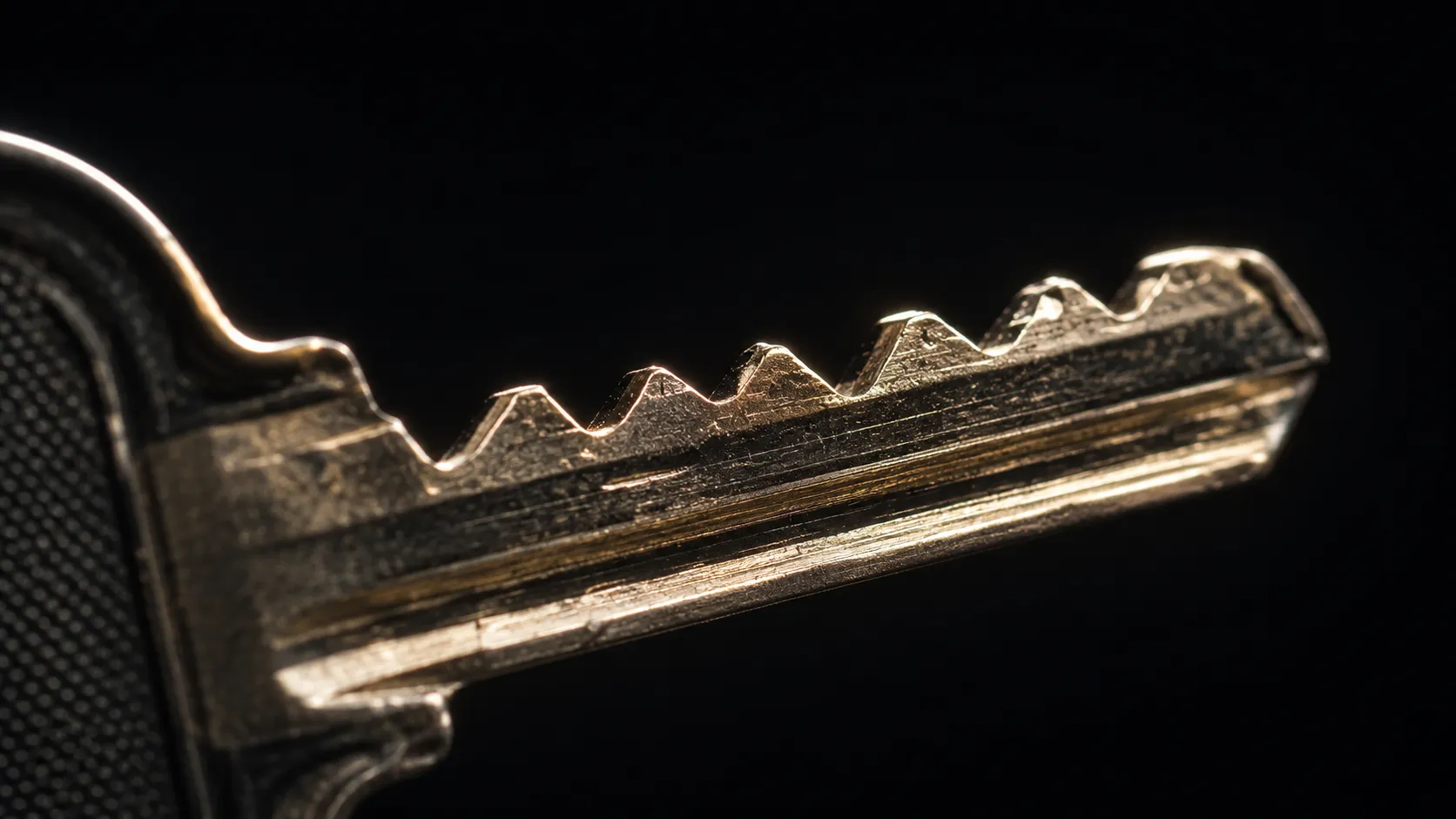
Each notch lifts a pin
Every cut on a key corresponds to one pin stack inside the lock cylinder.
The shear line is the key
All pins must align at the same height simultaneously. Only the right key achieves this.
More depths means more combinations
A lock with five pins and five possible cut depths has up to 3,125 possible key combinations.
Myth: the shape is just for grip
Every cut is functional. Even the bow, the part you hold, is often shaped to indicate which way to insert the key.
Everyday Objects
A bump key, a specially cut key struck with a hard tap, can momentarily bounce all pins to the shear line at once, opening some locks. High-security locks use additional mechanisms to prevent this.
Myth vs Reality
A lock with more pins and more precise cut depths is harder to pick. The visual complexity of the key is secondary.
Continue learning
That famous interview question, answered properly
Another design choice shaped by practical engineering.

Everyday Objects
Another design choice shaped by practical engineering.

That deep dent in the bottom
A nearby object mystery to keep exploring.