History & Design

Why Do Pencils Have Erasers?

A design marriage that was considered obvious once, controversial before that, and is now entirely taken for granted. Pencils and erasers were separate tools for over 200 years before someone thought to attach them. When they finally were combined, the result was so convenient that the idea immediately spread worldwide. It also generated a surprisingly heated patent dispute and was initially banned in France for encouraging sloppiness. The answer involves a 1858 patent, a French educational philosophy, and what rubber has to do with the word eraser.

Quick answer

Pencils have erasers because Hymen Lipman patented the combination in 1858, solving the practical inconvenience of carrying two separate tools. The eraser itself works because rubber is slightly tacky and abrasive enough to physically lift graphite particles from paper's surface texture without dissolving them. Lipman's patent was eventually invalidated by the US Supreme Court in 1875, which ruled that combining two existing items did not constitute a novel invention - making the eraser-pencil combination essentially open to any manufacturer.
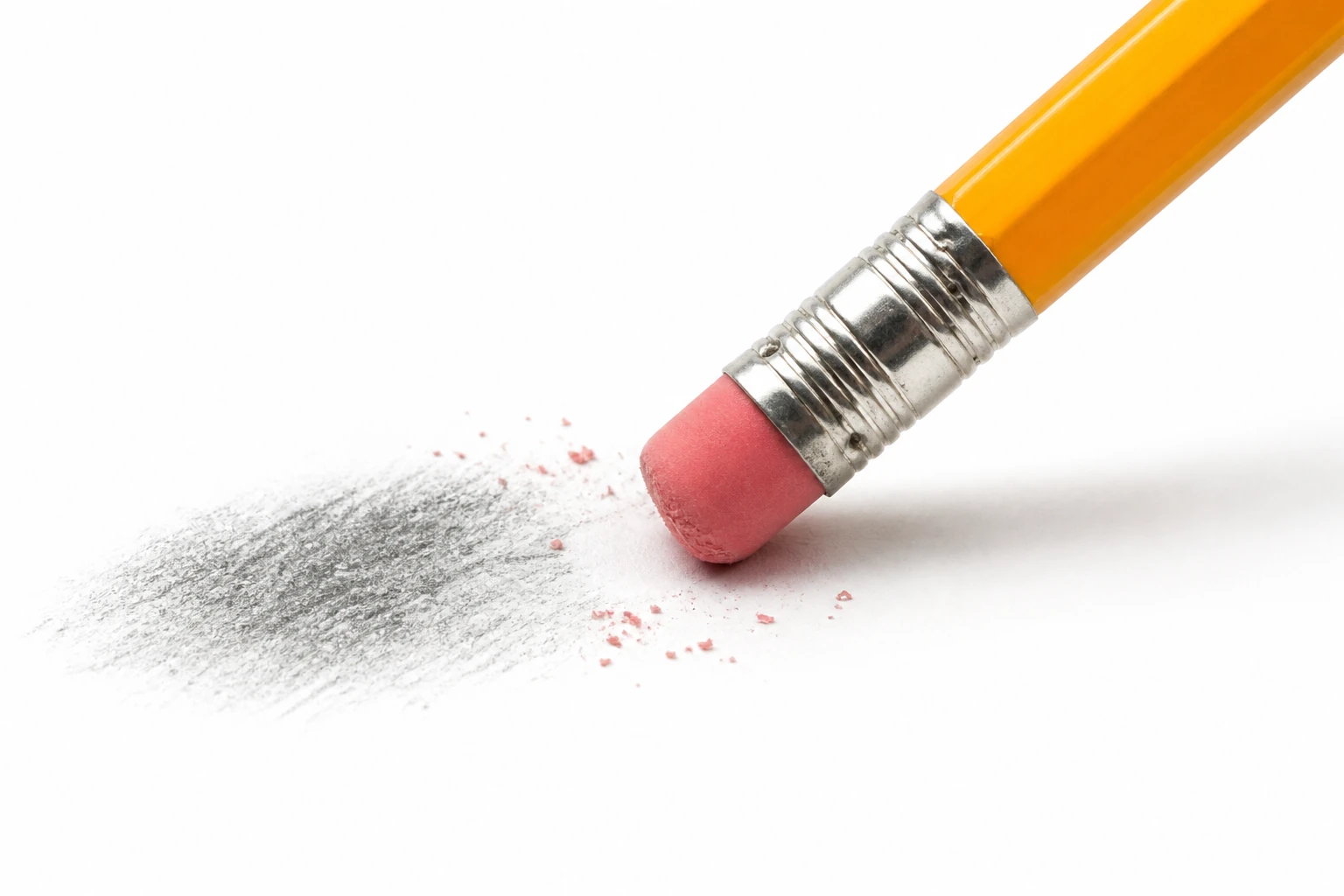
Why Do Pencils Have Erasers? hero image

The mystery

The answer involves a 1858 patent, a French educational philosophy, and what rubber has to do with the word eraser.

The short answer

Pencils have erasers because Hymen Lipman patented the combination in 1858, solving the practical inconvenience of carrying two separate tools. The eraser itself works because rubber is slightly tacky and abrasive enough to physically lift graphite particles from paper's surface texture without dissolving them.

The twist

Lipman's patent was eventually invalidated by the US Supreme Court in 1875, which ruled that combining two existing items did not constitute a novel invention - making the eraser-pencil combination essentially open to any manufacturer.

Common mistake

The combined pencil eraser seems so obviously useful that it must have been immediately embraced everywhere.

Convenience that took two centuries to arrive

The pencil eraser's history involves a surprising delay, a clever patent, and a French objection on pedagogical grounds.

Pencils and rubber erasers existed separately for a long time

Pencils developed from the 16th century onwards, while rubber's erasing properties were first noted by the English scientist Joseph Priestley in 1770, who called it 'rubber' after its ability to rub out pencil marks.

For nearly a century, the two tools coexisted without anyone permanently attaching them.

For 90 years, everyone who used a pencil also carried a separate eraser. The solution was obvious only in retrospect.

Lipman's patent combined convenience with controversy

Hyman Lipman patented the combined pencil-eraser in 1858, and it quickly became popular enough that Eagle Pencil Company purchased the rights for a substantial sum.

However, the patent was challenged and ultimately declared invalid, on the grounds that combining two existing inventions does not constitute a new invention, opening the market to all manufacturers.

The pencil eraser generated a Supreme Court patent case. Few stationery innovations have had quite that level of legal consequence.

France banned the combined pencil on educational principles

French educators argued that attaching an eraser to a pencil made mistakes too easy to correct, undermining students' development of careful, deliberate writing habits.

The ban persisted for some time, reflecting a genuine philosophical difference in how errors and correction should be handled in education.

The eraser pencil was banned in France not because it was useless, but because it was too convenient.

Why rubber removes graphite

A short sequence explains the erasing mechanism.

1

01. Rubber contacts paper surface

The slightly sticky rubber surface makes molecular contact with graphite-bearing paper fibers.

2

02. Friction lifts graphite particles

As rubber is dragged across paper, it physically picks up graphite particles from surface pores.

3

03. Abrasion from rubber removes remaining surface graphite

Tiny rubber particles also abrade away remaining graphite from the paper's texture.

4

04. Rubber debris carries graphite away from the page

The small pink crumbs of used eraser contain the removed graphite.

What those eraser crumbs actually are

Eraser residue is primarily rubber particles combined with the graphite they have lifted from the paper, which is why heavily used erasers turn gray.

The erasing process is entirely mechanical - rubber's slight tackiness and abrasiveness physically move graphite particles, rather than dissolving or chemically reacting with them.

Surprising eraser facts

The first 'erasers' were crumbled bread
Before rubber's erasing properties were discovered, artists and writers used small pieces of soft bread to rub out pencil marks.
Pink is the default eraser color for historical reasons
An American manufacturer included pumice in their erasers for extra abrasion, and dyed them pink to distinguish them. The color stuck as the industry standard.
Art erasers work differently
Kneaded erasers pick up graphite through tackiness without abrasion, making them gentler for detailed artwork.

Was the pencil eraser always considered a good idea?

Myth

The combined pencil eraser seems so obviously useful that it must have been immediately embraced everywhere.

Its current ubiquity makes its acceptance feel inevitable and immediate, erasing the actual historical resistance to it.

Reality

It was controversial in educational contexts, banned in France, and legally contested - the obvious idea took time to become universally accepted.

It was controversial in educational contexts, banned in France, and legally contested - the obvious idea took time to become universally accepted.

Where eraser mechanics matter

Technical drawing
Different eraser types are used in technical drawing to selectively remove marks without damaging adjacent lines.
Whiteboard erasers
Dry-erase markers use ink that does not penetrate surface pores, allowing removal by a similarly non-chemical, physical wiping mechanism.

Why this design history matters

The eraser pencil's history illustrates how even obvious improvements to tools face resistance based on cultural, educational, and legal frameworks.

It is a reminder that convenience and adoption are different things, and that technology's obvious solutions are not always immediately recognized as such.

Worth noting

The most convenient invention that France once banned

The pencil eraser is so useful that it took a patent dispute and a Supreme Court case to establish who, if anyone, could own the idea - and it was banned in France as too helpful. No stationery item has generated quite this much controversy for quite this little apparent reason.

Quick answers

Common questions

Why does the eraser on a pencil wear out faster than the pencil itself?

The eraser is much smaller than the graphite core, and every correction removes both graphite from the paper and a small amount of rubber, so it depletes rapidly relative to the pencil's writing life.

History & Design

Related questions

High-end pencils are typically intended for art and precision work, where a separate high-quality eraser is preferred over the small, imprecise eraser attached to a pencil.

The inventor of the eraser pencil

Hyman Lipman

A Philadelphia stationer who patented the combined pencil and eraser in 1858, sold the rights for a large sum, and watched his patent eventually declared invalid by the Supreme Court.

Where eraser mechanics matter

Technical drawing

Different eraser types are used in technical drawing to selectively remove marks without damaging adjacent lines.

Where eraser mechanics matter

Whiteboard erasers

Dry-erase markers use ink that does not penetrate surface pores, allowing removal by a similarly non-chemical, physical wiping mechanism.

Was the pencil eraser always considered a good idea?

It was controversial in educational contexts, banned in France, and legally contested - the obvious idea took time to become universally accepted.

It was controversial in educational contexts, banned in France, and legally contested - the obvious idea took time to become universally accepted.