You noticed the can tab

Why Do Soda Can Tabs Have Holes?

The hole in a can tab is not just for your finger. It helps the tab act like a lever so a small lift can punch open the lid.

Quick answer

The hole in a soda can tab gives your finger a place to grip and helps the tab work as a tiny lever. When you lift the tab, it pivots around the rivet and pushes the scored part of the lid open.

The straw trick is real, but it is a bonus use. The main purpose of the tab hole is opening the can.
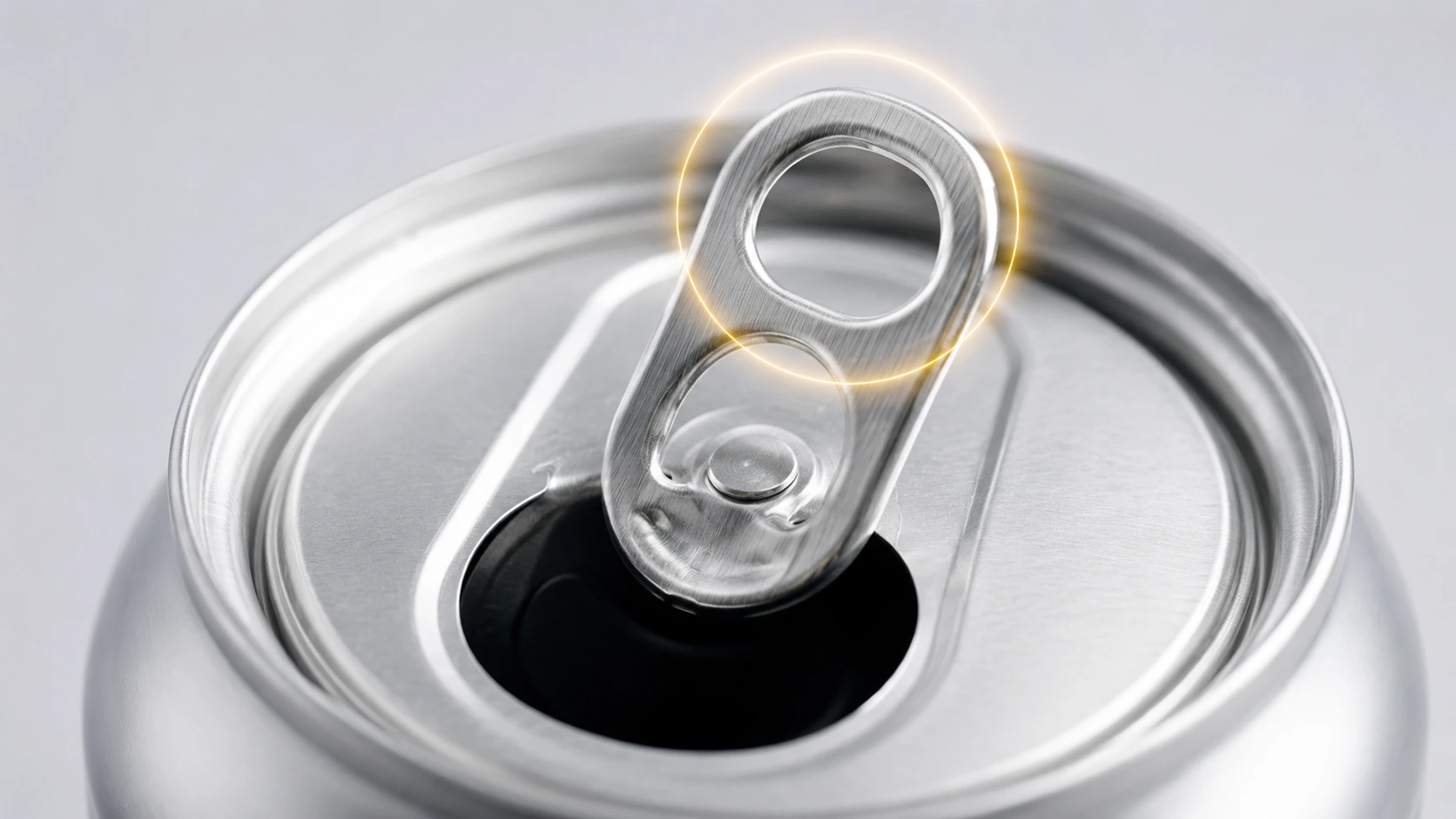
Close-up of a soda can tab showing the finger hole and rivet

Main job

Open the can

Mechanism

Lever + rivet

Bonus use

Straw holder

Not only for

Decoration

The tab is a lever, not just a ring

A soda can tab works because it pivots around the rivet in the middle.

When you lift the back of the tab, the front nose of the tab pushes down into the scored part of the can lid.

The hole gives your finger a place to grip, so you can lift the tab with enough control and force to start that lever action.

What each part of the soda can tab does

The tab looks simple, but each little shape has a job.

Large hole
Lets your finger grip and lift the tab. It also reduces metal without making the tab useless.
Rivet
Holds the tab to the lid and acts as the pivot point.
Front nose
Presses the scored drinking section down into the can.
Scored lid
The pre-weakened part of the lid that opens when the tab pushes on it.
Tab shape
Gives enough strength and leverage while using a small amount of aluminum.

Note

The straw trick works, but it is not the whole story

After opening the can, you can rotate the tab so the hole sits over the drinking opening. Slide a straw through it and it can help keep the straw from floating upward.

Myth vs Reality

Myth

The hole exists only to hold a straw.

That trick works, which is why many people think the hole was designed only for straws.

Reality

It is mainly part of the opening mechanism.

The tab hole helps your finger grip the tab, while the tab pivots on the rivet and pushes the scored lid open.

Why is the tab not just a solid piece of metal?

A solid tab would use more aluminum and would be harder to grip with one finger.

The hole removes extra material while still leaving a strong enough shape around the edges.

That is the neat part: the tab is cheap, light, easy to use, and strong enough to open a pressurized can. Tiny engineering goblin, doing its job quietly.

Why modern tabs stay attached

Older pull tabs detached completely from the can. They opened the drink, but they also created litter and safety problems.

Modern stay-tabs remain attached after opening, so the tab does not become a loose piece of sharp metal.

That is why today’s soda can tab looks like a small engineered lever instead of a removable ring.

Worth noting

The simple answer

The hole is mostly there so your finger can lift the tab and make the lever work. The straw holder trick is useful, but it is a side effect, not the main reason.

Quick answers

Common questions

Why do soda can tabs have holes?

The hole gives your finger a place to grip and lift the tab. This helps the tab work as a lever to open the scored section of the can lid.

Is the can tab hole for holding a straw?

It can be used that way after the can is open, but the main purpose of the tab hole is to help open the can.

How does a soda can tab open the can?

The tab pivots around the rivet. When you lift the back of the tab, the front nose pushes down on the scored part of the lid until it opens.

Why does a soda can lid have a scored opening?

The scored opening is a weakened outline in the metal. It lets the can open cleanly when the tab presses down on it.

Why are soda can tabs not solid?

The hole saves aluminum, gives your finger a better grip, and keeps the tab light while still strong enough to open the can.

Why do modern can tabs stay attached?

Modern stay-tabs reduce litter and safety issues compared with older pull tabs that detached completely.

What is the little metal dot on the can tab?

That metal dot is the rivet. It holds the tab to the can lid and acts as the pivot point for opening.