Visual answer
How Hunger and Satiety Signals Reach Your Brain
The hormonal communication system between the gut, fat tissue, and the hypothalamus.
Stomach Emptying
As the stomach empties and blood glucose begins to fall, ghrelin production increases in the stomach lining. Ghrelin enters the bloodstream and travels to the hypothalamus where it activates appetite-stimulating neurons.
Ghrelin Signal
Ghrelin binds to receptors in the hypothalamus and triggers increased appetite, slowed metabolism, and a preference for calorie-dense foods. It also activates dopamine circuits, making food feel more rewarding and increasing motivation to seek it.
Leptin from Fat Cells
Fat cells continuously secrete leptin in amounts proportional to fat stores. The more fat stored, the more leptin circulates. Leptin signals to the hypothalamus that energy stores are adequate and suppresses appetite-stimulating pathways.
Hypothalamus Integration
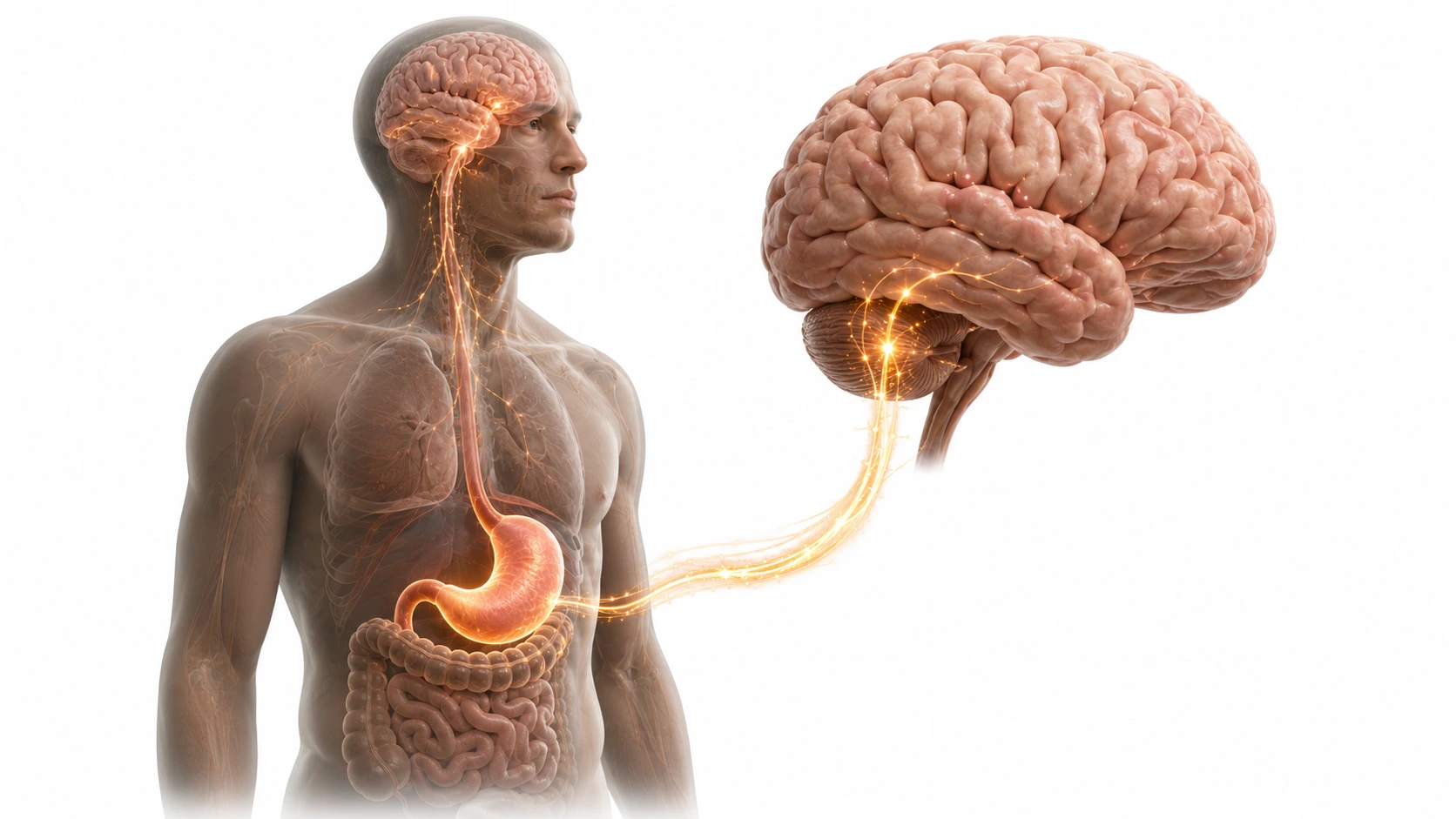
The hypothalamus receives signals from ghrelin, leptin, insulin, gut peptides, and the vagus nerve simultaneously. It integrates all of these signals to calibrate appetite, metabolism, and eating behaviour. It acts as the body's energy balance regulator.
Satiety Signals
As eating begins, the stomach stretches and the gut releases peptides including CCK and PYY that signal fullness to the hypothalamus and brain stem. Insulin rises with blood glucose. Ghrelin falls. The cumulative result is a suppression of appetite.
Homeostatic vs Hedonic Hunger
Homeostatic hunger is driven by genuine energy need. Hedonic hunger is driven by pleasure, reward, and the brain's dopamine system, and can operate independently of energy state. Ultra-processed foods are specifically engineered to trigger hedonic hunger regardless of caloric intake.
Ghrelin, the hunger hormone
Ghrelin: The Hormone That Makes You Want to Eat
Ghrelin is produced primarily in the stomach lining and peaks in the bloodstream roughly twenty minutes before your usual mealtimes, which is why you feel hungry at predictable times even if you haven't eaten. Your hunger is, in part, a trained clockwork. The same time you always eat, your stomach starts sending the signal.
Ghrelin does not just trigger appetite. It also slows the metabolism, making the body burn calories more conservatively, and directs the brain to prefer high-calorie foods over lower-calorie options. When researchers give people ghrelin infusions, they eat significantly more at the next meal and show stronger brain activation in reward regions when shown images of food.
This has profound implications for dieting. Caloric restriction significantly raises ghrelin levels. A person following a low-calorie diet for weeks may have ghrelin levels far higher than before the diet began, making hunger progressively more intense over time rather than fading. The body interprets the calorie deficit as a threat and turns up the hunger signal accordingly.
Leptin, the satiety hormone
Leptin: Why Your Body Fights Against Weight Loss
Leptin is produced by fat cells in amounts roughly proportional to how much fat is stored. Its primary job is to signal to the hypothalamus that energy reserves are sufficient and eating can stop. In theory this sounds like a reliable weight-regulating system. In practice it is considerably more complicated.
The primary problem is leptin resistance. In many people with excess body fat, the hypothalamus stops responding normally to leptin signals, even though leptin levels are high or very high. The fat cells are sending the satiety signal. The brain is no longer listening. The result is persistent hunger despite adequate or excessive energy stores.
When a person loses significant weight, leptin levels fall sharply as fat cells shrink. This falling leptin signals to the hypothalamus that the body is entering a state of dangerous energy deficit. The brain responds by increasing appetite and reducing metabolic rate. This is a major reason why the body actively resists weight loss and why weight regain after dieting is so common: it is a hormonal battle, not a willpower one.
Two kinds of hunger
Why You Can Be Full and Still Want Dessert
There are two fundamentally different hunger systems. Homeostatic hunger is driven by genuine energy need. When blood glucose falls, ghrelin rises, and the hypothalamus signals that the body needs fuel. This is the hunger that is satisfied by eating enough.
Hedonic hunger is driven by the brain's reward system, specifically the dopamine circuits that make rewarding experiences desirable and motivating. Hedonic hunger can occur with a completely full stomach if the right trigger is present. The smell of fresh bread. The sight of a favourite food. The right memory. It operates entirely independently of energy state.
Ultra-processed foods are specifically engineered to maximise hedonic hunger. The combination of fat, sugar, salt, and specific textures activates reward circuits in ways that evolved stimuli like whole foods cannot match. The brain's hedonic system did not evolve for foods that can trigger a dopamine response comparable to a drug. Which is, quite literally, a form of the brain being hijacked.
Emotional hunger
How Emotions and Stress Affect Hunger
Acute stress typically suppresses appetite through cortisol and sympathetic nervous system activation. This is why you may not feel hungry when genuinely frightened or in crisis. The body is in emergency mode and digestion is temporarily suspended.
Chronic stress, however, has the opposite effect. Sustained cortisol elevation promotes fat storage, particularly around the abdomen, and over time drives increases in appetite, particularly for high-calorie comfort foods. The stress response that was designed for short emergencies becomes metabolically destructive when switched on indefinitely.
Emotional eating, reaching for food in response to boredom, sadness, anxiety, or stress rather than genuine hunger, engages the hedonic food reward system as a form of emotional regulation. Food reliably triggers dopamine and endorphin responses. Using food this way is not a character flaw. It is a rational use of an available reward system. Understanding this is the first step to working with it.
Gut-brain connection
The Gut-Brain Conversation That Controls What You Eat
The gut and brain are in constant two-way communication through the vagus nerve, one of the longest nerves in the body, and through the bloodstream via hormones. The gut has its own extensive nervous system, sometimes called the enteric nervous system or the second brain, containing around 100 million neurons.
As food arrives in the stomach and intestines, specialised cells release peptides including cholecystokinin, peptide YY, and GLP-1 that travel via the bloodstream and vagus nerve to the brain, signalling fullness, reducing appetite, and influencing metabolism. The timing of these signals partly explains why eating slowly reduces caloric intake: the satiety signals need fifteen to twenty minutes to reach the brain after food arrives in the gut.
The gut microbiome, the trillions of bacteria living in the intestines, also influences hunger and food preference in ways only beginning to be understood. Certain bacterial populations are associated with increased cravings for specific foods, altered satiety sensitivity, and even mood and anxiety levels. The bacteria in your gut may be quietly influencing what you feel like eating.
Misconception
Common Misconception
What people think
Hunger is simply a matter of willpower
The dominant cultural narrative around eating, weight, and dieting frames overconsumption as a failure of discipline. If you are hungry after eating, you should just resist. If you regain weight after losing it, you lacked commitment. Hunger is treated as a psychological challenge that determined people overcome.
What actually happens
Reality
Hunger is driven by hormones operating largely below conscious control. Ghrelin rises when the body needs energy. Leptin resistance undermines the natural satiety signal. The body actively fights weight loss by increasing ghrelin and decreasing metabolic rate in response to calorie restriction. The difficulty of resisting hunger is a physiological reality, not a character flaw. Treating it as a willpower problem leads to blame and shame rather than effective strategies.
Quick answers
Common questions
What causes the feeling of hunger? +
Hunger is caused primarily by the hormone ghrelin, which rises as the stomach empties and blood glucose falls. Ghrelin travels to the hypothalamus and activates appetite-stimulating neurons. The sensation is reinforced by dopamine circuits that increase motivation to seek food.
What is ghrelin and what does it do? +
Ghrelin is a hormone produced mainly by the stomach lining that acts as the body's primary appetite signal. It rises before meals, falls after eating, slows the metabolism, and directs the brain to prefer calorie-dense foods. It also rises significantly during caloric restriction, making dieting progressively harder over time.
What is leptin and why does it matter? +
Leptin is produced by fat cells in amounts proportional to fat stores and signals to the hypothalamus that energy reserves are adequate. It suppresses appetite. Leptin resistance, in which the hypothalamus stops responding normally to leptin, is a key mechanism in obesity and explains why hunger can persist despite ample energy stores.
What is the difference between hunger and appetite? +
Hunger is the physiological drive to eat, driven by energy need and hormones like ghrelin. Appetite is desire for specific foods, influenced by sensory cues, emotions, habits, and the hedonic reward system. You can have appetite without physiological hunger, and occasionally feel no appetite despite genuine hunger.
Why does your stomach growl when you are hungry? +
Stomach growling, technically called borborygmi, is actually caused by the intestines contracting to clear residual contents between meals, a process called the migrating motor complex. The sound is loudest when the digestive tract is empty because there is nothing to muffle the contractions. It became associated with hunger because the two coincide.
Why do we feel hungry again soon after eating? +
Several factors can cause hunger to return quickly after a meal. Low protein or fibre content means the meal was digested rapidly and satiety signals faded fast. Hedonic hunger driven by reward circuits can activate independently of energy state. Chronic stress or poor sleep disrupts ghrelin and leptin signalling. And high-glycaemic foods cause rapid blood sugar rise followed by a sharp drop that triggers ghrelin.