Hidden stories
Origins
Some words began as people. Some escaped from books. Some were accidents that stuck. Search a phrase you already say, or browse the strange story behind it.
Start here
Stories people look up first
Quick answers. Then the real origin.
HIDDEN ORIGINS
Why Is It Called Murphy's Law?
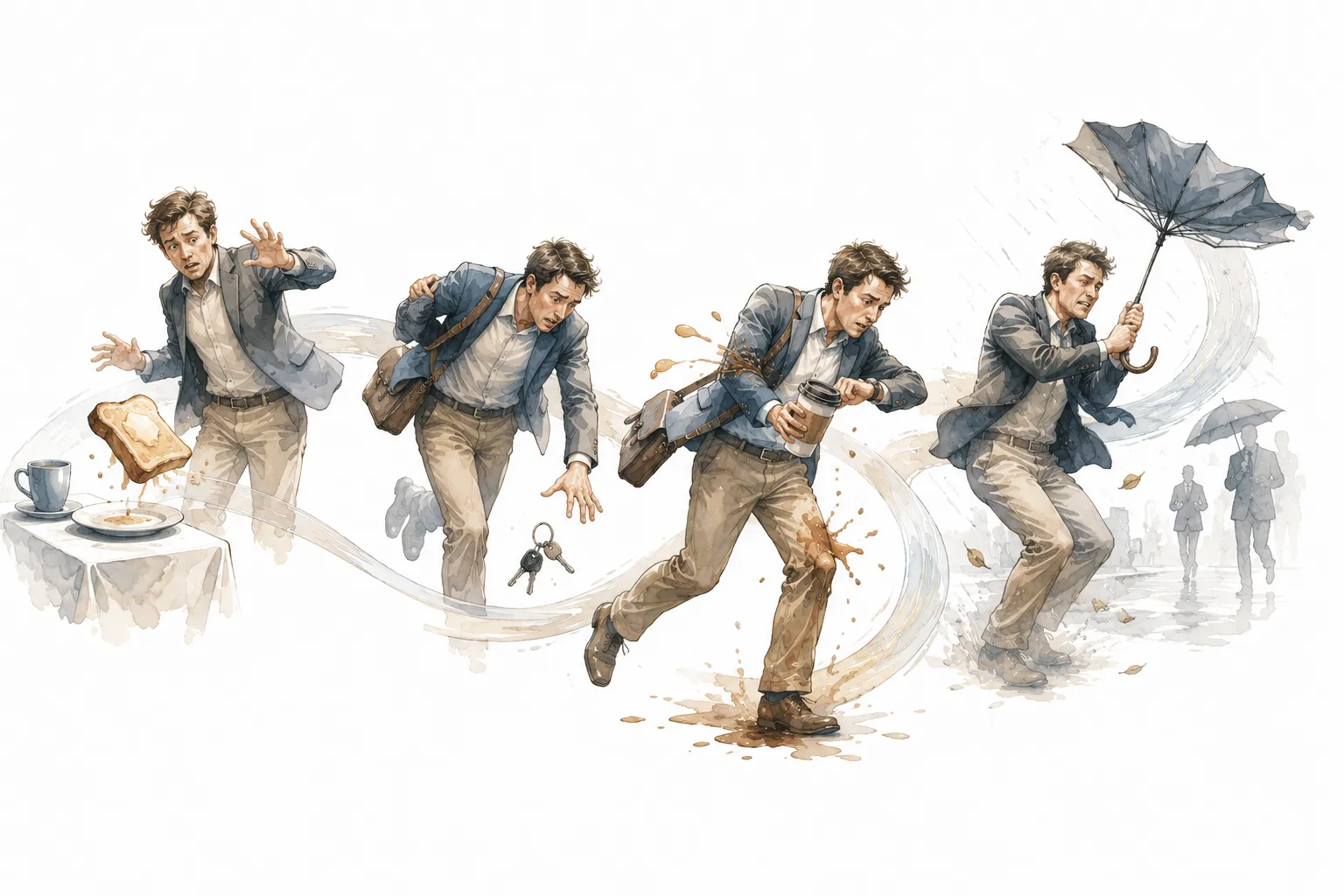
Murphy's Law is named after Edward A. Murphy Jr., a U.S. Air Force engineer working on rocket sled experiments in 1949. When a set of sensors was wired backward by a technician, Murphy snapped that if there was a way to do something wrong, that technician would find it. A colleague turned the complaint into a general rule, and the name stuck.
Read the story →

HIDDEN ORIGINS
Why Is It Called a Catch-22?
Catch-22 comes from Joseph Heller's 1961 novel 'Catch-22.' In the book, a fictional military regulation states that a pilot can be excused from flying dangerous missions only if they are insane, but asking to be excused proves they are sane enough to know danger, which means they must fly anyway. The impossible loop gave its name to any similarly self-defeating situation.
Read the story →

HIDDEN ORIGINS
Why Is It Called the Streisand Effect?
The Streisand Effect is named after singer and actress Barbra Streisand, who in 2003 sued a photographer to remove an aerial photo of her California home from a public coastal archive. The lawsuit drew far more attention to the photo than it ever had before, and commentator Mike Masnick coined the term to describe this backfiring pattern.
Read the story →

HIDDEN ORIGINS
What Does 'Existence Precedes Essence' Mean?
'Existence precedes essence' is a core principle of Jean-Paul Sartre's existentialist philosophy, most directly stated in his 1946 lecture 'Existentialism Is a Humanism.' It means that humans are not born with a predetermined nature or purpose; we simply exist first, and only through our choices and actions do we come to define who we are.
Read the story →
HIDDEN ORIGINS
Who Said 'Power Tends to Corrupt'?
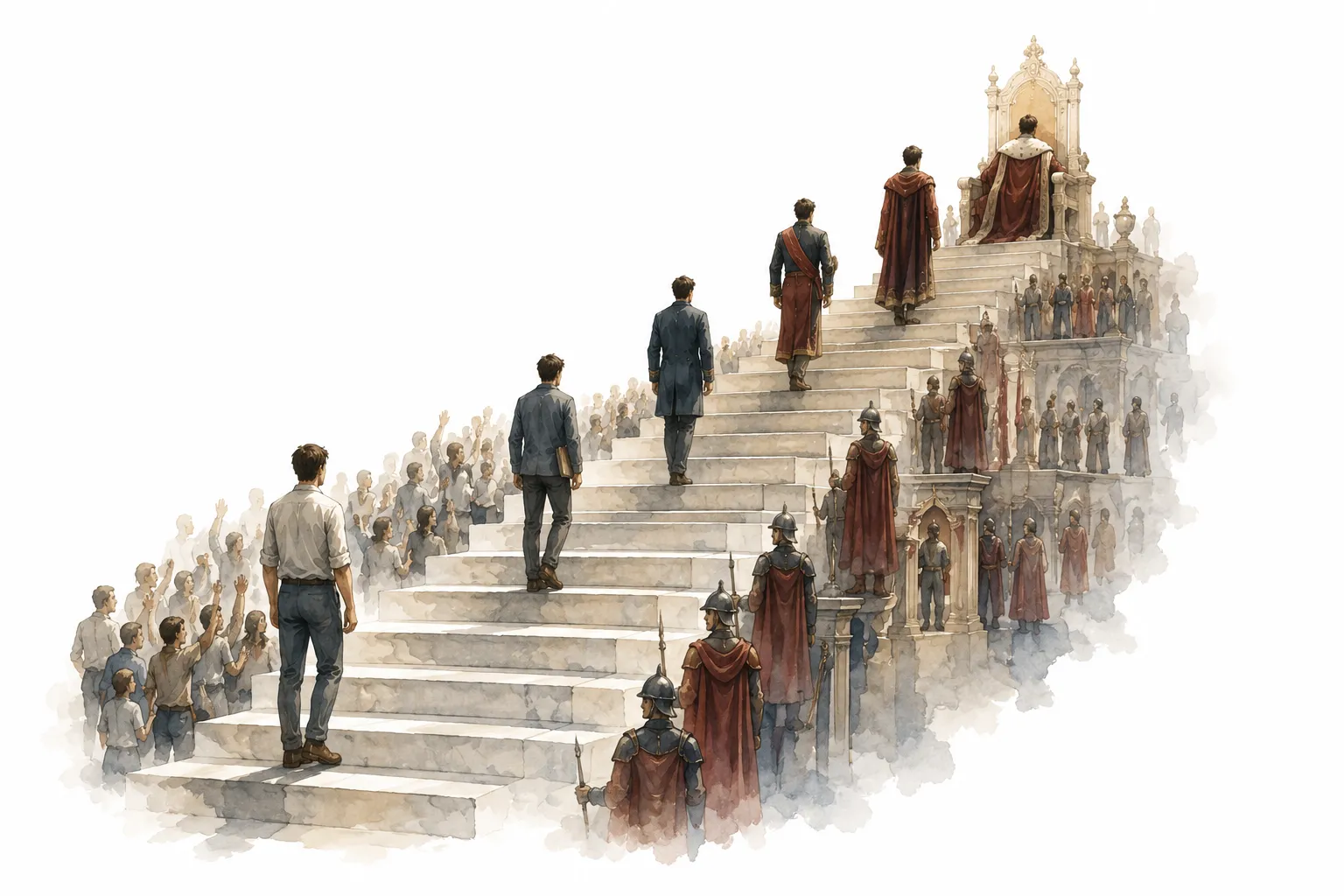
'Power tends to corrupt, and absolute power corrupts absolutely' was written by Lord Acton, a British historian, in an 1887 letter to fellow historian Bishop John Dalberg-Acton's correspondent Mandell Creighton. Acton was specifically arguing that powerful historical figures, including popes and kings, should be judged by the same moral standards as everyone else.
Read the story →
HIDDEN ORIGINS
Why Do We Say 'The Map Is Not the Territory'?
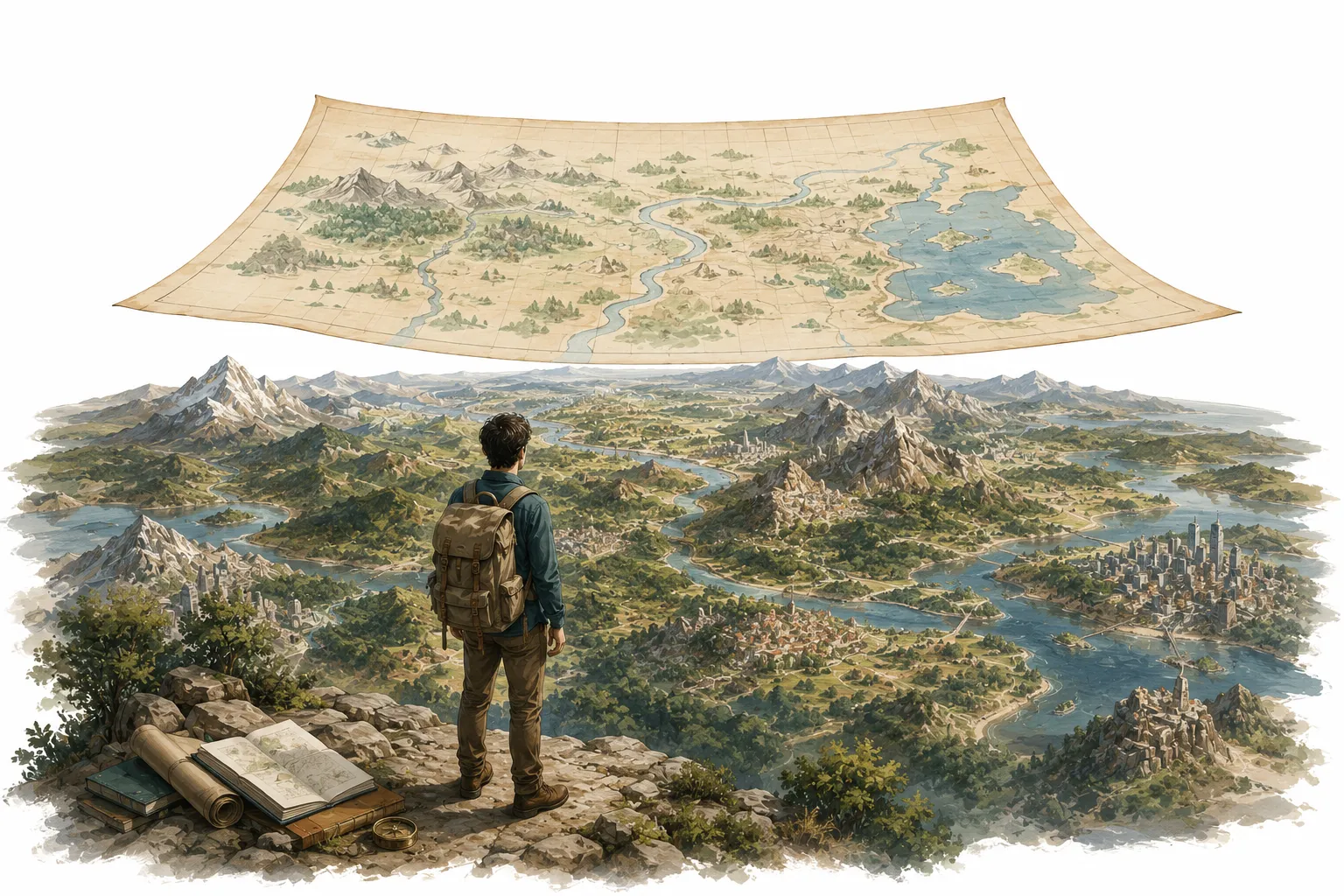
'The map is not the territory' was coined by Alfred Korzybski, a Polish-American scholar, in his 1931 work on general semantics. He used it to argue that our words, models, and mental categories are useful representations of reality, but they are never identical to reality itself, and confusing the two leads to flawed thinking.
Read the story →
Browse by kind
How did this word get here?
Filter by the kind of origin: a person, a phrase, a quote, or whatever new shelves appear as more stories are added.
All origin stories
Explore the full origins shelf
12 stories found
HIDDEN ORIGINS
What Does 'Existence Precedes Essence' Mean?
'Existence precedes essence' is a core principle of Jean-Paul Sartre's existentialist philosophy, most directly stated in his 1946 lecture 'Existentialism Is a Humanism.' It means that humans are not born with a predetermined nature or purpose; we simply exist first, and only through our choices and actions do we come to define who we are.
Read the story →

HIDDEN ORIGINS
What Does 'Extraordinary Claims Require Extraordinary Evidence' Mean?
'Extraordinary claims require extraordinary evidence' means that the more a claim contradicts what we already know to be reliably true, the stronger the supporting proof needs to be. Astronomer Carl Sagan popularized this exact phrasing on his 1980 television series 'Cosmos,' building on an older principle traceable to French mathematician Pierre-Simon Laplace.
Read the story →

HIDDEN ORIGINS
What Does 'Hell Is Other People' Mean?
'Hell is other people' comes from Jean-Paul Sartre's 1944 existentialist play 'No Exit,' in which three characters are trapped together for eternity in the afterlife. The line means that being constantly observed and judged by others traps us into seeing ourselves only as they see us, rather than as we truly are.
Read the story →
HIDDEN ORIGINS
What Does 'Standing on the Shoulders of Giants' Mean?
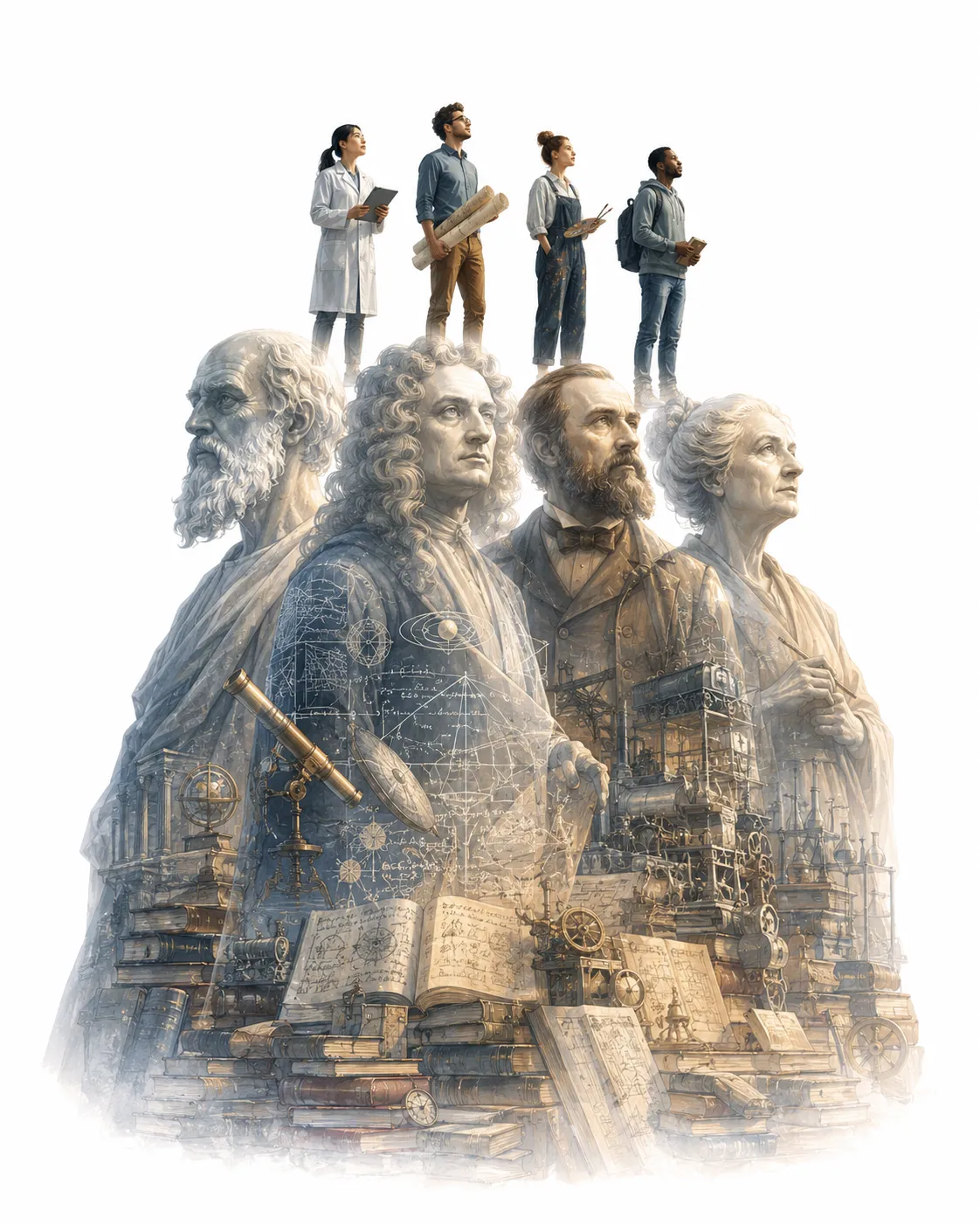
'Standing on the shoulders of giants' means that new discoveries are built on the accumulated work of earlier thinkers. Isaac Newton popularized the phrase in a 1675 letter, but he was echoing a much older image traced to the twelfth-century French scholar Bernard of Chartres, who compared scholars to dwarfs perched on giants' shoulders, seeing farther only because of what came before.
Read the story →
HIDDEN ORIGINS
Where Does 'The Ends Justify the Means' Come From?
'The ends justify the means' is popularly attributed to Niccolò Machiavelli's 1532 book 'The Prince,' but the exact phrase does not appear in his original Italian text. It is a later paraphrase summarizing Machiavelli's argument that rulers may sometimes need to act immorally to maintain power and stability.
Read the story →
HIDDEN ORIGINS
Who Said 'Power Tends to Corrupt'?
'Power tends to corrupt, and absolute power corrupts absolutely' was written by Lord Acton, a British historian, in an 1887 letter to fellow historian Bishop John Dalberg-Acton's correspondent Mandell Creighton. Acton was specifically arguing that powerful historical figures, including popes and kings, should be judged by the same moral standards as everyone else.
Read the story →
HIDDEN ORIGINS
Who Said 'Those Who Cannot Remember the Past Are Condemned to Repeat It'?
'Those who cannot remember the past are condemned to repeat it' was written by George Santayana, a Spanish-American philosopher, in his 1905 book 'The Life of Reason.' Santayana was making a broader philosophical point about memory and progress, not specifically commenting on war or politics, though the quote is now most often used in those contexts.
Read the story →
HIDDEN ORIGINS
Why Do We Say 'The Map Is Not the Territory'?
'The map is not the territory' was coined by Alfred Korzybski, a Polish-American scholar, in his 1931 work on general semantics. He used it to argue that our words, models, and mental categories are useful representations of reality, but they are never identical to reality itself, and confusing the two leads to flawed thinking.
Read the story →
HIDDEN ORIGINS
Why Is It Called a Catch-22?
Catch-22 comes from Joseph Heller's 1961 novel 'Catch-22.' In the book, a fictional military regulation states that a pilot can be excused from flying dangerous missions only if they are insane, but asking to be excused proves they are sane enough to know danger, which means they must fly anyway. The impossible loop gave its name to any similarly self-defeating situation.
Read the story →

HIDDEN ORIGINS
Why Is It Called Hofstadter's Law?
Hofstadter's Law is named after Douglas Hofstadter, the cognitive scientist and author of 'Godel, Escher, Bach.' He proposed the law - 'it always takes longer than you expect, even when you take Hofstadter's Law into account' - as a playful, self-referential joke about planning, fitting his lifelong fascination with loops that fold back on themselves.
Read the story →
HIDDEN ORIGINS
Why Is It Called Murphy's Law?
Murphy's Law is named after Edward A. Murphy Jr., a U.S. Air Force engineer working on rocket sled experiments in 1949. When a set of sensors was wired backward by a technician, Murphy snapped that if there was a way to do something wrong, that technician would find it. A colleague turned the complaint into a general rule, and the name stuck.
Read the story →
HIDDEN ORIGINS
Why Is It Called the Streisand Effect?
The Streisand Effect is named after singer and actress Barbra Streisand, who in 2003 sued a photographer to remove an aerial photo of her California home from a public coastal archive. The lawsuit drew far more attention to the photo than it ever had before, and commentator Mike Masnick coined the term to describe this backfiring pattern.
Read the story →
Connected hubs
After the origin, keep thinking
Origins tells you where a phrase came from. Concepts and Why help you use the idea once you know the story.
FAQ
Origins FAQ
What is TinyThat Origins?
It is a shelf of short stories about where familiar words, phrases, laws, and quotes actually came from — before they became everyday language.
Are these the true origins of every phrase?
Each page starts with the best-supported origin story, then notes what people usually get wrong. Some phrases have messy histories; the pages say so when the trail gets murky.
How is Origins different from Concepts?
Concepts explains how an idea works and when to use it. Origins explains how the wording got here in the first place — the person, book, accident, or moment behind the phrase.
Will new origin stories show up here automatically?
Yes. Every published origin article in the catalog appears on this hub, and new kinds of origin (people, phrases, quotes, and more) show up in the filters as they are added.