01The Hidden Story
Imagine the most famous line ever attributed to one of history's greatest scientists actually belonging, originally, to someone almost nobody has heard of.
That is the strange situation behind this phrase.
Isaac Newton wrote it in a 1675 letter to a rival scientist, framing his own achievements as built on the work of those who came before him. It reads as an act of modesty from a man not always known for modesty.
But Newton was not inventing the image. He was reaching for a metaphor that had already been circulating among European scholars for over five hundred years, attributed to a churchman most people today have never encountered.
Who Said It First?
Bernard of Chartres
Bernard of Chartres was a twelfth-century French philosopher and teacher associated with the cathedral school of Chartres, a major center of medieval learning.
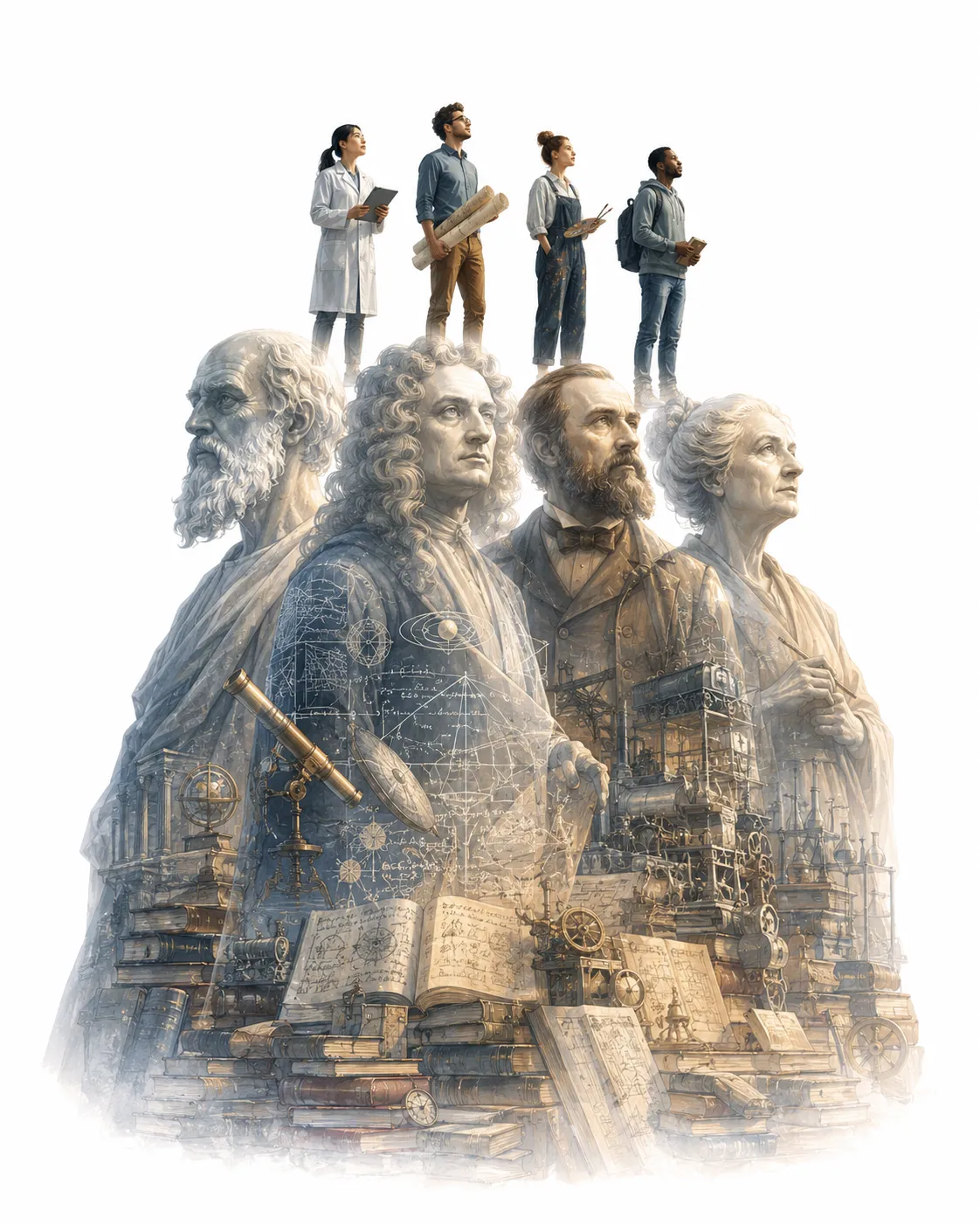
According to the later writer John of Salisbury, Bernard described scholars of his own time as dwarfs standing on the shoulders of giants, the giants being the great thinkers of classical antiquity.
The image suggested that even modest scholars could see further than their towering predecessors, not through greater height, but through the simple advantage of standing on what had already been built.
How a Medieval Image Reached Newton
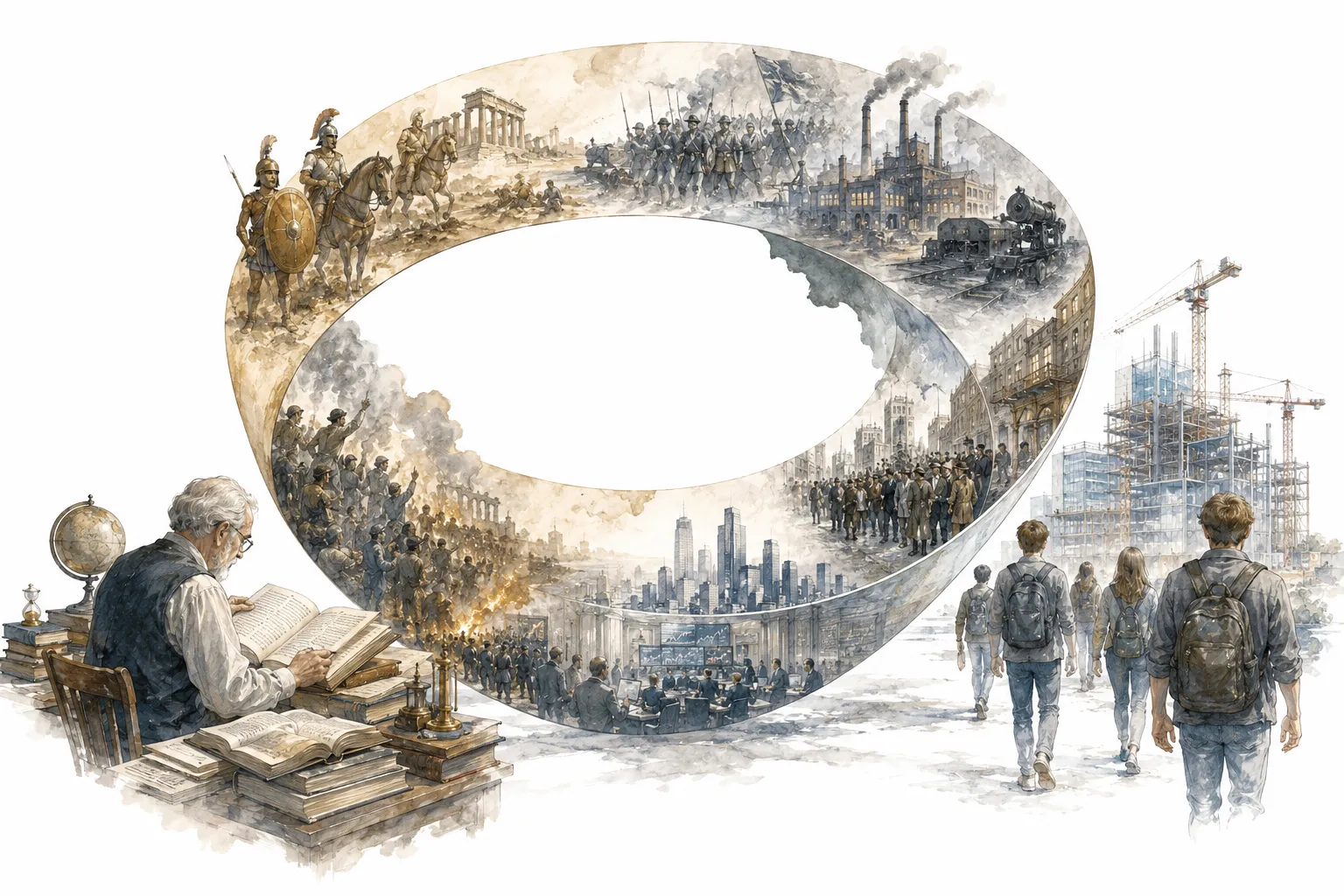
The metaphor traveled through centuries of European scholarship long before Isaac Newton ever picked up a pen.
Various writers and translators reused and adapted the image over the following five hundred years, until it had become a familiar, almost proverbial way of describing intellectual progress.
Newton's 1675 letter to Robert Hooke gave the phrase its most famous and lasting English wording, and his towering scientific reputation ensured the line would be remembered as his, even though he was, fittingly, standing on someone else's shoulders to say it.
- 1100s Bernard of Chartres uses the dwarfs-and-giants image.
- Medieval Europe The metaphor spreads through scholarly writing for centuries.
- 1675 Newton writes the now-famous phrase in a letter to Robert Hooke.
- Modern Use The phrase becomes a standard way to credit intellectual progress.