HIDDEN ORIGINS

Who Said 'Power Tends to Corrupt'?

Generations of politicians, professors, and protest signs have repeated this line. Almost none of them know it began as a private complaint about papal authority.

Illustration of a crown slowly tarnishing, representing the corrupting effect of power
Said By Lord ActonCountry United KingdomYear 1887Category Quotation

QUICK ANSWER

Here is the origin in plain English.

'Power tends to corrupt, and absolute power corrupts absolutely' was written by Lord Acton, a British historian, in an 1887 letter to fellow historian Bishop John Dalberg-Acton's correspondent Mandell Creighton. Acton was specifically arguing that powerful historical figures, including popes and kings, should be judged by the same moral standards as everyone else.

THE STORY

The hidden story behind the word

01

The Hidden Story

Imagine writing a private letter to a colleague, never intending it for publication, and having one sentence from it outlive your entire body of published academic work.

That is exactly what happened to Lord Acton.

Acton was a serious, somewhat obscure historian engaged in a scholarly disagreement about how to judge historical figures fairly, particularly popes and monarchs who had committed serious wrongdoing while in office.

His argument was that high office should never excuse bad behavior, and that the more power someone holds, the more closely their actions deserve scrutiny. Tucked inside that argument was a sentence that has since outgrown the letter, the debate, and Acton himself.

02

Who Was Lord Acton?

Lord Acton

Lord Acton, born John Dalberg-Acton, was a British historian and Liberal politician of the nineteenth century, known for his work on the history of liberty and his strong moral views on political power.

In 1887, Acton wrote a letter to historian Mandell Creighton criticizing him for being too lenient toward popes and kings who had committed atrocities, arguing that historical figures should be judged by ordinary moral standards regardless of their rank.

The famous line about power corrupting was Acton's central justification: the more power a person holds, the less they should be excused for misusing it.

03

How a Private Letter Became a Famous Quote

Acton's letter was not written for public consumption, but it survived in historical archives and was eventually published as part of his broader collected correspondence and writings.

Once in print, the line's blunt, quotable phrasing made it irresistible to politicians, journalists, and educators looking for a sharp way to warn against unchecked authority.

By the twentieth century, the quote had detached almost entirely from Acton's specific argument about popes and historians, becoming a general-purpose warning about political and institutional power of any kind.

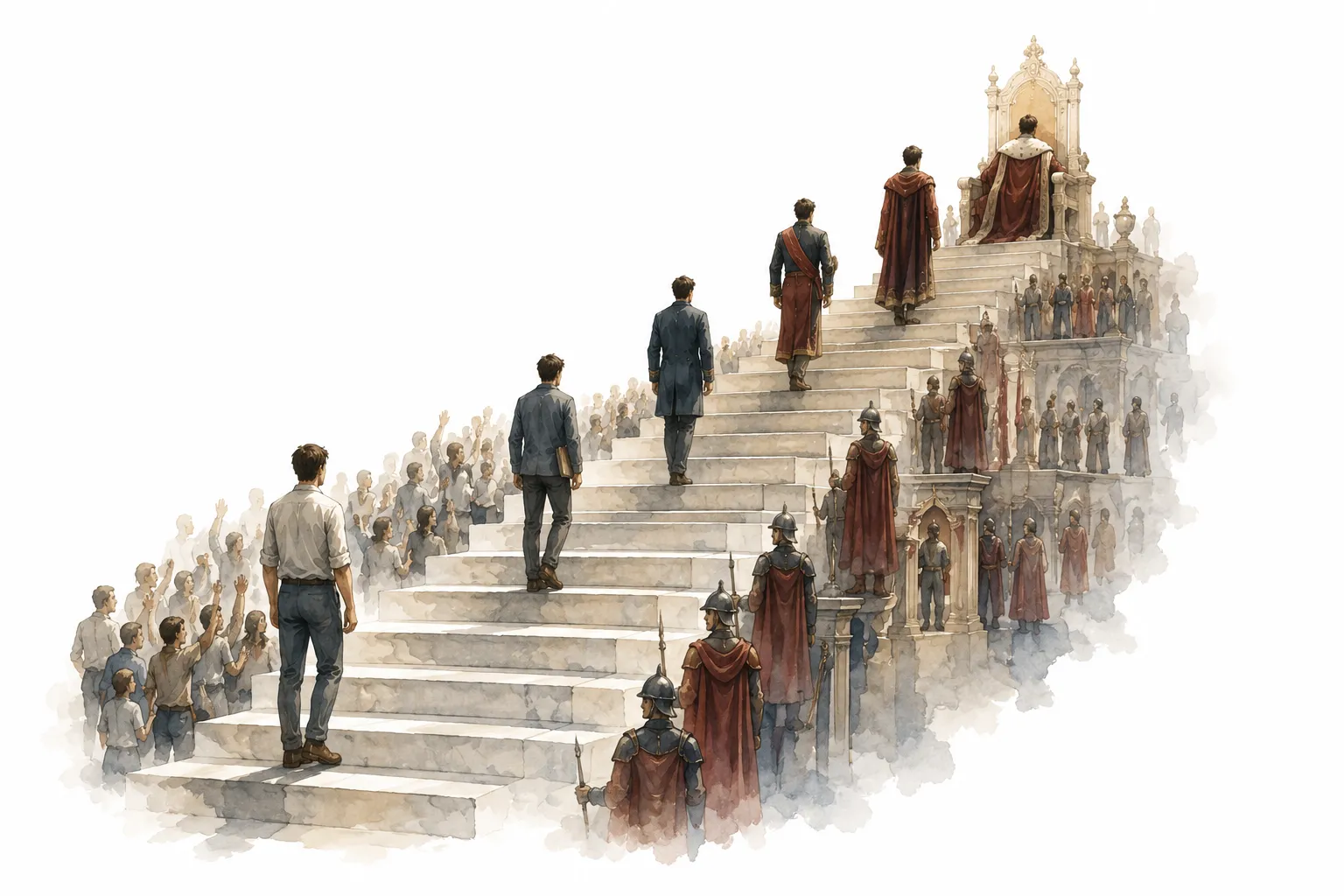
  1. 1887 Lord Acton writes the line in a private letter to Mandell Creighton.
  2. Later 1800s The letter is published as part of Acton's collected writings.
  3. 1900s Politicians and writers begin widely quoting the line.
  4. Modern Use The quote becomes a universal warning about unchecked power.
TIMELINE

Timeline

1834

Lord Acton is born.

1887

Acton writes the famous letter to Mandell Creighton.

1902-1910

Acton's correspondence is published posthumously.

1900s onward

The quote becomes widely used in politics and writing.

MEANING TODAY

What Does It Mean Today?

It means that having power tends to lead people toward unethical behavior, and unchecked power makes this far worse.

Today the phrase is invoked across nearly every political system in discussions of corruption, dictatorship, and institutional accountability.

It is used to argue for checks and balances, term limits, free press, and independent courts, all systems designed specifically to prevent any single person or group from holding unchecked authority.

The quote remains popular precisely because history keeps providing fresh examples that seem to prove Acton right.

IN THE WILD

Examples You'll Recognize

Politics

Term limits exist because power tends to corrupt, and absolute power corrupts absolutely.

Used to justify institutional checks on long-term political authority.

Business

Giving one executive total control over the company is risky. Power tends to corrupt.

Applied to organizational concerns about concentrated authority.

Everyday

Ever since he got that promotion, he's been impossible to work with. Power corrupts, I guess.

Used informally to describe a personal change in behavior after gaining authority.

Did You Know?

  • Lord Acton's full title was John Emerich Edward Dalberg-Acton, 1st Baron Acton.
  • Acton's letter specifically discussed historical popes and monarchs, not modern democratic politics.
  • The quote is sometimes mistakenly attributed to other historical figures, including various American founders.

COMMON MISUNDERSTANDINGS

Common Misunderstandings

The quote was originally about modern politics or dictatorship.

It was originally written about how historians should judge popes and kings of the past.

Lord Acton published the line in a book or speech.

It first appeared in a private letter, only becoming public after his death.

TinyThat Insight

Some of history's most famous lines were never meant for an audience at all. Acton's sentence proves that the right warning, phrased sharply enough, will find its way into public memory whether the author intended it or not.

FAQ

Quick answers to common questions.

Who said power tends to corrupt and absolute power corrupts absolutely?

Lord Acton, a British historian, wrote it in an 1887 letter to historian Mandell Creighton.

What was Lord Acton's original argument?

He argued historical figures, including popes and kings, should be judged by the same moral standards as anyone else, regardless of their power.

Was the quote originally public?

No, it appeared in a private letter and only became widely known after his correspondence was published.

How is the quote used today?

It is widely used to argue for checks and balances and against unchecked political or institutional authority.