Visual answer
What Happens Inside Your Body After a Vaccine
From the moment a vaccine enters your body to the day your immune system stops a real infection, six steps.
Vaccine enters the body
The vaccine is injected or administered. It carries a harmless antigen or instructions to make one, nothing that can cause the actual disease.
Immune system detects something foreign
Immune cells pick up the antigen and identify it as something that does not belong. They flag it and start the response.
Antibodies are produced
B cells manufacture antibodies shaped to lock onto that specific antigen. These circulate in the bloodstream ready to act.
Memory cells are created
Some immune cells become long-lived memory cells. They stay in the body, sometimes for years, ready to respond if the real pathogen appears.
Real pathogen arrives later
Months or years later, the actual germ enters the body. The immune system already has it on file.
Fast response prevents serious illness
Memory cells trigger a rapid response. Antibodies are produced quickly. The infection is stopped or its impact is significantly reduced.
How vaccines work
How Do Vaccines Work?
Think of your immune system as a security force that has never seen the outside world. Give it a briefing before the threat arrives, and it is prepared. That briefing is what a vaccine does.
A vaccine introduces something that looks like a threat but is not one. It might be a weakened or inactivated version of a germ, a single protein from its surface, or, in the case of newer mRNA vaccines, a set of temporary instructions that tell your own cells to produce one harmless piece of a pathogen. In every case, your immune system notices it, treats it as a potential danger, and mounts a response.
The germ itself never arrives. Just the preview. And that preview is enough.
Inside the body
How Do Vaccines Work in the Body?
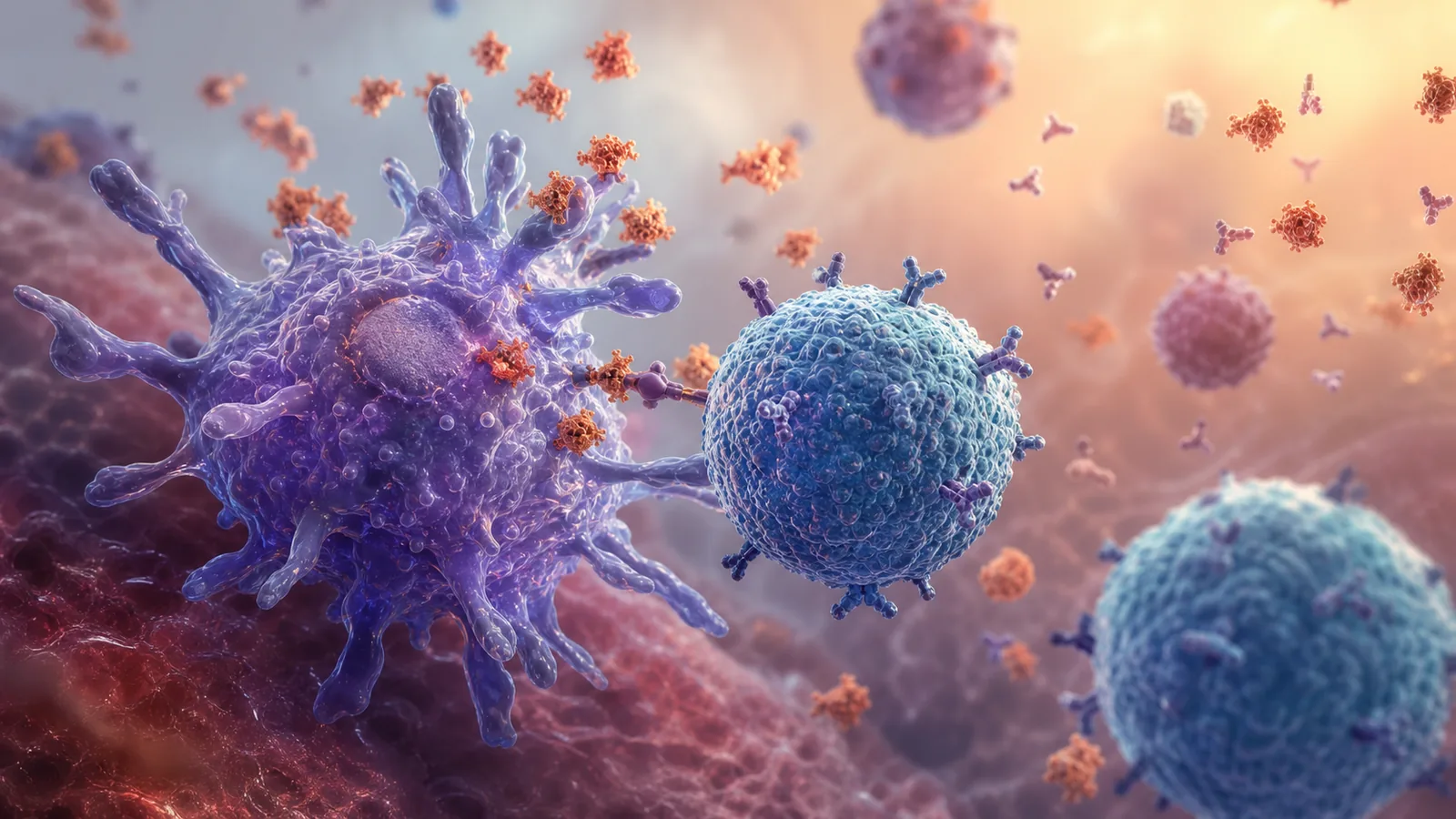
When a vaccine enters your body, immune cells pick up the antigen and examine it. Think of an antigen like a germ's fingerprint. Once the fingerprint is on file, your immune system can recognise that germ instantly.
The next step is antibody production. Special white blood cells called B cells manufacture antibodies, proteins shaped to lock onto that specific antigen. If the real pathogen ever arrives, antibodies can tag it for destruction before it spreads.
The part that makes vaccines so powerful is memory. Some immune cells become long-lived memory cells that hang around for years, sometimes for life. The next time that antigen appears, memory cells trigger a response so fast that the infection often cannot take hold at all.
Protection from disease
How Do Vaccines Protect Us From Disease?
Protection works on a spectrum. At its best, a vaccinated immune system catches a pathogen so quickly that you never develop symptoms at all. More often, you might get a milder version of an illness rather than a severe one. In both cases, vaccines do exactly what they are supposed to.
Vaccines also often reduce how much pathogen you shed when infected, which can slow spread to others. When enough people in a community are vaccinated, the germ struggles to find new hosts, a phenomenon known as herd immunity. This matters especially for people who cannot be vaccinated, including very young infants and those with certain health conditions.
Viruses and pathogens
How Do Vaccines Work Against Viruses and Other Pathogens?
A pathogen is simply anything that can cause disease, viruses, bacteria, fungi, parasites. Vaccines exist for quite a few of them.
Viruses are particularly suited to vaccines because they tend to be stable enough that your immune system can learn their shape, but genuinely dangerous if you meet one unprepared. Flu, COVID, polio, and measles vaccines all work on the same principle: teach your immune system what the virus looks like before it arrives uninvited.
For some bacteria, like those causing tetanus or whooping cough, vaccines train the immune system to neutralise the toxins those bacteria produce, not just the bacteria themselves. Different pathogens need different approaches, which is why vaccine science is such an active field.
Reducing infection impact
How Do Vaccines Reduce the Impact of Infections?
Vaccines do not always form a perfect barrier. Some vaccinated people still get infected, especially with pathogens that mutate quickly, like influenza. But even when infection happens, the story changes significantly.
A vaccinated immune system is not starting from scratch. It has memory cells and existing antibodies that kick in fast. The result is usually a milder illness, a lower risk of hospitalisation, fewer complications, and a lower risk of long-term effects. For older adults, people with chronic conditions, and very young children, that difference can be life-saving.
Vaccines vs antivirals
How Are Vaccines Different From Antiviral Medicines?
These two are often confused, but they work in completely different ways.
Vaccines are given before infection. Their job is to train your immune system so it is ready before the germ ever arrives. Once the training is done, your immune system carries that knowledge forward on its own.
Antiviral medicines are usually given after infection. They do not train the immune system. Instead, they interfere directly with how a virus replicates, blocking the machinery the virus uses to copy itself, or disrupting its ability to enter cells.
The analogy is roughly this: vaccines are training camp. Antivirals are the emergency response.
How it began
The Country Doctor Who Started It All
In 1796, an English doctor named Edward Jenner noticed something curious about milkmaids: they seemed to get a mild illness called cowpox but almost never came down with the much deadlier smallpox. He had a hunch about why.
Jenner took material from a cowpox sore and deliberately introduced it into a young boy. A few weeks later, he exposed the boy to smallpox. The boy did not get sick.
It was a rough experiment by modern standards. But the logic was sound, and it worked. Jenner called it vaccination, from the Latin word for cow. The principle he discovered in a Gloucestershire dairy is the same one that now protects billions of people worldwide.
Misconception
Common Misconception
What people think
Vaccines give you the disease they protect against.
Vaccines give you the disease they protect against.
What actually happens
Reality
Vaccines use weakened, inactivated, or partial versions of a pathogen, or just the genetic instructions to make one harmless protein. They cannot give you the disease they are designed to prevent.
Quick answers
Common questions
Do vaccines contain the actual disease? +
No, not in a form that can make you sick. Some vaccines use weakened or inactivated versions of a pathogen. Others use just a small fragment of its surface. Newer mRNA vaccines contain temporary instructions, not any part of the pathogen at all.
Can vaccines stop infection completely? +
Sometimes, but not always. What vaccines reliably do is reduce the chances of serious illness and complications. Even when a vaccinated person does get infected, the immune system responds faster and usually limits the damage significantly.
Why do some vaccines need boosters? +
Immune memory can fade over time. A booster gives the immune system a reminder. Some pathogens, like influenza, also mutate quickly, so updated vaccines are needed to match the current strain.
How do vaccines work against viruses? +
Vaccines introduce a harmless antigen from the virus, a protein from its surface, a weakened copy, or instructions to make one. The immune system learns to recognise it. When the live virus appears, the response is fast and targeted.
How are vaccines different from antiviral medicines? +
Vaccines are given before infection to train the immune system. Antivirals are given after infection to interfere directly with how a virus copies itself. Different tools, different timing, different mechanisms.
What happens inside the body after vaccination? +
The immune system detects the antigen, produces antibodies, and creates memory cells. This process takes a few days to a couple of weeks. After that, the immune system is primed and ready, sometimes for years.