The Verdict
Verdict
No, palm lines cannot predict how many children you'll have
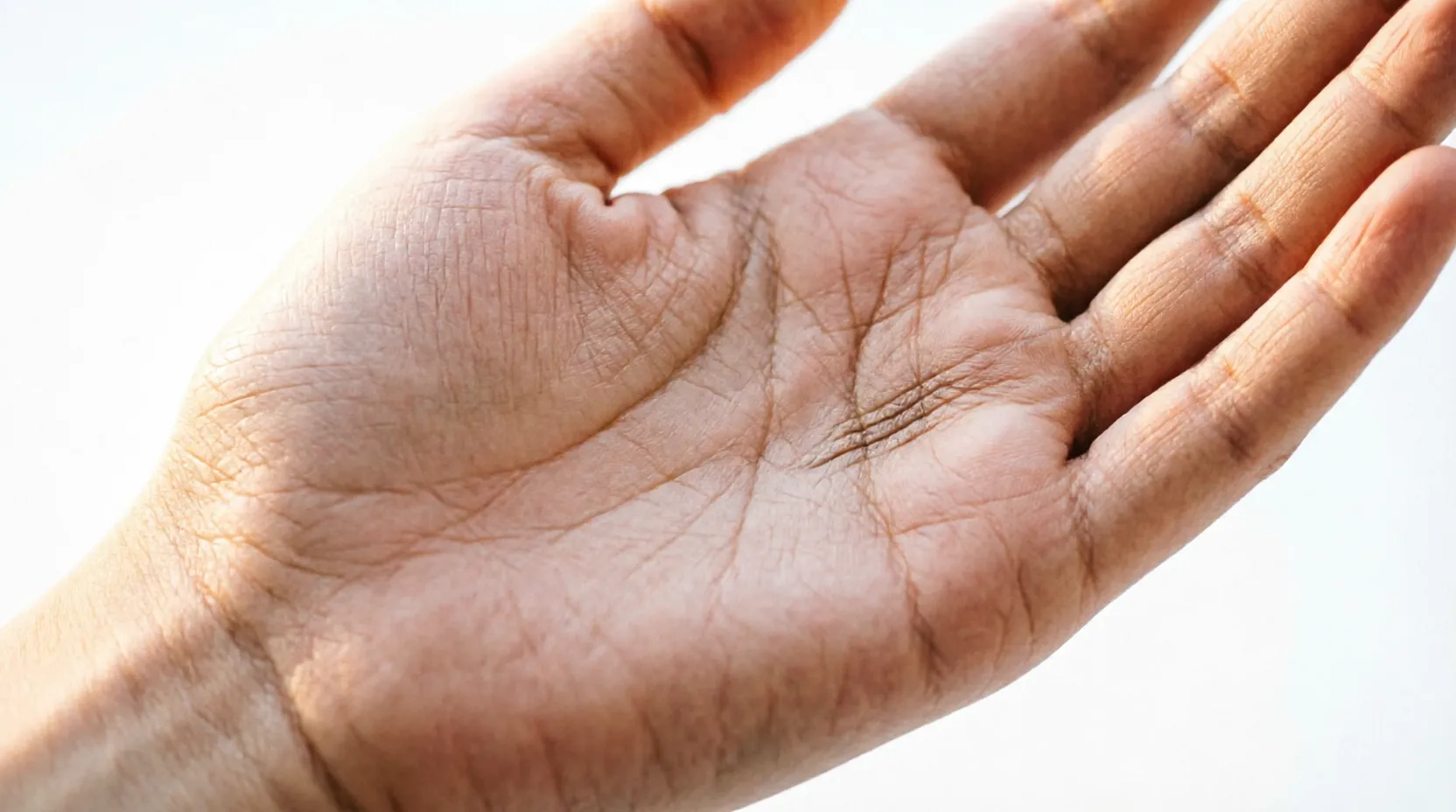
The 'children lines' (tiny vertical lines at the base of the pinky on what palmists call the Mercury mount) are fine skin creases with no anatomical connection to the reproductive system. They're influenced by local skin thickness, habitual pressure, hydration, and genetics. A controlled study where palmists counted 'children lines' and compared against actual family sizes would show no correlation.
Useful analogy
It's like counting the scratches on someone's car hood to predict how many times they'll parallel park in the future. The scratches record past events, and barely even that reliably.
The catch
The claim is nearly impossible to test properly because palmists disagree on which lines count, how deep they need to be, and whether they represent potential or actual children. An unfalsifiable system is not a predictive one.
The Claim
What Palmists Actually Claim
Different palmistry traditions make different claims. Western palmistry typically says the vertical lines below the pinky (on the Mercury mount) count your children, each line represents one child, with deeper lines indicating boys and finer lines indicating girls in some traditions. The marriage lines (horizontal lines just above the heart line on the side of the palm) are also used in some systems.
Indian (Jyotish) palmistry uses a different set of lines entirely and incorporates birth chart analysis. Chinese palmistry may use both the Mercury mount and the thumb's second joint. The sheer inconsistency across traditions is itself revealing: if children lines carried genuine biological information, you'd expect global convergence on the same physical feature, not three different systems using three different spots.
Even within Western palmistry, different practitioners reading the same hand will disagree on the count. An informal test conducted by skeptic researcher James Randi demonstrated that the same hand, read by ten different palmists, produced child counts ranging from zero to six.
The Myth
Why This Myth Feels Convincing
What people think
"My palm reader said two children, and I have two children"
This is the most common personal testimony. Many people report that their child count matched what a palmist told them, sometimes before they had children. This feels like strong evidence.
What actually happens
Confirmation bias at work on a small canvas
Most people have between one and four children, and most people's Mercury mounts show between one and four countable lines, depending on how you count them. The number space is small, overlap is inevitable, and we remember matches far better than mismatches. A palmist who told a childless person 'you'll have three' and was wrong is forgotten; the one who said 'two' and was right becomes a story. This is confirmation bias operating in one of its most favorable environments.
Evidence
Testing the Claim
Different palmists reading the same hand produce inconsistent child counts, up to sixfold variation in informal tests
StrongMercury mount lines have no anatomical connection to the reproductive system
StrongThe limited number range (0–4 children for most people) creates high false-positive rates from random guessing
StrongPalm lines do change during and after pregnancy due to skin changes, creating a plausible but false post-hoc narrative
CircumstantialNo controlled study has demonstrated palmist accuracy for child-count prediction above chance
StrongQuick answers
Common questions
Final insight
You Can't Count Your Future Children in Your Hand
The enduring appeal of children lines isn't hard to understand, it taps into one of the most profound uncertainties in human life. Will I have children? How many? The lines on your palm have no answer. But the desire to ask the question is worth sitting with. Fertility science has made extraordinary advances; if the question genuinely worries you, that conversation belongs with a doctor. Your palm just knows how you've used your hand.
Quick answers
Common questions
Why do so many cultures have 'children line' traditions? +
Before modern medicine, fertility and family size were among the most pressing human concerns. Palm reading offered people a sense of control and foreknowledge over something deeply uncertain. The universality of the desire, not the accuracy of the method, explains why the tradition appears across so many cultures.
Can modern medical imaging actually predict fertility potential? +
To a meaningful degree yes. Antral follicle count (counting small follicles in the ovaries via ultrasound) and AMH levels give reasonable estimates of ovarian reserve. These don't predict how many children you'll choose to have, but they indicate biological fertility potential.