Visual answer
Hybrid Viability by Genetic Distance
How closely related two species must be for hybridization to produce viable, fertile offspring.
Same species, different populations
Fully fertile, maximum hybrid vigor possible (e.g., human ethnic groups)
Very close species (<1M years diverged)
Often fertile hybrids, e.g., human × Neanderthal, grizzly × polar bear
Close species (1–5M years)
Usually sterile hybrids with viable development, mule, liger
Distant species (>5M years)
Typically non-viable, chromosomal and developmental incompatibility prevents viable offspring
The Verdict
Verdict
Yes, cross-species reproduction is real, common in evolutionary history, and increasing
Species definition in biology is contentious, the 'biological species concept' defines species as groups that can't interbreed, but exceptions are so numerous that alternative definitions exist. In reality, closely related species frequently hybridize. The key variables are chromosomal compatibility, reproductive timing, physical compatibility, and whether the hybrid can develop to viability. Most hybrids are sterile (preventing gene flow between species), but fertile hybrids do occur, and ancient hybridization has left traces in the genomes of virtually every complex animal, including humans.
Useful analogy
Species are less like locked boxes and more like dialects of the same language. Very similar dialects can understand each other perfectly. As they diverge, communication degrades. At some point they become mutually incomprehensible, but the line is fuzzy, not a wall.
The catch
The sterility of most hybrids (mules, ligers) supports the idea of species as real biological categories. But the existence of fertile hybrids, the Neanderthal admixture in human DNA, and the 'hybrid swarm' phenomenon in some fish populations shows that the species boundary is permeable, and always has been.
Why Most Hybrids Are Sterile
Why Mules Can't Have Babies, The Genetics of Hybrid Sterility
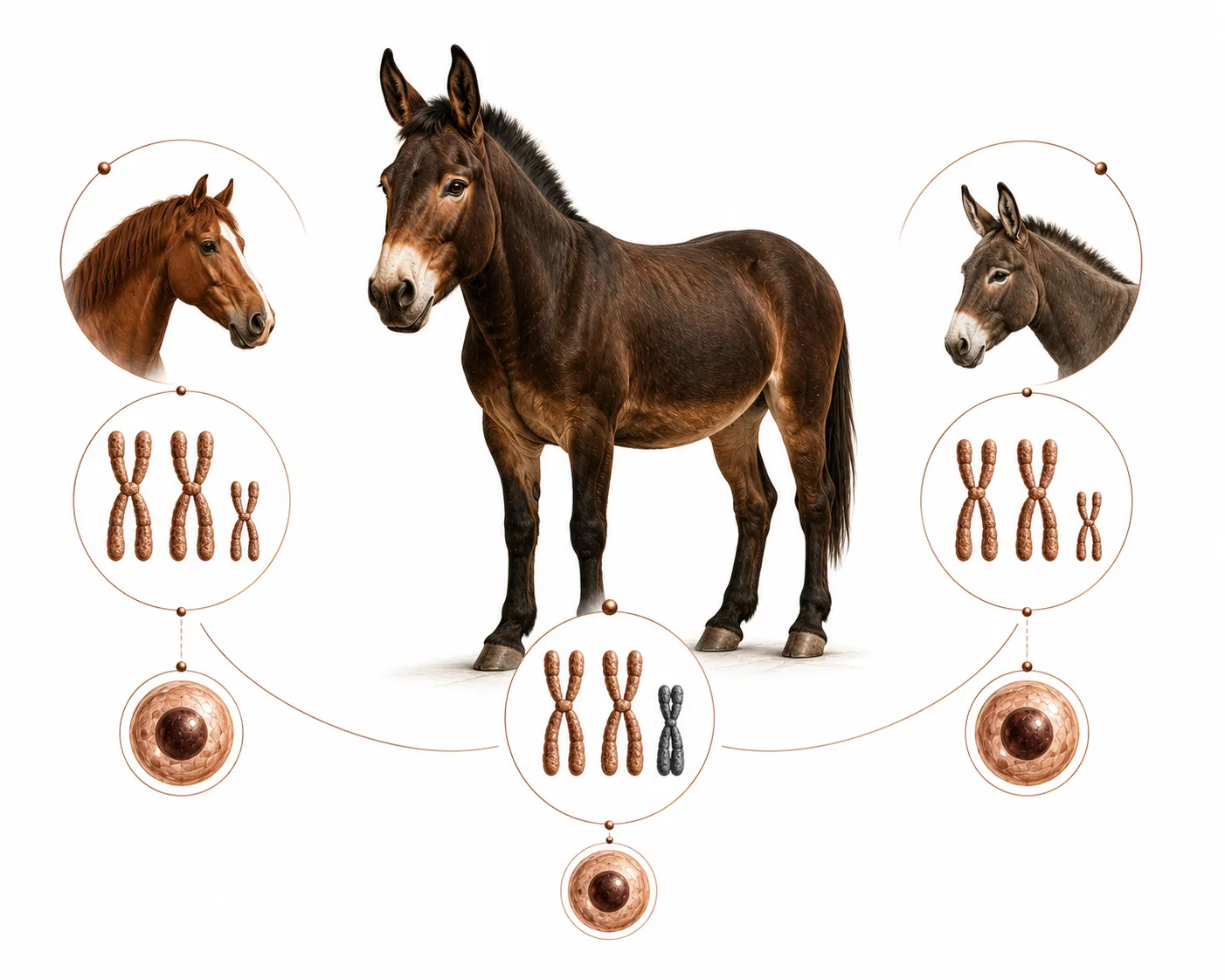
Horses have 64 chromosomes; donkeys have 62. A mule receives 32 from each parent, for a total of 63, an odd number. During meiosis (the cell division that produces sperm and eggs), chromosomes pair up. With 63 chromosomes, there's always one left without a partner. This makes successful meiosis nearly impossible, rendering mules almost universally sterile. (There are rare documented exceptions, all mares.)
The same logic applies to most hybrids: chromosomal number mismatches, or even subtle structural differences in chromosomes, disrupt the precise choreography of meiosis. The hybrid is viable as a body but cannot produce functional gametes.
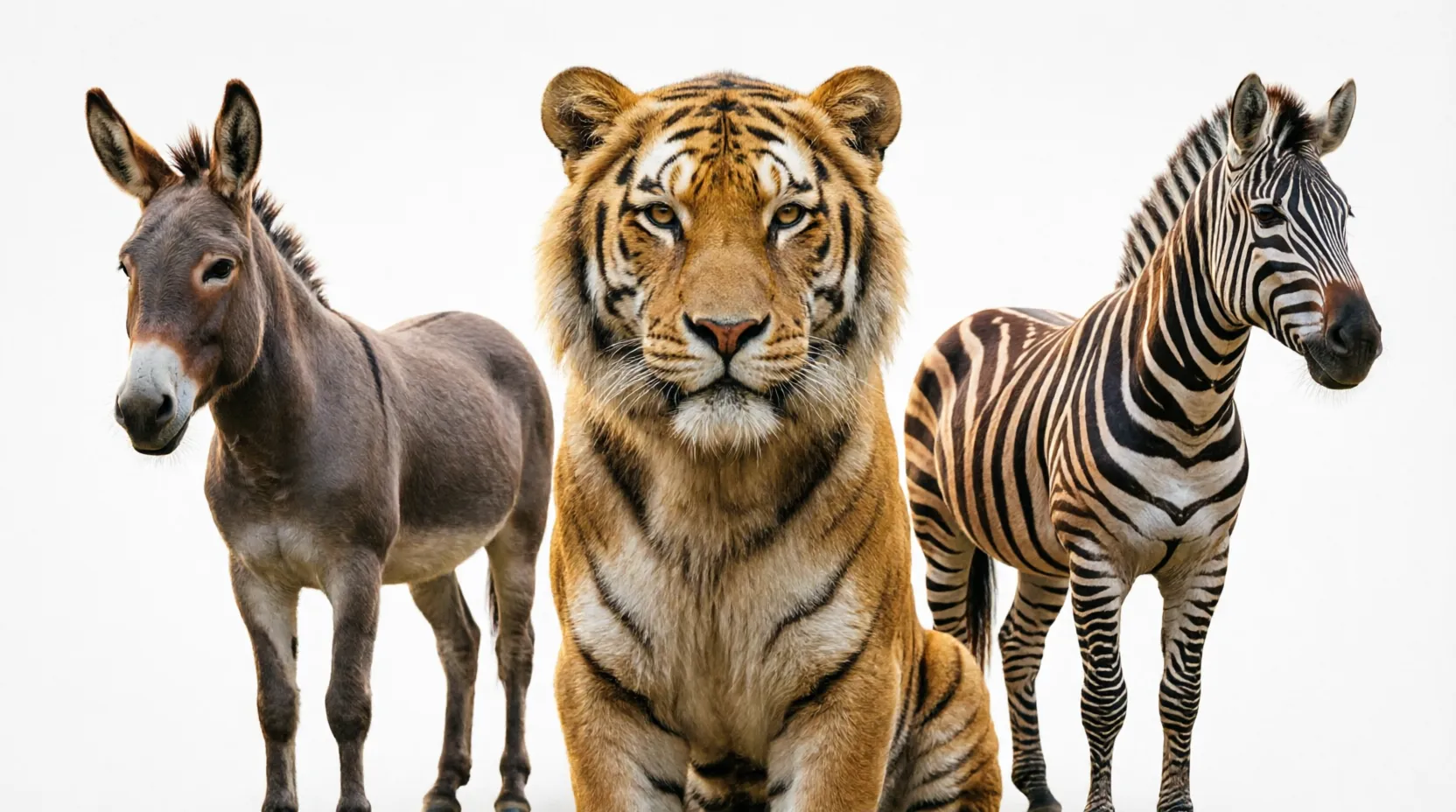
Ligers (lion-tiger crosses) illustrate a different aspect: imprinting. Lions and tigers have co-evolved growth-regulation systems. A liger inherits growth-promoting genes from the lion father and lacks the tiger mother's growth-suppressing counterparts, with no reciprocal balancing from the paternal side. The result is gigantism: ligers grow far beyond either parent species. This isn't a superpower, it comes with joint and organ problems.
Known Hybrids
Famous and Surprising Real-World Hybrids
Mule (horse × donkey)
Sterile, almost universally. Used for work for 3,000+ years.
Liger (lion × tiger)
Sterile males, occasionally fertile females. Extremely large due to imprinting effects.
Pizzly / Grolar bear (grizzly × polar bear)
Fertile, found increasingly in the wild as climate change overlaps ranges.
Narwhal × beluga = 'Narluga'
Discovered via DNA analysis of a skull; fertile status unknown.
Wholphin (false killer whale × bottlenose dolphin)
At least one documented fertile female, now with offspring.
Coywolf (coyote × wolf × dog)
Highly fertile and increasingly dominant in eastern North America, a successful hybrid population.
Human × Neanderthal
Produced fertile offspring, ~2% of non-African human genomes are Neanderthal. Happened repeatedly over tens of thousands of years.
Species Are...
Are Species Real Boundaries or Fuzzy Categories?
What people think
"Species are fixed, natural categories, the boundaries are absolute"
We learn species as discrete labeled boxes. A lion is a lion, a tiger is a tiger, and they are fundamentally separate things.
What actually happens
Species are useful approximations of a continuous evolutionary process
The biological species concept has so many exceptions, ring species, fertile hybrids, historical admixture, that many biologists now prefer alternative concepts (phylogenetic, ecological, morphological). 'Species' is a tremendously useful practical category, but the tree of life doesn't have clean branch points. Evolution is an ongoing process and the branch is always in the process of splitting, or, sometimes, rejoining.
Quick answers
Common questions
Final insight
The Tree of Life Is More of a Tangled Web
Evolution is often illustrated as a branching tree, clean divergences, separate species marching forward in parallel. The reality is messier and richer: branches merge, ancient populations interbreed, hybrids flourish and sometimes become new species in their own right. You carry Neanderthal DNA. The coywolf is conquering the American Northeast. The boundaries between species are real enough to be useful, and porous enough to be endlessly fascinating.
Quick answers
Common questions
Why are hybrid animals often larger or stronger than their parents? +
Hybrid vigor (heterosis), the increased biological fitness that can result from crossing genetically distinct populations. When both copies of a gene come from different lineages, there's a lower chance that two copies of a recessive harmful variant will meet. The result can be increased size, disease resistance, and productivity. Mules are harder-working than either parent for exactly this reason.