The Verdict
Verdict
No, palm reading cannot predict death
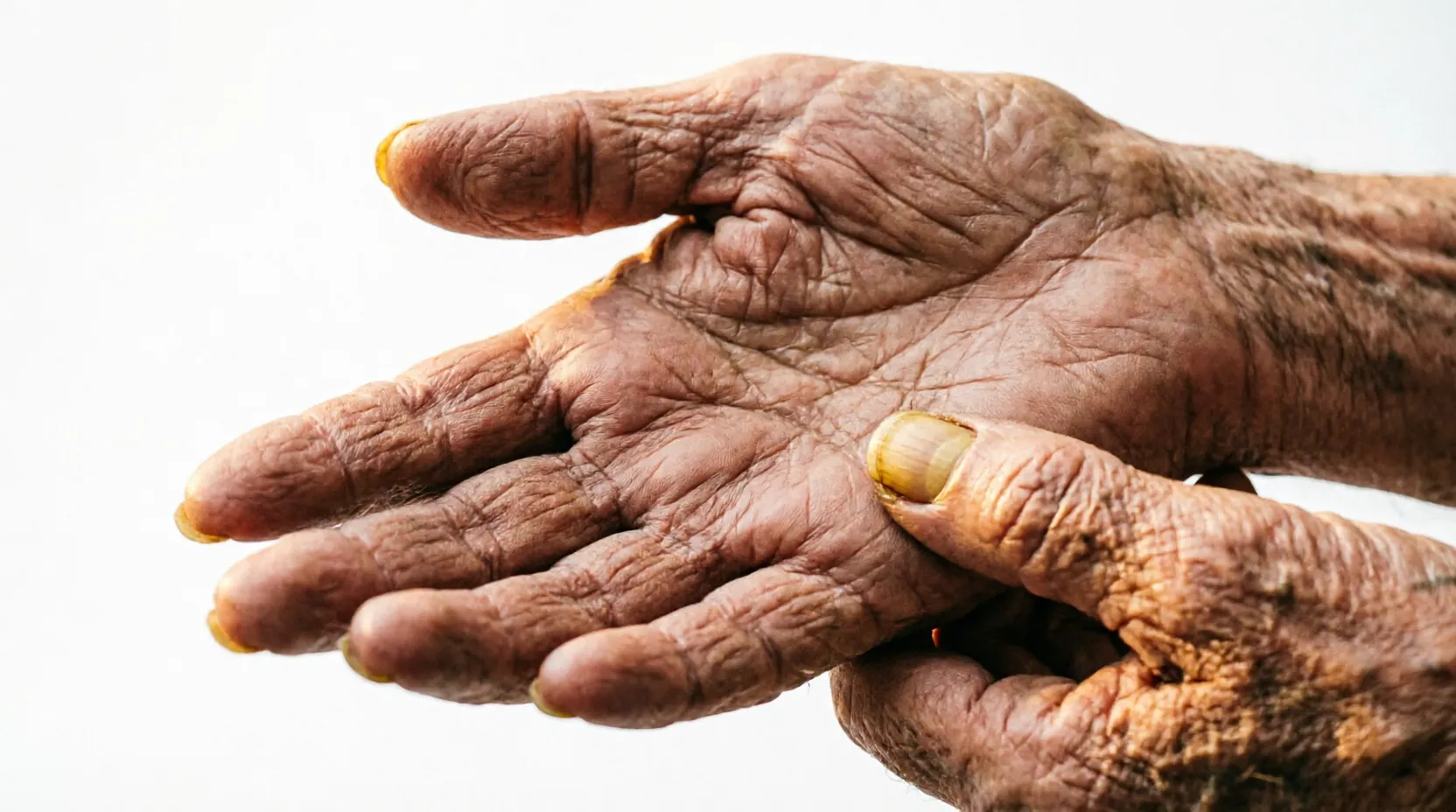
No peer-reviewed study has ever found a statistically significant link between palm line patterns and lifespan, cause of death, or any specific future event. The 'life line' is a flexion crease, a fold that forms where your palm bends. Its length, depth, and shape are determined by the mechanics of fetal hand development, not by fate.
Useful analogy
Asking your palm line to predict your death is like asking the crease in your jeans to predict where you'll walk next. The crease tells you where the fabric bends, nothing more.
The catch
Here's the genuinely interesting catch: palm lines DO carry some biological information. Abnormal crease patterns (like a single transverse palmar crease, the 'simian line') are associated with certain chromosomal conditions including Down syndrome and some heart defects. So the hand IS a window into your biology, just not in the way palmists claim.
The Evidence
What Research Actually Found
A 1981 study in the British Medical Journal found no correlation between life line length and longevity in 100 deceased subjects
StrongThe Barnum effect (1948) demonstrated that people accept vague personality descriptions as uniquely accurate, the psychological engine behind fortune telling
StrongA single transverse palmar crease is a medically documented marker for chromosomal abnormalities, palm lines do carry some biological data
ModerateDermatoglyphic studies (fingerprint and palm line science) link certain patterns to elevated risk of some conditions including schizophrenia
CircumstantialPalmistry practitioners show no better-than-chance accuracy when tested under controlled conditions
StrongThe Big Myth
The Life Line Myth
What people think
"A short life line means you'll die young"
This is the most persistent palmistry claim, that the length and depth of the curved line running from between your thumb and index finger down toward your wrist determines how long you'll live.
What actually happens
The life line predicts how you flex your palm, not how long you live
The life line is a flexion crease, it forms in the womb around week 12 of gestation wherever the skin folds when the fetus moves its hand. Its shape is purely mechanical, determined by the geometry of your developing hand. Studies comparing life line length to actual lifespan in deceased individuals have found zero correlation.
Why It Feels Real
The Psychology Behind Why Palm Reading 'Works'
In 1948, psychologist Bertram Forer gave his students a 'personalized' personality analysis based on their birth dates. He then revealed every student had received the exact same vague description. They'd rated it 85% accurate on average. This is called the Forer (or Barnum) effect, and it's the entire psychological engine behind palmistry.
Palm readers speak in universal truths: 'You have experienced a significant loss,' 'You have untapped potential,' 'There is a period of change coming.' These are true for virtually everyone at any given moment. The human brain, wired for pattern recognition and self-reference, instantly files these statements as specific and accurate.
Add to this the theater of the reading, the hushed voice, the intense scrutiny of your hand, the sense of being truly seen, and the effect becomes powerful. It isn't lying, exactly. It's exploiting cognitive architecture that evolved for survival, not for evaluating fortune tellers.
The Real Science
What Palm Lines Can Actually Tell You
Imagine this
A doctor, not a fortune teller, examines your palm lines.
What would happen
They're looking for a single transverse palmar crease (one horizontal line across the entire palm instead of two), present in approximately 45% of people with Down syndrome and associated with several other chromosomal conditions. They're also checking dermatoglyphic patterns that may suggest elevated risk for certain health conditions. Your palm genuinely is a medical document.
Why this matters
The science of dermatoglyphics (palm and fingerprint patterns) is a legitimate medical field. It's just that what it reads is genetic history written in the womb, not a prophecy about your future.
Quick answers
Common questions
Final insight
The Lines Are Real. The Prophecy Isn't.
Your palm lines are genuine biological artifacts, written in the womb, shaped by genetics and movement, and carrying real (if modest) medical information. What they don't carry is a timeline. The desire to read fate in the body is ancient and deeply human. But the body speaks in the language of biology, not prophecy. The story your palm tells is about where you came from, not where you're going.
Quick answers
Common questions
Is palmistry practiced differently across cultures? +
Yes significantly. Indian (Jyotish) palmistry, Chinese palmistry, and Western palmistry use different lines, mounts, and interpretive frameworks. This inconsistency itself is a red flag, if palm lines carried genuine predictive information, the system would converge across cultures.
Are palm lines genetic? +
Partially. The general pattern of major flexion creases has a hereditary component, but the specific details vary even between identical twins, because they're influenced by individual fetal movement patterns in the womb.