Visual answer
How Sunlight Becomes a Blue Sky
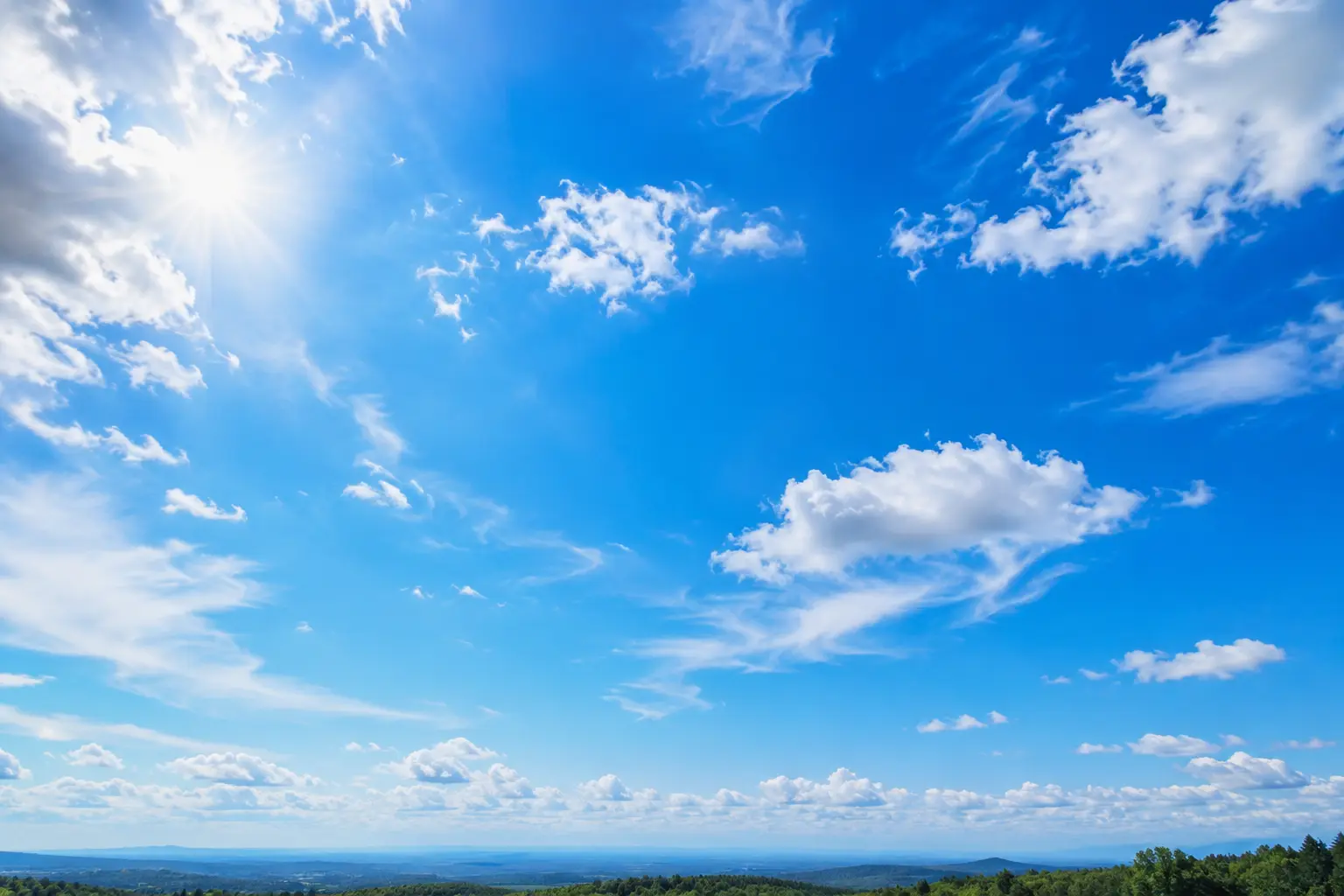
White sunlight enters the atmosphere. Blue wavelengths scatter widely, while red wavelengths travel more directly.
White sunlight enters
Sunlight contains all visible colors mixed together, which is why it usually appears white.
Air molecules scatter light
Nitrogen and oxygen molecules are small enough to scatter shorter wavelengths especially well.
Blue spreads across the sky
Blue light scatters in every direction, so it reaches your eyes from the whole sky dome.
Red travels farther
Longer red and orange wavelengths scatter less, which is why they dominate when sunlight travels through more air at sunrise or sunset.
Rayleigh scattering
The Sky Is Blue Because Air Is Better at Scattering Blue Light
Sunlight is a mixture of wavelengths. Each color travels as a wave of a different length. Blue and violet have short wavelengths. Red and orange have longer wavelengths.
When sunlight enters Earth's atmosphere, it runs into molecules of nitrogen and oxygen. These molecules are much smaller than the wavelengths of visible light, so they scatter shorter wavelengths much more efficiently than longer ones.
This process is called Rayleigh scattering. Because blue light scatters strongly in all directions, the whole sky becomes a source of blue light, not just the area near the sun.
Myth vs reality
Myth vs Reality
What people think
The sky is blue because it reflects the ocean
The idea is easy to picture because both the ocean and the sky are often blue.
What actually happens
The atmosphere makes its own blue
The color comes from sunlight scattering through air molecules. The ocean often looks blue partly because of light behavior in water and partly because it reflects the sky, not the other way around.
Sky colors
Why the Sky Changes Color
Midday sky
Sunlight takes a shorter path through the atmosphere, so scattered blue light dominates.
Sunrise and sunset
Sunlight travels through more air, scattering away much of the blue and leaving red and orange wavelengths.
Clouds
Water droplets scatter many wavelengths together, so clouds often look white or grey.
Space
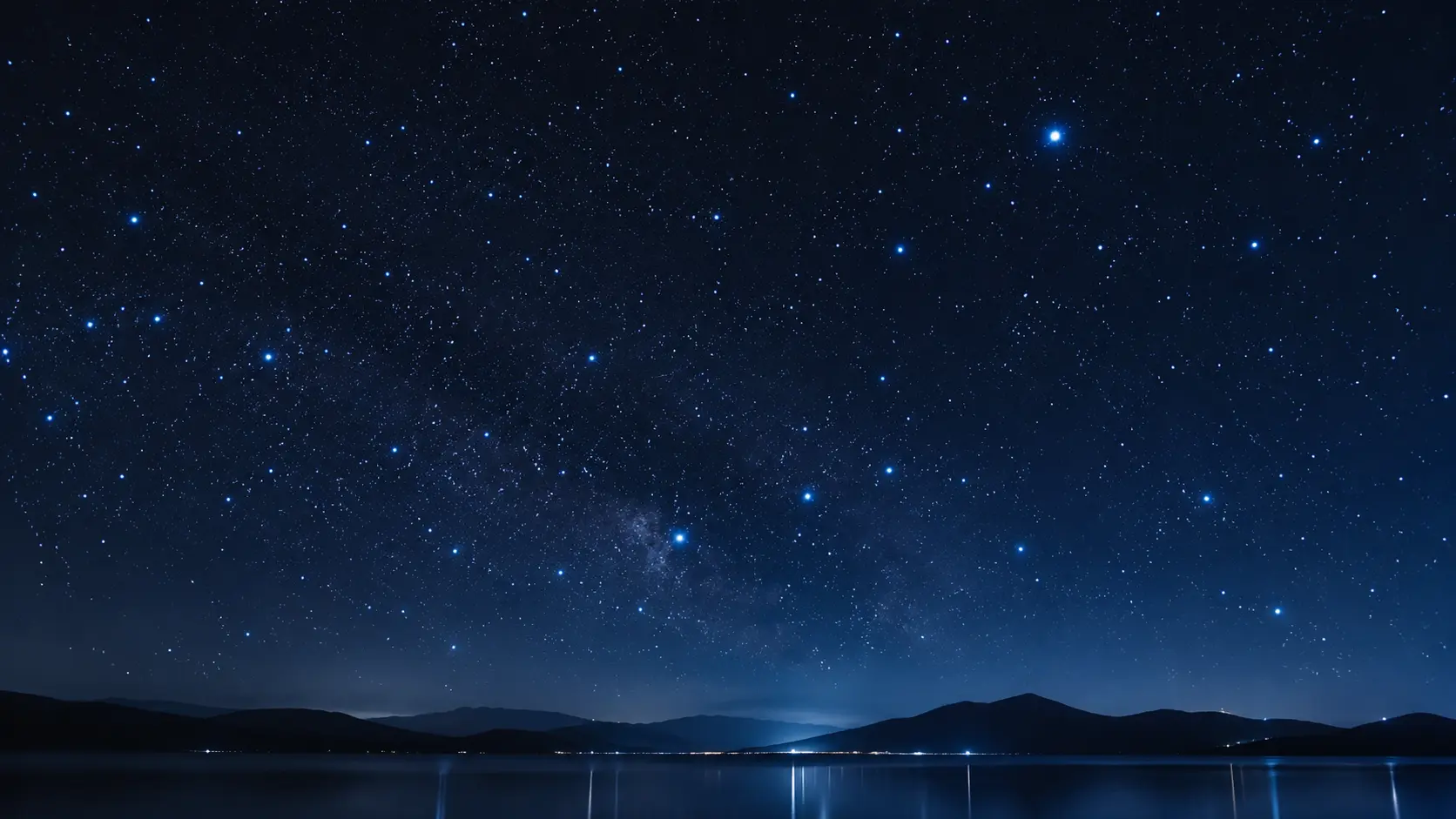
With no atmosphere to scatter sunlight, the sky appears black even when the sun is shining.
Quick answers
Common questions
Why does the sky look lighter near the horizon? +
Near the horizon, light passes through more air before reaching your eyes. Multiple scattering events mix in more white light and make the blue look paler.
Why is the sky black in space? +
Space has almost no air molecules to scatter sunlight toward your eyes, so the background remains black except where direct light sources are visible.
Why are sunsets red and orange? +
At sunset, sunlight travels through a longer slice of atmosphere. Much of the blue light scatters away, leaving more red and orange light to reach you.
Does pollution change sky color? +
Yes. Smoke, dust, and pollution add particles that scatter light differently, often making daylight hazier and sunsets more vivid.