Quick Facts
Quick Facts
The surface molecules of ice are less tightly bonded than those inside.
That creates a thin, liquid-like layer even below 0°C.
Friction from shoes or skates can increase the effect.
Extremely cold ice is often noticeably less slippery.
Visual answer
Why ice is slippery
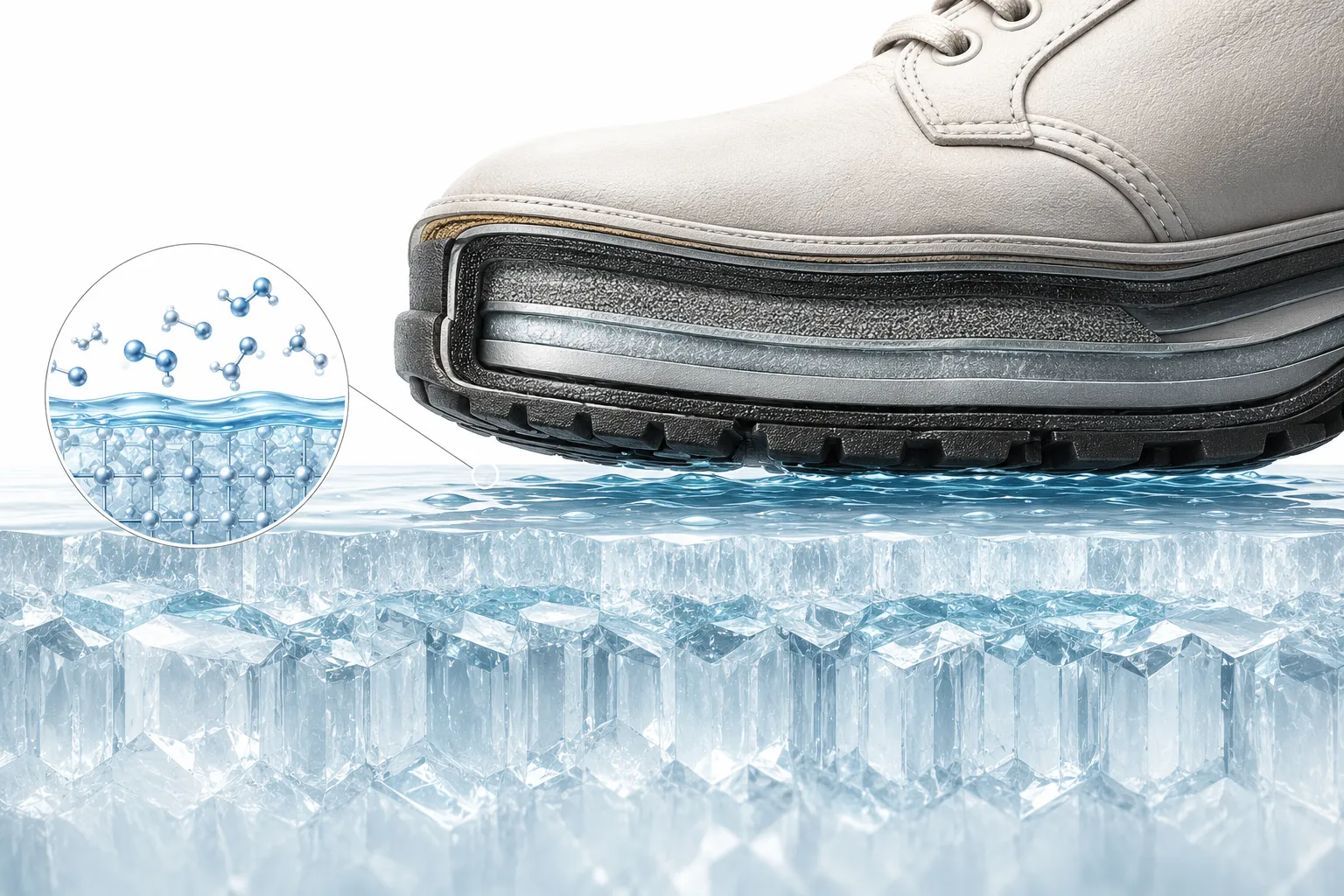
The diagram shows the thin mobile surface layer on ice and how pressure and friction can make slipping easier.
Surface layer
Ice has a thin, mobile layer at its surface.
Pressure and friction
A shoe or skate can add local pressure and heat.
Low grip
The surface offers less resistance, so your foot slides more easily.
Surface Layer
The Top Of Ice Isn't Quite Like The Rest
Inside a block of ice, water molecules are locked into an orderly crystal structure.
At the surface, however, molecules have fewer neighboring molecules holding them in place.
That allows them to move more freely, creating an incredibly thin liquid-like layer that acts as a natural lubricant.
Pressure & Friction
Your Foot Makes It Even Slipperier
When you step on ice, pressure and friction generate a tiny amount of heat.
Near the freezing point, that heat can make the already slippery surface even more lubricated.
Scientists now believe both the natural surface layer and this extra melting contribute to why ice feels so slick.
Analogy
A Brick Wall Wearing Silk
The familiar part
Imagine touching a solid brick wall that's been covered with an incredibly thin sheet of silk.
How it applies
The wall remains solid, but the surface suddenly feels smooth and slippery. Ice behaves similarly because only its outermost molecular layer is unusually mobile.
Where the analogy breaks
Silk can wrinkle. Molecules politely ignore fashion.
Curiosity Notes
Details Most People Miss
Why this still matters
Why This Still Matters
Understanding why ice is slippery helps engineers design safer roads, better winter tires, improved athletic equipment, and even more efficient ice-skating surfaces.
Key Findings
- ✓Core findingIce has a microscopic liquid-like surface layer.
- ✓Strong evidenceThat layer greatly reduces friction.
- ⚠Main consequencePressure and friction can make the layer slightly thicker.
- ✓Wider legacyVery cold ice is usually less slippery than ice near 0°C.
Final insight
A Last Thought
Ice seems like the simplest of substancesjust frozen water. Yet its surface behaves differently from its interior, reminding us that even something as familiar as a winter puddle can still surprise scientists. Nature has a habit of hiding its cleverest tricks in the things we step on every day.
Quick answers
Common questions
Why is very cold ice less slippery? +
Far below freezing, the liquid-like surface layer becomes thinner, increasing friction and making the ice less slippery.
Do ice skates melt the ice? +
Partly. Modern research suggests skates benefit both from the naturally slippery surface layer and a small amount of additional melting caused by pressure and friction.