Visual answer
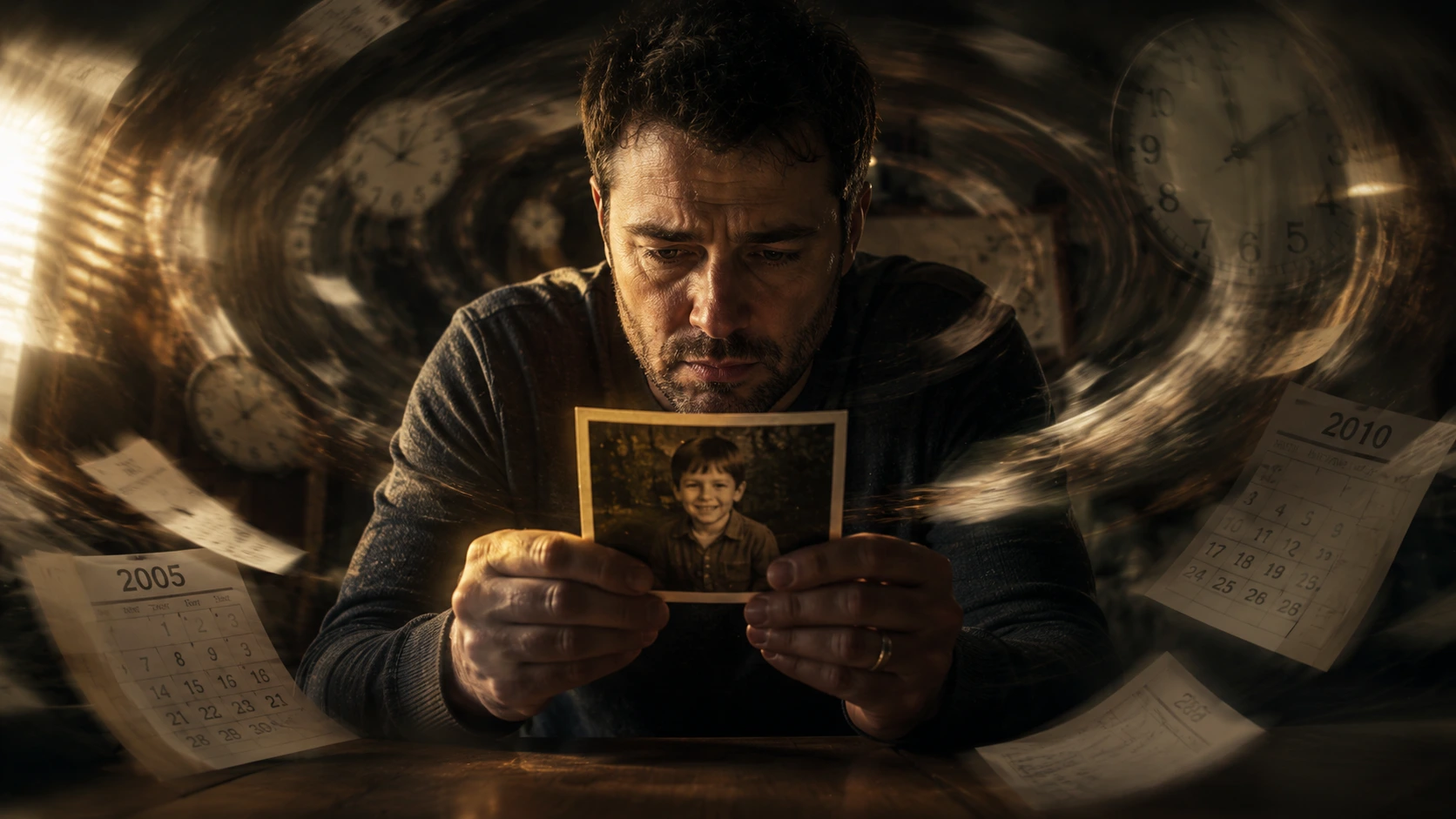
Why a year felt longer at age 10
The same 12 months can feel very different depending on how much new information your brain processed.
Age 10: high novelty
Almost everything is new. Your brain records dense, detailed memories.
Age 10: looking back
The year feels long because there is so much to recall.
Age 40: low novelty
Most routines are familiar. Fewer distinct memories are formed.
Age 40: looking back
The year feels short because there is less to distinguish one week from another.
Proportion theory
Each year is a smaller slice of your life
When you are 10, one year is 10 percent of your entire life. When you are 50, one year is 2 percent.
This proportional difference is one reason a year felt enormous as a child and feels brief as an adult.
This theory, sometimes called the ratio hypothesis, was first proposed by philosopher Paul Janet in the 19th century.
Clock speed myth
Does your brain's internal clock actually speed up?
What people think
Your brain's clock literally runs faster as you age.
Some people assume there is a biological timer that speeds up, physically accelerating perceived time.
What actually happens
It is about memory density, not clock speed.
There is no evidence of a literal internal clock speeding up. The effect comes from how much distinct, new information your brain records and looks back on.
Contributing factors
What contributes to time feeling faster
Proportional age
Each year is a smaller fraction of total life lived so far.
Reduced novelty
Familiar routines produce fewer distinct, memorable moments.
Attention and focus
Busy or distracted periods feel shorter when looking back.
Emotional intensity
Emotionally charged periods feel longer and more vivid in memory.
How to slow it down
You can actually slow time down
Seeking out new experiences is the most reliable way to make time feel longer when you look back on it.
Travel, learning new skills, meeting new people, and breaking routines all create more memory landmarks.
Being more present also helps. Mindfulness and attention to detail create richer memories of ordinary moments.
Quick answers
Common questions
Why does time feel faster as we get older? +
Mainly because familiar routines produce fewer distinct memories. When you look back at a routine month, there is less to recall, so it feels compressed.
Is it true that time passes faster when you are busy? +
In the moment, yes. But looking back, busy and eventful periods often feel longer because more happened and more was recorded.
Why did summers feel so long as a kid? +
Childhood summers were packed with new experiences. Your brain formed rich, dense memories. Looking back, all that detail makes the period feel longer.
Can you actually make time feel slower? +
Yes. Seeking out novel experiences, learning new things, traveling, and practicing mindfulness all help create more memory landmarks that stretch perceived time.
At what age does time start feeling faster? +
Most people report noticing it in their late 20s or 30s, when routines become more settled and novelty decreases.