Visual answer
What happens in your body after a meal
Several systems shift at once after eating, and most of them point toward rest.
Blood flows to the gut
More blood goes to the digestive system to process food, slightly less reaches the brain.
Insulin is released
Insulin helps move sugar into cells, which can cause a brief energy dip.
Tryptophan rises
Protein-containing food raises tryptophan in the blood, which the brain converts to serotonin and melatonin.
Melatonin increases
Melatonin is the hormone associated with sleepiness. Even a small rise has a noticeable effect.
What causes it
Several things happen at once after you eat
Digestion is an active process. Your gut needs extra blood flow to absorb nutrients, which slightly reduces blood available to the brain.
Eating also triggers the release of hormones, including serotonin and cholecystokinin, that promote calm and relaxation.
When you eat foods high in tryptophan (like turkey, eggs, or cheese), your brain can convert more of it into serotonin and eventually melatonin, both of which make you sleepy.
Turkey myth
Is it really about the turkey on Thanksgiving?
What people think
Turkey makes you sleepy because of all the tryptophan.
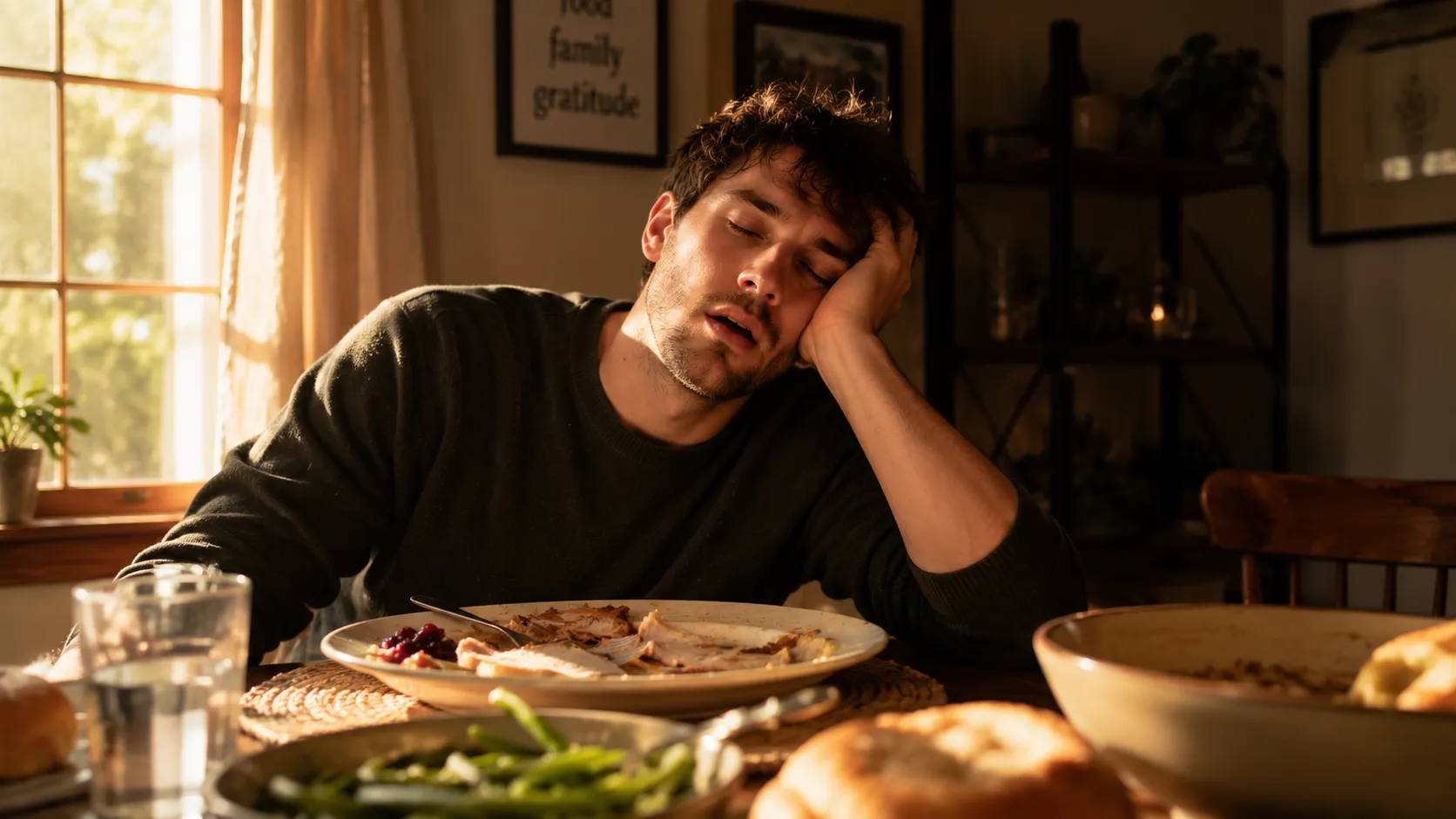
Every Thanksgiving, turkey gets blamed for the post-meal nap.
What actually happens
Turkey has about as much tryptophan as chicken or beef.
The real culprit is the size of the meal combined with alcohol, carbohydrates, and the general hormonal response to a large feast.
Meal types
Which meals make you most tired
Large, high-carb meal
Biggest blood sugar spike, most dramatic crash, strongest sleepiness.
High-fat meal
Fat slows digestion significantly and promotes relaxation hormones.
Small, balanced meal
Milder blood sugar response, less dramatic drowsiness.
Sugary snack on empty stomach
Fast spike followed by a fast crash. Short but sharp drowsiness.
How to reduce it
How to avoid the post-meal slump
Eating smaller portions helps more than anything else. Large meals amplify every factor.
Choosing lower-glycemic foods reduces the blood sugar crash. Adding protein and fat to a carb-heavy meal slows the sugar spike.
A short walk after eating can also help. It keeps blood moving and prevents the full slump from setting in.
Quick answers
Common questions
Why do I always feel sleepy after eating? +
Your body redirects blood to the digestive system and releases hormones like serotonin and melatonin during digestion. Combined with blood sugar shifts, this creates drowsiness.
Is feeling tired after eating normal? +
Yes, mild postprandial sleepiness is completely normal. Severe fatigue after every meal may be worth discussing with a doctor, as it can sometimes indicate blood sugar regulation issues.
What foods make you most sleepy? +
Large portions of refined carbohydrates and high-fat foods tend to cause the strongest post-meal tiredness. Foods high in tryptophan like turkey, eggs, and dairy also contribute.
Does turkey really make you sleepy? +
Turkey contains tryptophan, but not more than most other proteins. The Thanksgiving sleepiness is mostly from the large meal size, carbohydrates, and alcohol combined.
How do you stop feeling tired after eating? +
Eat smaller portions, choose lower-glycemic foods, and take a short walk after your meal. These steps reduce blood sugar swings and keep circulation moving.