Quick Facts
Quick Facts
Studies have found coffee stimulates colon activity within just a few minutes of drinking it.
Caffeine alone doesn't fully explain the effect—decaf produces a similar, if weaker, response.
Coffee's acidity can mildly irritate the stomach lining, adding to the effect.
Roughly a third of people report a strong, reliable urge shortly after their first cup.
Visual answer
How coffee moves things along
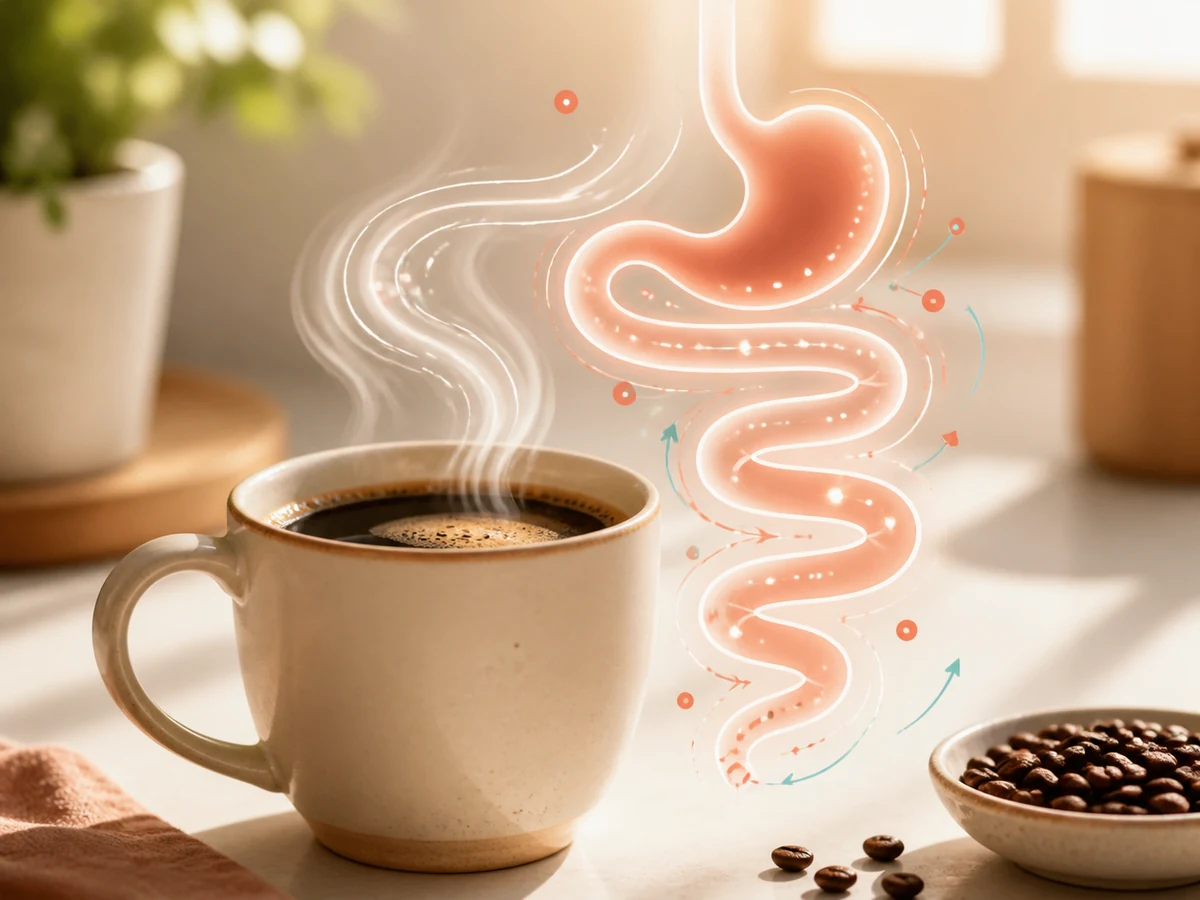
Coffee pulls on several gut mechanisms nearly simultaneously.
Stomach stretches
Coffee entering the stomach triggers the gastrocolic reflex, signaling the colon to get moving.
Hormones spike
Gastrin and cholecystokinin levels rise, both known to stimulate colon contractions.
Colon contracts
Muscles in the colon squeeze more forcefully, moving things along faster than usual.
The Mechanism
Coffee Pulls Several Levers at Once
The simplest explanation people reach for is caffeine, and caffeine does play a supporting role—it stimulates muscle contractions throughout the digestive tract. But it can't be the whole story, because decaffeinated coffee produces a similar, if gentler, effect.
A large part of what's happening is the gastrocolic reflex: the stomach, once it senses food or drink arriving, sends a signal further down the line telling the colon it's time to make room for what's coming next. Coffee seems to trigger this reflex unusually strongly.
On top of that, coffee raises levels of gastrin and cholecystokinin, two hormones known to encourage the colon to contract more forcefully. And coffee's natural acidity gives the stomach lining a small extra nudge of its own.
Why Not Everyone?
Some Guts Are More Talkative Than Others
Not everyone experiences this the same way, and researchers still aren't entirely sure why. Differences in gut sensitivity, hormone response, and the balance of gut bacteria may all play a part.
For some people the effect is dramatic and consistent; for others it barely registers—one of the more personal quirks of an otherwise universally shared beverage.
Analogy
A Fire Drill, Not a Fire
The familiar part
A fire drill doesn't mean the building is actually burning—it just means someone pulled the alarm, and everyone has to move regardless.
How it applies
Coffee behaves like an especially enthusiastic hand on the gastrocolic alarm, setting the colon in motion whether or not there's anything urgent to deal with.
Where the analogy breaks
Which is why the effect can strike well before the coffee has had any real time to be digested at all.
Curiosity Notes
Details Most People Miss
Why this still matters
Why This Still Matters
Coffee's gut effect is a handy reminder that a single food or drink can influence the body through several overlapping pathways at once, rather than one tidy cause-and-effect chain.
Key Findings
- ✓Core findingCoffee triggers the gastrocolic reflex, signaling the colon to get moving.
- ✓Strong evidenceHormones like gastrin and cholecystokinin rise after drinking coffee, stimulating contractions.
- ⚠Main consequenceCaffeine contributes, but isn't the sole cause—decaf has a similar, milder effect.
- ✓Wider legacyIndividual sensitivity varies widely from person to person.
Final insight
A Last Thought
The next time coffee sends you rushing to the bathroom, you can take a small, nerdy comfort in knowing it isn't just one thing happening—it's your stomach, your hormones, and your colon all agreeing, with unusual speed, that it's time to get moving.
Quick answers
Common questions
Does decaf coffee have the same effect? +
Yes, though generally to a lesser degree—supporting the idea that caffeine isn't the only trigger involved.
Why does it happen so quickly after drinking coffee? +
Because much of the response is reflex-driven, triggered as soon as the stomach senses the drink arriving, rather than waiting for digestion to fully process it.