Visual answer
How Road Line Colors Organize Traffic
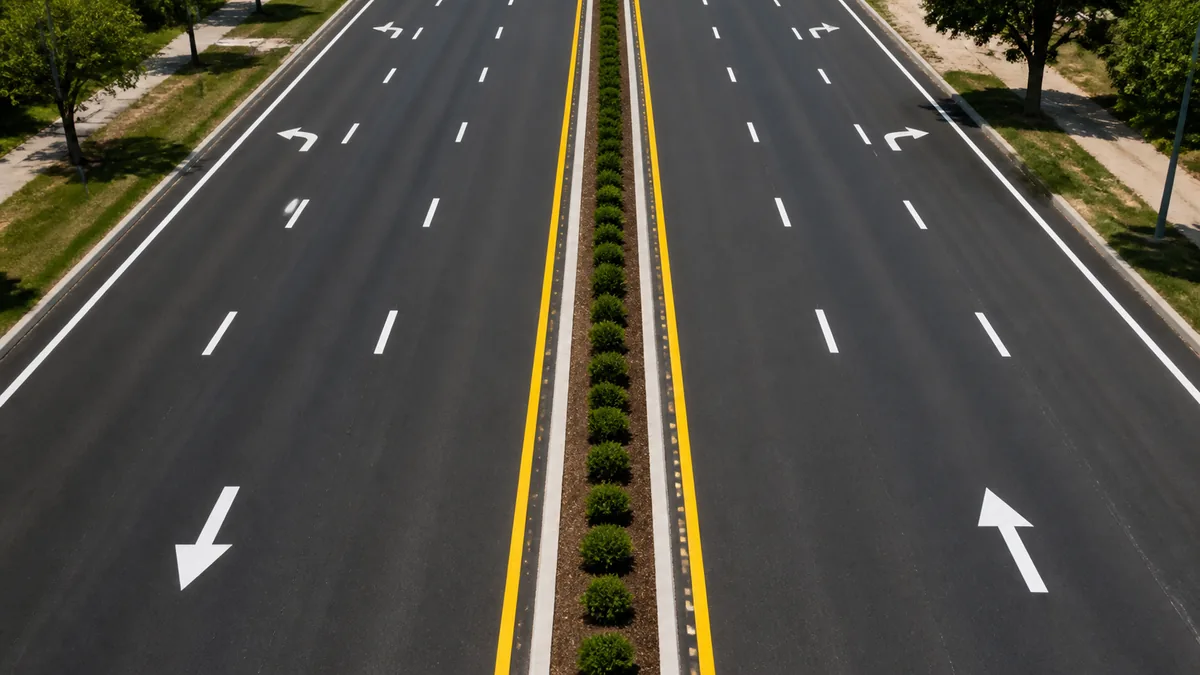
Yellow usually separates opposing traffic, while white separates traffic moving in the same direction.
Notice the pattern
The visible detail hints at a practical reason behind the everyday design or behavior.
Identify the mechanism
The core cause is shown with simple arrows so the relationship is easy to follow.
See the effect
The diagram connects the cause to what you actually notice in real life.
Remember the takeaway
The final step reduces the idea to the simple answer behind the article.
What white lines
What white lines mean
White lines are used between lanes of traffic moving in the same direction. On a multi-lane road heading one way, the lines between lanes are white. White edge lines mark the outer boundary of the road. A dashed white line means lane changes are permitted; a solid white line means you should stay in your lane.
What yellow lines
What yellow lines mean
Yellow lines separate lanes of oncoming traffic, meaning vehicles travelling in opposite directions. A solid yellow line on your side of the centre means no overtaking. Double solid yellow lines mean no overtaking in either direction. A dashed yellow line means overtaking is permitted when the road ahead is clear.
Why use different
Why use different colours at all?
The colour difference allows drivers to understand the road layout instantly. If you see yellow, you know oncoming traffic is on the other side. If you see white, you know all nearby traffic is heading the same way as you. This information matters most at night, in poor visibility, or on unfamiliar roads.
Does every country
Does every country use the same system?
No. The white and yellow system is common in North America, but other countries use different conventions. In the United Kingdom, for example, white lines are used for both same-direction and opposite-direction separation, with double white lines used to prohibit overtaking. Road marking standards vary by country.
What do other
What do other road line colours mean?
Some roads include additional colours for specific purposes. Blue lines sometimes indicate accessible parking zones. Red or orange lines can indicate no-stopping areas. Green is sometimes used for cycle lanes or specific road zones. These vary significantly by region.
Misconception
Common Misconception
What people think
All countries use yellow lines for the centre of the road.
All countries use yellow lines for the centre of the road.
What actually happens
Reality
The yellow centre line system is mainly used in North America. Many other countries, including the UK, use white lines for all lane separation and use different line patterns to indicate overtaking rules.
Quick answers
Common questions
What does a broken yellow centre line mean? +
A broken or dashed yellow line means passing or overtaking is permitted when it is safe to do so. If the yellow line on your side is solid but the other side is dashed, passing is not allowed for you but is allowed for oncoming traffic.
Why do road lines sometimes disappear? +
Road markings fade over time due to traffic wear and weather. Maintenance crews repaint them periodically. In some areas, particularly older roads, markings may become hard to see, which is a recognised road safety concern.
Why are some lines solid and others dashed? +
Dashed or broken lines are permissive, they tell you that crossing or changing lanes is allowed. Solid lines are restrictive, crossing them is prohibited or strongly discouraged. The pattern communicates the rule without requiring a sign.