Visual answer
How Side Mirrors Expand Driver Vision
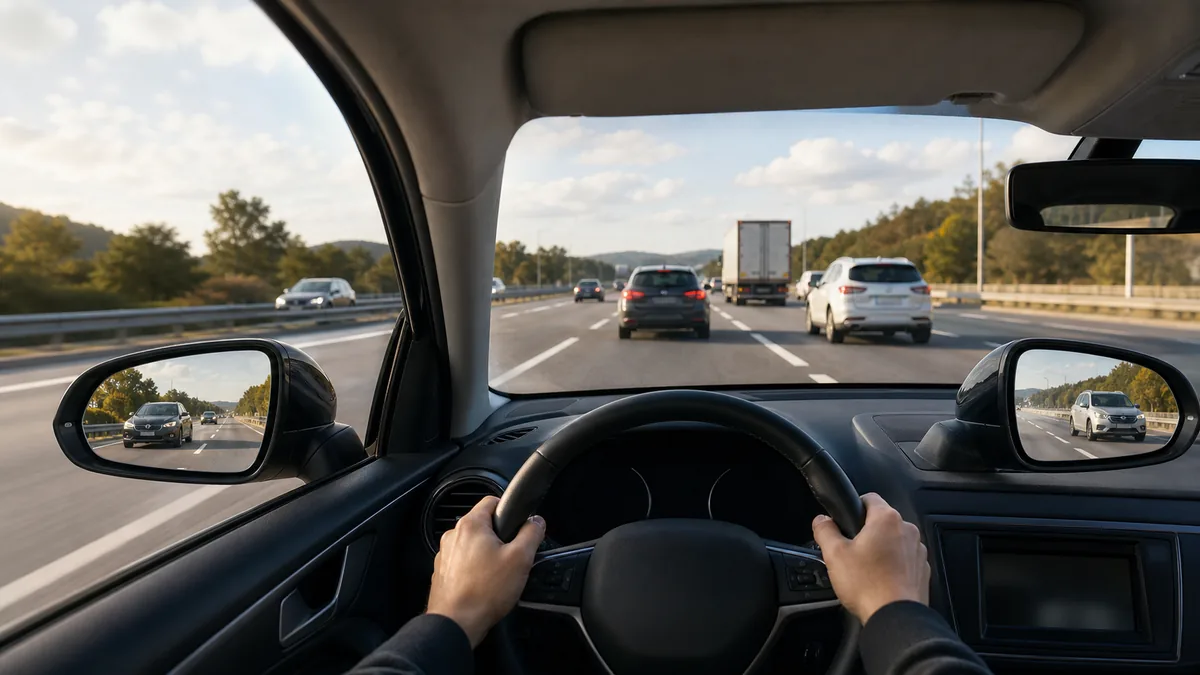
Two side mirrors widen what the driver can see and reduce blind spots around the vehicle.
Notice the pattern
The visible detail hints at a practical reason behind the everyday design or behavior.
Identify the mechanism
The core cause is shown with simple arrows so the relationship is easy to follow.
See the effect
The diagram connects the cause to what you actually notice in real life.
Remember the takeaway
The final step reduces the idea to the simple answer behind the article.
What each mirror
What each mirror covers
The rear view mirror, mounted inside, shows what is directly behind. The driver-side wing mirror shows the left rear. The passenger-side mirror shows the right rear. Each covers a different zone, and together they provide a reasonable picture of the area around the car, though not a perfect one.
Why the rear
Why the rear view mirror is not enough
A rear view mirror only shows what is behind the car through the back window. Wide vehicles, headrests, passengers, and the angle of view all limit what you can see. Wing mirrors on each side extend your vision to areas the rear window cannot reach.
When did passenger-side
When did passenger-side mirrors become standard?
In early motoring, most cars only had a driver-side mirror or no side mirrors at all. As cars became faster and traffic became denser, passenger-side mirrors became increasingly common. Many countries eventually made them a legal requirement for road safety.
Blind spots still
Blind spots still exist
Even with three mirrors, there are still blind spots, areas beside the car that none of the mirrors fully cover. Drivers are taught to check blind spots by physically turning their head before changing lanes. Modern vehicles increasingly use sensors and cameras to help monitor these areas.
Why the passenger
Why the passenger mirror looks different
The passenger-side mirror is often convex, meaning curved outward, which gives a wider field of view than a flat mirror. The trade-off is that objects appear smaller and further away than they are, which is why these mirrors often carry the warning that objects are closer than they appear.
Misconception
Common Misconception
What people think
Three mirrors give a complete view of the road around you.
Three mirrors give a complete view of the road around you.
What actually happens
Reality
Even with all three mirrors correctly adjusted, blind spots remain. These are areas on either side of the car where a vehicle can travel without being visible in any mirror.
Quick answers
Common questions
Why does the passenger mirror say objects are closer than they appear? +
The passenger-side mirror is convex, meaning it curves outward. This creates a wider field of view but also makes objects appear smaller and further away than they actually are. The warning label is a legal requirement in many countries to prevent drivers from misjudging distances.
Do all countries require mirrors on both sides? +
Most countries with modern traffic safety regulations require at least two mirrors giving rear and side visibility. The exact requirements vary by country and vehicle type.
Will cameras replace mirrors in the future? +
Some manufacturers have already replaced traditional wing mirrors with camera and screen systems in certain models. These provide a wider and clearer view without wind resistance, but regulatory approval varies by country.