Visual answer
How Wabi-Sabi Sees the World Differently
Wabi-Sabi is not a style. It is a perceptual shift. Here is how it reframes things that most cultures treat as problems.
Wabi: The Beauty of Simple and Impoverished
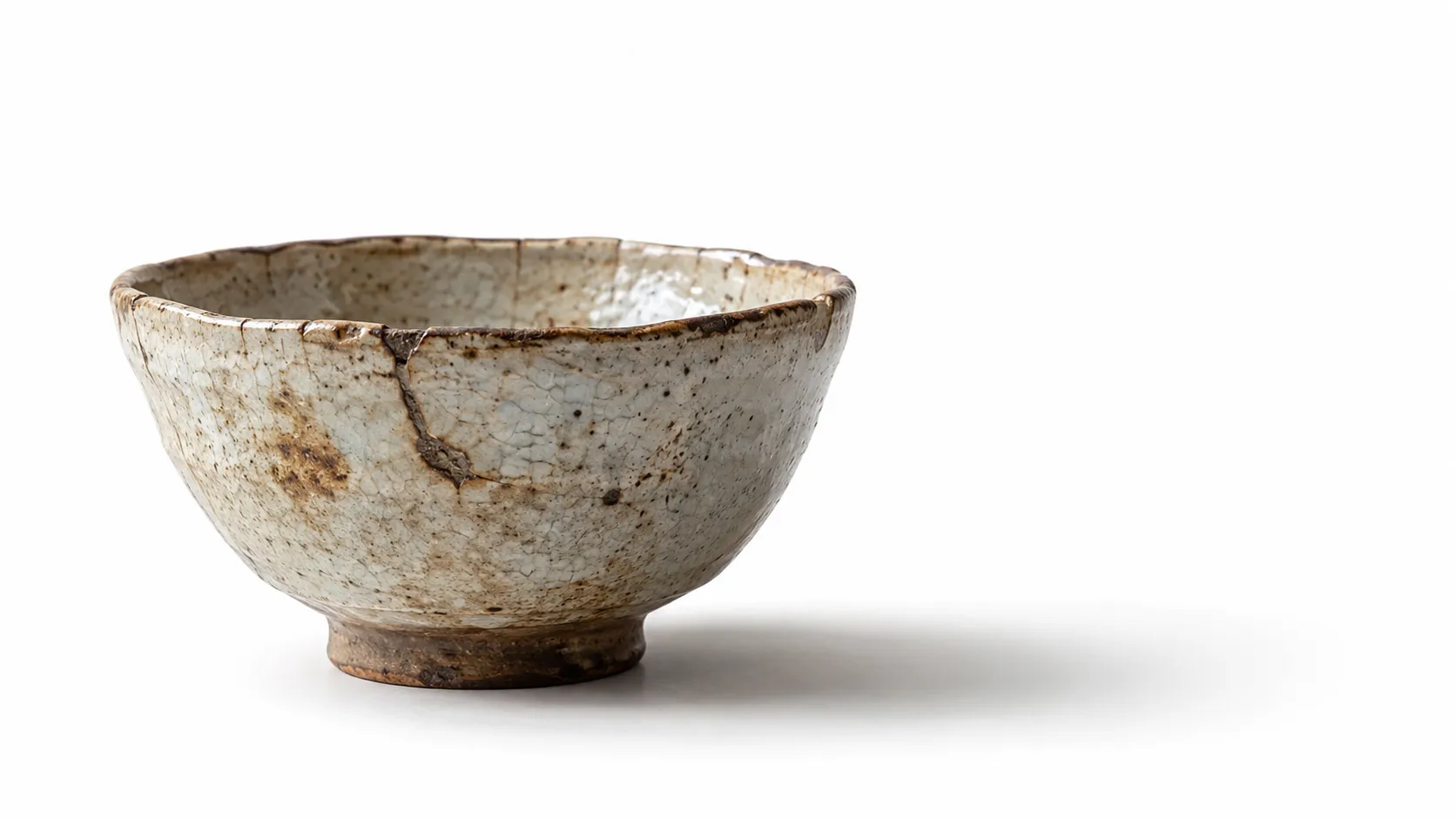
Wabi describes beauty found in restraint, roughness, and humble materials. A handmade clay cup with an uneven rim is Wabi. A moss garden with no flowers is Wabi. A room with one carefully chosen object and nothing else is Wabi. It is the opposite of ornate, decorated, or impressive.
Sabi: The Beauty of Age and Wear
Sabi describes beauty that comes from the passage of time. The rust on an iron garden gate. The silver patina on old bronze. The worn armrest on a favorite chair. These are not signs of neglect. They are the accumulation of a life lived.
Together: A Complete Aesthetic Philosophy
Wabi-Sabi combined describes a whole way of seeing. It asks you to look at rough, simple, aged, and irregular things and find in them a beauty that polished, new, and perfect things cannot offer. This is not resignation. It is a trained perceptual sensitivity.
In Practice: What It Looks Like
A Wabi-Sabi home might have raw linen curtains, a cracked ceramic vase, bare wooden floors with visible grain, and hand-thrown pottery. A Wabi-Sabi garden might be asymmetrical, mossy, and wild at the edges. A Wabi-Sabi relationship might be one where you have stopped trying to fix each other.
Wabi vs Sabi
What Is the Difference Between Wabi and Sabi?
Most people treat Wabi-Sabi as one idea, and in everyday use it is. But the two words describe slightly different qualities of beauty, and understanding the difference makes the concept sharper.
Wabi points to the beauty of simple, rough, asymmetrical, humble, and incomplete things. It is about the quality of the object itself. A handmade bowl with an uneven lip is Wabi. A garden hut made of bent bamboo and fallen leaves is Wabi. A meal made from foraged ingredients served on a wooden board is Wabi. The word was originally associated with poverty and loneliness, but tea masters like Sen no Rikyu transformed it into an aesthetic ideal by arguing that voluntary simplicity was more sophisticated than decorated luxury.
Sabi points to the beauty that time and use add to things. It is about the quality of time rather than the object itself. A bronze bell covered in green verdigris is Sabi. A wooden Buddha statue worn smooth by centuries of hands touching its head is Sabi. A cobblestone street with the stones worn down in patterns by millions of footsteps is Sabi. Sabi requires a history. A brand new object cannot be Sabi.
Together, the two words describe an aesthetic that values what is humble and what is old over what is impressive and what is new. This was a radical position in 16th century Japan, when wealthy patrons competed to display the most elaborate Chinese ceramics. It remains a radical position today.
Myth: it is minimalism
Myth vs Reality: Wabi-Sabi Is Just Minimalism With a Japanese Name
What people think
Wabi-Sabi is basically the same as minimalism or Marie Kondo's decluttering philosophy
Because both involve simplicity and the absence of clutter, Western audiences often treat Wabi-Sabi and minimalism as the same thing with different branding.
What actually happens
Minimalism seeks order and control. Wabi-Sabi embraces disorder and impermanence
Minimalism is a design and lifestyle philosophy that uses reduction to achieve clarity and order. It fights entropy. Wabi-Sabi is an aesthetic philosophy that welcomes entropy. A cracked wall, a rust stain, or a lopsided vase would be fixed or replaced in a minimalist framework. In Wabi-Sabi they are the point. Marie Kondo's method asks whether things spark joy. Wabi-Sabi asks whether things carry the beautiful trace of time.
Myth: it is about sadness
Myth vs Reality: Wabi-Sabi Is a Sad or Depressing Worldview
What people think
Accepting impermanence and imperfection means resigning yourself to loss and decline
Because Wabi-Sabi acknowledges that everything fades, breaks, and ends, some people read it as a melancholy or defeatist philosophy.
What actually happens
Accepting impermanence is what makes the present moment beautiful rather than threatening
Wabi-Sabi is not about resignation. It is about the radical act of actually seeing what is in front of you instead of what you wish were in front of you. Cherry blossoms are the most celebrated flower in Japan precisely because they fall within a week. Their beauty and their brevity are inseparable. That is Wabi-Sabi. The philosophy argues that fighting impermanence is what creates suffering, and accepting it is what creates peace.
Myth: only about design
Myth vs Reality: Wabi-Sabi Is Just a Design Style
What people think
Wabi-Sabi is a trend in interior design and ceramics
In Western markets, Wabi-Sabi is usually presented as an interior design aesthetic: raw linen, rough ceramics, neutral colors, and visible natural materials.
What actually happens
Wabi-Sabi is a complete philosophical orientation toward life, relationships, and self
The design applications are real but they are downstream of a much deeper philosophy. Wabi-Sabi applied to relationships means accepting that people are imperfect and that their flaws are part of who they are. Applied to career, it means releasing the idea that a path must be linear and polished to be valuable. Applied to your own body and aging, it means recognizing that the lines and marks of a life lived have their own dignity.
Wabi-Sabi and Kintsugi
How Do Wabi-Sabi and Kintsugi Connect?
If Wabi-Sabi is the philosophy, Kintsugi is one of its most beautiful expressions. Kintsugi is the practice of repairing broken pottery with lacquer mixed with gold or silver powder, so that the cracks become visible gilded lines rather than hidden repairs.
In a world where broken things are either discarded or repaired to look unbroken, Kintsugi does the opposite. It says the break happened. It is part of the object's history. Let us make it the most beautiful part.
This practice emerged in Japan in the late 15th century, reportedly when a cracked tea bowl belonging to the shogun Ashikaga Yoshimasa was sent to China for repair and returned with ugly metal staples holding it together. Japanese craftsmen developed Kintsugi as a more beautiful alternative. Over time it became not just a repair technique but a philosophical statement completely in harmony with Wabi-Sabi.
Applied to human experience, the connection becomes pointed. Your setbacks, failures, losses, and broken periods are not things to hide. They are the cracks in you. Wabi-Sabi says those cracks are interesting. Kintsugi says fill them with gold.
Wabi-Sabi vs Hygge
Wabi-Sabi vs Hygge: Two Philosophies of Simple Comfort
Origin
Wabi-Sabi comes from Japanese Zen aesthetics. Hygge comes from Danish and Norwegian everyday culture.
Core idea
Wabi-Sabi finds beauty in imperfection and impermanence. Hygge finds wellbeing in warmth, togetherness, and coziness.
Relationship with time
Wabi-Sabi explicitly embraces aging, wear, and the passage of time. Hygge is about creating a comfortable present moment, largely indifferent to time.
Social dimension
Wabi-Sabi can be deeply solitary. It is about your private relationship with things and with impermanence. Hygge is almost always social, built around shared warmth and togetherness.
Applied to objects
Wabi-Sabi celebrates old, rough, cracked, and irregular objects. Hygge celebrates soft, warm, comfortable, and inviting ones. Both reject slick, sterile, and mass-produced environments.
Applying it today
How to Actually Apply Wabi-Sabi to Your Life
You do not need to redecorate your home or enroll in a ceramics course. Wabi-Sabi is first and foremost a perceptual practice. It asks you to look at things differently.
Start with your immediate surroundings. Look for the places where something is worn, irregular, aged, or imperfect. Instead of automatically registering those as problems to fix, try sitting with them for a moment. The scratch on your table has a history. The fraying hem on your favorite sweater marks how many times you have worn it. The asymmetrical branches of the tree outside your window are the result of wind and light and decades of growing. These are not flaws. They are evidence.
Applied to yourself, Wabi-Sabi is an antidote to the particular cruelty of social media comparison culture. It suggests that your uncertain career path, your irregular sleep schedule, your body that does not look like a filtered photograph, and your personality that does not fit neatly into an impressive narrative are not failures of self-improvement. They are the texture of a real life.
The practice does not ask you to stop trying to improve things. It asks you to stop treating imperfection as a source of shame. Those are different questions entirely.
Quick answers
Common questions
What does Wabi-Sabi mean in everyday life? +
In everyday life, Wabi-Sabi means finding the beauty in things that are old, worn, irregular, handmade, or imperfect instead of automatically treating them as problems to fix or replace. It also means accepting that your own life, relationships, and self are not supposed to look polished.
How do you apply Wabi-Sabi to your home? +
Bring in natural materials with visible texture like raw linen, unfinished wood, and handmade ceramics. Welcome imperfections rather than hiding them. Do not over-decorate. Leave some emptiness. Let things age rather than replacing them as soon as they show wear.
What is the difference between Wabi and Sabi? +
Wabi describes the beauty of things that are simple, rough, and humble. Sabi describes the beauty that comes from age, use, and the passage of time. Wabi is about the quality of the object itself. Sabi is about the beauty that time adds to it.
Is Wabi-Sabi the same as minimalism? +
No. Minimalism seeks order through reduction. Wabi-Sabi seeks beauty in natural imperfection and entropy. A minimalist would fix or replace a cracked bowl. Wabi-Sabi treats the crack as the most interesting part of it.
How does Wabi-Sabi relate to Kintsugi? +
Kintsugi is a physical practice that expresses Wabi-Sabi philosophy. It repairs broken pottery with gold to make the cracks visible and beautiful rather than hiding them. If Wabi-Sabi is the worldview, Kintsugi is one of its most direct expressions.
Can Wabi-Sabi be practiced in a Western lifestyle? +
Yes, though it requires resisting some deeply ingrained cultural instincts toward perfection, newness, and uniformity. The practice starts with perception, noticing the beauty in worn, aged, and irregular things rather than registering them as deficiencies.
What are the three truths of Wabi-Sabi? +
The three truths, as described by author Leonard Koren, are: nothing lasts, nothing is finished, and nothing is perfect. These come from Buddhist ideas about impermanence, incompleteness, and the nature of the material world.
How to stop seeking perfection using Wabi-Sabi +
Wabi-Sabi suggests that perfection is the wrong target entirely. Instead of asking what is wrong with this, try asking what this tells me about time, use, and history. The practice is perceptual. You are training yourself to see what is there rather than what should be there.