The Biology
What the Brain Does in the Moments Before and During Death
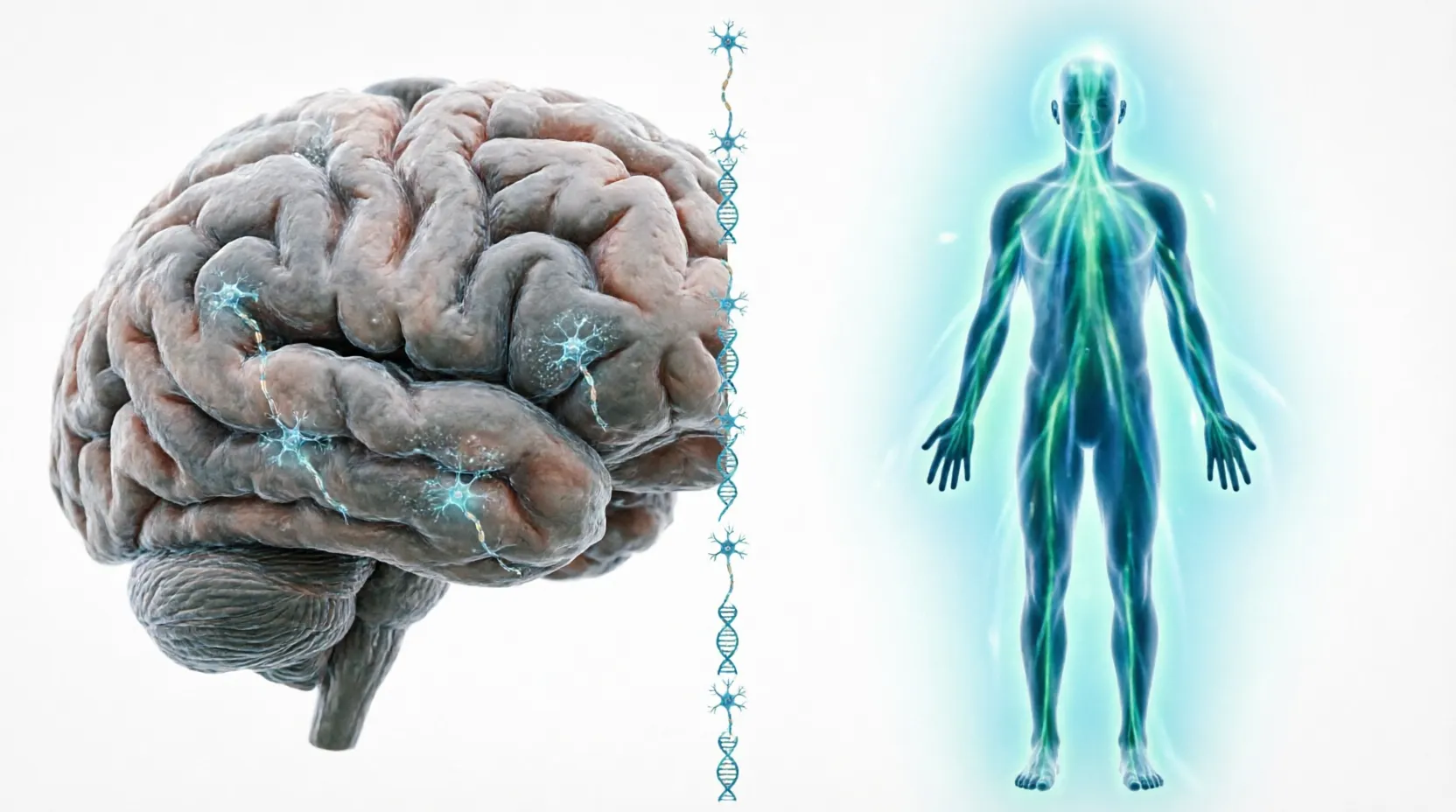
A landmark 2023 study by researchers at the University of Michigan, published in the Proceedings of the National Academy of Sciences, monitored the brain activity of four cardiac arrest patients as they died. In all four cases, the researchers detected a surge in gamma wave activity, associated with conscious processing, in the minutes after cardiac arrest, after the heart had stopped. These surges specifically occurred in the temporo-parietal-occipital junction, a brain region strongly associated with dreaming, visual hallucinations, and near-death experiences.
This was the first direct neural evidence that a coherent, heightened state of consciousness may accompany dying, not just that the brain sputters out, but that it potentially surges. The researchers were careful not to overinterpret: four patients is a small sample. But the findings aligned strikingly with animal studies showing similar gamma wave surges at death.
Separately, the dying process triggers a cascade of neurochemical releases. Endorphins, the body's natural opioids, surge dramatically, explaining the reported absence of pain and the euphoric calm many near-death experiencers describe. Some researchers, including Rick Strassman, have proposed that the pineal gland may release DMT (a powerful psychedelic) at death, though this remains unconfirmed in humans.
NDE Features
What Near-Death Experiencers Consistently Report
Tunnel and light
Reported by ~60% of NDEs, possibly explained by the visual cortex's dying firing pattern causing central brightening
Life review
A rapid, panoramic replay of memories, may reflect hippocampal activity in the gamma surge
Out-of-body experience
Sensation of viewing one's body from above, associated with temporo-parietal junction activation
Presence of deceased relatives
Across cultures; may involve pattern-completion processes in a memory-activated dying brain
Profound peace and loss of fear
Nearly universal, likely driven by endorphin surge and possible anesthetic neurochemicals
A boundary or point of no return
A 'threshold' sensation reported globally; psychological rather than neurological in origin
The Myth
The Myth: Death Is Simply the Lights Going Off
What people think
"Dying is like falling asleep, consciousness just fades out"
The popular materialist model assumes consciousness simply dims and ceases, like a computer powering down. Death as a gentle fade to nothing.
What actually happens
The data suggests dying may involve a paradoxical consciousness surge
Multiple independent lines of evidence, the 2023 PNAS study, earlier rat studies showing gamma surges at cardiac arrest, and the remarkable consistency of NDE accounts, suggest the final moments of dying may involve heightened, organized neural activity rather than a simple fade. What this means philosophically remains deeply contested.
Different Deaths
How Different Causes of Death Feel Different
Drowning: Initial panic gives way to a well-documented calm. The hypoxia (oxygen deprivation) that follows triggers the same endorphin and neurochemical cascade as other oxygen-deprivation deaths. Many survivors of near-drowning describe a remarkable transition from terror to peace.
Cardiac arrest: The most-studied form of dying, because it can be reversed. Initial sudden loss of consciousness, followed by, as we now know, a period of organized brain activity. No pain (the heart itself has few pain fibers during sudden arrest).
Terminal illness: A slower process. Modern palliative care has dramatically reduced the pain of terminal dying. The 'death rattle' (noisy breathing in final hours) is more distressing to witnesses than to the person dying, who is typically deeply unconscious. The 'terminal lucidity' phenomenon, patients experiencing unexpected periods of clarity and coherence in the hours before death, is documented but poorly understood.
Traumatic death: The body's trauma response, an enormous adrenaline and endorphin surge, likely provides a degree of analgesia. Many trauma survivors report not feeling pain initially. Whether this extends to deaths from trauma is unknown.
Final insight
The Evidence Is Less Frightening Than the Imagination
What science has learned about dying is, unexpectedly, somewhat reassuring. The process appears to involve the body's most powerful pain-relief systems, a possible surge of organized consciousness, and, in accounts from those who returned, a near-universal report of peace. This doesn't answer what comes after, or whether anything does. But the experience of dying itself appears to be gentler than humans have feared for most of history. That seems worth knowing.
Quick answers
Common questions
What does the AWARE study tell us about near-death experiences? +
The AWARE (AWAreness during REsuscitation) study, led by Dr. Sam Parnia, placed hidden images on shelves above resuscitation bays that could only be seen from above, testing OBE claims. The study found that one patient had a verifiable OBE narrative consistent with actual events during resuscitation, though no patient saw the target images. The results were intriguing but inconclusive.
Do NDEs prove there is an afterlife? +
NDEs are real experiences, something genuine happens neurologically. What they don't do is prove post-mortem consciousness. The neurological model (heightened brain activity at death producing the experience) and the afterlife model are both consistent with NDE reports. The experiences are real; their metaphysical interpretation remains genuinely open.
Is death painful? +
The dying process itself, particularly in the final stages, is increasingly well-managed by modern palliative care. The body's own opioid system also provides significant natural analgesia at death. Most documented causes of death involve a reduction of pain as the process completes, not an increase.
Can you hear things after you die? +
Hearing is the last sense to shut down, it outlasts vision and touch. Some resuscitated patients report hearing conversations from the room during the period they were clinically dead. Palliative care practitioners recommend speaking to unconscious or dying people on this basis.