Body & Brain

What Happens If You Stare at a Screen All Day?

Your eyes are not broken. But they are being asked to do something they were not designed for. For most of human history, eyes shifted focus constantly between near and far in changing natural light. Modern screen work asks the eye to hold focus at one distance on a self-illuminated surface for hours. The eye can do this, but it does not enjoy it. Screen-related symptoms are common, but the most important mechanism is not radiation or brightness. It is blinking.

Quick answer

All-day screen use can produce digital eye strain: dry eyes, blurred vision, headache, neck pain, reduced blink rate, circadian disruption from evening blue light, possible contribution to myopia progression in children, and musculoskeletal strain. Normal screen use does not appear to permanently damage adult eyes. People blink about three times less while using screens because focused attention suppresses blinking.
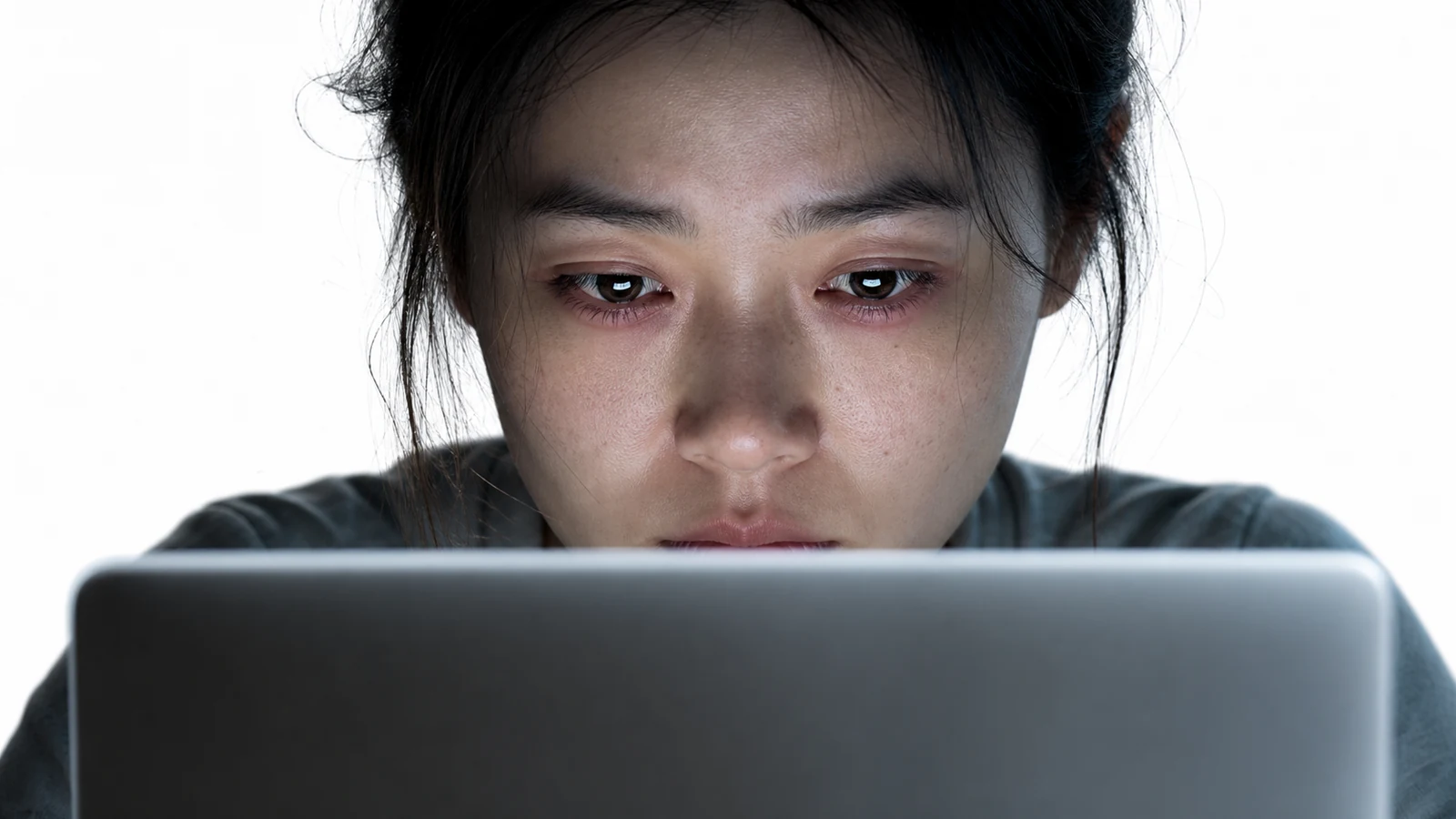
What Happens If You Stare at a Screen All Day? hero image

The short answer

All-day screen use can produce digital eye strain: dry eyes, blurred vision, headache, neck pain, reduced blink rate, circadian disruption from evening blue light, possible contribution to myopia progression in children, and musculoskeletal strain.

Reduced blink rate produces dry eye

Concentration suppresses blinking; reduced blinking lets tear film evaporate; dry cornea becomes irritated.

Curiosity twist

People blink about three times less while using screens because focused attention suppresses blinking.

Common mistake

Staring at screens all day permanently damages adult eyes.

What happens to the eye during screen time

Computer Vision Syndrome, or digital eye strain, is a symptom cluster caused by the specific visual demands of screen work.

The blink deficit

Blinking spreads tear film across the cornea. Normal blink rate is around 15 blinks per minute, but screen work can lower it to 5-7. The result is tear evaporation, dryness, corneal irritation, and the gritty burning feeling people call eye strain.

Memorable line: Screen eye strain is not caused by looking at a screen. It is caused by forgetting to blink while looking at a screen.

Accommodation and the near-focus lock

The ciliary muscle changes lens shape for near focus. Holding the same near distance for hours can create accommodative fatigue or spasm, making distance vision temporarily blurry after long screen sessions.

Memorable line: The eye, like any muscle, cramps up when held in one position too long.

Blue light and the sleep disruption

Evening screen light stimulates blue-sensitive retinal cells that feed into the circadian clock. This can suppress melatonin and delay sleep, especially when screens are bright and close to bedtime.

Memorable line: The most damaging thing about screens at night is not what they do to your eyes. It is what they do to your clock.

Screen effects on the visual system

The visual system responds to all-day screen use through multiple pathways.

1

Reduced blink rate produces dry eye

Concentration suppresses blinking; reduced blinking lets tear film evaporate; dry cornea becomes irritated. Blinking is eye maintenance.

2

Sustained accommodation produces muscle fatigue

The ciliary muscle stays in near-focus mode for hours, producing fatigue and temporary blur. Near focus is active work.

3

Blue light suppresses melatonin

Evening blue light exposure can delay melatonin onset and shift the circadian clock. Night screens affect sleep more than eye structure.

4

Ergonomic strain accumulates

Screen posture can create neck, shoulder, and back strain often mistaken for eye-only fatigue. Some screen headaches start in posture.

Why myopia is becoming an epidemic

Myopia rates have risen sharply in parts of East Asia. The strongest protective factor appears to be outdoor time, likely because bright daylight stimulates retinal dopamine that slows axial eye growth. Screens may contribute mainly by replacing outdoor time.

Screen science surprises

The 20-20-20 rule has limited evidence
The exact numbers are arbitrary, but the principle of interrupting sustained near focus is sound.
Blue-light glasses have weak evidence for eye strain
Blue light matters for sleep, but daytime eye strain is driven more by blinking, accommodation, and ergonomics.

Do screens permanently damage eyes?

Myth

The myth

Staring at screens all day permanently damages adult eyes.

Reality

The reality

Digital eye strain is real and uncomfortable, but normal screen use is not shown to permanently damage adult eyes. Symptoms are generally reversible with breaks, blinking, lighting, and ergonomic changes. Why people think this: Eye strain feels like damage, and screen anxiety makes the concern intuitive.

Screens and children: the myopia crisis

Singapore's outdoor time intervention
Programs promoting outdoor time in children support the idea that daylight exposure helps slow myopia progression.

The world's newest visual environment

Most screen workers now ask their visual system to perform sustained close-work for 8-12 hours a day. The symptoms are expected, reversible, and widespread enough to be a public-health and workplace-design issue.

Surprising consequence: Children spending at least 90 minutes outdoors daily show lower myopia progression in multiple studies.

Worth noting

The eye in an unprecedented world

The eye evolved for changing light and shifting distance. Screen strain is its request for breaks, distance, blinking, and daylight. The eye is not fragile. But it was built for a world that no longer exists for most of us.

Quick answers

Common questions

Do blue-light glasses help with sleep?

They may help in the evening by reducing melatonin suppression, though night-mode settings and reducing screen use before bed are also useful.

Are OLED screens better for the eyes than LCD screens?

Differences are modest. Blink rate, focus distance, duration, lighting, and posture matter more than screen technology.