Digital & Society

What Happens If You Stop Using Social Media?

The studies are in. The results are not what the optimists or the pessimists expected. In 2018, Stanford and NYU researchers paid about 2,000 Facebook users to deactivate their accounts for four weeks, then compared them with a control group. The findings were mixed in exactly the way real life tends to be: people felt slightly better, used their time differently, and became less exposed to political information. Quitting social media produces measurable effects on wellbeing, mood, polarization, information access, and time use. Not all of them are what you would expect.

Quick answer

Social media abstinence studies generally find reduced anxiety and depression symptoms, improved subjective wellbeing, less FOMO, better sleep, less political exposure, and more available time. The tradeoff is reduced access to social information and weaker connection with distant acquaintances. The Stanford/NYU Facebook study found deactivation made people slightly happier but also significantly less politically informed.
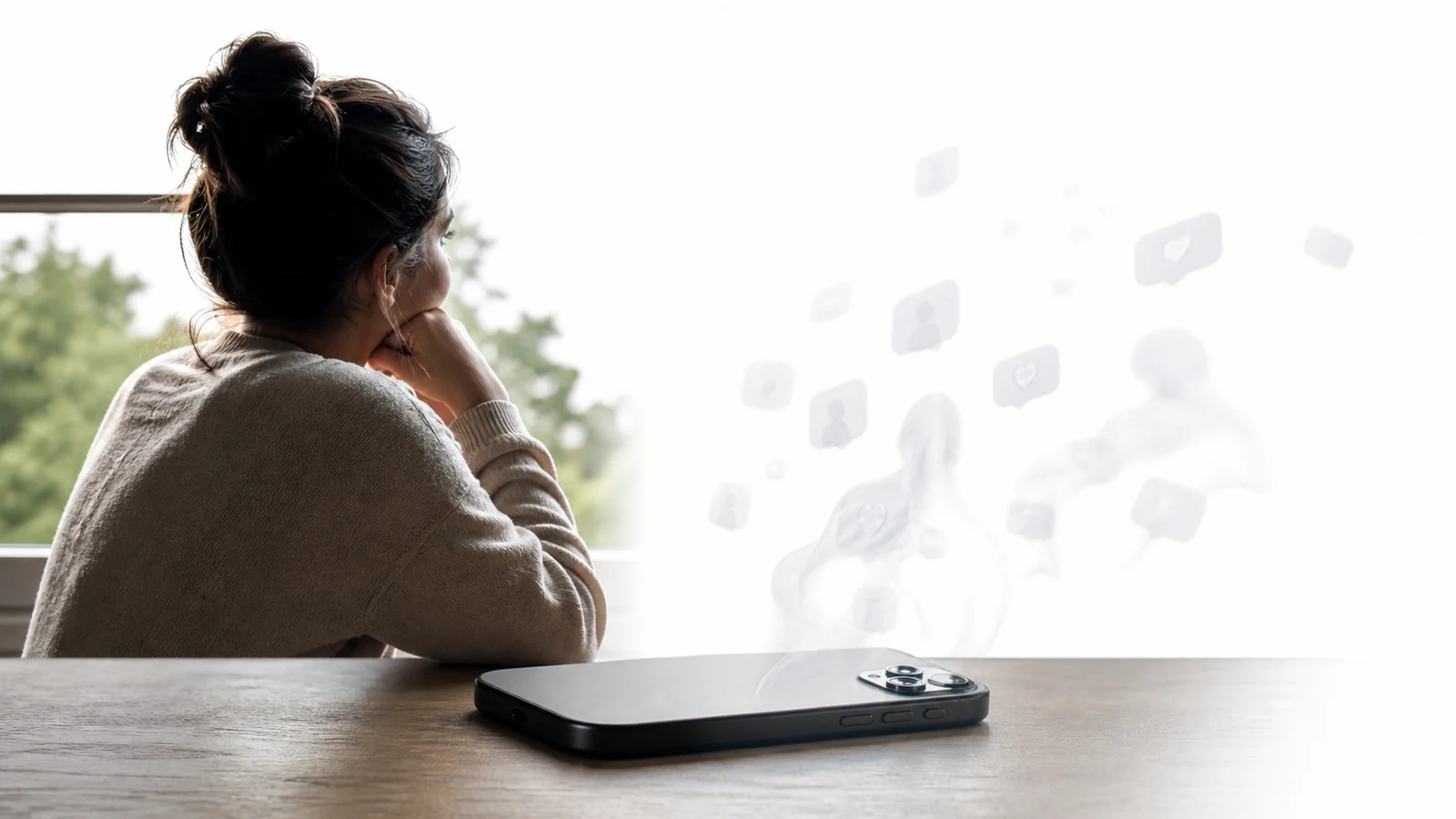
What Happens If You Stop Using Social Media? hero image

The short answer

Social media abstinence studies generally find reduced anxiety and depression symptoms, improved subjective wellbeing, less FOMO, better sleep, less political exposure, and more available time.

Variable ratio reinforcement

Likes, messages, and new posts arrive unpredictably, creating a powerful reward schedule similar to the one used by slot machines.

Curiosity twist

The Stanford/NYU Facebook study found deactivation made people slightly happier but also significantly less politically informed.

Common mistake

Rising social media use proves that social media directly caused rising adolescent depression.

What the research actually says

The relationship between social media and wellbeing is heavily studied and genuinely contested. The strongest evidence suggests small but reliable improvements when people reduce or stop use, especially heavy passive use.

The randomized controlled trials

The best evidence comes from experiments that randomly assign people to reduce or eliminate social media use. Results are consistent in direction but modest in size: depression, anxiety, and subjective wellbeing tend to improve slightly. A 2022 meta-analysis of experimental studies found a small but statistically reliable effect.

Memorable line: The research on quitting social media does not say it will make you happy. It says it will make you slightly happier.

Social media and the comparison engine

The most consistent mechanism is social comparison. Social media creates an unusual environment: curated highlights from other people's lives, consumed without the context that would normally soften comparison. Passive scrolling is more strongly associated with worse wellbeing than active use like messaging or commenting.

Memorable line: Social media is a highlight reel you are comparing your behind-the-scenes footage to.

What you get back when you stop

The most concrete benefit is time. Heavy users who quit or reduce use often gain one to two hours per day. That time may move into sleep, reading, exercise, face-to-face interaction, or sometimes just television. The improvement depends on what replaces the scroll.

Memorable line: The two hours you spend scrolling are not always relaxation time. They can be comparison, stimulation, and mild anxiety dressed as leisure.

How social media affects the brain

Social media's psychological effects operate through specific mechanisms.

1

Variable ratio reinforcement

Likes, messages, and new posts arrive unpredictably, creating a powerful reward schedule similar to the one used by slot machines. Pull-to-refresh is structurally close to pulling a lever.

2

Social comparison activation

Aspirational feeds encourage upward comparison against unusually curated versions of other people's lives. The comparison environment is engineered, not natural.

3

Attention fragmentation

Frequent checking trains the attention system to expect constant novelty, making sustained single-task focus harder. Even a visible phone can reduce performance on attention tasks.

4

Circadian disruption

Evening social media combines screen light with emotional stimulation, both of which can delay sleep onset. The content can keep you awake even when the screen brightness is solved.

What we're using it instead of

The effect of social media depends heavily on substitution. If it replaces face-to-face connection, sleep, reading, or exercise, the trade is usually negative. If it replaces isolation or maintains distant relationships that would otherwise fade, it may be positive. That is why the research is nuanced: the same app can supplement connection for one person and replace it for another.

What the quitters found

Most people return to social media
Follow-up studies often find that people return after abstinence periods, suggesting the benefits are real but not usually strong enough to sustain quitting for most users.
Passive use is worse than active use
Scrolling and watching are more consistently linked with worse wellbeing than messaging, commenting, or direct interaction.

Is social media making us depressed?

Myth

The myth

Rising social media use proves that social media directly caused rising adolescent depression.

Reality

The reality

The correlation is real and the mechanisms are plausible, but causation and effect size remain debated. The honest answer is that social media likely has a real effect for some people, especially heavy passive users, but the average effect is smaller than public debate often suggests. Why people think this: The timing is compelling, and the mechanisms are easy to understand, so public discussion often moves faster than the evidence can justify.

Experiments in quitting

The Danish happiness study
A 2016 Danish experiment found that people assigned to stop Facebook for one week reported higher life satisfaction, less negative affect, more present-moment focus, and less envy.

Attention as a resource

The largest cost of social media may be attentional. Continuous use trains rapid shifting, novelty seeking, and low tolerance for boredom, all of which compete with deep work, reading, in-person conversation, and creative activity.

Surprising consequence: The Stanford/NYU experiment found people who deactivated Facebook watched more TV, so freed time does not automatically become better time.

Worth noting

The experiment you can run yourself

The useful thing about social media research is that the personal experiment is simple. Quit or reduce it for a week, notice what changes, and notice what you replace it with. You do not need a study to try the experiment. You need a week, a willingness to be bored, and curiosity about what the boredom leads to.

Quick answers

Common questions

Does quitting social media improve mental health for everyone?

No. Benefits are strongest for heavy passive users. People who use social media mainly for active connection with distant friends or family may lose more than they gain by quitting entirely.

Is there a social media platform that is less harmful?

Image-heavy, performance-oriented platforms tend to create stronger comparison effects. Interest-based or direct-message-heavy use appears less harmful, but any algorithmic feed can optimize engagement over wellbeing.