Body & Brain

What Happens If You Spend All Day Sitting?

The chair is the most dangerous piece of furniture in your house. A 2009 American Journal of Epidemiology study followed more than 123,000 people for 14 years and found that people who sat six or more hours a day were more likely to die during the study period than those who sat three hours or less, even after accounting for exercise. Researchers call this active couch potato syndrome: you exercise, but you also sit, and they do not fully cancel each other out. Prolonged sitting is not simply not exercising. It is a distinct physiological state with specific mechanisms of harm, some beginning within minutes.

Quick answer

Extended daily sitting is associated with suppressed lipoprotein lipase activity, reduced glucose uptake in leg muscles, higher cardiovascular risk, deep vein thrombosis risk, hip and back problems, weakened postural muscles, and increased mortality risk even in people who otherwise exercise. Lipoprotein lipase, the enzyme that helps clear fat from the blood, is suppressed within 30 minutes of sitting. A brief walk can help restore its activity.
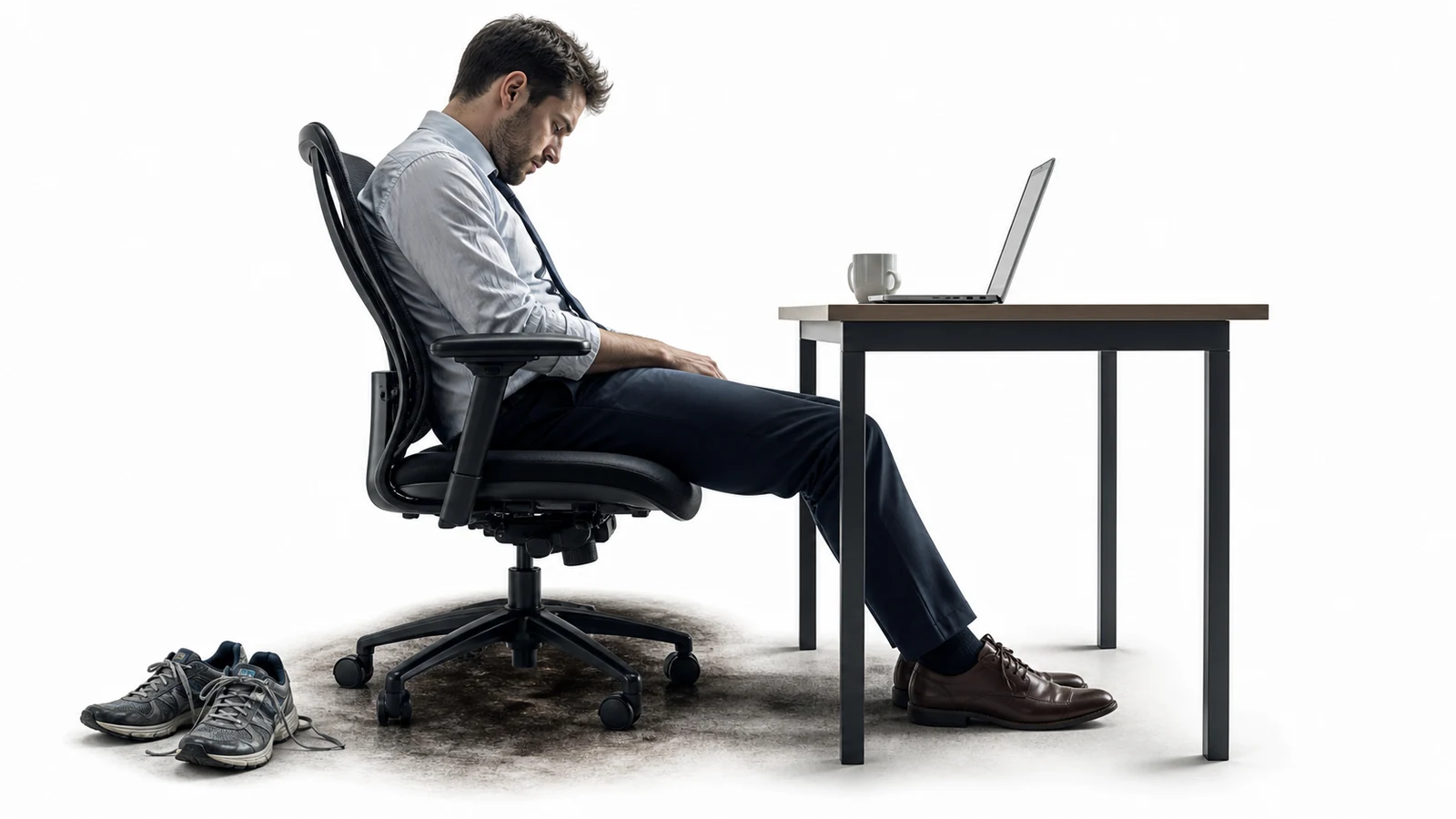
What Happens If You Spend All Day Sitting? hero image

The short answer

Extended daily sitting is associated with suppressed lipoprotein lipase activity, reduced glucose uptake in leg muscles, higher cardiovascular risk, deep vein thrombosis risk, hip and back problems, weakened postural muscles, and increased mortality risk even in people who otherwise exercise.

LPL suppression

Fat-clearing enzymes in leg muscle capillaries are suppressed within 30-60 minutes of sitting, allowing blood triglycerides to remain elevated after meals.

Curiosity twist

Lipoprotein lipase, the enzyme that helps clear fat from the blood, is suppressed within 30 minutes of sitting.

Common mistake

An hour of vigorous exercise cancels the harms of sitting for the rest of the day.

What sitting does that 'not exercising' doesn't

Sedentary physiology shows that sitting is not merely the absence of exercise benefits. It creates a passive, unloaded state in the large leg muscles that suppresses important metabolic processes.

The lipoprotein lipase collapse

Lipoprotein lipase is produced by muscle cells and helps capture fat from the bloodstream after meals. When leg muscles contract during standing, walking, or loaded movement, LPL activity stays high. When the legs are passive in a chair, LPL activity can fall dramatically within 30-60 minutes, leaving triglycerides elevated for longer.

Memorable line: Sitting turns off the fat-clearing system in your blood within 30 minutes. A short walk turns it back on.

The break evidence: why interrupting sitting matters

David Dunstan and colleagues showed that breaking prolonged sitting with short activity breaks, even two-minute walks, improves glucose and triglyceride responses compared with uninterrupted sitting. The benefit is not mainly intensity; it is interrupting the passive state.

Memorable line: The most important variable is not how long you exercise. It is how long you go without interrupting sitting.

What sitting specifically does

The physiology of prolonged sitting operates through multiple pathways.

1

LPL suppression

Fat-clearing enzymes in leg muscle capillaries are suppressed within 30-60 minutes of sitting, allowing blood triglycerides to remain elevated after meals. This happens fast enough to matter inside a normal workday.

2

GLUT4 transporter reduction

Glucose transporter proteins in muscle cells respond to contraction. Passive muscles bring fewer transporters to the cell surface, reducing glucose uptake. A small muscle contraction signal can matter more than the calories burned.

3

Reduced skeletal pump activity

Leg muscles help pump venous blood back toward the heart. Sitting idles that pump and can contribute to blood pooling and clot risk. Your calves are a peripheral heart when they move.

4

Postural muscle disengagement

Deep core and postural muscles disengage during sustained sitting, contributing to imbalance, hip tightness, and lower back pain. The chair does work your body was supposed to do.

Sitting as a modern invention

Extended chair-sitting is historically unusual. Traditional rest positions such as squatting, kneeling, or sitting on the ground maintain more hip, thigh, and core activation. The office chair creates a uniquely passive hip angle that human biology did not spend evolutionary time adapting to.

The sitting research surprises

Long-haul flights are a concentrated version
Deep vein thrombosis risk rises when immobility, dehydration, mild hypoxia, and cramped posture combine for hours.
Standing desks help, but movement matters more
Prolonged standing can cause its own problems. The best pattern is variation: sitting, standing, and movement.

Can you exercise your way out of sitting all day?

Myth

The myth

An hour of vigorous exercise cancels the harms of sitting for the rest of the day.

Reality

The reality

Exercise helps enormously, but sitting harms are not fully erased by exercise at another time. You need both regular exercise and regular interruption of prolonged sitting. Why people think this: It feels intuitive that health works like a balance sheet, but metabolic systems respond to timing and posture as well as total activity.

Sitting and the modern office

The 10,000-step target reconsidered
Breaking sedentary time throughout the day can matter independently from reaching a daily step target in one evening walk.

The workplace as health environment

Modern knowledge work assumes humans can sit still for eight hours without consequence. The evidence says workplace design, office culture, and break norms are health variables.

Surprising consequence: A two-minute walk every hour may be one of the cheapest workplace health interventions available.

Worth noting

The two-minute intervention

The best response to a sedentary workday is not dramatic: stand up, walk briefly, and interrupt the chair. Not fitness, just maintenance. The chair is not the problem. Staying in it without interruption is.

Quick answers

Common questions

Does the type of sitting matter?

Somewhat. Active sitting can increase muscle activation compared with passive sitting, but standing and walking breaks have stronger metabolic effects.