Earth & Space

What Happens If the Moon Disappeared?

The Moon is not decorative. Remove it and the Earth becomes a different planet. The Moon shapes tides, stabilizes Earth's axial tilt, slows the planet's rotation, and lights the night enough to influence animal behavior. Its size relative to Earth makes its influence unusually large. Without the Moon, Earth's tilt could wander chaotically over millions of years, producing climate swings far beyond recent human experience.

Quick answer

If the Moon disappeared, tides would shrink to weaker solar tides, nights would be darker, Earth's axial tilt would become less stable over geological time, and ecosystems tied to lunar light and tides would change. Earth's Moon is unusually large for a terrestrial planet and likely formed from a giant impact with the early Earth.
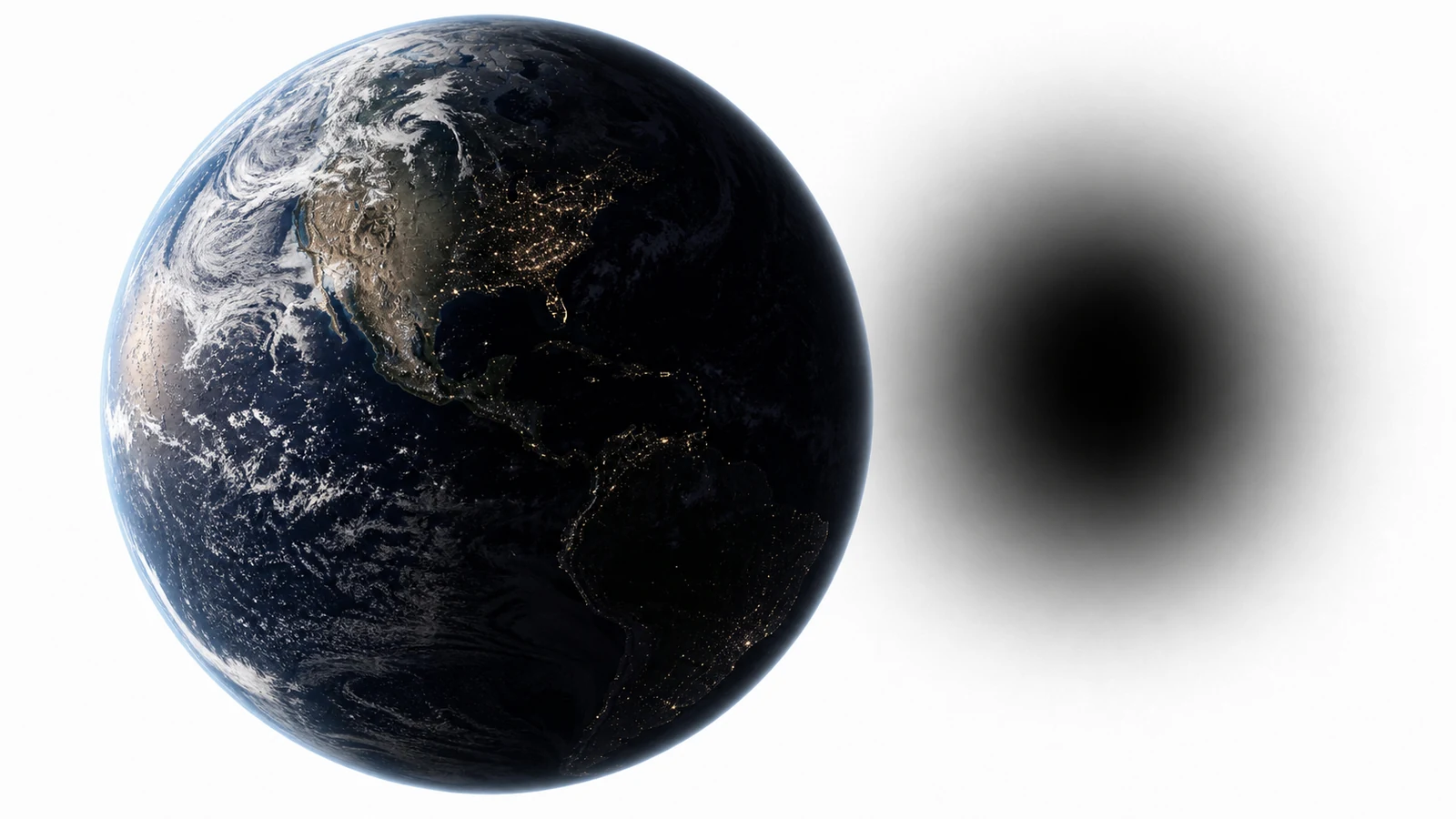
What Happens If the Moon Disappeared? hero image

The short answer

If the Moon disappeared, tides would shrink to weaker solar tides, nights would be darker, Earth's axial tilt would become less stable over geological time, and ecosystems tied to lunar light and tides would change.

Ocean tides

Differential lunar gravity creates tidal bulges that produce high and low tides.

Curiosity twist

Earth's Moon is unusually large for a terrestrial planet and likely formed from a giant impact with the early Earth.

Common mistake

Life on Earth would be impossible without the Moon.

What the Moon is doing

The Moon influences Earth through tidal forcing, tidal friction, night illumination, and axial stabilization.

The tides and the life that evolved with them

Lunar tides create intertidal zones where organisms repeatedly face air and water. Those habitats may have helped drive adaptations that made the move from ocean to land easier.

Memorable line: The Moon may have helped create the pressure that drove the first creatures onto land.

The axial tilt problem

Earth's tilt produces seasons. The Moon helps keep that tilt within a narrow range. Without it, simulations suggest the tilt could vary chaotically over millions of years, making long-term climate stability rarer.

Memorable line: The Moon does not just light the night. It helps keep the seasons stable enough for life to plan around them.

The Moon's effects on Earth

The Moon acts on Earth through overlapping mechanisms.

1

Ocean tides

Differential lunar gravity creates tidal bulges that produce high and low tides. Solar tides would remain, but they are much weaker.

2

Axial tilt stabilization

The Moon's mass resists torques from other planets that would otherwise destabilize Earth's spin axis. Mars lacks this stabilizer and has chaotic tilt history.

3

Rotational braking

Tidal friction slows Earth's rotation and causes the Moon to recede by about 3.8 cm per year. Days were shorter in the deep past.

4

Night illumination

Moonlight affects nocturnal behavior, reproduction, navigation, and predator-prey dynamics. Some mass spawning events are lunar-timed.

Why the Moon is unusually large

The Giant Impact Hypothesis proposes that a Mars-sized body struck early Earth about 4.5 billion years ago, ejecting material that formed the Moon. The collision may also have helped set Earth's tilt and later habitability conditions.

Moon facts that surprise

The Moon is moving away
Apollo retroreflectors show the Moon receding about 3.8 cm per year.
The Moon stabilizes climate indirectly
By stabilizing tilt, it helps maintain season patterns over long timescales.

Is the Moon essential for life on Earth?

Myth

The myth

Life on Earth would be impossible without the Moon.

Reality

The reality

Simple life might persist without it. The stronger claim is that the Moon likely increased the probability of complex life by stabilizing climate and shaping tidal habitats. Why people think this: The Moon's importance is real enough that probabilistic claims often become absolute claims.

Lunar effects we see daily

Coral spawning and the full moon
Many corals time mass spawning to lunar light and tidal cycles, including events on the Great Barrier Reef.

The accident that made us possible

The Moon is one of the improbable features in Earth's habitability story: born from catastrophe, then acting as stabilizer.

Surprising consequence: The search for habitable exoplanets may need to consider axial stability, not just distance from a star.

Worth noting

The borrowed stability

We live on a planet stabilized by debris from an ancient collision. The Moon is not decoration; it is part of the system that made Earth familiar. The Moon is a scar from an ancient collision that accidentally became a shield.

Quick answers

Common questions

How much darker would nights be without the Moon?

A full moon is roughly ten times brighter than starlight alone, so moonless nights would be dramatically darker to human eyes.

If the Moon disappeared, would tides stop?

No. Solar tides would remain, but they would be much smaller and follow a different rhythm.