Earth & Space

What Happens If All Bees Disappear?

The famous Einstein quote about bees is probably fake. The science behind it is not. The quote that humans would have only four years left if bees disappeared is probably not Einstein's. But the question is real. Bees are central to crop diversity, wild plant reproduction, and the ecosystems that support food webs. A world without bees would not starve immediately. It would become less nutritious, less diverse, more expensive, and ecologically poorer.

Quick answer

If all bee species disappeared, many flowering plants and pollinator-dependent crops would fail or yield far less. Staple grains such as wheat, rice, and corn would survive, but fruits, vegetables, nuts, berries, coffee, and many micronutrient-rich foods would become scarcer and more expensive. Honeybees are not native to North America. The continent's thousands of native bee species often pollinate specific plants more effectively.
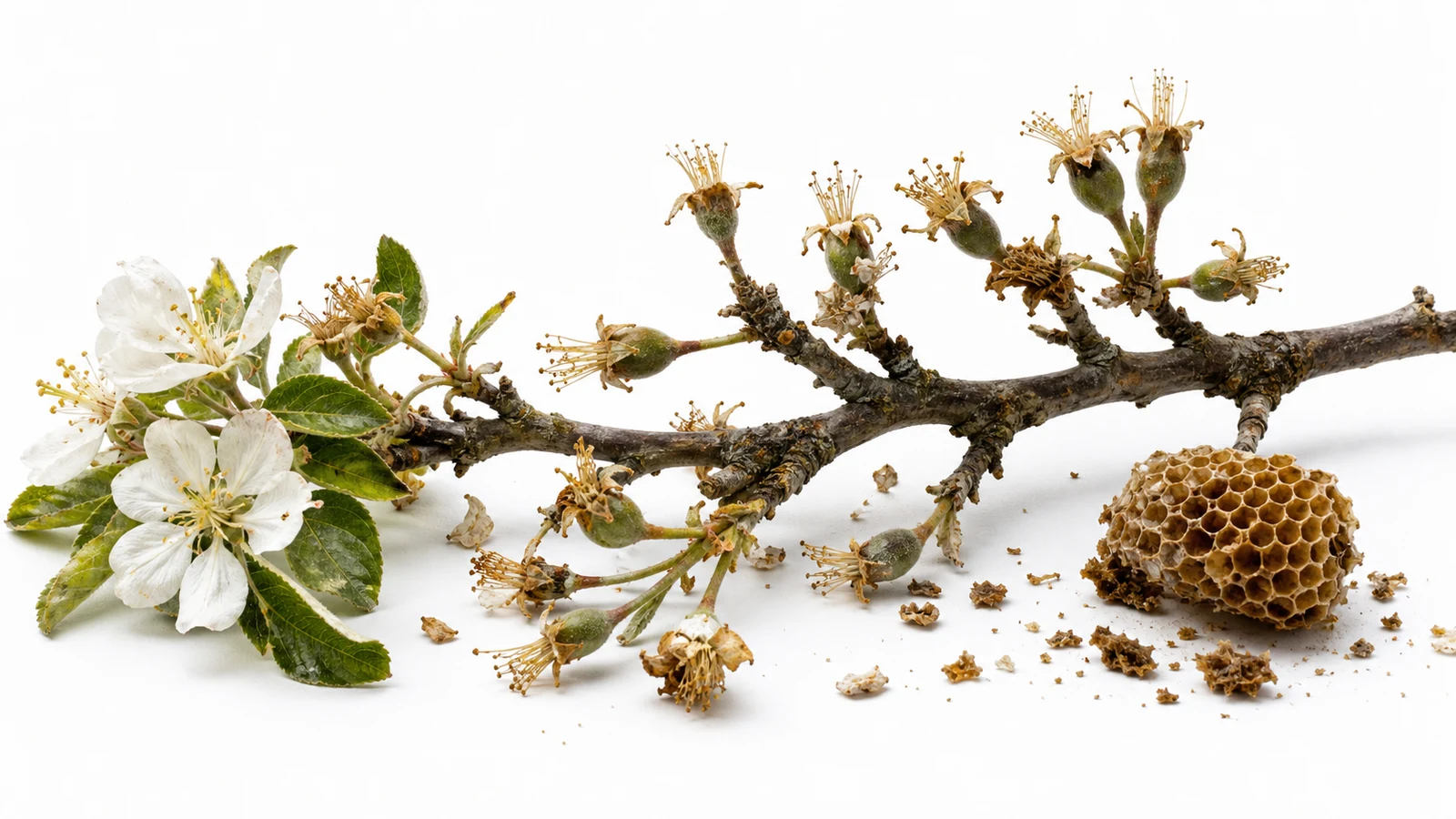
What Happens If All Bees Disappear? hero image

The short answer

If all bee species disappeared, many flowering plants and pollinator-dependent crops would fail or yield far less.

Habitat loss

Agricultural intensification removes wildflower meadows, hedgerows, field margins, and nesting sites.

Curiosity twist

Honeybees are not native to North America.

Common mistake

All bees are disappearing globally and will soon vanish.

What bees actually do

Animal pollination supports many of the crops that provide variety and nutrition, and bees are the dominant animal pollinators globally.

The foods that depend on bees

Almonds, apples, blueberries, avocados, melons, cucumbers, pumpkins, sunflowers, coffee, and many orchard fruits depend heavily on bee pollination. The calorie staples would remain, but the vitamins, minerals, oils, and dietary diversity would take the hit.

Memorable line: A world without bees would not starve. It would develop nutritional deficiency.

The cascade through ecosystems

Bees pollinate wildflowers, shrubs, and trees that feed birds, mammals, insects, and the predators that depend on them. Without pollination, seed and fruit production drops, forest regeneration slows, and food webs thin out over time.

Memorable line: Bees do not just make food. They make the world more alive.

Why bees are disappearing

Bee populations face multiple simultaneous stressors.

1

Habitat loss

Agricultural intensification removes wildflower meadows, hedgerows, field margins, and nesting sites. In the UK, most wildflower meadows have disappeared since the 1930s.

2

Pesticides

Neonicotinoids and other pesticides can impair navigation, foraging, reproduction, and survival. Systemic pesticides can reach pollen and nectar.

3

Pathogens and parasites

Varroa mites and viruses are major causes of honeybee colony loss, while wild bees face their own disease pressures. The parasite is often more damaging than lack of flowers in managed hives.

4

Climate change

Warming shifts flowering and bee emergence times, potentially desynchronizing plants and pollinators. A flower can bloom before its pollinator is active.

Why we notice honeybees but not native bees

Honeybees are managed, economically visible, and tracked by beekeepers. Wild bees are more diverse, harder to monitor, and often more important for specific plants, but they have no commercial lobby and no honey product to make their decline visible.

Bee facts that surprise

Almonds depend on a huge annual bee migration
California almonds require a massive share of US managed honeybee colonies every February for pollination.
Some orchards are hand-pollinated
In parts of China, farmers have hand-pollinated fruit trees where pollinator populations were severely reduced.

Are bees actually going extinct?

Myth

The myth

All bees are disappearing globally and will soon vanish.

Reality

The reality

Managed honeybee numbers are relatively stable globally because beekeepers replace colonies. The deeper crisis is wild bee diversity and native species decline, which is harder to measure and harder to reverse. Why people think this: Colony collapse disorder made honeybees the public face of a broader pollinator problem.

Bees in the economy

The California almond dependency
The almond industry rents bee colonies at enormous scale, showing what happens when free ecosystem pollination is no longer enough.

Ecosystem services we price at zero

Pollination is worth hundreds of billions of dollars globally, but because wild organisms provide it for free, markets often price it at zero until it starts disappearing.

Surprising consequence: The foods most associated with healthy diets are often the most pollinator-dependent, so bee decline makes healthy eating less accessible.

Worth noting

The free service we forgot about

Every apple, almond, blueberry, and cup of coffee depends on pollination work that humans did not invent and mostly do not pay for. Bees do not work for us. We work with them, and we have been forgetting to pay attention to the arrangement.

Quick answers

Common questions

Could we replace bees with drones?

Not at meaningful scale. Robotic pollination exists in experiments, but bees visit billions of flowers cheaply, efficiently, and without charging batteries.