Philosophy & Thinkers

Why Was Nietzsche Misunderstood by So Many People?

His ideas were hijacked, twisted, and weaponized in ways he would have found appalling. Nietzsche attacked German nationalism, antisemitism, and herd mentality. Later nationalists quoted him as if he belonged to them.

Quick answer

Nietzsche was misunderstood because his sister controlled and distorted his archive, his aphoristic style made selective quotation easy, and his most provocative concepts were ripped away from their context. The people who claimed him often represented exactly the mass politics he despised.
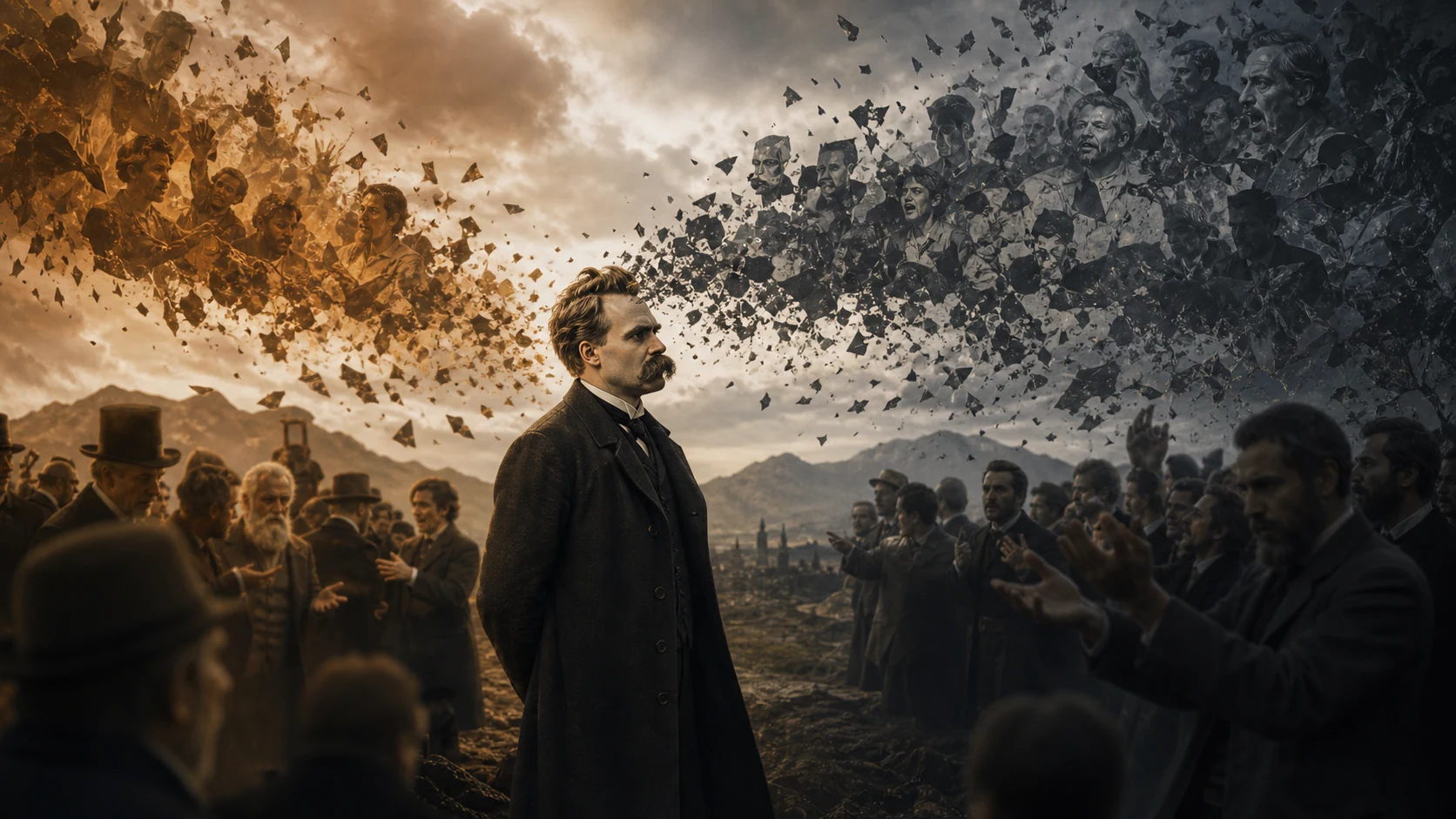
Why Was Nietzsche Misunderstood by So Many People? hero image

The hook

His sister Elisabeth shaped his posthumous archive.

The hidden mechanism

Aphorisms made him unusually easy to quote badly.

The twist

Concepts like Ubermensch and will to power were stripped from context.

Common mistake

He was not a proto-fascist.

How His Sister Reframed the Legacy

After Nietzsche's mental collapse in 1889, Elisabeth Forster-Nietzsche gained control of his manuscripts. She was a nationalist and antisemite, positions Friedrich had repeatedly attacked.

She promoted The Will to Power as if it were his masterwork, though it was assembled from unpublished fragments. That editorial framing pushed readers toward a distorted political Nietzsche.

Why His Style Made It Easy

Nietzsche wrote in sharp, memorable bursts. That makes the prose powerful, but it also lets a sentence travel without its argument.

A phrase about strength, overcoming, or power can sound like domination when removed from the broader project: a critique of inherited values and resentful mass morality.

The Concepts That Got Twisted

The popular versions are often almost the opposite of the philosophical versions.

1

Ubermensch

An individual ideal of value-creation became falsely racialized by later readers.

2

Will to power

A broad drive toward expression and overcoming got reduced to crude domination.

3

God is dead

A warning about a moral vacuum was mistaken for simple triumphant atheism.

The Deeper Problem: Complex Ideas Travel Badly

Nietzsche expected to be misunderstood because he was writing for readers who could hold competing tensions at once. Many readers encountered him through political labels first and texts second.

The real damage came from a feedback loop: bad editions created bad readings, and bad readings made the bad editions seem plausible.

The Common Misunderstanding

Myth

Nietzsche's philosophy naturally led to fascism.

It is an easy explanation because it makes the story simpler than it really was.

Reality

His actual work repeatedly attacks nationalism, antisemitism, and mass herd politics.

The real explanation is more interesting because it shows the system, pressure, and tradeoffs behind the event.

Why It Mattered

Immediate effect
His reputation became a warning about archive control and selective quotation.
Long-term effect
Scholars had to reconstruct the authorized Nietzsche against the manufactured one.
Modern echo
Online quote culture repeats the same decontextualizing habit today.
Best way to remember it
Nietzsche was misunderstood because his sharpest sentences survived more easily than the difficult arguments that made them mean something.

Worth noting

Key Takeaway

Nietzsche was misunderstood because his sharpest sentences survived more easily than the difficult arguments that made them mean something.

Quick answers

Common questions

Should The Will to Power be treated as Nietzsche's main book?

No. It is an editorial compilation from notes, not an authorized finished work.

What should readers start with?

Beyond Good and Evil and On the Genealogy of Morality are better guides to his mature arguments.