Philosophy & Thinkers

Why Did Confucius Become So Influential?

He spent most of his life as a failure. Then his ideas ran a civilization for two thousand years. Confucius died without seeing rulers adopt the reforms he cared about. History reversed the verdict after he was gone.

Quick answer

Confucius became influential because his ideas solved a governing problem: how to hold a large society together without constant force. Ritual, education, relationships, and moral leadership gave later empires a durable operating system. His lifetime looked like failure. His afterlife became one of the most successful political philosophies ever built.
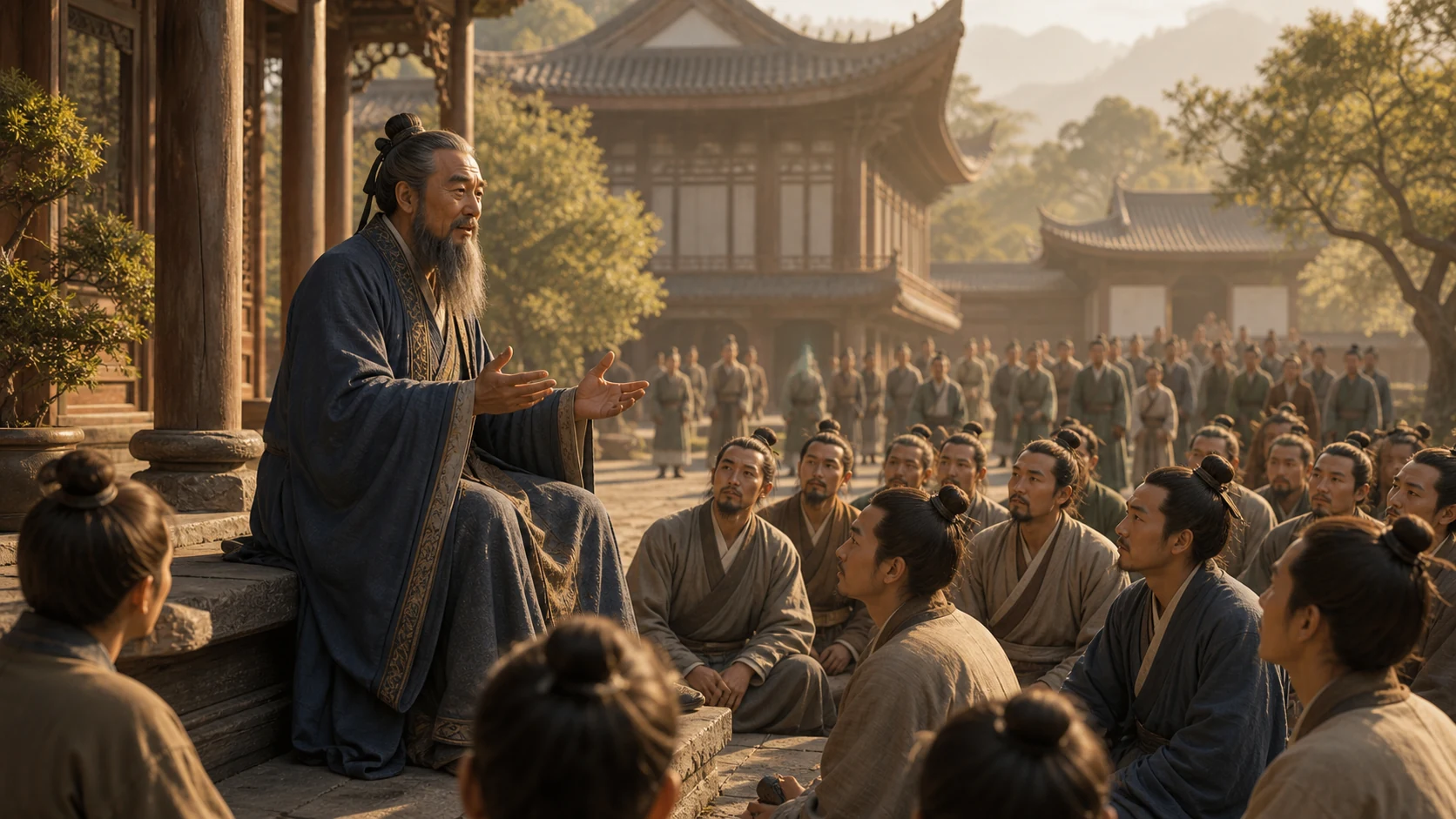
Why Did Confucius Become So Influential? hero image

The hook

He spent years seeking rulers who mostly ignored him.

The hidden mechanism

His system made social order depend on reciprocal obligations.

The twist

The Han dynasty turned Confucianism into state ideology.

Common mistake

It was not simply blind obedience to authority.

The Problem He Was Trying to Solve

Confucius lived as the old Zhou order was weakening and rival states fought for power. He saw political chaos as a failure of relationships: rulers stopped acting like rulers, ministers like ministers, parents like parents, and children like children.

His solution was not mainly law or coercion. It was moral cultivation reinforced by ritual and education.

Why Empires Found It Useful

Confucianism justified hierarchy, but it also constrained it. A ruler owed humane government; ministers owed honest service, including criticism when the ruler was wrong.

For bureaucrats, it created a path where learning and moral refinement mattered. The examination tradition made the state imagine itself as a meritocracy, even when reality was imperfect.

The Relationships That Built the System

Confucius treated society as a web of roles, each with duties in both directions.

1

Ruler and minister

The ruler must govern humanely; the minister must serve loyally and speak honestly.

2

Parent and child

Filial piety trained people to see obligation as something larger than immediate self-interest.

3

Family, age, and friendship

The other relationships extended the same logic outward, while friendship remained a moral relationship between equals.

The Deeper Reason: He Made Virtue Practical

Confucius did not treat virtue as a mood. He treated it as a skill practiced through rituals, forms of address, study, and repeated conduct.

The surprising insight is behavioral: act with care often enough, and the inner disposition can be trained by the outer form.

The Common Misunderstanding

Myth

Confucianism is just blind obedience to authority.

It is an easy explanation because it makes the story simpler than it really was.

Reality

Confucius emphasized reciprocal duties and the minister's obligation to correct rulers.

The real explanation is more interesting because it shows the system, pressure, and tradeoffs behind the event.

Why It Mattered

Immediate effect
It gave Chinese empires a shared moral language.
Long-term effect
It shaped education, bureaucracy, family life, and political legitimacy across East Asia.
Modern echo
Modern civil-service ideals still echo the belief that learning should qualify power.
Best way to remember it
Confucius became influential because he turned virtue into a practical technology for governing large societies.

Worth noting

Key Takeaway

Confucius became influential because he turned virtue into a practical technology for governing large societies.

Quick answers

Common questions

Is Confucianism a religion?

It has rituals and sacred texts, but no central personal God or salvation doctrine. It is often described as ethical and political philosophy with religious dimensions.

What is the Analects?

A collection of sayings and conversations attributed to Confucius, compiled by students after his death.