1
01. Foil enters the dishwasher with intact oxide layer
Normal, protective aluminium oxide surface is present.
Everyday Science
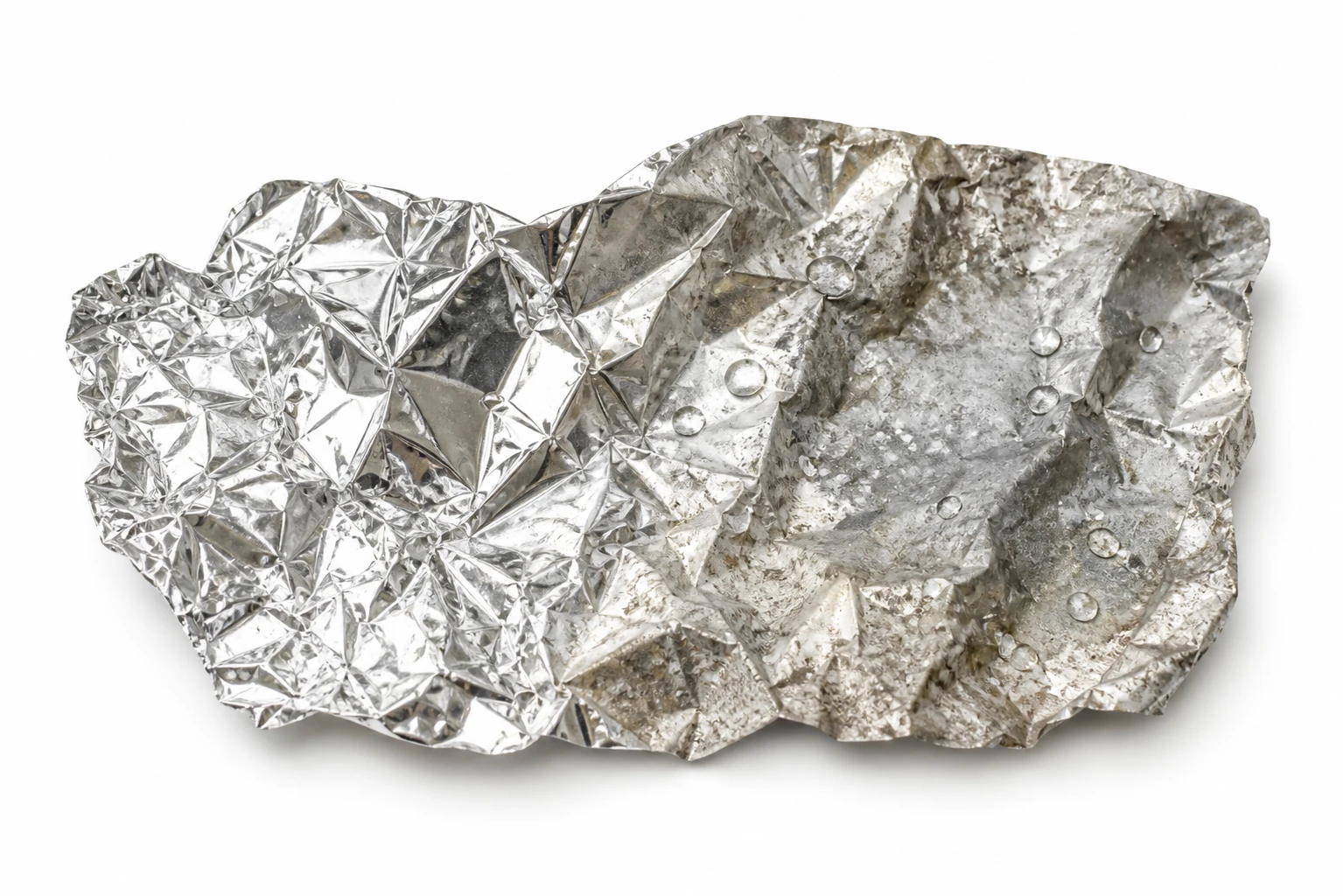
What happens when alkaline detergent meets aluminium at high temperature - and why the result is permanent. Brilliant silver aluminium foil goes into the dishwasher and comes out dull, matte, and slightly ghostly looking. This is not the dishwasher's fault, exactly, nor the foil's. It is a chemical reaction that the combination of hot water, alkaline detergent, and aluminium basically cannot avoid. The answer involves aluminium oxide, alkaline chemistry, and why aluminium handles acidic and neutral conditions well but struggles specifically with alkaline ones.
Quick answer
Tin foil, which is actually aluminium, dulls in the dishwasher because the strongly alkaline detergent at high temperatures dissolves the protective aluminium oxide layer on the foil's surface and attacks the aluminium itself, creating a rough, matte surface that scatters light rather than reflecting it. Aluminium is normally protected from corrosion by a thin oxide layer that forms almost instantly on contact with air. Alkaline conditions dissolve this protective layer and attack the underlying metal, which is why aluminium and dishwashers are considered incompatible.
The mystery
The answer involves aluminium oxide, alkaline chemistry, and why aluminium handles acidic and neutral conditions well but struggles specifically with alkaline ones.
The short answer
Tin foil, which is actually aluminium, dulls in the dishwasher because the strongly alkaline detergent at high temperatures dissolves the protective aluminium oxide layer on the foil's surface and attacks the aluminium itself, creating a rough, matte surface that scatters light rather than reflecting it.
The twist
Aluminium is normally protected from corrosion by a thin oxide layer that forms almost instantly on contact with air. Alkaline conditions dissolve this protective layer and attack the underlying metal, which is why aluminium and dishwashers are considered incompatible.
Common mistake
Some assume that multiple dishwasher exposures accumulate damage progressively.
Everyday Science
Partially, using acidic cleaners like cream of tartar or commercial aluminium polish, which clean the surface but cannot fully restore the original surface texture.
The chemistry of protective oxide layers
The understanding that certain metals self-protect through spontaneous surface oxide formation, developed systematically in the 19th century.
Where alkaline attack on metals matters
Non-anodized aluminium pots and pans undergo the same dulling and surface damage for identical chemical reasons.
Where alkaline attack on metals matters
Brass and copper items also suffer in dishwashers, though through different but related electrochemical reactions.
Does dishwasher foil damage become worse over repeated washes?
The most significant damage occurs in the first wash when the initial oxide layer is removed; subsequent washes continue attacking the newly reformed oxide but the surface is already roughened.
Continue learning