1
01. Unrolling generates electrostatic charge
Friction between film layers transfers electrons.
Everyday Science
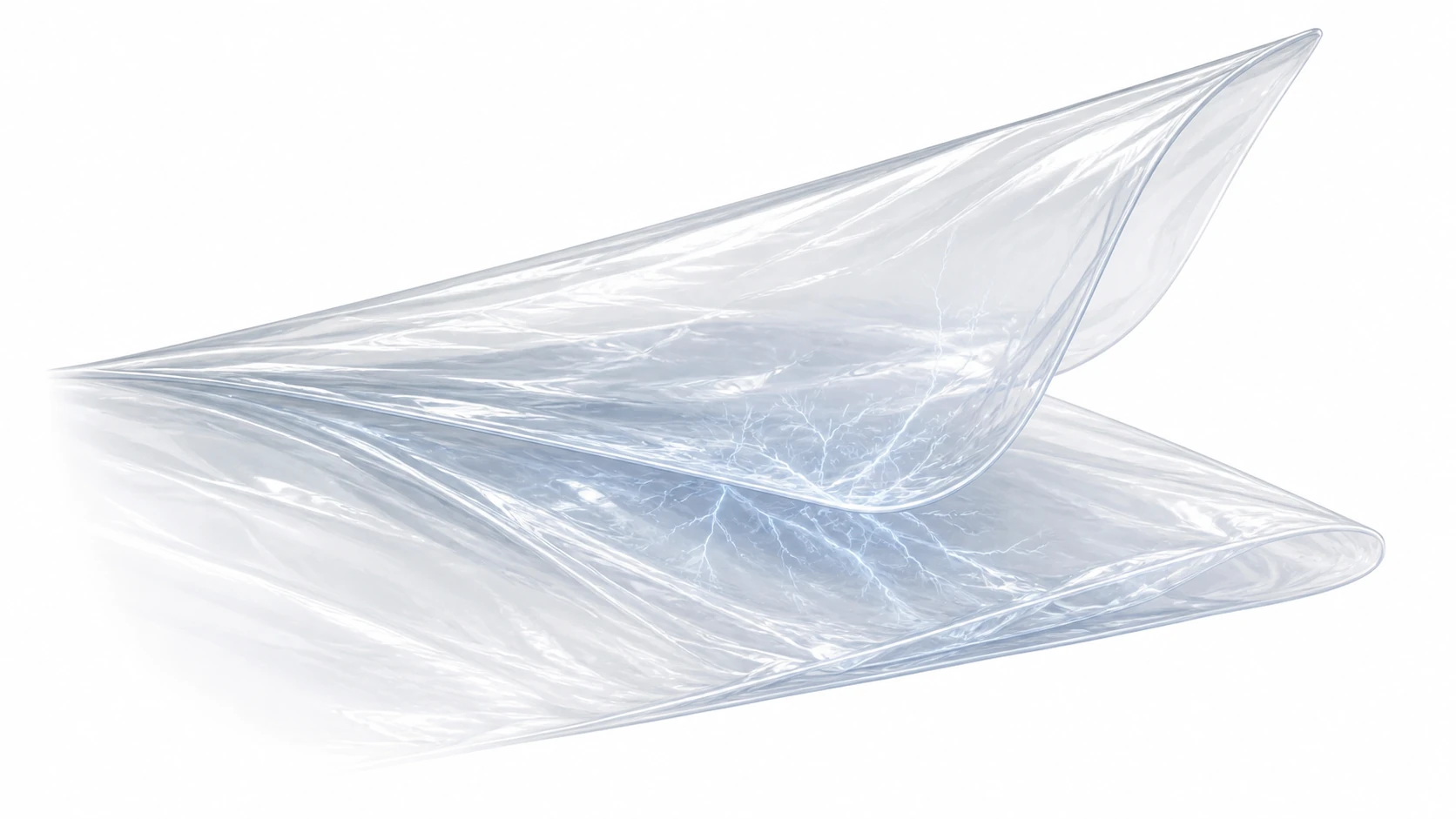
A material designed to be inconvenient in specifically the way that makes it useful. Plastic wrap sticks to itself with infuriating determination and to almost nothing else with any reliability whatsoever, unless that nothing else happens to be your hand, the edge of the box, or another piece of plastic wrap that is now utterly inseparable from the first piece. This behavior is not an accident. It is chemistry, and it works exactly as designed. The answer involves electrostatic charge, molecular polarity, and the specific reason plastic wrap sticks enthusiastically to glass and stainless steel while barely bothering with wood.
Quick answer
Plastic wrap sticks through a combination of very weak electrostatic charges accumulated during unrolling, molecular polar interactions between the plastic and certain surfaces, and the flexibility of the thin film itself allowing maximum molecular contact area with smooth surfaces. Plastic wrap sticks better to some surfaces than others because of chemistry - it clings well to glass and polished metal due to polar molecular interactions, while struggling with polyethylene and wood, which have incompatible surface chemistry.
The mystery
The answer involves electrostatic charge, molecular polarity, and the specific reason plastic wrap sticks enthusiastically to glass and stainless steel while barely bothering with wood.
The short answer
Plastic wrap sticks through a combination of very weak electrostatic charges accumulated during unrolling, molecular polar interactions between the plastic and certain surfaces, and the flexibility of the thin film itself allowing maximum molecular contact area with smooth surfaces.
The twist
Plastic wrap sticks better to some surfaces than others because of chemistry - it clings well to glass and polished metal due to polar molecular interactions, while struggling with polyethylene and wood, which have incompatible surface chemistry.
Common mistake
Many people assume plastic wrap creates a completely airtight seal around food.
Everyday Science
The torn edge has lost the accumulated charge from unrolling, and the self-adhesion chemistry requires fresh charge to work effectively.
The inventor of Saran Wrap
A Dow Chemical worker who discovered polyvinylidene chloride accidentally in 1933 while cleaning lab equipment; the material was initially used as a military equipment coating before becoming the first commercial food wrap.
Where thin-film adhesion matters
Tinted window films use similar electrostatic and molecular adhesion principles to attach to glass surfaces without liquid adhesives.
Where thin-film adhesion matters
Industrial food packaging uses engineered film adhesion for precise oxygen and moisture barrier properties.
Does plastic wrap actually create an airtight seal?
Standard plastic wrap is gas-permeable to varying degrees, though PVDC-based wraps had significantly better oxygen barrier properties than modern polyethylene versions.
Continue learning