Everyday Science

Why Does Oil Float on Water?

Two liquids that refuse to mix, for reasons that go back to their molecular personalities. Pour oil into a glass of water and it never blends in - it gathers itself into golden pools and sits stubbornly on top, no matter how thoroughly you stir it. This is not laziness. Oil and water are, at a molecular level, simply incompatible in a way that has nothing to do with mixing technique. The answer involves polarity, density, and why oil and water have been famously refusing to get along since long before the phrase existed.

Quick answer

Oil floats on water primarily because it is less dense than water, and the two liquids do not mix because water molecules are polar while oil molecules are nonpolar, so they are chemically incompatible and naturally separate. Even if oil were somehow made denser than water, it would still refuse to dissolve into it - density explains why it floats, but polarity explains why it never blends.
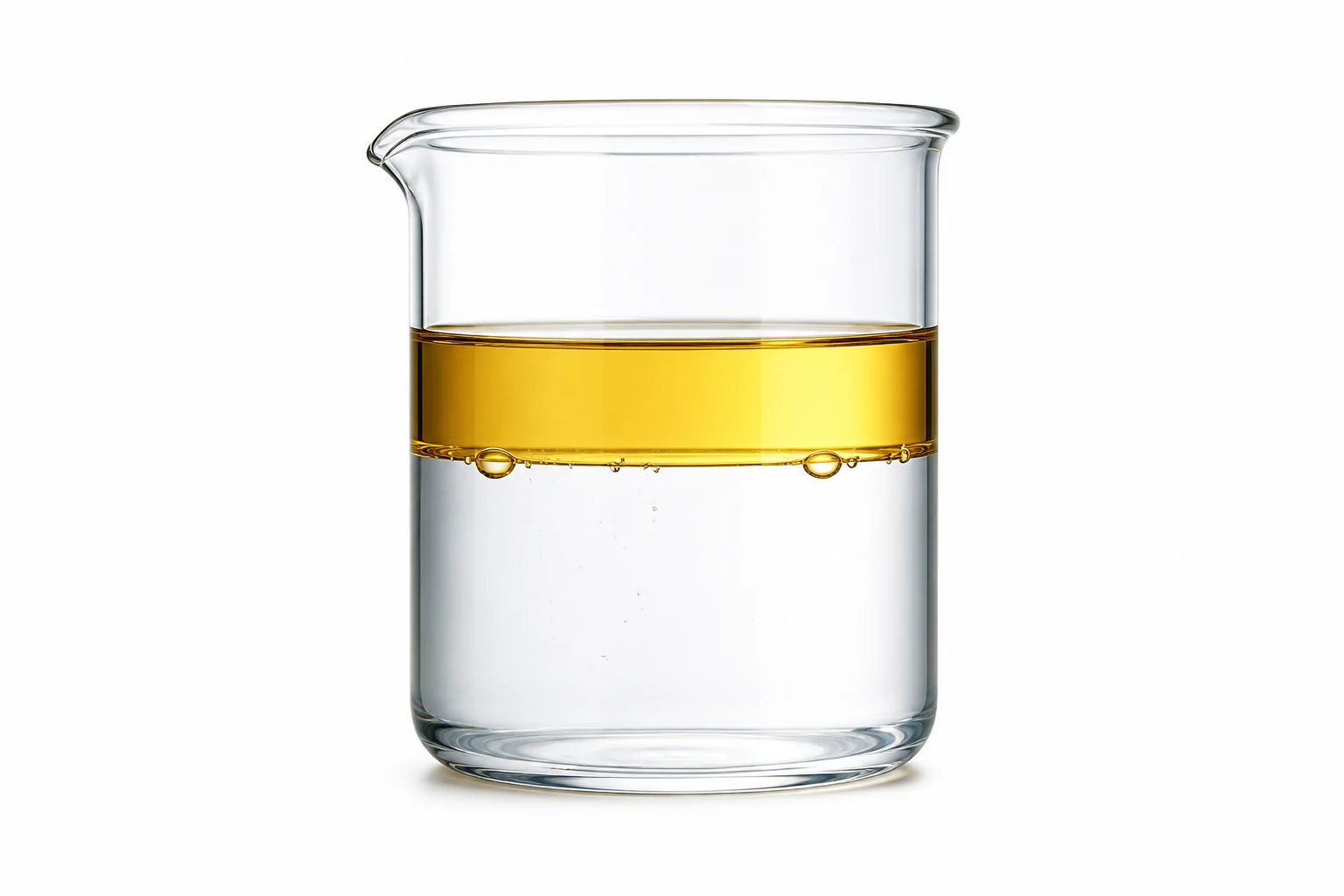
Why Does Oil Float on Water? hero image

The mystery

The answer involves polarity, density, and why oil and water have been famously refusing to get along since long before the phrase existed.

The short answer

Oil floats on water primarily because it is less dense than water, and the two liquids do not mix because water molecules are polar while oil molecules are nonpolar, so they are chemically incompatible and naturally separate.

The twist

Even if oil were somehow made denser than water, it would still refuse to dissolve into it - density explains why it floats, but polarity explains why it never blends.

Common mistake

Many people assume oil floats simply because it is more viscous, or "thicker," than water.

Two separate reasons working together

Oil's behavior on water is really the result of two distinct properties - density and molecular polarity - acting at the same time.

Oil is simply lighter for its size

Oil molecules are packed less tightly than water molecules, giving oil a lower density - roughly 0.92 grams per milliliter compared to water's 1.0.

Less dense substances naturally rise above denser ones, which is the immediate reason oil ends up on top.

Oil floats for the same simple reason a beach ball floats: it weighs less for the space it takes up.

Water molecules prefer their own company

Water molecules are polar, meaning they have a slightly positive and slightly negative end, allowing them to form strong hydrogen bonds with each other.

Oil molecules are nonpolar and cannot participate in these bonds, so water molecules effectively squeeze oil out rather than make room for it.

Water is not avoiding oil out of spite; it is simply too busy holding hands with itself.

Why stirring never solves it permanently

Vigorous stirring can temporarily break oil into small droplets suspended in water, but the two liquids separate again almost immediately once stirring stops.

True mixing would require an emulsifier, a substance capable of bridging the polar and nonpolar worlds, like soap or egg yolk.

Oil and water are not arguing during a stir; they are simply waiting out a temporary inconvenience.

Why oil and water separate so reliably

A short sequence explains exactly what happens whenever the two liquids meet.

1

01. Oil and water are combined

The two liquids are poured into the same container.

2

02. Water molecules bond strongly with each other

Polar water molecules form a tight hydrogen-bonded network, excluding oil molecules.

3

03. Oil molecules clump together instead

Nonpolar oil molecules are drawn to each other rather than to water, forming separate droplets or pools.

4

04. Density sorts the layers

The less dense oil rises to settle clearly above the denser water.

What this teaches about molecular chemistry

Oil and water's refusal to mix is one of the clearest everyday illustrations of the principle that "like dissolves like" - polar substances mix readily with other polar substances, while nonpolar substances mix only with other nonpolar substances.

This single chemical rule governs an enormous range of practical phenomena, from why soap cleans grease to why certain medications must be specially formulated to dissolve in the body.

Surprising oil and water facts

Soap works by bridging the divide
Soap molecules have both a polar and nonpolar end, allowing them to surround oil droplets and suspend them in water.
Salad dressing relies on temporary emulsion
Vinaigrettes separate quickly because they typically lack a stable emulsifier, unlike mayonnaise.
Oil spills exploit this same separation
Crude oil spreads across ocean surfaces precisely because it floats and resists mixing into seawater.

Isn't it just about oil being thicker than water?

Myth

Many people assume oil floats simply because it is more viscous, or "thicker," than water.

Oil's slow-pouring, sticky texture makes "thickness" feel like an intuitive, though incorrect, explanation.

Reality

Viscosity has nothing to do with floating; the actual cause is oil's lower density and its chemical incompatibility with water's polarity.

Viscosity has nothing to do with floating; the actual cause is oil's lower density and its chemical incompatibility with water's polarity.

Where this separation principle matters

Cooking
Chefs use emulsifiers like egg yolk to stabilize sauces that would otherwise separate, such as hollandaise.
Environmental cleanup
Oil spill containment relies directly on oil's tendency to float and stay separated from water.

Why this kitchen-counter chemistry matters

Understanding why oil and water separate underlies food science, environmental cleanup methods, and even pharmaceutical formulation.

It explains both why your vinaigrette needs shaking and why oil spills can be contained and skimmed off ocean surfaces.

Worth noting

A friendship that was never going to happen

Oil and water are not failing to mix; they are simply following a molecular rulebook that has never once allowed an exception. Few relationships in chemistry are as famously, reliably doomed as oil and water.

Quick answers

Common questions

Can oil ever permanently mix with water?

Not without an emulsifier - left alone, oil and water will always separate again over time.

Does temperature affect whether oil and water mix?

Heat can temporarily affect viscosity and droplet size, but it does not change the fundamental polar versus nonpolar incompatibility.

Everyday Science

Related questions

Soap molecules surround grease with their nonpolar ends while their polar ends bond with water, washing it away.

The chemistry behind polarity

Molecular Polarity Theory

A foundational chemistry concept describing how uneven electron distribution gives molecules positive and negative regions.

Related questions

Why do oil spills spread so far across the ocean?

Oil's low density and resistance to mixing let it spread thinly across the water's surface.

Where this separation principle matters

Cooking

Chefs use emulsifiers like egg yolk to stabilize sauces that would otherwise separate, such as hollandaise.

Where this separation principle matters

Environmental cleanup

Oil spill containment relies directly on oil's tendency to float and stay separated from water.

Isn't it just about oil being thicker than water?

Viscosity has nothing to do with floating; the actual cause is oil's lower density and its chemical incompatibility with water's polarity.

Viscosity has nothing to do with floating; the actual cause is oil's lower density and its chemical incompatibility with water's polarity.