Those tiny copper dots on your pockets

Why Do Jeans Have Rivets?

Jeans rivets look like style details now. They were originally tiny metal reinforcements placed where work pants ripped the fastest.

Quick answer

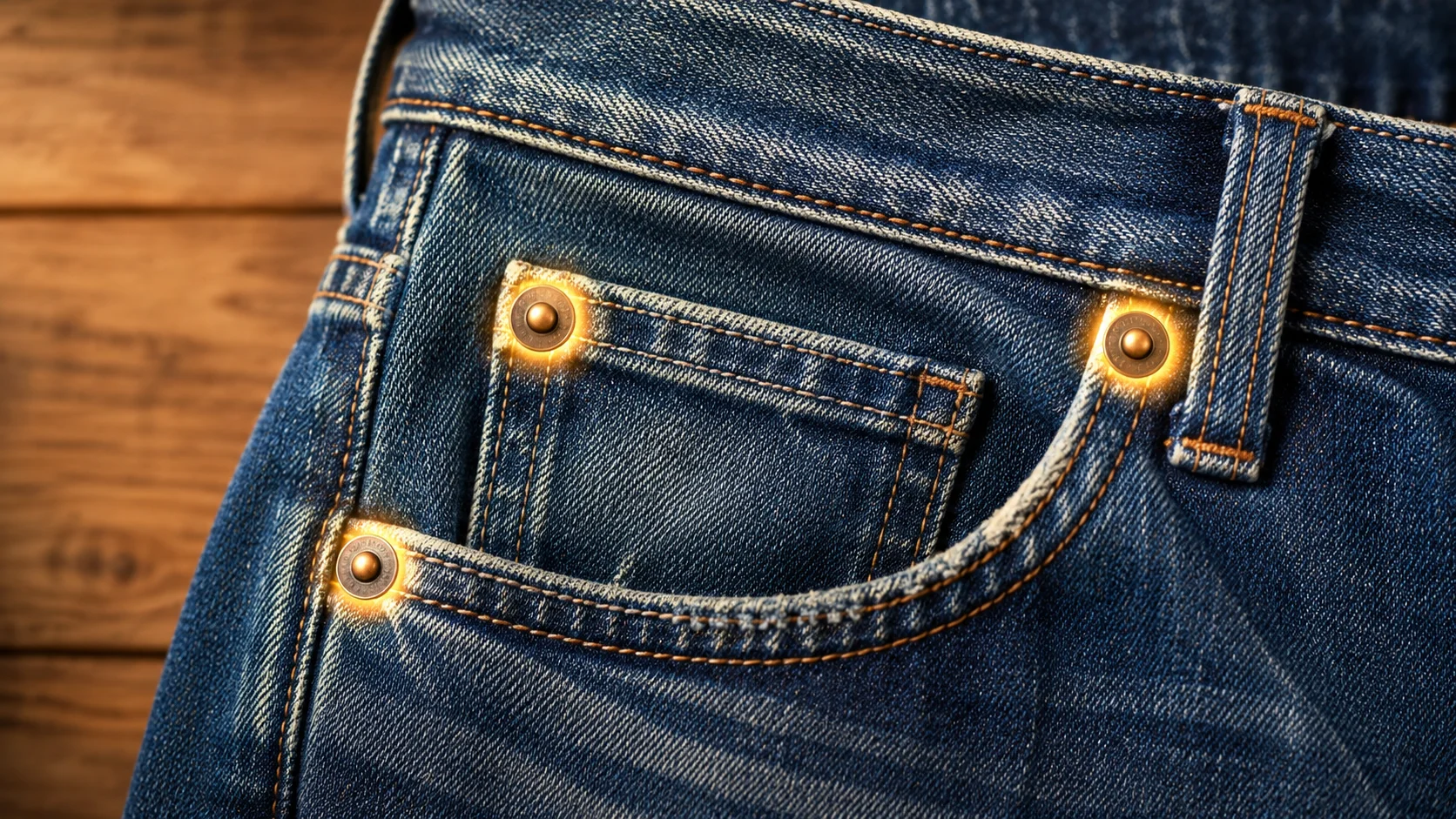
Pocket corners were the weak point on work pants. They'd rip under the weight of tools, gold, and hard labor. In 1871 a tailor named Jacob Davis started hammering copper rivets into those corners to stop them tearing. It worked so well that he partnered with Levi Strauss, patented the idea in 1873, and created what we now call blue jeans. Modern denim is stronger and doesn't need rivets the way it used to — but they stayed because they still add reinforcement at stress points, and because they've become the visual identity of jeans.

Close-up of copper rivets on the pocket corners of a pair of blue jeans

Invented

1871, by Jacob Davis

Patented

1873 with Levi Strauss

Original problem

Pockets tearing on laborers

Still functional?

Partly — mostly tradition now

A tailor, some leftover copper, and a very real problem

In 1870, a woman came to Jacob Davis's tailor shop in Reno, Nevada with a request: make her husband's work pants last longer. His pockets kept tearing. Davis looked over at his workbench, spotted the copper rivets he'd been using on horse blankets and wagon covers, and had an idea.

He started hammering rivets into the pocket corners of work pants. It solved the problem immediately. The rivets took the pulling force that would have torn the stitching and spread it across the metal fastener instead.

Davis knew the idea was worth protecting but didn't have the $68 for a patent. He wrote to his fabric supplier — Levi Strauss in San Francisco — and offered a partnership. They filed the patent together in 1873. That's the founding document of modern blue jeans.

Myth vs Reality

Myth

Rivets are just decorative now. They don't do anything.

It's easy to assume they're vestigial branding — just a visual signal of 'these are proper jeans.'

Reality

They still reinforce the real stress points.

Front pocket corners still take load when you stuff your pockets. Modern denim is stronger, but the rivets still help at those junction points. The back pocket rivets were eventually removed for scratching furniture — replaced with bar tack stitching that does the same job invisibly.
What changed about rivets from 1873 to today

Original purpose (1873)
Prevent pocket corners from tearing on miners, cowboys, and laborers who loaded pockets with tools and heavy material.
Material then
Copper. Durable, rust-resistant, and available in Davis's workshop.
Material now
Usually brass-plated steel or zinc alloy. Sometimes copper-tone for traditional aesthetics.
Back pocket rivets
Removed by Levi's by 1966 — they scratched furniture and saddles. Replaced with bar tack stitching that reinforces the same points invisibly.
Purpose now
Partly structural (front pocket stress points), partly tradition, partly brand identity. The visual of riveted denim signals 'real jeans.'

Worth noting

The patent expired in 1890 — and the whole industry copied it

Levi Strauss and Jacob Davis held the rivet patent for 17 years. The moment it expired, every workwear manufacturer started adding rivets to their pants. That's why rivets became the universal signal for denim — not because Levi's spread them, but because every competitor immediately wanted the same feature.

Quick answers

Common questions

What are the rivets on jeans for?

They reinforce the stress points on pocket corners and junctions, preventing the fabric and seams from tearing when pockets are loaded or pulled.

Who invented rivets on jeans?

Jacob Davis, a tailor in Reno, Nevada, came up with the idea around 1871. He patented it with fabric supplier Levi Strauss in 1873.

Do jeans rivets still serve a function today?

Partly. Front pocket rivets still add reinforcement at real stress points. Modern denim construction is stronger than 19th-century workwear, so they're less critical — but not purely decorative.

Why did Levi's remove the back pocket rivets?

The back pocket rivets scratched wooden furniture and saddles. Levi's first hid them under folded fabric in 1937, then removed them entirely by 1966 and replaced them with bar tack stitching.

What metal are jeans rivets made of?

Originally copper. Modern rivets are usually brass-plated steel or zinc alloy, chosen for durability and to achieve the classic copper or gold-tone appearance.

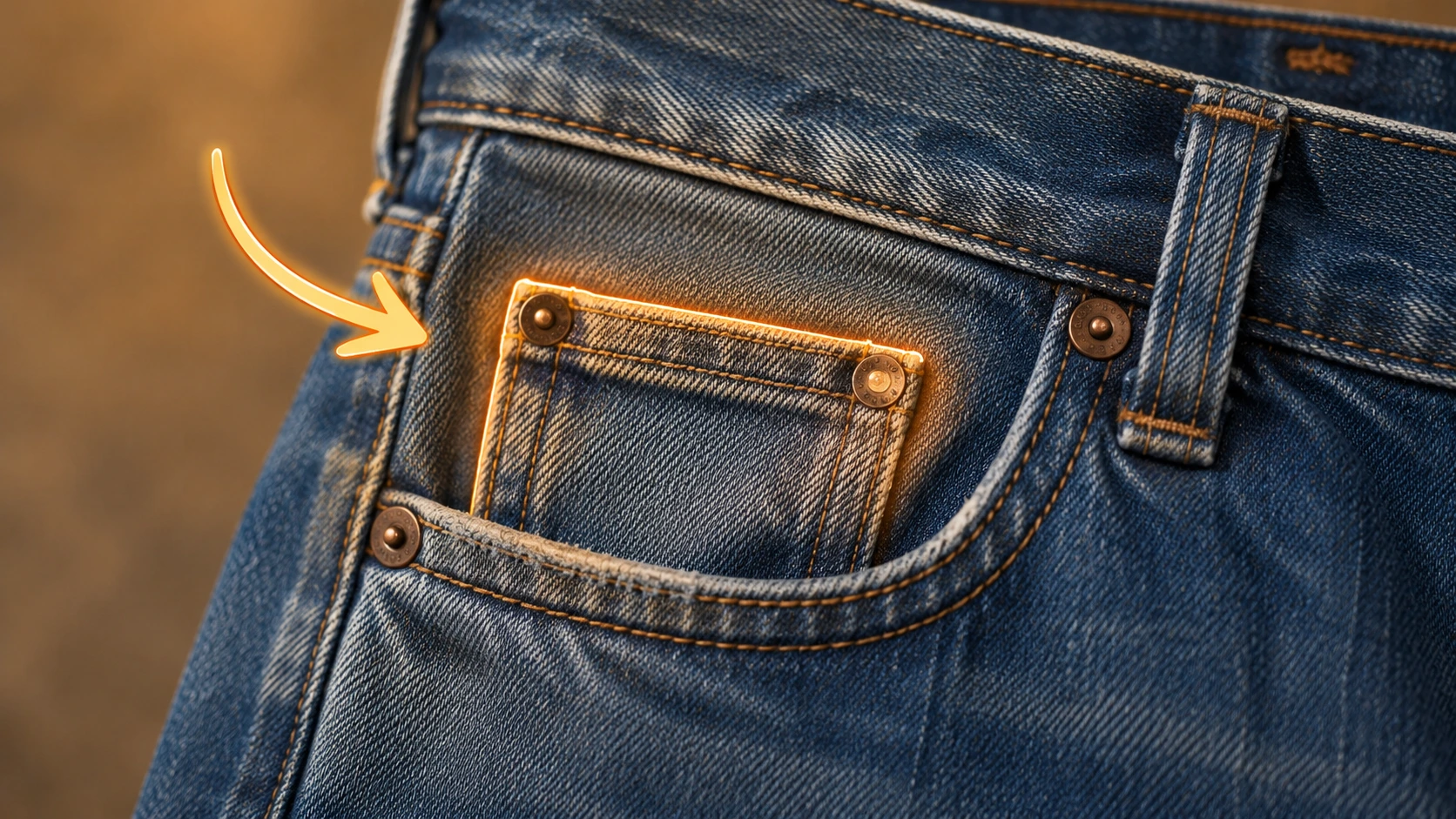
Why is the coin pocket on jeans also riveted?

The small front pocket takes concentrated load from coins, a watch, or other small heavy objects. The rivet prevents that tiny pocket from pulling away from the main fabric.

When did riveted jeans become standard?

The Levi Strauss and Davis patent ran from 1873 to 1890. When it expired, every other workwear maker immediately added rivets to their pants, making them an industry-wide standard almost overnight.

Are rivets on all jeans?

Most jeans include them on front pocket corners, but it's not universal. Some fashion denim skips them or uses decorative alternatives. Premium raw denim brands often treat rivet placement as a point of craft.