Everyday Science

Why Do Straws Look Bent in Water?

A glass of lemonade performs a magic trick every single time, and almost nobody applauds. Drop a straw into a glass of water and something quietly absurd happens: the straw appears to snap in half at the surface, as if the laws of physics had briefly lost interest in their job. The straw, of course, is fine. It is your eyes that have been fooled, by a trick so old that light has been playing it since long before there were eyes around to be fooled by it. The answer involves the speed of light changing lanes, a 17th-century Dutchman, and the reason your eyes are surprisingly easy to lie to.

Quick answer

Light travels slower in water than in air, and bends as it crosses the boundary between the two - a phenomenon called refraction - which shifts the apparent position of everything below the waterline. The straw is not bending even slightly. Your brain is simply assuming light has traveled in a straight line, when in fact it took a small detour.
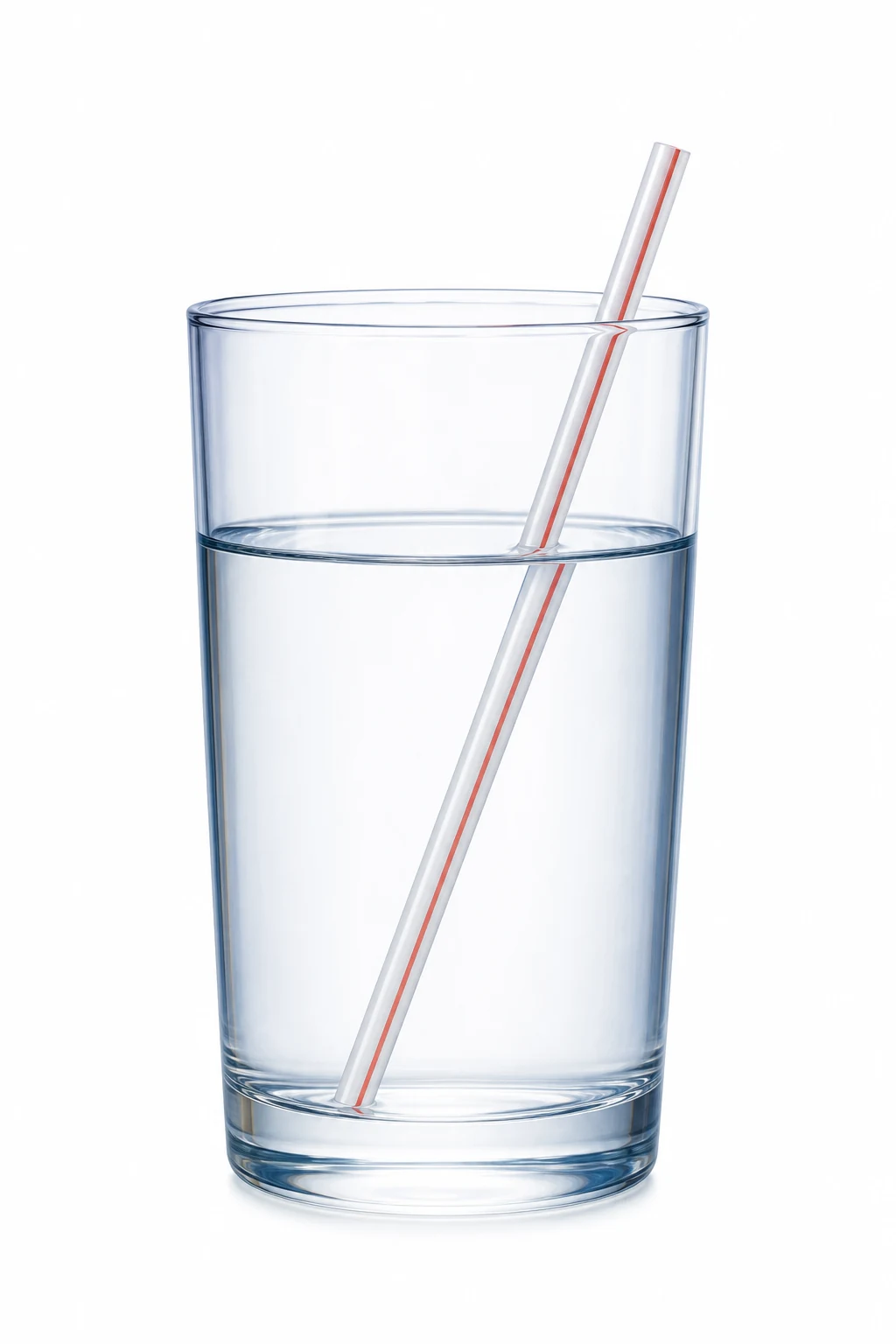
Why Do Straws Look Bent in Water? hero image

The mystery

The answer involves the speed of light changing lanes, a 17th-century Dutchman, and the reason your eyes are surprisingly easy to lie to.

The short answer

Light travels slower in water than in air, and bends as it crosses the boundary between the two - a phenomenon called refraction - which shifts the apparent position of everything below the waterline.

The twist

The straw is not bending even slightly. Your brain is simply assuming light has traveled in a straight line, when in fact it took a small detour.

Common mistake

Some people assume the straw is genuinely flexing under the water's surface tension.

The world's oldest optical illusion

Refraction has been confusing observant humans for thousands of years, but it took surprisingly long for anyone to explain why.

Light takes the slow lane

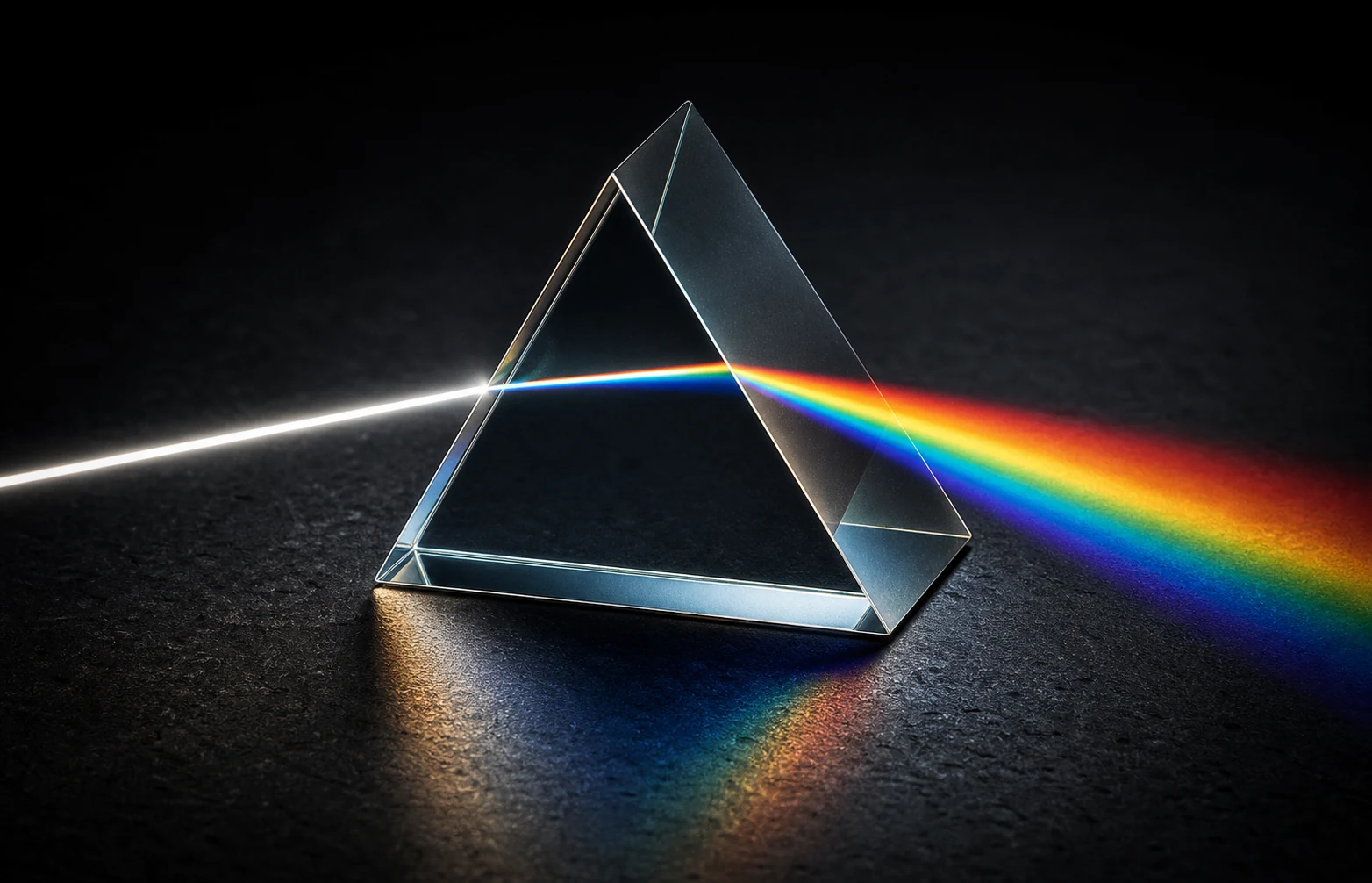
Light moves more slowly through water than through air, because water molecules are packed more densely and keep interrupting its progress.

When light crosses from air into water at an angle, this change in speed causes it to bend, the same way a shopping cart veers when one wheel hits mud and the other does not.

Light does not bend because it wants to. It bends because water is, politely speaking, in its way.

Snell's law gets the credit

The Dutch astronomer Willebrord Snellius worked out the precise mathematical relationship between the angle of light entering water and the angle it bends to, around 1621.

It is one of those tidy little equations that quietly runs the universe without ever showing up at parties.

Snellius solved a riddle that every child with a glass of water rediscovers and nobody else gets credit for.

Your brain assumes a straight line

Eyes do not actually see the straw. They detect light that has bounced off the straw and traveled to your retina.

The brain, which has never once seen light bend and lived to update its assumptions, reconstructs the straw's position by tracing the incoming light backward in a straight line - which puts the underwater portion in the wrong place.

Your brain is an excellent detective working from one bad assumption: that light always travels straight.

How the bend actually happens

A few factors decide how dramatic the apparent break looks.

1

01. Light enters at an angle

The steeper the angle between the straw and the water's surface, the more noticeable the bending appears.

2

02. It slows down crossing the boundary

Water is roughly 1.33 times more optically dense than air, which is exactly the bending power needed for the illusion.

3

03. The bent rays reach your eye

Your retina receives light that has changed direction, but no instructions explaining that it changed direction.

4

04. The brain extrapolates wrongly

It assumes a straight path back to the source, misplacing the underwater section of the straw.

What refraction is actually about

Refraction is not a flaw in the universe; it is one of its more useful features. Lenses, glasses, microscopes, and the human eye itself all depend entirely on light bending in predictable ways when it changes medium.

The bent straw is simply the most visible, least useful demonstration of a principle that otherwise lets us read, drive, and look at the moon.

Refraction's other party tricks

Mirages are refraction too
Hot air near the ground bends light upward, making the sky appear to pool on the road ahead.
Diamonds sparkle because of it
Diamonds bend light so strongly that they split and scatter it into intense flashes of color.
Fish are not where they look
Spear-fishers have had to learn to aim below the apparent position of a fish for centuries.

Surely the straw is actually warping slightly?

Myth

Some people assume the straw is genuinely flexing under the water's surface tension.

Visual evidence feels more trustworthy than an abstract explanation about photons changing speed.

Reality

The straw remains perfectly rigid and straight; only the light reaching your eyes has changed direction.

The straw remains perfectly rigid and straight; only the light reaching your eyes has changed direction.

Refraction in daily life

Swimming pools
Pools always look shallower than they are, a fact responsible for a great many stubbed toes.
Eyeglasses
Corrective lenses deliberately bend light to compensate for irregularities in the eye.

Why this small illusion matters

Understanding refraction is the first step toward understanding how every optical instrument humans have ever built actually works.

The same bending of light that confuses a child's straw also makes telescopes, cameras, and corrective lenses possible.

Worth noting

A glass of water, fully explained

The bent straw is proof that something as plain as tap water is quietly rewriting the path of every photon that touches it. Nothing in your kitchen is more honest, or more deceptive, than a glass of water.

Quick answers

Common questions

Does the bend look the same in every liquid?

No - denser liquids bend light more strongly, so the apparent break would look different in oil or syrup.

Why does the straw look broken only at the surface?

The bending happens precisely at the boundary where light changes medium, which is exactly where the apparent break appears.

Everyday Science

Related questions

The same refraction that bends a straw also raises the apparent floor of a pool.

The man who measured the bend

Willebrord Snellius

A Dutch mathematician who formalized the relationship between angles of incidence and refraction.

Related questions

Why do stars twinkle?

Turbulent air refracts starlight unpredictably as it passes through the atmosphere.

Refraction in daily life

Swimming pools

Pools always look shallower than they are, a fact responsible for a great many stubbed toes.

Refraction in daily life

Eyeglasses

Corrective lenses deliberately bend light to compensate for irregularities in the eye.

Surely the straw is actually warping slightly?

The straw remains perfectly rigid and straight; only the light reaching your eyes has changed direction.

The straw remains perfectly rigid and straight; only the light reaching your eyes has changed direction.