Everyday Science

Why Do Shadows Change Length?

A free, silent clock that humans relied on for thousands of years before the first mechanical timepiece existed. Stand in the same spot at sunrise and at noon and your shadow tells two completely different stories - first long and dramatic, stretching far across the ground, then short and unremarkable, barely visible at your feet. Nothing about you has changed. Only the angle of a star ninety-three million miles away has. The answer involves the geometry of light, Earth's tilt and rotation, and an ancient method for telling time using nothing but the sun and a stick.

Quick answer

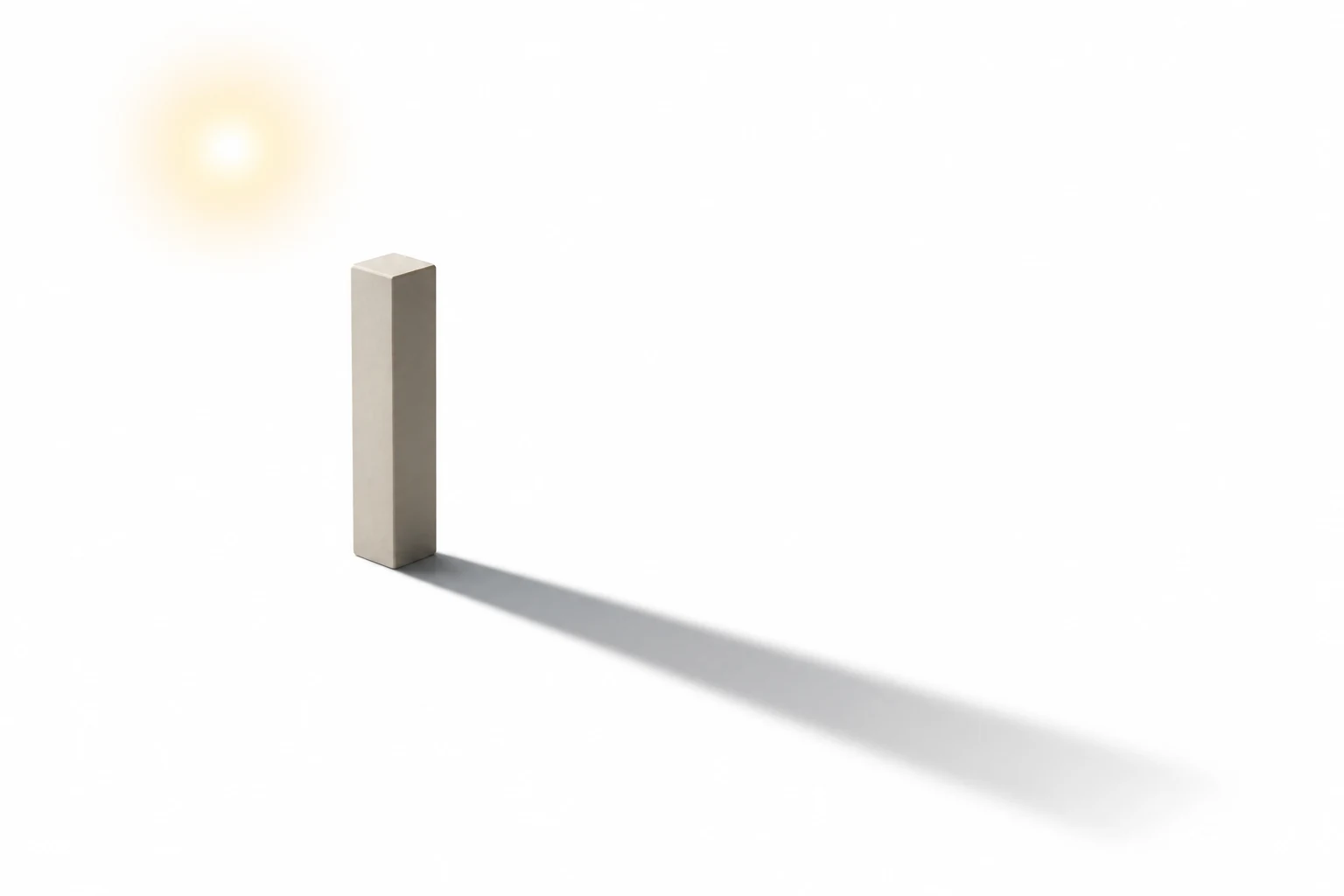
Shadows change length because the angle at which sunlight reaches the ground changes throughout the day as Earth rotates, and throughout the year as Earth's tilt changes the sun's height in the sky - lower sun angles cast longer shadows, while higher angles cast shorter ones. At the exact moment of solar noon during certain times of year near the equator, an object's shadow can vanish almost entirely, since the sun sits nearly straight overhead.
Why Do Shadows Change Length? hero image

The mystery

The answer involves the geometry of light, Earth's tilt and rotation, and an ancient method for telling time using nothing but the sun and a stick.

The short answer

Shadows change length because the angle at which sunlight reaches the ground changes throughout the day as Earth rotates, and throughout the year as Earth's tilt changes the sun's height in the sky - lower sun angles cast longer shadows, while higher angles cast shorter ones.

The twist

At the exact moment of solar noon during certain times of year near the equator, an object's shadow can vanish almost entirely, since the sun sits nearly straight overhead.

Common mistake

A common assumption is that shadows lengthen because the sun physically moves farther from Earth later in the day.

It is all about the angle of the light

A shadow's length is essentially a geometry problem solved automatically by the sun's position in the sky.

Low sun angles stretch shadows out

When the sun is low on the horizon, near sunrise or sunset, sunlight strikes the ground at a shallow angle, casting long, exaggerated shadows from even small objects.

This is simple geometry: a shallow light angle means the shadow has to stretch much farther to reach the ground.

A long shadow is not a sign of a tall object; it is a sign of a low sun working at a sharp angle.

High sun angles compress them

Around midday, when the sun is highest in the sky, light strikes the ground much more directly, producing short, compact shadows.

The exact minimum length depends on your latitude and the time of year, since the sun's maximum height in the sky varies accordingly.

At noon, the sun does its most efficient work, leaving shadows barely enough room to exist.

Earth's tilt adds a seasonal layer

Because Earth's axis is tilted relative to its orbit around the sun, the sun's maximum height in the sky changes across the seasons, making shadows generally longer in winter and shorter in summer, even at the same time of day.

This seasonal shift is the same mechanism responsible for changing day lengths and seasonal temperatures.

Shadows do not just track the hour; they quietly track the entire calendar.

How a shadow's length is determined

A short sequence of geometric relationships explains every shadow's exact length.

1

01. The sun's position in the sky is set by time and season

Earth's rotation and axial tilt continuously change the sun's apparent angle.

2

02. Light travels in a straight line toward an object

Sunlight reaches the object at whatever angle the sun currently sits in the sky.

3

03. The object blocks light, creating a dark area

Wherever the object intercepts sunlight, an unlit shadow forms on the ground behind it.

4

04. Geometry determines the shadow's exact length

Lower sun angles project the blocked light farther along the ground, producing longer shadows.

How ancient people used this to tell time

Sundials work entirely on this principle, using a fixed object's shadow to indicate the time of day based on the sun's predictable changing angle.

Some of the earliest known sundials date back thousands of years, demonstrating that ancient civilizations understood and exploited shadow geometry long before they had any formal theory of astronomy to explain it.

Surprising shadow facts

Shadows can vanish entirely at the equator
Near solar noon on the equinoxes, objects at the equator can cast almost no visible shadow at all.
Eratosthenes used shadows to measure Earth's size
Around 240 BCE, he compared shadow angles in two cities to calculate Earth's circumference with remarkable accuracy.
Shadow length varies by latitude even at the same time
Locations farther from the equator generally experience longer shadows due to the sun's lower maximum angle in the sky.

Don't shadows just get longer because the sun is farther away in the evening?

Myth

A common assumption is that shadows lengthen because the sun physically moves farther from Earth later in the day.

Long evening shadows feel intuitively connected to a setting sun "moving away," even though the actual cause is purely angular.

Reality

The sun's distance from Earth barely changes over a single day; shadow length is determined entirely by the angle of sunlight, not its distance.

The sun's distance from Earth barely changes over a single day; shadow length is determined entirely by the angle of sunlight, not its distance.

Where shadow geometry is used practically

Solar panel placement
Engineers calculate seasonal shadow angles to optimize solar panel positioning for maximum sunlight exposure.
Architecture and urban planning
Building designers consider shadow length across seasons to manage sunlight access for nearby structures.

Why shadow physics still matters today

Understanding the geometry of shadows remains essential for fields ranging from solar energy engineering to historical astronomy and archaeology.

Ancient and modern observers alike have used shadow measurements to calculate everything from the time of day to the size of the Earth itself.

Worth noting

A clock written in light and angle

Every shadow on the ground is, quietly, a precise geometric record of exactly where the sun happens to be at that moment. Long before clocks existed, people simply watched their own shadows to know how much of the day remained.

Quick answers

Common questions

Why does a shadow disappear at solar noon near the equator?

Because the sun sits almost directly overhead at certain times of year there, leaving little angle for a shadow to form.

Do cloudy days affect shadow length?

Clouds can diffuse or block sunlight entirely, but on partly cloudy days, visible shadows still follow the same angular rules.

Everyday Science

Related questions

Earth's tilt lowers the sun's maximum angle in winter, producing longer shadows even at midday.

The scientist who measured the world with a stick

Eratosthenes

An ancient Greek scholar who used shadow measurements in two distant cities to calculate Earth's circumference with striking accuracy.

Related questions

How did ancient sundials tell time accurately?

They tracked the sun's predictably changing angle throughout the day using a fixed object's shadow.

Where shadow geometry is used practically

Solar panel placement

Engineers calculate seasonal shadow angles to optimize solar panel positioning for maximum sunlight exposure.

Where shadow geometry is used practically

Architecture and urban planning

Building designers consider shadow length across seasons to manage sunlight access for nearby structures.

Don't shadows just get longer because the sun is farther away in the evening?

The sun's distance from Earth barely changes over a single day; shadow length is determined entirely by the angle of sunlight, not its distance.

The sun's distance from Earth barely changes over a single day; shadow length is determined entirely by the angle of sunlight, not its distance.