Biology & The Body

Why Do People Snore?

A sound that has ended relationships, generated patents, and puzzled physicians for centuries. Sleep is supposed to be quiet. For a significant portion of the population, it is anything but - and for the people trying to sleep nearby, it may qualify as a public nuisance. Snoring is one of those body functions that is simultaneously extremely common, poorly understood by most people who do it, and genuinely irritating to everyone else in the room. The answer involves relaxed throat muscles, turbulent airflow, and the reason snoring tends to get considerably worse with age, weight, and a glass of wine.

Quick answer

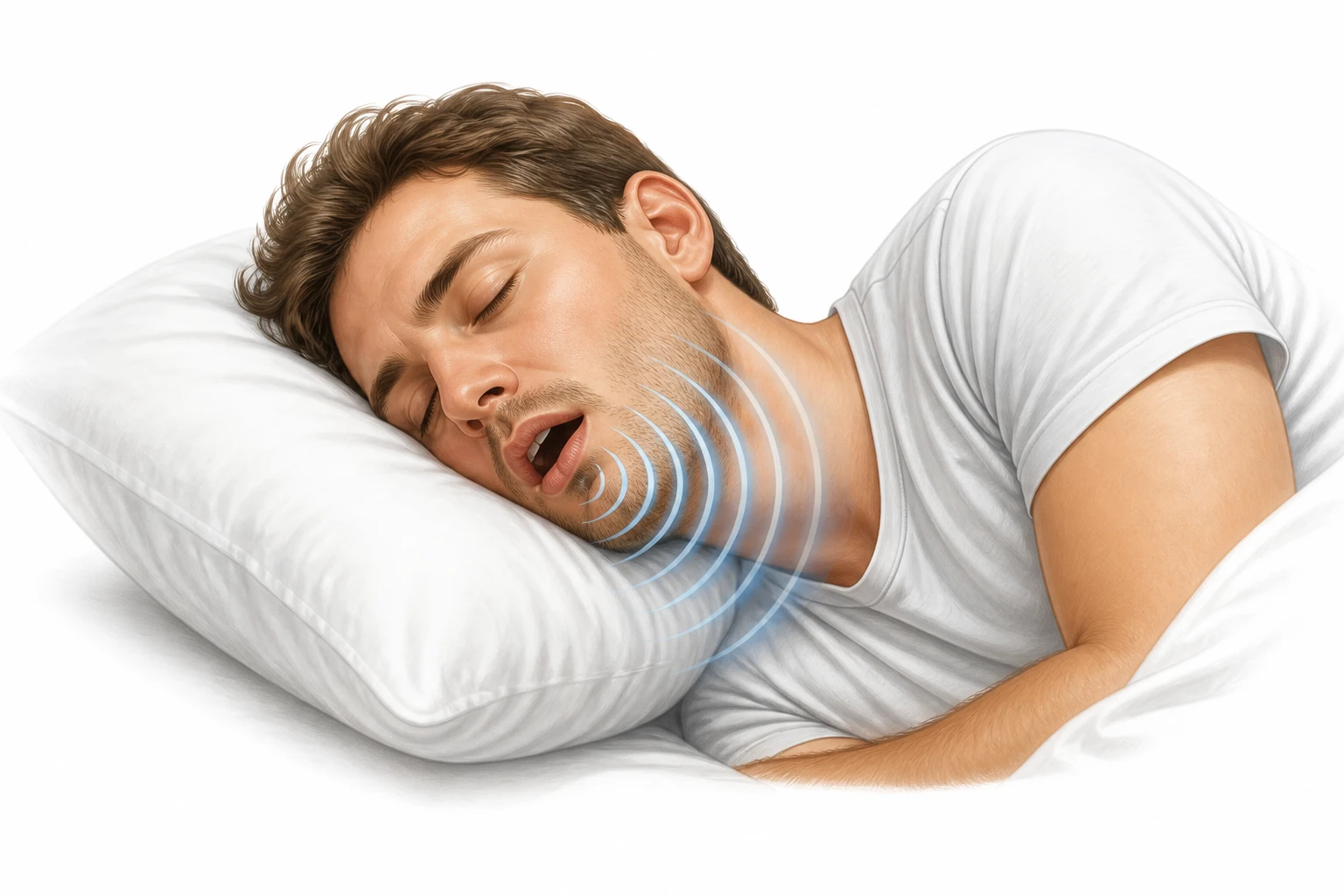
Snoring occurs when relaxed soft tissues in the upper airway, including the soft palate, uvula, and throat muscles, vibrate as air is forced past them during breathing, producing the characteristic rattling or rumbling sound. Almost everyone snores occasionally - it only becomes a significant issue when it happens regularly or severely enough to indicate a more serious condition like sleep apnea.
Why Do People Snore? hero image

The mystery

The answer involves relaxed throat muscles, turbulent airflow, and the reason snoring tends to get considerably worse with age, weight, and a glass of wine.

The short answer

Snoring occurs when relaxed soft tissues in the upper airway, including the soft palate, uvula, and throat muscles, vibrate as air is forced past them during breathing, producing the characteristic rattling or rumbling sound.

The twist

Almost everyone snores occasionally - it only becomes a significant issue when it happens regularly or severely enough to indicate a more serious condition like sleep apnea.

Common mistake

A common belief is that loud snoring indicates a particularly deep, restful sleep.

Relaxed tissue, turbulent air, and an unavoidable noise

Snoring is fundamentally an airflow problem, caused by what happens to the throat's soft tissues when they relax during sleep.

Sleep relaxes the muscles that normally hold the airway open

During wakefulness, muscles in the throat actively keep the upper airway open and relatively rigid. During sleep, these muscles relax significantly, causing the soft tissues of the palate and throat to sag inward.

This narrowing of the airway is the primary condition needed for snoring to occur.

A sleeping throat is doing a reasonable impression of a partly closed door that air has to force its way through.

Turbulent airflow through the narrowed passage causes vibration

As air moves through the narrowed airway during breathing, the faster, turbulent flow causes the loose surrounding tissues to vibrate rapidly, producing the snoring sound.

Like a flag vibrating in wind or a reed instrument producing a note, the tissue becomes an accidental noisemaker.

Snoring is, acoustically speaking, a very poorly designed musical instrument being played by an unconscious musician.

Several factors make snoring worse

Alcohol relaxes throat muscles further, significantly worsening snoring. Excess weight around the neck narrows the airway even before muscle relaxation begins. Sleeping on the back allows the tongue to fall backward into the airway.

Each of these compounds the basic tissue-narrowing effect.

Wine, weight, and sleeping position each independently tighten the screws on an already problematic airway.

From falling asleep to making noise

A short sequence links the physiology of sleep to the sound that keeps others awake.

1

01. Throat muscles relax as sleep deepens

Muscle tone decreases throughout the body, including in the upper airway.

2

02. Soft tissues sag inward, narrowing the passage

The airway becomes partially obstructed by relaxed palate and throat tissue.

3

03. Air moves through the narrowed space at higher velocity

Faster, more turbulent airflow is forced through the restricted passage.

4

04. Loose tissues vibrate and produce sound

The vibrating soft palate and surrounding tissues generate the characteristic snoring noise.

When snoring becomes a medical issue

Mild, occasional snoring is generally harmless. However, snoring accompanied by pauses in breathing, gasping, or choking can indicate obstructive sleep apnea, a condition where the airway partially or fully collapses during sleep, causing repeated oxygen drops throughout the night.

This is distinct from ordinary snoring and carries significant cardiovascular and cognitive health implications if left untreated.

Surprising snoring facts

Snoring tends to worsen significantly with age
Throat muscles naturally lose some tone over time, making the airway increasingly prone to collapse during sleep.
Chronic snoring can affect the snorer's own sleep quality
The vibration and partial airway restriction can disrupt sleep architecture even when the snorer remains unaware of it.
Some animals snore too
Dogs, cats, horses, and several other mammals have been documented snoring, particularly breeds with flat faces and restricted airways.

Doesn't snoring just mean someone is sleeping very deeply?

Myth

A common belief is that loud snoring indicates a particularly deep, restful sleep.

The apparent unconsciousness of a loud snorer creates an impression of very deep, undisturbed sleep.

Reality

Snoring, especially if loud and chronic, is more often a sign of disrupted sleep quality than unusually deep rest.

Snoring, especially if loud and chronic, is more often a sign of disrupted sleep quality than unusually deep rest.

Where snoring treatment intersects with science

Continuous positive airway pressure devices
CPAP machines treat sleep apnea by maintaining a constant air pressure that prevents airway collapse during sleep.
Positional therapy
Simple position changes, like sleeping on the side rather than the back, can meaningfully reduce snoring by preventing the tongue from falling backward.

Why this matters beyond the bedroom

Chronic snoring and sleep apnea are associated with increased risks of cardiovascular disease, cognitive decline, and daytime fatigue significant enough to impair driving and work performance.

Recognizing snoring as potentially more than an annoyance has become an important public health consideration.

Worth noting

An involuntary instrument

Snoring is the body's accidental production of sound from a system designed purely for breathing - a reminder that biology rarely stays as tidy as the diagrams suggest. Sleep is the one time the body is supposed to be quiet, and the throat has never fully agreed to this arrangement.

Quick answers

Common questions

Is snoring hereditary?

Partially - airway anatomy, which has a genetic component, influences susceptibility to snoring.

Does snoring get better with weight loss?

Often yes, since reducing fat tissue around the neck can meaningfully widen the effective airway.

Biology & The Body

Related questions

Alcohol relaxes throat muscles beyond their normal sleep state, causing more significant airway narrowing.

The sleep researcher who connected snoring and health

Christian Guilleminault

A Stanford physician whose pioneering research in the 1970s established obstructive sleep apnea as a distinct medical condition linked to serious health consequences.

Related questions

Why is sleep apnea dangerous if left untreated?

Repeated oxygen drops during sleep raise blood pressure and stress the cardiovascular system over time.

Where snoring treatment intersects with science

Continuous positive airway pressure devices

CPAP machines treat sleep apnea by maintaining a constant air pressure that prevents airway collapse during sleep.

Where snoring treatment intersects with science

Positional therapy

Simple position changes, like sleeping on the side rather than the back, can meaningfully reduce snoring by preventing the tongue from falling backward.

Doesn't snoring just mean someone is sleeping very deeply?

Snoring, especially if loud and chronic, is more often a sign of disrupted sleep quality than unusually deep rest.

Snoring, especially if loud and chronic, is more often a sign of disrupted sleep quality than unusually deep rest.