Biology & The Body

Why Does Sleep Paralysis Happen?

Waking up unable to move, while something lurks at the edge of the room - and the scientific explanation is, if anything, stranger than the ghost story. You wake up but cannot move. Something is sitting on your chest. A shadow stands in the corner of the room. For most of human history, this experience was explained by demons, witches, and night hags. Science eventually offered an explanation that is almost equally unsettling, for entirely different reasons. The answer involves your brain forgetting to turn itself back on in the right order, a survival mechanism that briefly misfires, and why almost every culture in history has a supernatural explanation for the same experience.

Quick answer

Sleep paralysis happens when the brain wakes up partially, regaining consciousness before switching off the muscle paralysis that normally prevents you from physically acting out dreams, leaving you awake but unable to move, often accompanied by vivid hallucinations generated by a mind still half in the dream state. The paralysis itself is a protective feature, not a malfunction - it is the same mechanism that stops you from punching the wall while dreaming about boxing.
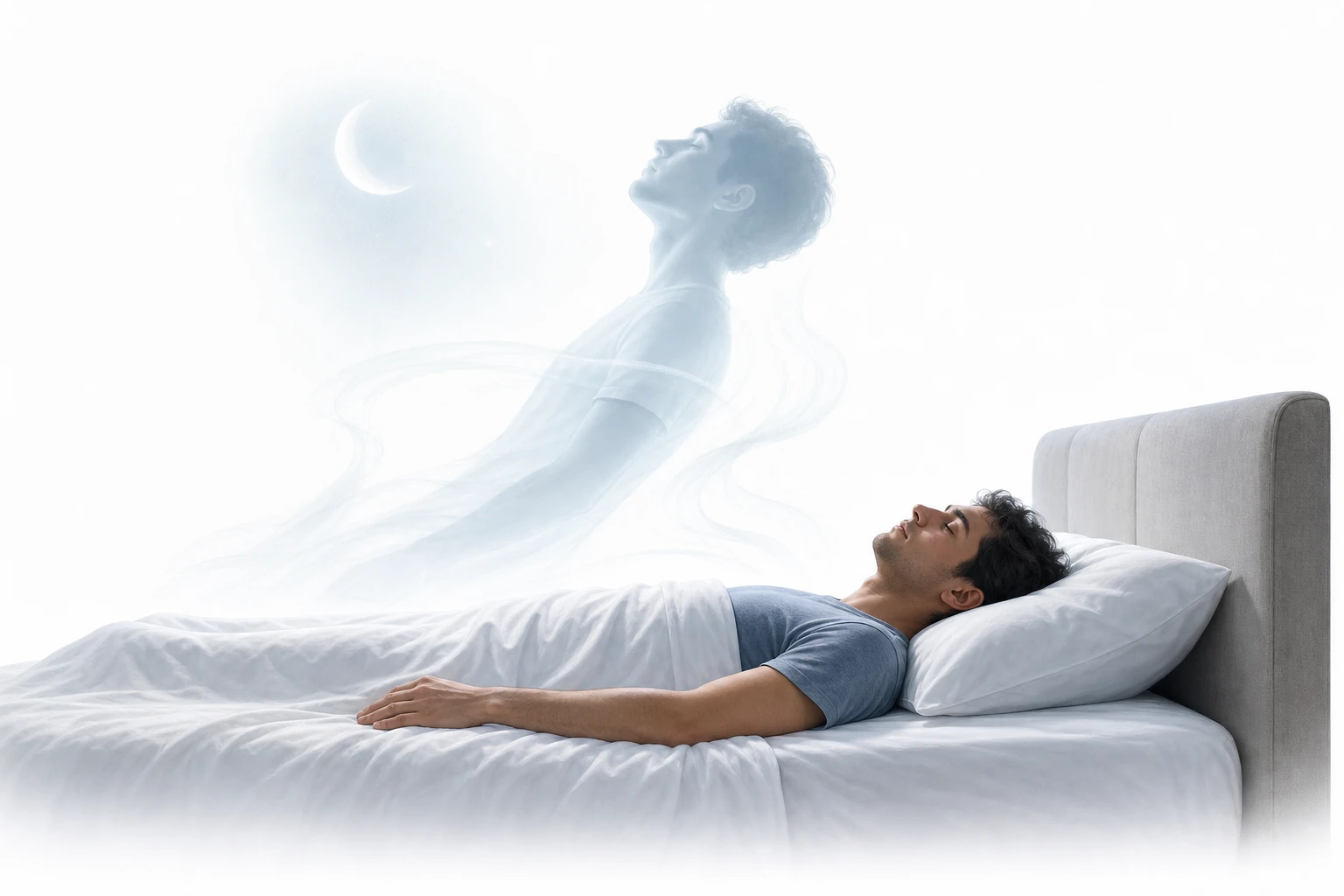
Why Does Sleep Paralysis Happen? hero image

The mystery

The answer involves your brain forgetting to turn itself back on in the right order, a survival mechanism that briefly misfires, and why almost every culture in history has a supernatural explanation for the same experience.

The short answer

Sleep paralysis happens when the brain wakes up partially, regaining consciousness before switching off the muscle paralysis that normally prevents you from physically acting out dreams, leaving you awake but unable to move, often accompanied by vivid hallucinations generated by a mind still half in the dream state.

The twist

The paralysis itself is a protective feature, not a malfunction - it is the same mechanism that stops you from punching the wall while dreaming about boxing.

Common mistake

Many people who experience sleep paralysis assume something is seriously wrong with their health.

A body stuck between two states

Sleep paralysis is not a disorder so much as an awkward timing error in a system that normally works seamlessly.

REM sleep requires your body to be locked down

During REM sleep, the stage where most vivid dreaming occurs, the brain sends active signals to suppress voluntary muscle movement, preventing you from physically acting out whatever your dreaming mind is doing.

This is a genuine survival feature, and in healthy sleep it switches off cleanly the moment you wake.

Your nightly paralysis is not a malfunction; it is simply your brain being careful about what you do with your hands while you dream.

The error is in the timing, not the system

Sleep paralysis occurs when consciousness returns before the brain has fully disengaged the muscle-suppression system, leaving a person awake, aware, and completely unable to move.

The experience typically lasts between a few seconds and a few minutes, though it can feel considerably longer from the inside.

Sleep paralysis is essentially a software timing error in a system that normally runs without incident every single night.

Hallucinations are the dreaming brain's final contribution

Because the brain's visual and emotional systems are still partially in dream mode during sleep paralysis, many people experience vivid, often frightening hallucinations - figures in the room, pressure on the chest, sounds and voices.

This is why cultures across history independently invented demonic explanations for sleep paralysis; the experience is almost designed to feel supernatural.

The ghost in the corner during sleep paralysis is simply your dreaming brain's last suggestion, arriving slightly too late to be filtered out.

What happens during a sleep paralysis episode

A short sequence of overlapping brain states produces the unsettling experience.

1

01. Consciousness returns while REM suppression continues

The brain wakes up in the wrong order, restoring awareness before releasing muscle control.

2

02. The person is awake but unable to move

Active signals continue suppressing voluntary movement despite full waking consciousness.

3

03. Dream-state hallucinations bleed into waking perception

The still-active visual and emotional dream systems generate vivid, frightening imagery.

4

04. The systems resynchronize and the episode ends

Within seconds to minutes, muscle control returns and hallucinations fade.

Why almost every culture invented the same demon

The Old Hag of Newfoundland folklore, the Islamic Jinn, the Japanese Kanashibari, and countless other traditions all describe the same experience: waking paralysis accompanied by a malevolent presence.

They arrived at strikingly similar supernatural explanations independently, because sleep paralysis is a universal human experience that remained completely unexplained until modern neuroscience.

Surprising facts about sleep paralysis

It is remarkably common
Research suggests roughly 8 percent of people will experience sleep paralysis at some point, with higher rates among students and people with irregular sleep schedules.
Sleep deprivation significantly increases the risk
Disrupted or insufficient sleep makes the brain more likely to wake up in the wrong state, triggering episodes more frequently.
Some people learn to enjoy it
Certain lucid dreaming practitioners deliberately attempt to use the state as an entry point into controlled dreaming.

Is sleep paralysis a sign of a serious condition?

Myth

Many people who experience sleep paralysis assume something is seriously wrong with their health.

The experience is so alarming and unusual that it feels impossible to be physiologically normal, even when it is.

Reality

Isolated episodes of sleep paralysis are common, generally harmless, and often linked to simple sleep disruption rather than any underlying medical condition.

Isolated episodes of sleep paralysis are common, generally harmless, and often linked to simple sleep disruption rather than any underlying medical condition.

Where sleep paralysis appears in culture

Henry Fuseli's 'The Nightmare'
The famous 1781 painting depicts a sleeping woman with a demon sitting on her chest, almost certainly depicting a sleep paralysis experience.
Multiple global folklore traditions
Sleep paralysis has independently generated supernatural explanations in virtually every culture that documented it.

Why understanding this matters

Knowing the physiological explanation for sleep paralysis reliably reduces the fear associated with episodes, since the experience is far less alarming when understood.

Sleep researchers note that explaining the mechanism often significantly reduces reported distress in people who experience it regularly.

Worth noting

A misfire with a thousand-year mythology

Sleep paralysis is a timing glitch in an otherwise excellent system - one that generated more folklore, art, and supernatural belief than almost any other neurological event in human history. Humanity invented hundreds of different demons to explain the same four minutes of misaligned brain timing.

Quick answers

Common questions

Is it possible to be harmed during sleep paralysis?

No, the paralysis is a temporary neurological state and causes no physical harm, though the experience itself can be distressing.

Why do hallucinations during sleep paralysis so often involve intruders?

Researchers suggest this reflects the brain's threat-detection systems being highly active during an already alarming state of helplessness.

Biology & The Body

Related questions

The combination of helplessness, vivid hallucinations, and a still-active emotional brain creates conditions specifically designed to feel threatening.

The painting that documented a universal experience

Henry Fuseli

The Swiss-British artist whose 1781 painting 'The Nightmare' is now widely interpreted as one of history's most famous depictions of sleep paralysis.

Related questions

Can sleep paralysis be prevented?

Consistent sleep schedules, adequate sleep, and reducing stress significantly lower the frequency of episodes.

Where sleep paralysis appears in culture

Henry Fuseli's 'The Nightmare'

The famous 1781 painting depicts a sleeping woman with a demon sitting on her chest, almost certainly depicting a sleep paralysis experience.

Where sleep paralysis appears in culture

Multiple global folklore traditions

Sleep paralysis has independently generated supernatural explanations in virtually every culture that documented it.

Is sleep paralysis a sign of a serious condition?

Isolated episodes of sleep paralysis are common, generally harmless, and often linked to simple sleep disruption rather than any underlying medical condition.

Isolated episodes of sleep paralysis are common, generally harmless, and often linked to simple sleep disruption rather than any underlying medical condition.