1
01. Sebum production feeds the yeast
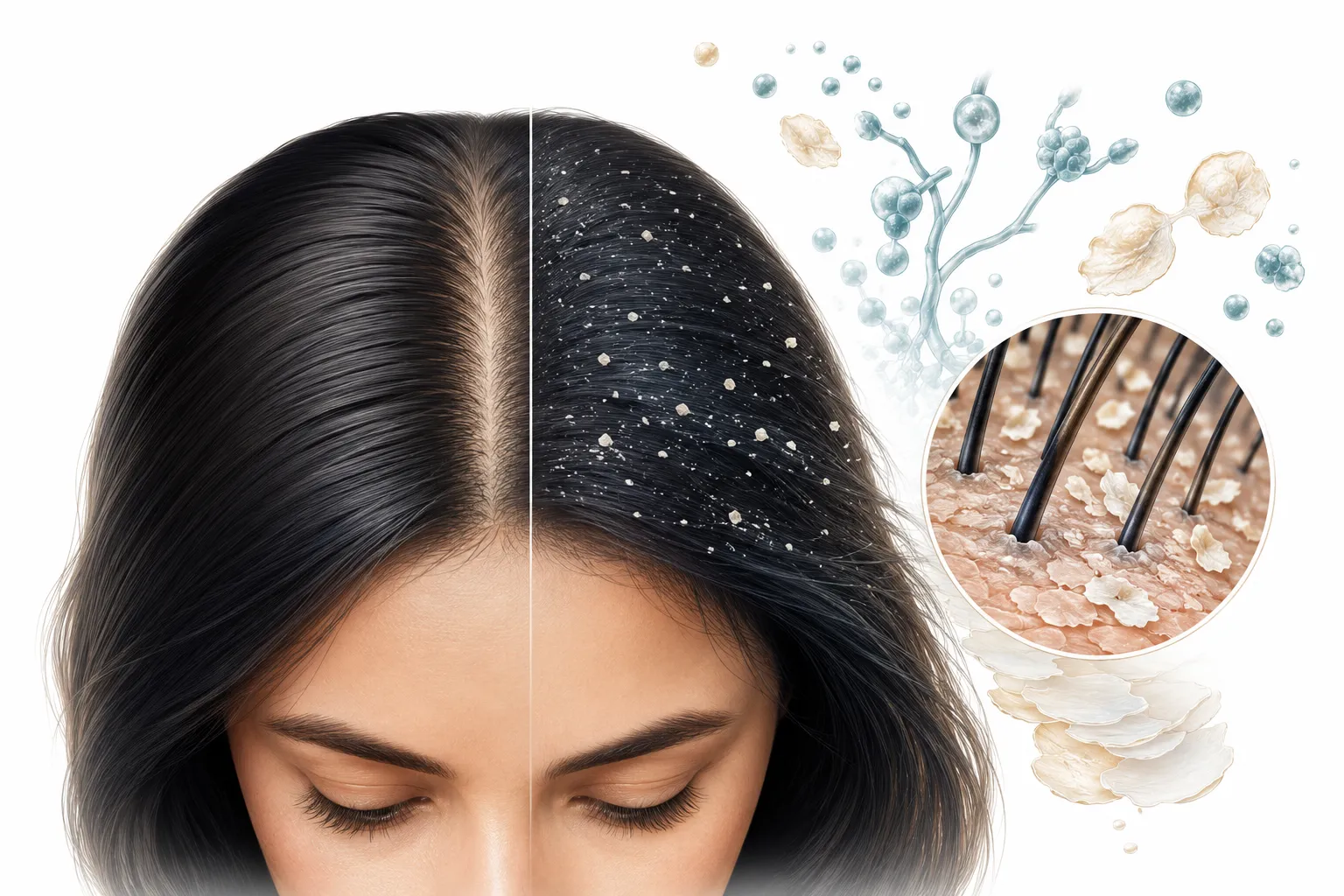
Scalp oil glands produce sebum, which Malassezia uses as its primary food source. More oil generally means more fuel for the yeast population.
Body & Health
It has almost nothing to do with how often you shower, and almost everything to do with a fungus that lives on everyone's head. There is a persistent myth that dandruff is a hygiene problem — a sign of a scalp that hasn't been washed enough. This is mostly untrue, and mildly unfair to the millions of scrupulously clean people who deal with it anyway. The real cause is a microscopic yeast that lives on almost every human scalp, clean or not, and occasionally decides to throw a party your skin cells did not agree to. The story involves a fungus everyone already has, an oily buffet it feeds on, and a skin reaction that speeds up cell turnover into something visible.
Quick answer
Dandruff is mainly caused by an overgrowth of Malassezia, a yeast-like fungus naturally present on the scalp, which irritates skin and speeds up cell shedding. You can't actually get rid of the fungus completely — it lives on virtually everyone's skin. The goal is only ever to manage it, not evict it.
The mystery
The story involves a fungus everyone already has, an oily buffet it feeds on, and a skin reaction that speeds up cell turnover into something visible.
The short answer
Dandruff is mainly caused by an overgrowth of Malassezia, a yeast-like fungus naturally present on the scalp, which irritates skin and speeds up cell shedding.
The twist
You can't actually get rid of the fungus completely — it lives on virtually everyone's skin. The goal is only ever to manage it, not evict it.
Common mistake
A common assumption is that dandruff means someone isn't washing their hair often enough.
Body & Health
No — Malassezia is already present on almost everyone's scalp, so dandruff isn't something you catch from someone else.
The scientist who identified the fungal link
A French dermatologist working in the early 20th century whose research into scalp conditions helped establish the connection between microorganisms and dandruff-like symptoms.
Where dandruff commonly shows up
Many people notice worsened dandruff during high-stress periods, likely linked to stress's effect on oil production and immune response.
Where dandruff commonly shows up
People with oily skin types or conditions like eczema often experience more persistent dandruff, since these conditions can alter the scalp's oil balance and barrier function.
Is dandruff caused by poor hygiene?
Dandruff is driven primarily by fungal activity and individual skin sensitivity, not cleanliness — in fact, over-washing can sometimes irritate the scalp further.
Continue learning