Myth vs Reality
It is purely a historical convention from the Northern Hemisphere
Clockwise is simply the direction that Northern Hemisphere sundial shadows happen to move. There is nothing inevitable about it.
Everyday Objects
The direction your clock hands spin was decided thousands of years ago, by shadows, not clockmakers.
Quick answer
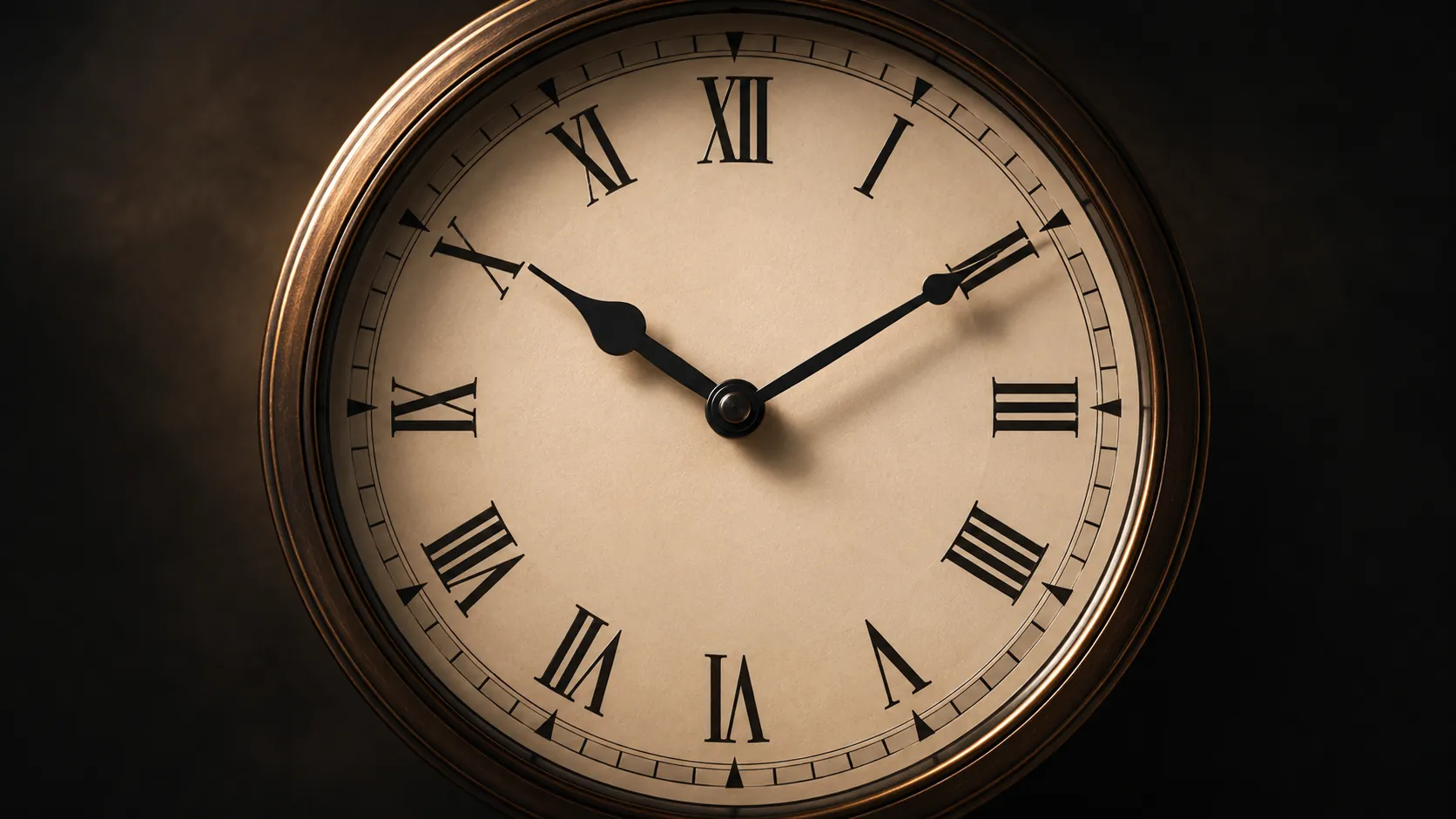
Clock hands move clockwise because early mechanical clocks were designed to imitate sundials, and sundials in the Northern Hemisphere cast shadows that move in that direction. As the sun travels across the sky from east to west, shadows rotate from west to north to east, what we now call clockwise. When mechanical clocks were developed in medieval Europe, clockmakers built them to match the direction of shadow movement that people already read as the passage of time. If clocks had been invented in the Southern Hemisphere, where sundial shadows move in the opposite direction, clockwise might be the reverse of what it is today.
It started with sundial shadows
In the Northern Hemisphere, sundial shadows sweep left-to-right across the face, matching clockwise rotation.
Medieval Europe set the convention
When mechanical clocks appeared in 13th-century Europe, they imitated the sundial direction most people knew.
It could have gone the other way
Southern Hemisphere sundials cast shadows in the opposite direction. If clocks had originated there, anti-clockwise might be standard.
Myth: it is the only logical direction
There is no physical or mathematical reason clocks must move clockwise. It is a historical convention, not a law.
Everyday Objects
A handful of church clocks in Europe from the 13th and 14th centuries ran anti-clockwise. Standardisation was gradual, not instant.
Myth vs Reality
Clockwise is simply the direction that Northern Hemisphere sundial shadows happen to move. There is nothing inevitable about it.
Continue learning

Everyday Objects
Both explain conventions that started for a reason but became default without people noticing.

Everyday Objects
Both trace everyday design standards back to their historical origins.

Everyday Objects
Both explain visual systems that only work because orientation is standardized.