Myth vs Reality
Public exits must open outward by safety code
Inward doors can be fatal in crowd evacuations. Building codes require outward-opening emergency exits specifically because of historical disasters involving inward-opening doors.
Everyday Objects
You have probably opened thousands of doors without wondering which way they swing, but the direction is a deliberate decision with real consequences.
Quick answer
Most residential interior doors open inward for a few practical reasons: security, usability in tight spaces, and protection from weather. An inward-opening door is harder to force from outside because the frame supports the door against outward pressure. The hinges are also on the inside, making them inaccessible to an intruder. However, public building exits are typically required by safety codes to open outward. In an emergency evacuation, a crowd pressing against an inward-opening door can trap people inside. Outward-opening doors give way under crowd pressure rather than resisting it.
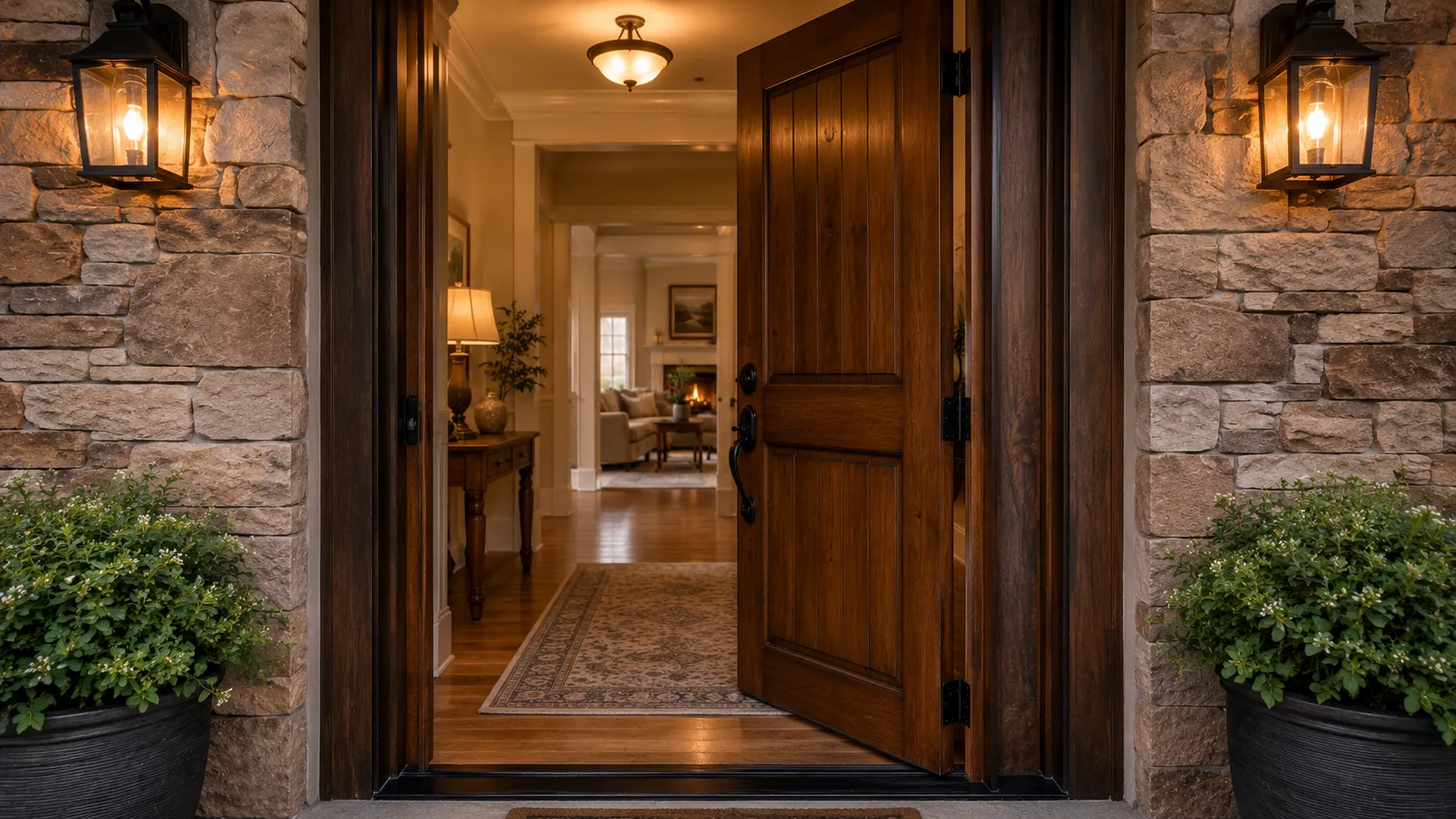
Inward doors are more secure
The door frame supports an inward door against forced entry, and the hinges stay on the protected interior side.
Outward doors suit emergencies
Public exits open outward so crowd pressure cannot accidentally jam the door shut during evacuations.
Weather affects the choice
Inward doors protect hinges and frames from rain and wind, which is especially relevant for exterior doors in houses.
Myth: there is one universal rule
Direction varies by building type, local codes, and context. No single rule applies everywhere.
Everyday Objects
Several catastrophic fires in the late 19th and early 20th centuries, including the 1903 Iroquois Theatre fire, killed hundreds partly because crowd pressure jammed inward-opening exit doors shut. Those disasters directly shaped modern building codes.
Myth vs Reality
Inward doors can be fatal in crowd evacuations. Building codes require outward-opening emergency exits specifically because of historical disasters involving inward-opening doors.
Continue learning

Everyday Objects
Both involve the everyday mechanics of home security and access.

Everyday Objects
Both explain familiar conventions that have a historical or practical origin most people never think about.

Everyday Objects
Both reveal practical design choices in building and home hardware.