Palms, soles, and armpits have a much higher concentration of sweat glands tied to emotional response than most other areas of skin, which is why nervous sweat shows up almost exclusively in these specific spots.
Body & Brain
Why do we sweat when we're nervous, even if we're not hot?
Why Do We Sweat When Nervous?
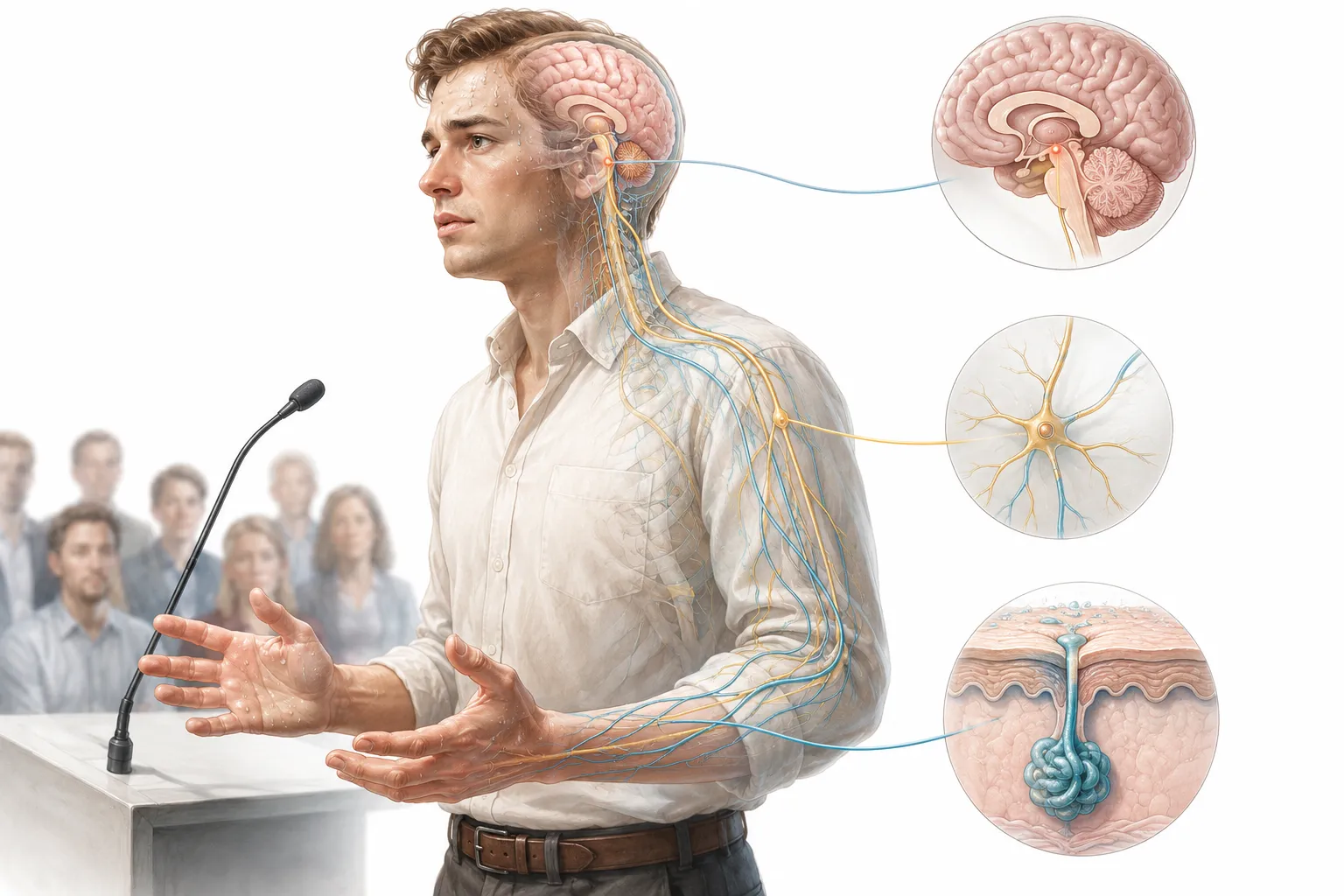
You can be sitting perfectly still, in a cool room, and still feel sweat break out on your palms the moment you're called on to speak in front of people.
On this page
The short answer
Nervous sweat is triggered by the sympathetic nervous system's stress response, not by heat. It largely comes from apocrine and eccrine glands concentrated in the palms, soles, and armpits, activated by adrenaline as part of the body's fight-or-flight reaction.
The body has two main types of sweat glands. Eccrine glands, spread across most of the skin, primarily regulate body temperature by releasing sweat that cools the skin as it evaporates. Apocrine glands, concentrated in the armpits, palms, soles, and groin, are more strongly linked to emotional and stress responses. When the brain perceives a stressful or threatening situation, the sympathetic nervous system releases adrenaline, which activates sweat glands in these emotionally responsive areas almost immediately, regardless of ambient temperature. This response evolved as part of the fight-or-flight system, likely because slightly damp palms and soles may have improved grip during a physical confrontation or a fast getaway, a survival advantage that has stuck around long after most modern stressful situations stopped requiring either.
At a glance
The trigger doesn't need to be a physical danger to activate the response.
Sweating when nervous means you're overheating from anxiety.
Your body runs two entirely separate sweating systems, and one of them evolved for a purpose that has almost nothing to do with staying cool.
Imagine two separate alarm systems wired into the same building, one that turns on the air conditioning when it's hot, and one that's rigged to a motion sensor from a threat that hasn't existed for thousands of years, but still triggers just as fast.
Diagram
Why Do We Sweat When Nervous: the idea in one diagram
Nervous sweat is produced when the sympathetic nervous system's stress response activates apocrine and stress-responsive eccrine glands independently of body temperature.
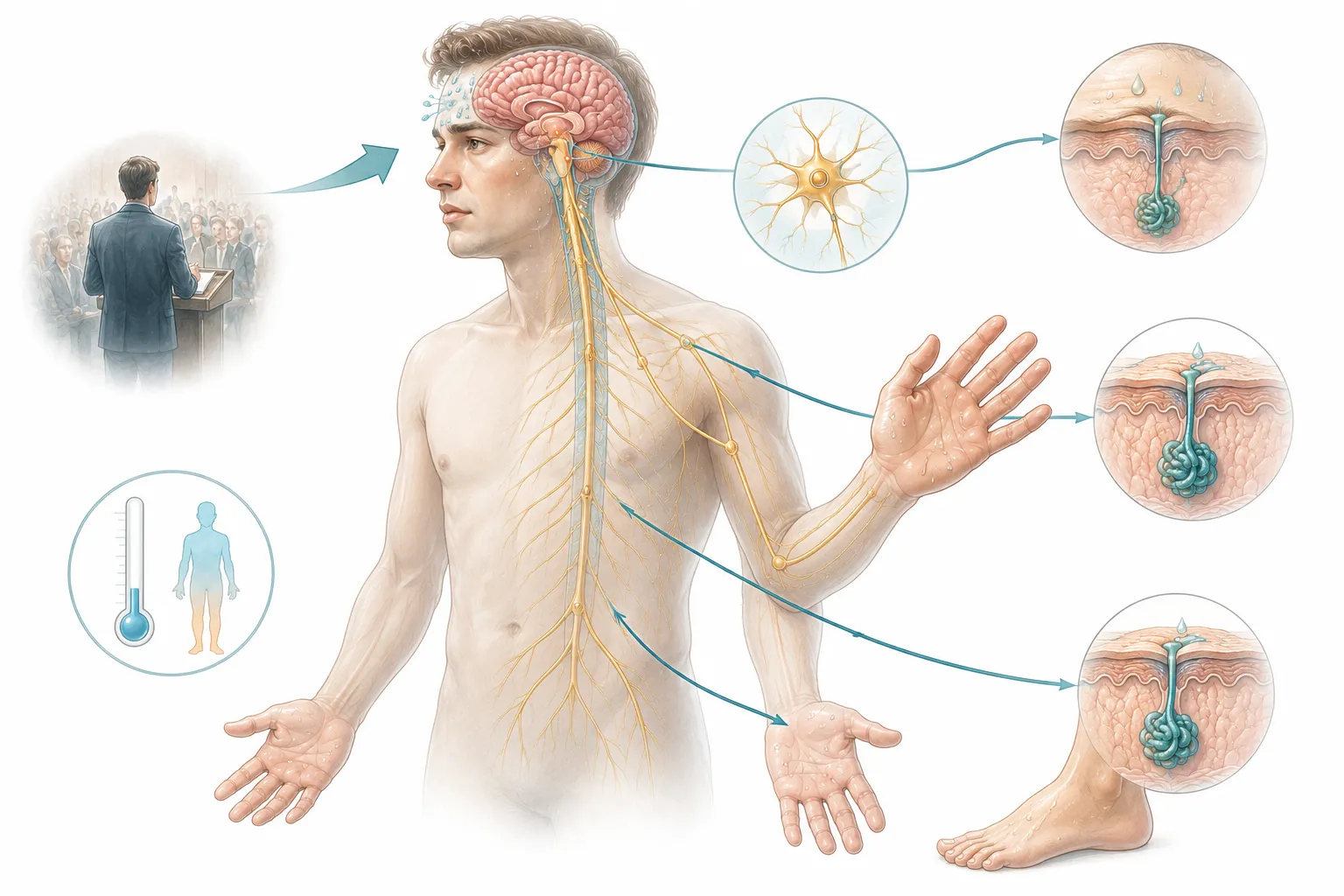
- 1The brain perceives a stressor
The trigger doesn't need to be a physical danger to activate the response.
- 2The sympathetic nervous system activates
Sweating is just one of many simultaneous physiological changes triggered by this switch.
- 3Stress-responsive glands activate
This is why you can sweat from nerves in a cold room.
- 4Sweat appears rapidly at key locations
Nervous sweat is built for speed, not gradual temperature regulation.
How it works
The mechanism
Nervous sweat is produced when the sympathetic nervous system's stress response activates apocrine and stress-responsive eccrine glands independently of body temperature.
- Step 01
The brain perceives a stressor
A stressful stimulus, whether a real threat or a modern social pressure like public speaking, is processed by brain regions involved in the stress response.
Like a security system detecting a trigger, regardless of whether it's an intruder or a false alarm.
The trigger doesn't need to be a physical danger to activate the response.
- Step 02
The sympathetic nervous system activates
This triggers the release of adrenaline and other stress hormones, preparing the body for a fight-or-flight response.
Like flipping a master switch that readies multiple systems at once.
Sweating is just one of many simultaneous physiological changes triggered by this switch.
- Step 03
Stress-responsive glands activate
Apocrine glands and stress-sensitive eccrine glands concentrated in the palms, soles, and armpits are stimulated directly by this hormonal signal, independent of skin or ambient temperature.
Like specific sprinklers in a building activating only when a particular sensor is triggered, regardless of the room's actual heat.
This is why you can sweat from nerves in a cold room.
- Step 04
Sweat appears rapidly at key locations
Because these glands are so densely concentrated in specific areas and directly wired to fast-acting nerve pathways, sweat can appear within seconds of the stress trigger.
Like a fast-acting alarm bell compared to a slower thermostat-based system.
Nervous sweat is built for speed, not gradual temperature regulation.
Surprises
Facts worth sitting with
Palms, soles, and armpits have a much higher concentration of sweat glands tied to emotional response than most other areas of skin, which is why nervous sweat shows up almost exclusively in these specific spots.
Surprising facts
What seems backwards
Worth comparing
In everyday life
Easy to get wrong
Pressure points
Where the simple answer gets interesting
Why does nervous sweat concentrate specifically in the palms and soles rather than spreading evenly?
Apocrine and specialized eccrine glands tied to emotional response are far denser in the palms, soles, and armpits than elsewhere on the body, and these areas are wired more directly into the sympathetic nervous system's rapid stress response pathways.
Your body has, in effect, prioritized certain locations for stress sweat, likely because those exact spots mattered most for gripping and traction during ancestral fight-or-flight moments.
Why does nervous sweat often smell stronger than regular sweat?
Apocrine sweat contains more proteins and lipids than the water-and-salt-heavy sweat from eccrine glands, and bacteria on the skin break these compounds down into odor-producing byproducts far more readily than they do with regular sweat.
The chemistry of fear sweat and the chemistry of temperature sweat are different enough that your nose, and other people's noses, can potentially pick up the difference.
Can you train your body to sweat less from nervousness?
While the reflex itself can't be eliminated, techniques like controlled breathing, gradual exposure to stressful situations, and cognitive behavioral strategies have been shown to reduce the intensity of the sympathetic nervous system's stress response over time.
An ancient, automatic reflex turns out to be at least partially responsive to modern psychological training, even though it evolved millions of years before either existed.
Behind the science
The story behind it
The development of the modern polygraph
Early twentieth-century researchers built lie detection devices around measuring physiological stress responses, including skin conductivity changes driven substantially by nervous sweating from apocrine glands.
The technology turned an ancient evolutionary reflex into the basis of a widely used, if scientifically contested, forensic and interrogation tool throughout the twentieth century.
A biological reflex millions of years old ended up at the center of a modern legal and criminal justice controversy.
Skin conductance response studies under stress
Researchers measured changes in skin electrical conductivity in subjects exposed to stressful stimuli, tracking how quickly and strongly sweat gland activity responded compared to baseline.
Stress-induced changes in skin conductivity occurred within seconds of stimulus exposure, confirming just how rapidly and directly the sympathetic nervous system activates sweat glands independent of temperature.
Clarify
Myth and reality
Myth
Sweating when nervous means you're overheating from anxiety.
Reality
Nervous sweat is triggered by the sympathetic nervous system's stress hormones directly, entirely independent of body or ambient temperature.
Evidence
People reliably sweat from stress in cold rooms and air-conditioned environments, conditions where temperature-based sweating wouldn't normally occur at all.
Looking closer
The deeper pattern
Nervous sweat persists not because it still serves its original purpose, but because the system that produces it has no way of knowing the purpose is gone.
One way to think about it
Ancient survival mechanisms rarely get updated to match modern circumstances; they simply keep firing under the same triggers they always responded to, whether or not those triggers still carry the same stakes.
Old alarms don't retire just because the danger they were built for did.
Limits
Where the explanation bends
Hyperhidrosis and chronic excessive sweating.
Some people have an overactive sympathetic nervous system response that causes excessive sweating from relatively minor or even absent stress triggers, a condition significant enough to require medical treatment.
A universal reflex can, in some people, become dramatically amplified into a condition that meaningfully affects daily life.
In daily life
What this helps you notice
Understanding that nervous sweat is a temperature-independent stress response can help people manage anxiety around visible sweating in social situations like interviews or public speaking.
Techniques like slow controlled breathing, which calm the sympathetic nervous system directly, are commonly recommended before high-stress events specifically because they can reduce the intensity of this stress-sweat response.
Remember
Key takeaways
- 1
Nervous sweat is triggered by the sympathetic nervous system's stress response, not by body temperature.
- 2
It comes largely from apocrine and stress-responsive eccrine glands concentrated in palms, soles, and armpits.
- 3
The reflex likely evolved to improve grip and traction during ancestral fight-or-flight situations.
- 4
Nervous sweat has a different chemical composition than heat-related sweat, contributing to its distinct smell.
- 5
Techniques that calm the sympathetic nervous system, like controlled breathing, can reduce nervous sweating over time.
The sweat on your palms before a job interview has nothing to do with the room's temperature and everything to do with a reflex built for threats that stopped mattering thousands of years ago.
Your body is still bracing your grip for a fight or a sprint that was never going to happen, every single time you're just trying to remember your own name in front of a hiring manager.
Read around the idea
More questions with the same curious pull
Nearby doors from the TinyThat archive, chosen by topic, intent, and reader curiosity.
Body & Brain
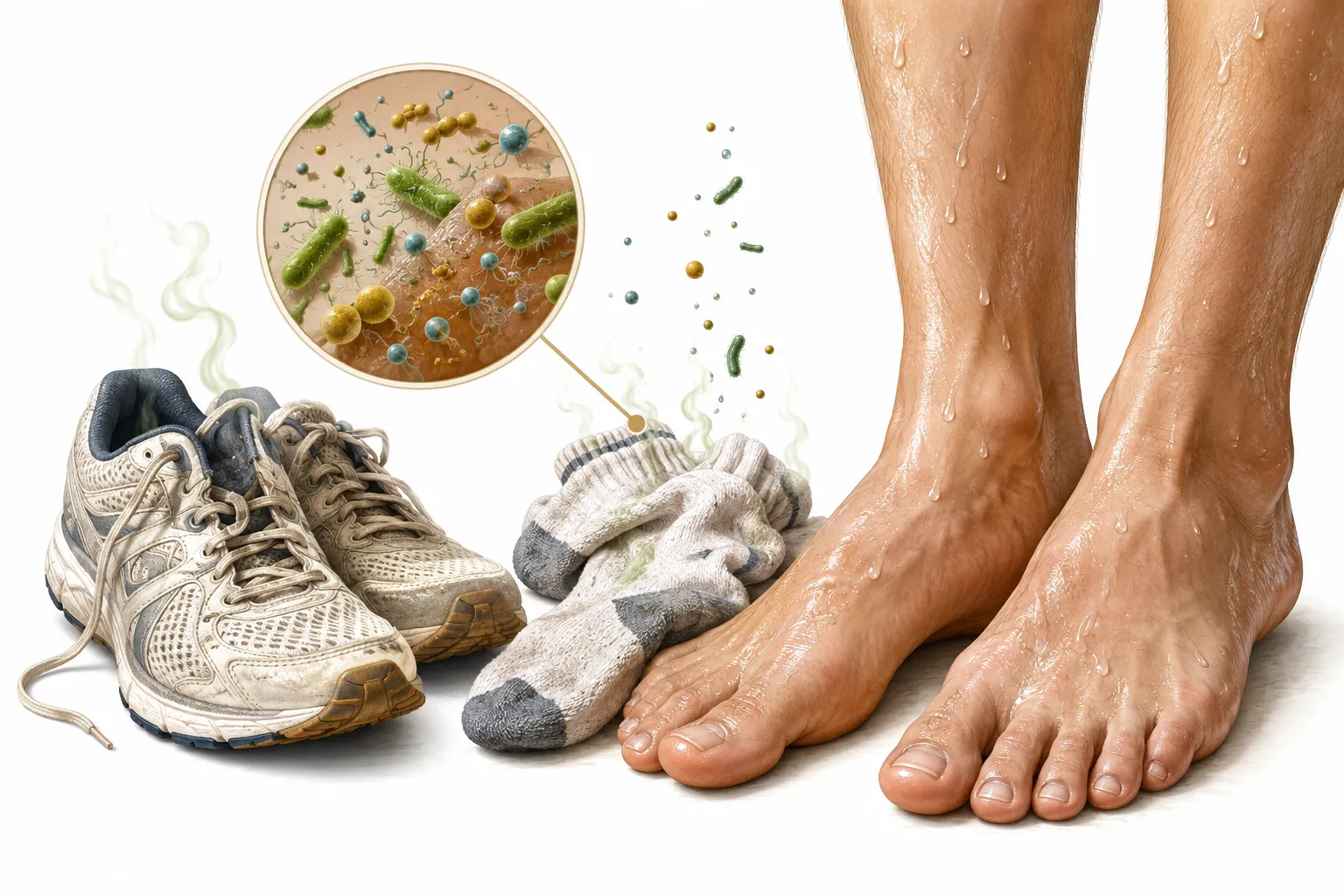
Why Do Feet Smell?
Bacteria breaking down sweat and dead skin cells on the feet produce the characteristic odor.
Body & Brain
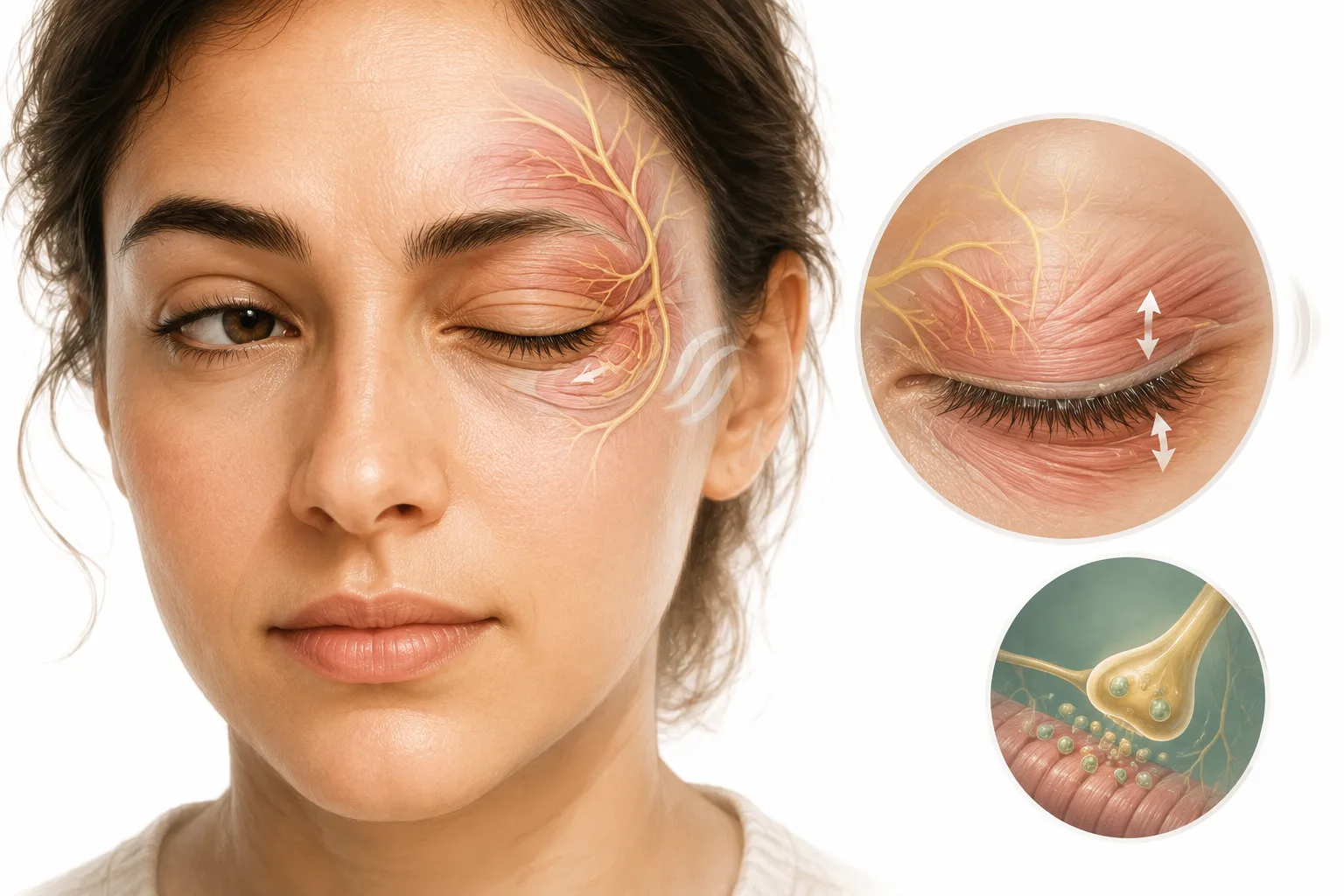
Why Do My Eyes Twitch?
Eye twitching is often linked to fatigue, stress, and stimulant intake affecting small facial muscles.
Body & Brain
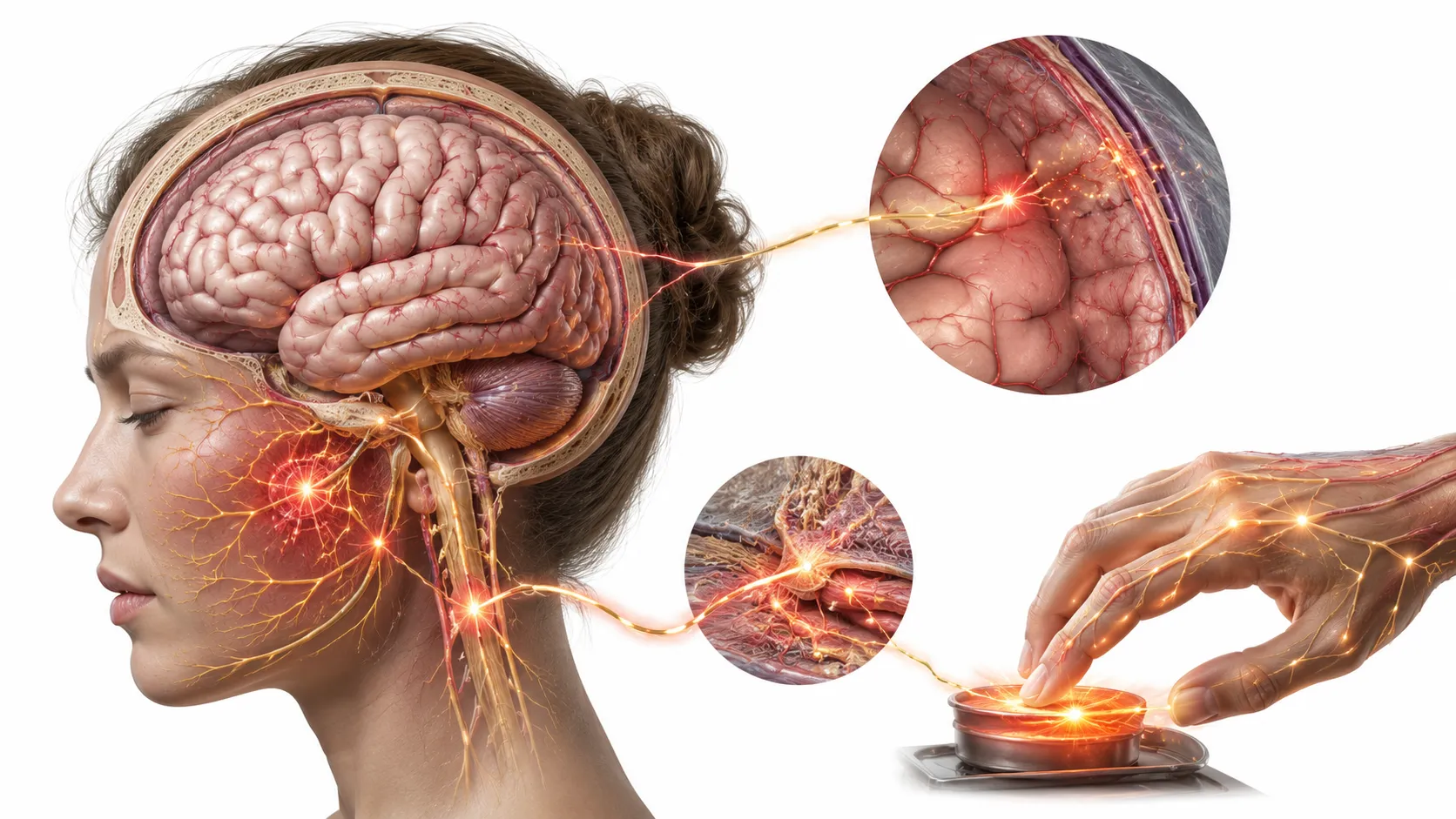
Can the Brain Feel Pain?
The brain controls all pain in your body, yet it cannot feel pain itself. Discover why, and what this strange fact re...