Whether earwax is wet and sticky or dry and flaky is determined by a single gene, and this same gene variant is also linked to differences in body odor and sweat gland type.
Body & Brain
Why do humans produce earwax?
Why Do We Have Earwax?
Earwax has a branding problem: most people think of it purely as something to remove, when it's actually a carefully engineered protective coating.
On this page
The short answer
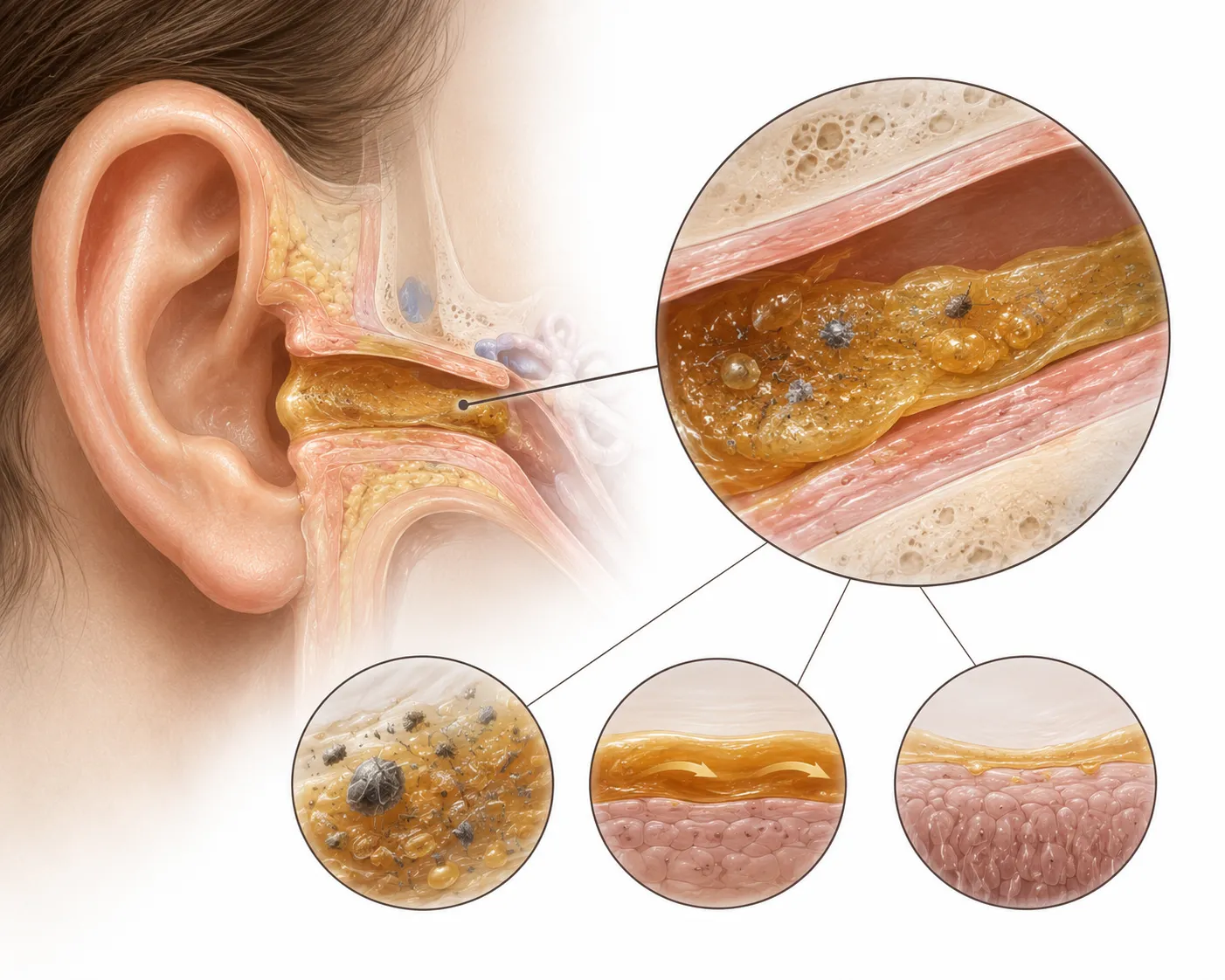
Earwax, medically called cerumen, is produced by glands in the outer ear canal to trap dust, dead skin, and debris, lubricate and waterproof the canal, and provide antimicrobial protection against infection, all while naturally migrating outward to keep the ear canal clean.
Specialized glands in the skin of the outer ear canal produce a mixture of oily secretions and shed skin cells that combine to form earwax. This waxy coating traps incoming dust, debris, and small insects before they can travel deeper toward the eardrum, and its slightly acidic, oily composition has natural antibacterial and antifungal properties that help prevent infection. Earwax also lubricates the skin of the ear canal, preventing it from becoming dry, itchy, or cracked, which could otherwise create an entry point for infection. Crucially, the skin of the ear canal grows and migrates slowly outward over time, carrying old earwax and trapped debris toward the ear opening, where it naturally flakes away, meaning a healthy ear canal cleans itself without needing to be scraped or dug out manually.
At a glance
Earwax isn't accumulated dirt, it's an actively manufactured substance.
Earwax is simply dirt that needs to be regularly cleaned out with cotton swabs.
The skin lining the ear canal migrates outward over time, carrying earwax and trapped debris along with it, which means healthy ears are largely self-cleaning without any help from cotton swabs.
Picture flypaper hanging near an open window, catching dust and insects before they can get further into the house. Earwax is doing something remarkably similar just inside your ear canal.
Diagram
Why Do We Have Earwax: the idea in one diagram
Earwax forms from glandular secretions and shed skin cells in the outer ear canal, providing trapping, lubricating, and antimicrobial protection, while naturally migrating outward to keep the ear canal clean.
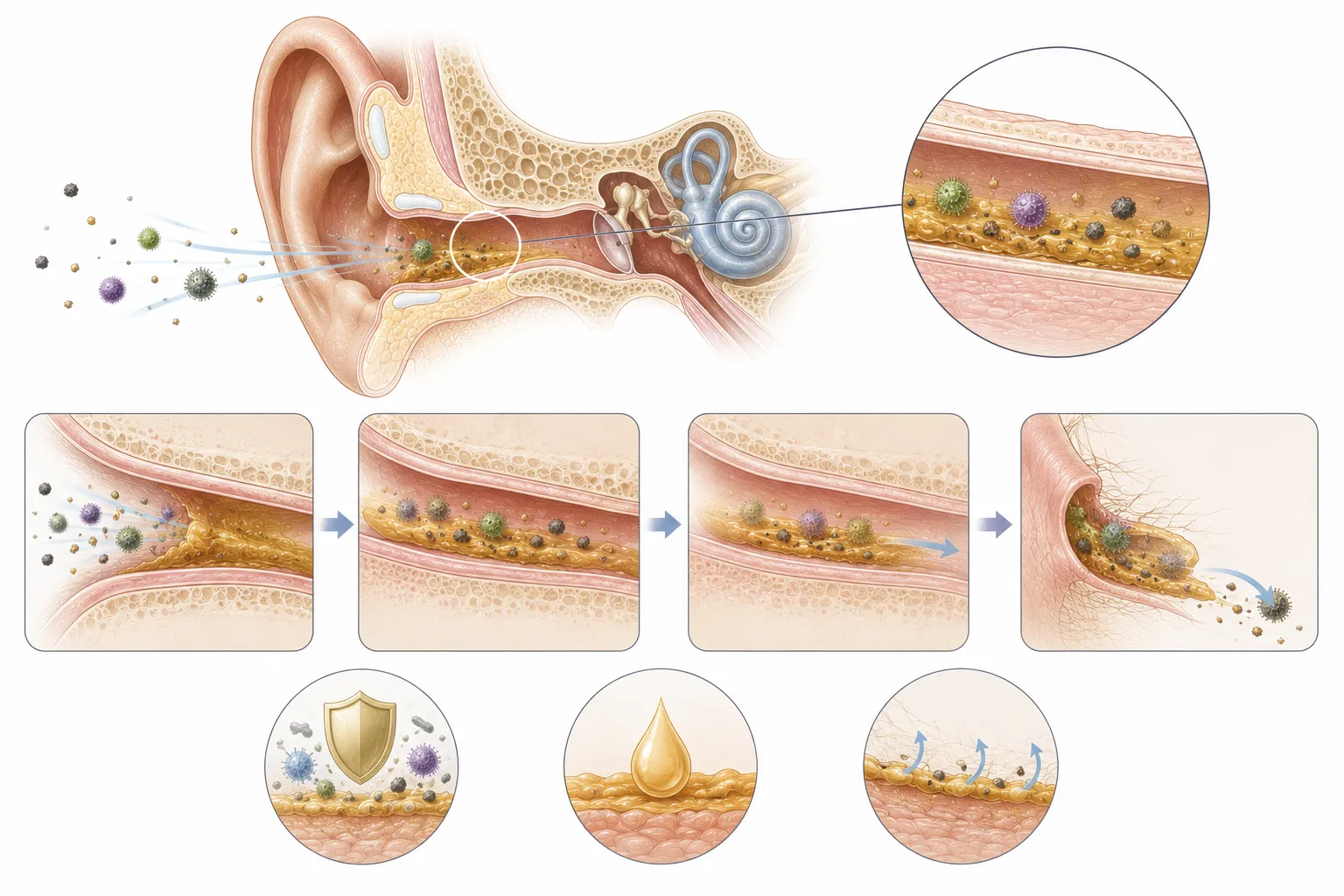
- 1Glands secrete oily and waxy substances
Earwax isn't accumulated dirt, it's an actively manufactured substance.
- 2The wax traps incoming debris
This trapping function is a first line of physical defense for the ear canal.
- 3Antimicrobial properties fight infection
Earwax provides chemical protection in addition to physical trapping.
- 4Skin migration carries wax outward
This built-in self-cleaning process is why manual ear cleaning usually isn't necessary.
How it works
The mechanism
Earwax forms from glandular secretions and shed skin cells in the outer ear canal, providing trapping, lubricating, and antimicrobial protection, while naturally migrating outward to keep the ear canal clean.
- Step 01
Glands secrete oily and waxy substances
Specialized glands in the skin of the outer ear canal produce a combination of oily and waxy secretions that mix with shed skin cells.
Like a factory continuously producing raw material for a protective coating.
Earwax isn't accumulated dirt, it's an actively manufactured substance.
- Step 02
The wax traps incoming debris
The sticky texture of earwax captures dust, small insects, and other debris before they can travel deeper toward the eardrum.
Like flypaper catching particles before they reach a more sensitive area.
This trapping function is a first line of physical defense for the ear canal.
- Step 03
Antimicrobial properties fight infection
Earwax's slightly acidic, oily composition inhibits the growth of many bacteria and fungi that could otherwise cause infection in the ear canal.
Like a protective coating that actively resists contamination, not just blocks it physically.
Earwax provides chemical protection in addition to physical trapping.
- Step 04
Skin migration carries wax outward
The skin of the ear canal slowly grows and migrates outward over time, carrying old earwax and trapped debris toward the ear opening, where it naturally flakes away.
Like a slow-moving conveyor belt continuously carrying waste toward an exit.
This built-in self-cleaning process is why manual ear cleaning usually isn't necessary.
Surprises
Facts worth sitting with
Whether earwax is wet and sticky or dry and flaky is determined by a single gene, and this same gene variant is also linked to differences in body odor and sweat gland type.
Surprising facts
What seems backwards
Worth comparing
In everyday life
Easy to get wrong
Pressure points
Where the simple answer gets interesting
Why does one gene determine whether earwax is wet or dry?
A single gene variant affects the composition of secretions from glands in the ear canal, determining whether earwax takes on a wet, sticky texture or a dry, flaky one, and this same gene is linked to differences in sweat gland activity elsewhere in the body.
One small genetic switch quietly shapes a trait most people have never thought to question.
Why does using cotton swabs to clean ears often make things worse?
Cotton swabs tend to push earwax and debris deeper into the narrow ear canal rather than removing it, which can lead to compaction, blockage, or even minor injury to the sensitive eardrum.
A tool widely marketed for ear cleaning frequently works against the ear's own natural cleaning system.
How does the ear canal clean itself without any help?
Skin cells in the ear canal are continuously produced and slowly migrate outward toward the opening of the ear, carrying earwax and trapped debris with them until it naturally flakes away near the entrance.
The ear runs its own built-in conveyor belt system, no manual scooping required.
Behind the science
The story behind it
Medical guidance discouraging cotton swab use
Otolaryngology associations have issued formal guidance advising against inserting cotton swabs or similar objects into the ear canal for cleaning purposes.
This reflects growing recognition of earwax's protective function and the risks of disrupting the ear's natural cleaning process.
Understanding a body process fully can completely reverse long-standing, widely accepted hygiene habits.
Genetic association studies on earwax type
Researchers analyzed genetic variation across populations and identified a specific gene responsible for wet versus dry earwax consistency.
The same gene variant was found to influence body odor and sweat gland secretion type, linking two seemingly unrelated traits to a single genetic switch.
Clarify
Myth and reality
Myth
Earwax is simply dirt that needs to be regularly cleaned out with cotton swabs.
Reality
Earwax is an actively produced, functional substance that traps debris, fights infection, and naturally migrates out of the ear canal without needing manual removal in most healthy ears.
Evidence
Medical guidance from otolaryngology associations consistently advises against routine manual ear cleaning for this reason.
Looking closer
The deeper pattern
Earwax's protective function is easily mistaken for dirtiness precisely because of what it looks and feels like.
One way to think about it
Appearances can be deeply misleading; something that looks like grime or waste can, on closer inspection, turn out to be a deliberately engineered protective system.
It's worth questioning the instinct to remove or clean away anything that simply looks unpleasant, since function and appearance don't always match.
Limits
Where the explanation bends
Excessive earwax buildup or impaction.
In some people, earwax can accumulate faster than the natural migration process clears it, leading to blockage, temporary hearing loss, or discomfort that may require professional removal.
Even a well-designed self-cleaning system can occasionally fall behind and need outside help.
In daily life
What this helps you notice
Understanding earwax's protective role can help people avoid unnecessary and potentially harmful ear cleaning habits.
Doctors typically recommend only cleaning the visible outer ear with a washcloth, leaving the ear canal itself alone unless a doctor identifies a genuine blockage.
Remember
Key takeaways
- 1
Earwax traps dust, debris, and small insects before they can reach deeper, more sensitive parts of the ear.
- 2
Its oily, slightly acidic composition provides natural antibacterial and antifungal protection.
- 3
The ear canal continuously self-cleans through slow outward migration of skin cells carrying earwax with it.
- 4
Cotton swabs often push wax deeper into the canal rather than removing it, risking blockage or injury.
- 5
A single gene determines whether earwax is wet and sticky or dry and flaky, and is also linked to sweat gland type.
Earwax was never dirt to be dug out, it's a self-renewing protective coating with its own built-in conveyor belt, quietly doing its job long before anyone reaches for a cotton swab.
The ear canal has been running a fully automated cleaning system since before you were born, and most of what people call 'cleaning their ears' is really just interrupting it.
Read around the idea
More questions with the same curious pull
Nearby doors from the TinyThat archive, chosen by topic, intent, and reader curiosity.
Body & Brain
What Happens to Your Body If You Don't Shower?
Sweat, oil, and dead skin cells accumulate, feeding bacteria that produce noticeable odor within a day or two.
Body & Brain
Why Do We Have Tonsils?
Tonsils help filter and sample airborne and ingested pathogens as part of early immune defense.
Body & Brain
Can the Brain Feel Pain?
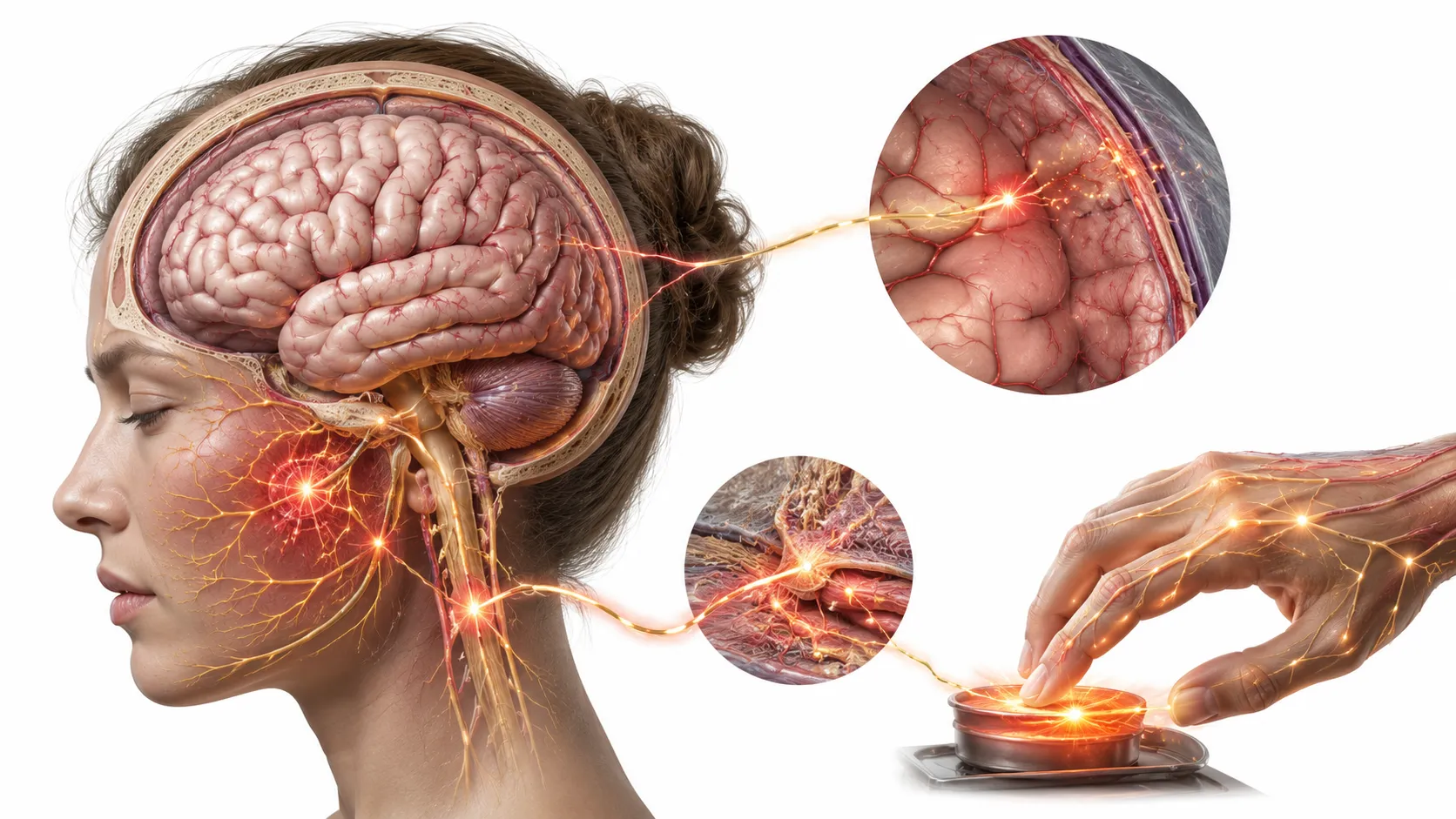
The brain controls all pain in your body, yet it cannot feel pain itself. Discover why, and what this strange fact re...