Human embryos develop a visible external tail structure around five to six weeks of gestation, which almost always recedes into the coccyx well before birth.
Body & Brain
Why do humans have a tailbone if we don't have tails?
Why Do We Have a Tailbone?
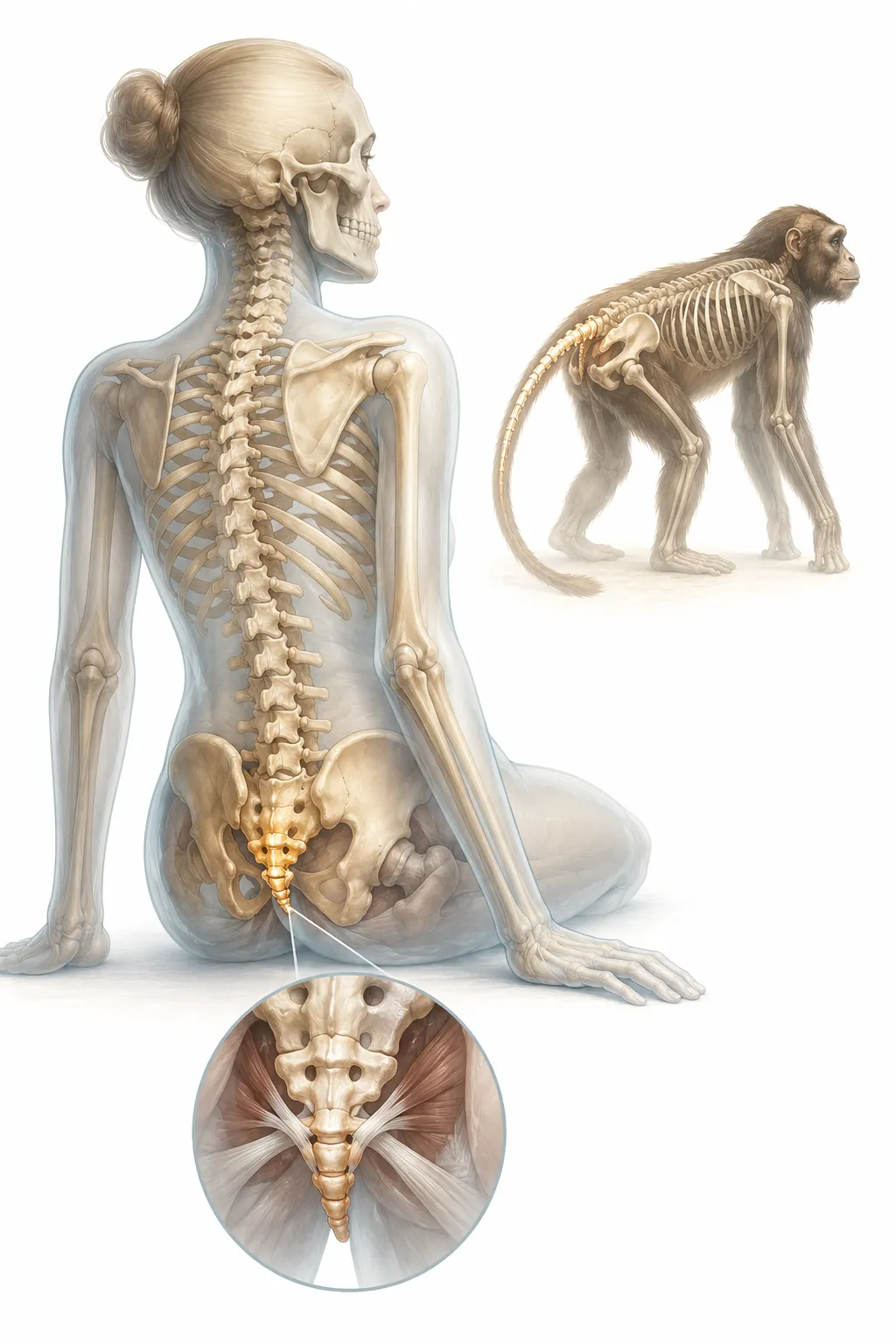
At the very bottom of the human spine sits a small, curved cluster of fused bones, all that's left of a tail your distant ancestors actually used.
On this page
The short answer
The tailbone, or coccyx, is a remnant of the tail present in our distant primate ancestors, and while humans no longer have an external tail, the tailbone remains functionally important as an anchor point for several pelvic floor muscles and ligaments essential for sitting, balance, and bowel control.
Millions of years ago, human ancestors had functional tails used for balance and movement in trees. As hominins evolved to walk upright and lost the need for a tail, the bones that once extended into it gradually shrank and fused into the small triangular structure now called the coccyx. Rather than disappearing entirely, this structure was repurposed. Several important pelvic floor muscles, including ones involved in bowel control and pelvic support, attach directly to the coccyx, and it also helps distribute body weight when sitting, particularly when leaning backward. Human embryos briefly develop a visible tail-like structure early in development, which typically regresses and fuses into the coccyx before birth, a striking echo of our evolutionary history.
At a glance
Every human embryo briefly carries this evolutionary echo before it changes shape.
The tailbone is a completely useless evolutionary leftover with no modern function.
Human embryos briefly develop a visible tail structure around the fifth week of pregnancy, which normally recedes and fuses into the tailbone well before birth.
Picture the base of a ship's mast, no longer holding a sail the way it once did, but still anchoring important rigging that keeps everything else stable. The tailbone works in a similar supporting role today.
Diagram
Why Do We Have a Tailbone: the idea in one diagram
The coccyx forms from the fusion of the last several vertebrae, a remnant of the ancestral tail, and functions today primarily as an anchor point for pelvic floor muscles and as a weight-bearing structure during sitting.
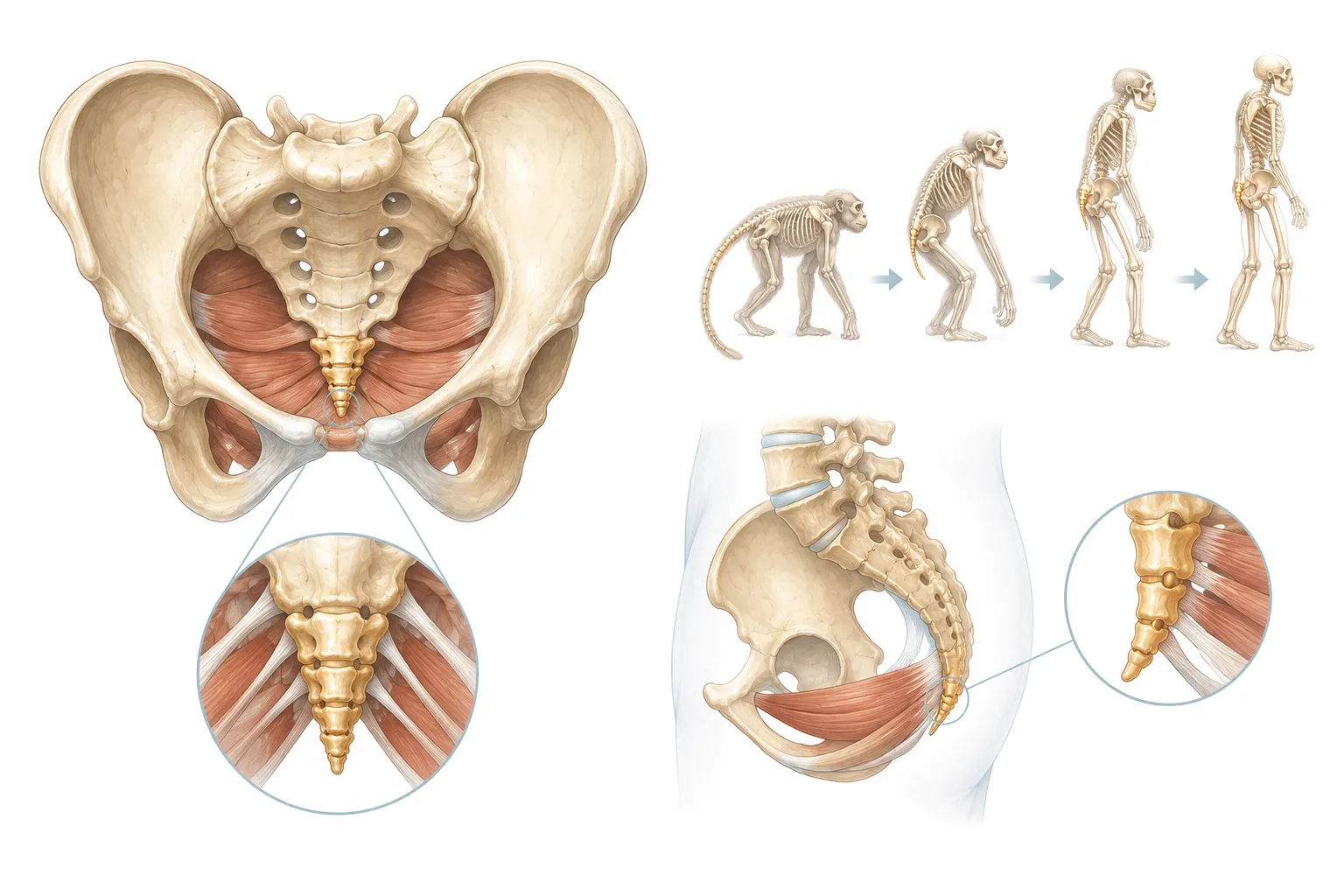
- 1Embryonic tail structure forms early in development
Every human embryo briefly carries this evolutionary echo before it changes shape.
- 2The tail structure regresses and fuses
What starts as a tail-like structure ends up as a small, fused, functional bone.
- 3Pelvic floor muscles anchor to the coccyx
The bone's original purpose disappeared, but its structural role didn't.
- 4The coccyx bears weight during sitting
The tailbone contributes directly to everyday comfort and stability while sitting.
How it works
The mechanism
The coccyx forms from the fusion of the last several vertebrae, a remnant of the ancestral tail, and functions today primarily as an anchor point for pelvic floor muscles and as a weight-bearing structure during sitting.
- Step 01
Embryonic tail structure forms early in development
Around five to six weeks of gestation, the developing spine briefly extends into a visible tail-like structure, echoing the body plan of tailed ancestors.
Like temporary scaffolding used during an early stage of construction.
Every human embryo briefly carries this evolutionary echo before it changes shape.
- Step 02
The tail structure regresses and fuses
As development continues, the tail structure typically regresses through programmed cell death and the remaining vertebrae fuse into the small triangular coccyx.
Like scaffolding being absorbed into or removed from a completed building.
What starts as a tail-like structure ends up as a small, fused, functional bone.
- Step 03
Pelvic floor muscles anchor to the coccyx
Several muscles and ligaments involved in pelvic support and bowel control attach directly to the coccyx, giving it an ongoing functional role.
Like a mooring post still holding important ropes even after the original ship it was built for is long gone.
The bone's original purpose disappeared, but its structural role didn't.
- Step 04
The coccyx bears weight during sitting
When sitting, especially leaning backward, part of the body's weight is distributed through the coccyx along with the ischial bones of the pelvis.
Like a tripod leg providing extra stability alongside the main support points.
The tailbone contributes directly to everyday comfort and stability while sitting.
Surprises
Facts worth sitting with
Human embryos develop a visible external tail structure around five to six weeks of gestation, which almost always recedes into the coccyx well before birth.
Surprising facts
What seems backwards
Worth comparing
In everyday life
Easy to get wrong
Pressure points
Where the simple answer gets interesting
Why do human embryos briefly develop a visible tail?
Early embryonic development recapitulates patterns shaped by evolutionary history, and the transient tail structure reflects the developmental program inherited from tailed ancestors, which typically regresses and fuses into the coccyx before birth.
Every human being briefly carries a visible echo of a much older evolutionary body plan before it disappears.
What actually happens to the pelvic floor if the tailbone is removed?
Because several key pelvic floor muscles anchor to the coccyx, its removal, sometimes performed for chronic pain, can affect pelvic support and requires other structures to help compensate for the lost anchor point.
A bone many consider useless turns out to leave a noticeable functional gap when it's actually gone.
Why does tailbone pain take so long to heal compared to other minor injuries?
The coccyx bears weight during sitting and serves as an attachment point for multiple muscles and ligaments under near-constant use, which makes it difficult to fully rest and allow to heal compared to less frequently stressed body parts.
A structure most people forget exists becomes impossible to ignore the moment it's injured.
Behind the science
The story behind it
Documented cases of human tail remnants
Medical literature includes documented, extremely rare cases of infants born with a soft-tissue tail remnant near the coccyx.
These cases offer a striking, tangible link to the evolutionary history embedded in human developmental biology.
Evolutionary history doesn't always stay neatly buried; it occasionally resurfaces in unexpected, visible ways.
Embryological studies of tail bud regression
Developmental biologists studied the programmed cell death process responsible for the regression of the embryonic tail structure in humans.
The regression process was found to closely parallel tail development and loss patterns seen in other primates, reinforcing the shared evolutionary origin.
Clarify
Myth and reality
Myth
The tailbone is a completely useless evolutionary leftover with no modern function.
Reality
The coccyx actively anchors several pelvic floor muscles and ligaments and helps bear weight while sitting, giving it a genuine, ongoing functional role.
Evidence
Anatomical studies consistently document multiple muscle and ligament attachments to the coccyx that are relevant to pelvic support and bowel function.
Looking closer
The deeper pattern
The tailbone shows how evolution rarely discards old structures outright, it repurposes them for new jobs.
One way to think about it
Structures and systems that outlive their original purpose often survive by being adapted to a new function rather than being eliminated entirely.
Obsolescence in one role doesn't necessarily mean uselessness overall; the same structure can find new work.
Limits
Where the explanation bends
Coccygectomy, or surgical removal of the tailbone for chronic pain.
In severe, persistent cases of tailbone pain unresponsive to other treatment, doctors may surgically remove the coccyx, which can improve pain but requires adjustment in how pelvic muscles and sitting weight distribution are managed.
In daily life
What this helps you notice
Understanding the coccyx's role in weight-bearing explains why tailbone injuries from falls can cause pain that lingers for weeks or months.
Doctors often recommend cushioned, coccyx-relief seating for patients recovering from a tailbone injury to reduce direct pressure during healing.
Remember
Key takeaways
- 1
The tailbone, or coccyx, is a remnant of the tail present in distant human ancestors.
- 2
Despite losing its original tail function, the coccyx anchors several important pelvic floor muscles and ligaments.
- 3
Human embryos briefly develop a visible tail structure that typically regresses and fuses into the coccyx before birth.
- 4
The coccyx helps distribute body weight while sitting, particularly when leaning backward.
- 5
Coccyx injuries can cause disproportionately long-lasting pain given how many structures attach to it.
The tailbone is proof that evolution rarely just throws things away; it lost its original job millions of years ago and quietly found a new one holding up muscles you rely on every single day.
Every time you sit down, lean back, or simply hold your posture, a small fused remnant of an ancestral tail is doing part of the work, whether you've ever thought about it or not.
Read around the idea
More questions with the same curious pull
Nearby doors from the TinyThat archive, chosen by topic, intent, and reader curiosity.
Body & Brain
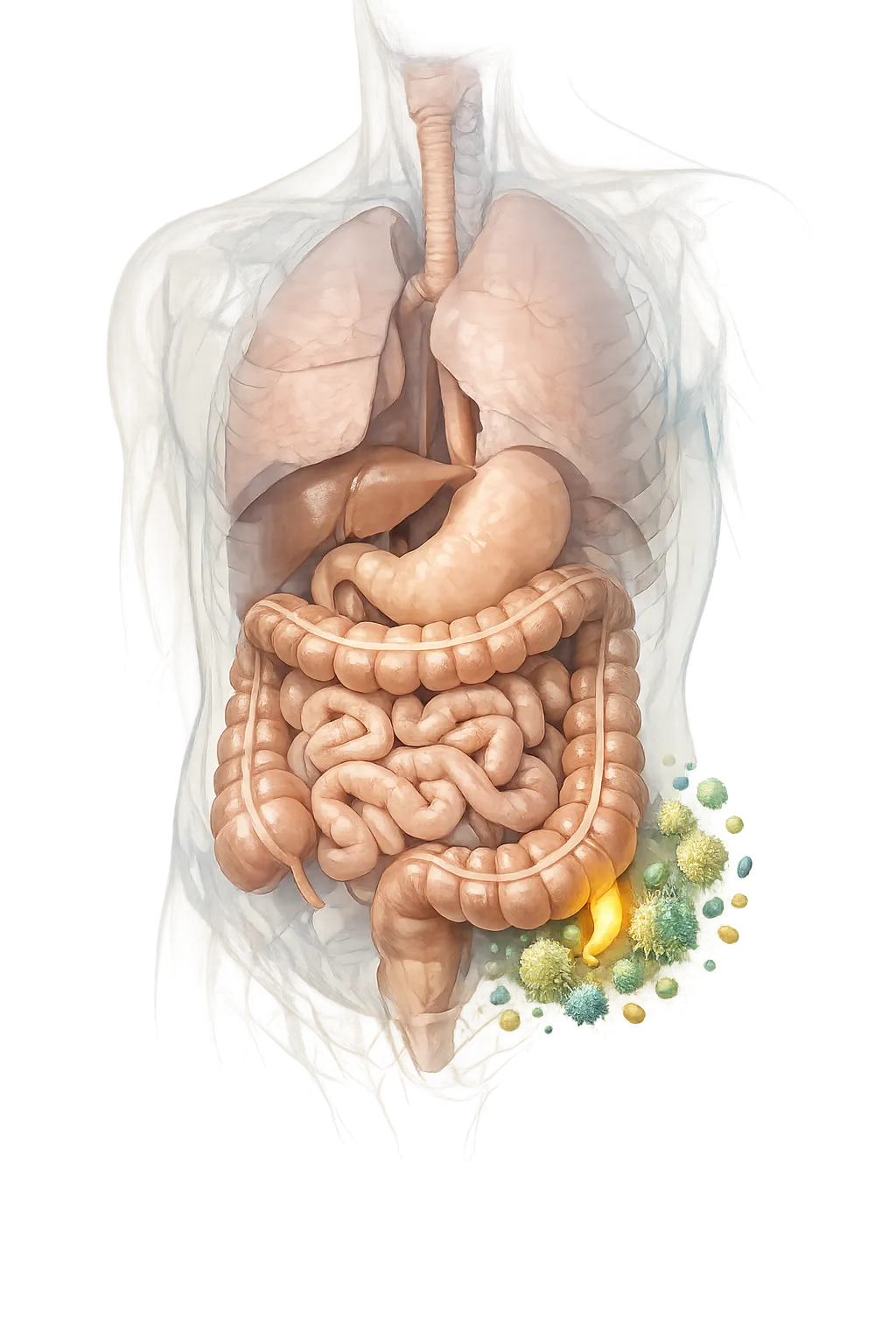
Why Do We Have an Appendix?
The appendix likely functions as a protected reservoir for beneficial gut bacteria, helping recolonize the intestines...
Body & Brain
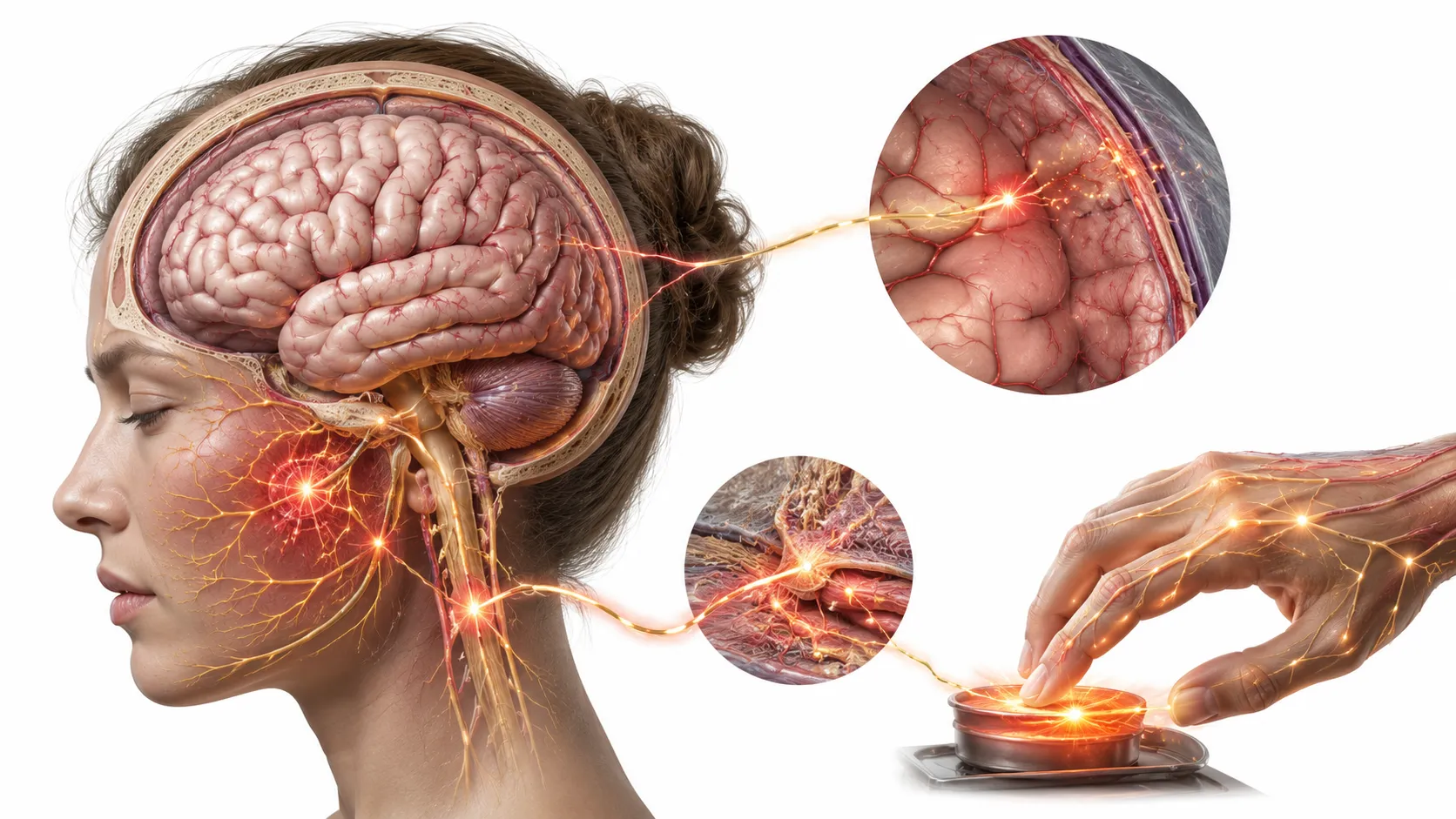
Can the Brain Feel Pain?
The brain controls all pain in your body, yet it cannot feel pain itself. Discover why, and what this strange fact re...
Body & Brain
Does Your Brain Eat Itself?
Your brain really does consume parts of itself. Learn about autophagy, synaptic pruning, and why self-consumption is...