The umbilical cord contains three blood vessels, one vein carrying oxygen and nutrients to the fetus and two arteries carrying waste products away, a distinct arrangement from blood vessels found elsewhere in the body.
Body & Brain
Why do humans have a navel, or belly button?
Why Do We Have a Navel?
Every single person, without exception, carries a small permanent scar right in the center of their abdomen, and most never think of it as a scar at all.
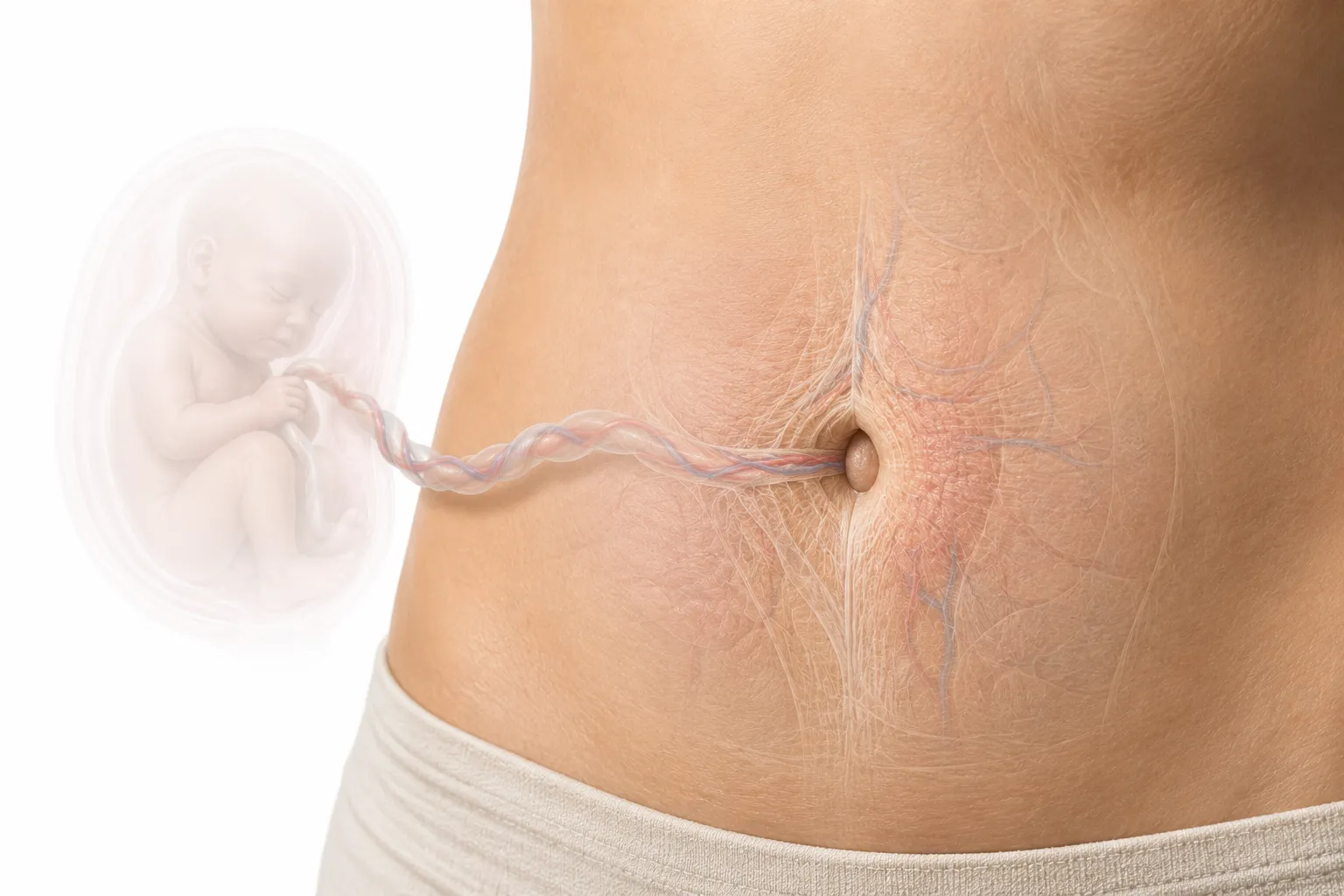
On this page
The short answer
The navel is the healed scar left behind after the umbilical cord, which connected a fetus to the placenta for nourishment and oxygen during pregnancy, is cut and its remaining stump dries up and falls away shortly after birth.
During pregnancy, the umbilical cord serves as the vital connection between a developing fetus and the placenta, delivering oxygen and nutrients from the mother's bloodstream while removing waste products, since the fetus cannot yet breathe or eat independently. After birth, once the newborn can breathe and feed on its own, the umbilical cord is clamped and cut, leaving a small stump attached to the baby's abdomen. Over the following one to two weeks, this stump dries out and naturally falls off, and the wound left behind heals into the permanent scar known as the navel. Whether the resulting scar forms as an 'innie,' which curves inward, or an 'outie,' which protrudes outward, depends primarily on how the underlying scar tissue and skin settle during healing, not on how the cord itself was cut or tied.
At a glance
The umbilical cord is a fully functional, essential structure before birth, not simply decorative anatomy.
Whether someone has an innie or outie belly button depends on how the doctor cut the umbilical cord.
Whether a navel ends up as an 'innie' or an 'outie' has essentially nothing to do with how the umbilical cord was cut, and almost everything to do with how the healing scar tissue settles underneath.
Picture a garden hose that once connected a house to an external water supply, permanently unplugged and sealed once construction is finished, leaving behind a small, unmistakable mark where the connection used to be.
Diagram
Why Do We Have a Navel: the idea in one diagram
The navel forms as a permanent scar after the umbilical cord, which sustained a fetus during pregnancy, is cut at birth and its remaining stump dries up and separates from the healing skin.
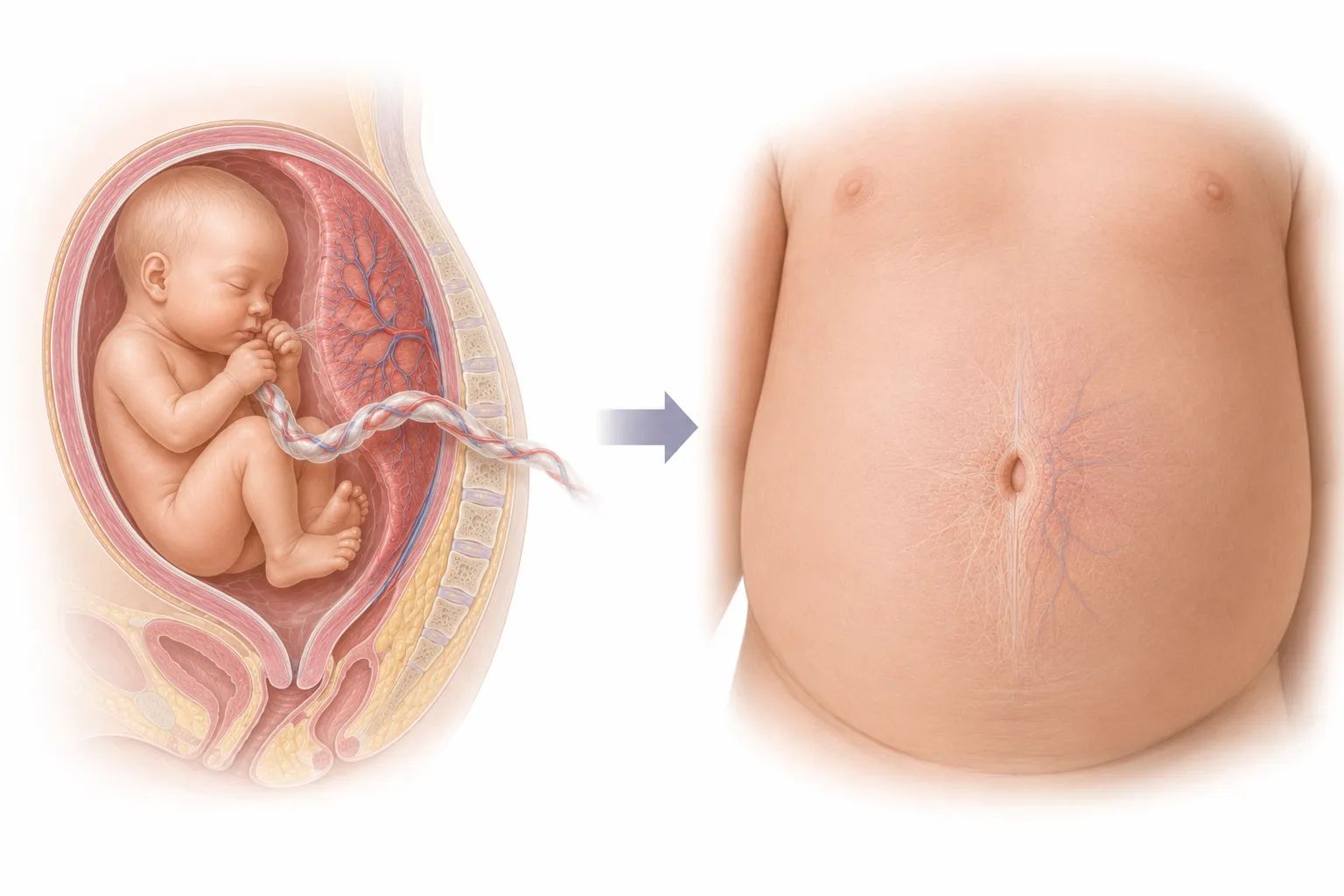
- 1The umbilical cord connects fetus to placenta
The umbilical cord is a fully functional, essential structure before birth, not simply decorative anatomy.
- 2The cord is clamped and cut after birth
This marks the transition from dependence on the umbilical connection to full physiological independence.
- 3The stump dries and separates
This separation process requires no active intervention in a healthy newborn.
- 4The wound heals into a permanent scar
The navel's final appearance is a byproduct of individual healing, not of how the procedure was performed.
How it works
The mechanism
The navel forms as a permanent scar after the umbilical cord, which sustained a fetus during pregnancy, is cut at birth and its remaining stump dries up and separates from the healing skin.
- Step 01
The umbilical cord connects fetus to placenta
During pregnancy, the umbilical cord carries oxygen and nutrients from the placenta to the developing fetus while removing waste products.
Like a supply line delivering essential resources to a building not yet capable of generating its own.
The umbilical cord is a fully functional, essential structure before birth, not simply decorative anatomy.
- Step 02
The cord is clamped and cut after birth
Once a newborn can breathe and feed independently, the umbilical cord is clamped and cut, leaving a small stump attached to the baby's abdomen.
Like disconnecting a supply line once a building's own internal systems become operational.
This marks the transition from dependence on the umbilical connection to full physiological independence.
- Step 03
The stump dries and separates
Without ongoing blood flow, the remaining umbilical stump gradually dries out and naturally separates from the healing skin underneath, typically within one to two weeks.
Like a plant stem naturally drying and detaching once it's no longer connected to its water source.
This separation process requires no active intervention in a healthy newborn.
- Step 04
The wound heals into a permanent scar
The small wound left behind after the stump separates heals over, forming the permanent scar known as the navel, its final innie or outie shape determined by how the underlying tissue settles.
Like any healed wound leaving behind a lasting scar shaped by how the underlying tissue repairs itself.
The navel's final appearance is a byproduct of individual healing, not of how the procedure was performed.
Surprises
Facts worth sitting with
The umbilical cord contains three blood vessels, one vein carrying oxygen and nutrients to the fetus and two arteries carrying waste products away, a distinct arrangement from blood vessels found elsewhere in the body.
Surprising facts
What seems backwards
Worth comparing
In everyday life
Easy to get wrong
Pressure points
Where the simple answer gets interesting
Why does the umbilical cord stump fall off on its own instead of needing to be removed?
Once cut, the remaining stump is no longer supplied with blood flow, causing the tissue to dry out and naturally separate from the healing skin underneath over one to two weeks, a process that requires no manual intervention in a healthy newborn.
The body handles the disconnection process completely on its own, with no outside help required.
What actually determines whether someone has an innie or outie belly button?
The final shape depends primarily on how the underlying scar tissue and abdominal skin settle during healing, and in some cases on the presence of a minor umbilical hernia, rather than on how the cord was originally cut.
A trait many people assume was determined by a doctor's technique is actually shaped almost entirely by internal healing patterns.
Does the navel serve any function after birth?
No, once the umbilical stump falls away and the wound heals, the navel serves no ongoing physiological function; it remains simply as a permanent scar marking where the umbilical cord was once attached.
One of the most universally recognizable features on the human body turns out to be functionally unnecessary after the earliest days of life.
Behind the science
The story behind it
Medical guidance on umbilical cord care after birth
Pediatric medical guidelines provide specific recommendations for keeping the umbilical stump clean and dry to support healthy healing in newborns.
Following this guidance helps minimize the risk of infection during the natural stump separation process.
Even a process that happens automatically in the body can benefit from simple, informed care during its early stages.
Clinical studies on delayed umbilical cord clamping
Researchers compared health outcomes for newborns with immediate versus delayed umbilical cord clamping after birth.
Delayed clamping was found to offer certain health benefits for newborns, including improved iron stores, leading to updated clinical guidance in many settings.
Clarify
Myth and reality
Myth
Whether someone has an innie or outie belly button depends on how the doctor cut the umbilical cord.
Reality
The final shape of the navel is determined primarily by how the underlying scar tissue and skin settle during healing, not by the specific technique used to cut or tie the cord.
Evidence
Medical literature on umbilical healing consistently attributes navel shape to tissue and healing factors rather than cord-cutting technique.
Looking closer
The deeper pattern
The navel is permanent evidence of a temporary structure, a connection essential before birth and immediately unnecessary after it.
One way to think about it
Some of the most universally recognized features of the body aren't ongoing functional systems at all, they're simply the leftover markers of processes that served their entire purpose in a very narrow window of time.
Not every prominent, permanent feature needs an ongoing purpose to explain its existence.
Limits
Where the explanation bends
Umbilical granuloma or minor healing complications.
In some newborns, a small amount of pink tissue remains after the umbilical stump falls off, requiring simple medical treatment to fully resolve the healing process.
Even a nearly universal healing process can occasionally take a slightly different path requiring minor medical attention.
In daily life
What this helps you notice
Understanding the navel as a healed scar rather than a functional organ can put to rest common myths about its formation and shape.
New parents are commonly advised by pediatricians on basic umbilical stump care, understanding it as a normal healing wound rather than an ongoing functional structure.
Remember
Key takeaways
- 1
The navel is a permanent scar left behind after the umbilical cord stump separates from a newborn's abdomen.
- 2
The umbilical cord served as the vital connection delivering oxygen and nutrients to a fetus before birth.
- 3
The stump typically dries and falls off naturally within one to two weeks after birth.
- 4
Whether a navel becomes an innie or outie depends on how underlying tissue heals, not on cord-cutting technique.
- 5
The navel serves no ongoing physiological function after birth, existing solely as a healed scar.
The navel was never designed to do anything at all, it's simply the honest, permanent scar left behind by the one connection every single person on Earth once depended on completely.
Every belly button is a small, universal reminder that before any of us could breathe, eat, or exist independently, something else was doing all of that work for us, one shared connection at a time.
Read around the idea
More questions with the same curious pull
Nearby doors from the TinyThat archive, chosen by topic, intent, and reader curiosity.
Body & Brain
Why Do We Have a Tailbone?
The tailbone is a remnant of an ancestral tail and still anchors several important muscles and ligaments today.
Body & Brain
Why Do Scars Form?
Scars form when the body repairs deeper skin damage with collagen fibers arranged differently than the original tissue.
Body & Brain
Can the Brain Feel Pain?
The brain controls all pain in your body, yet it cannot feel pain itself. Discover why, and what this strange fact re...