Skin & Nervous System

What Causes Goosebumps?

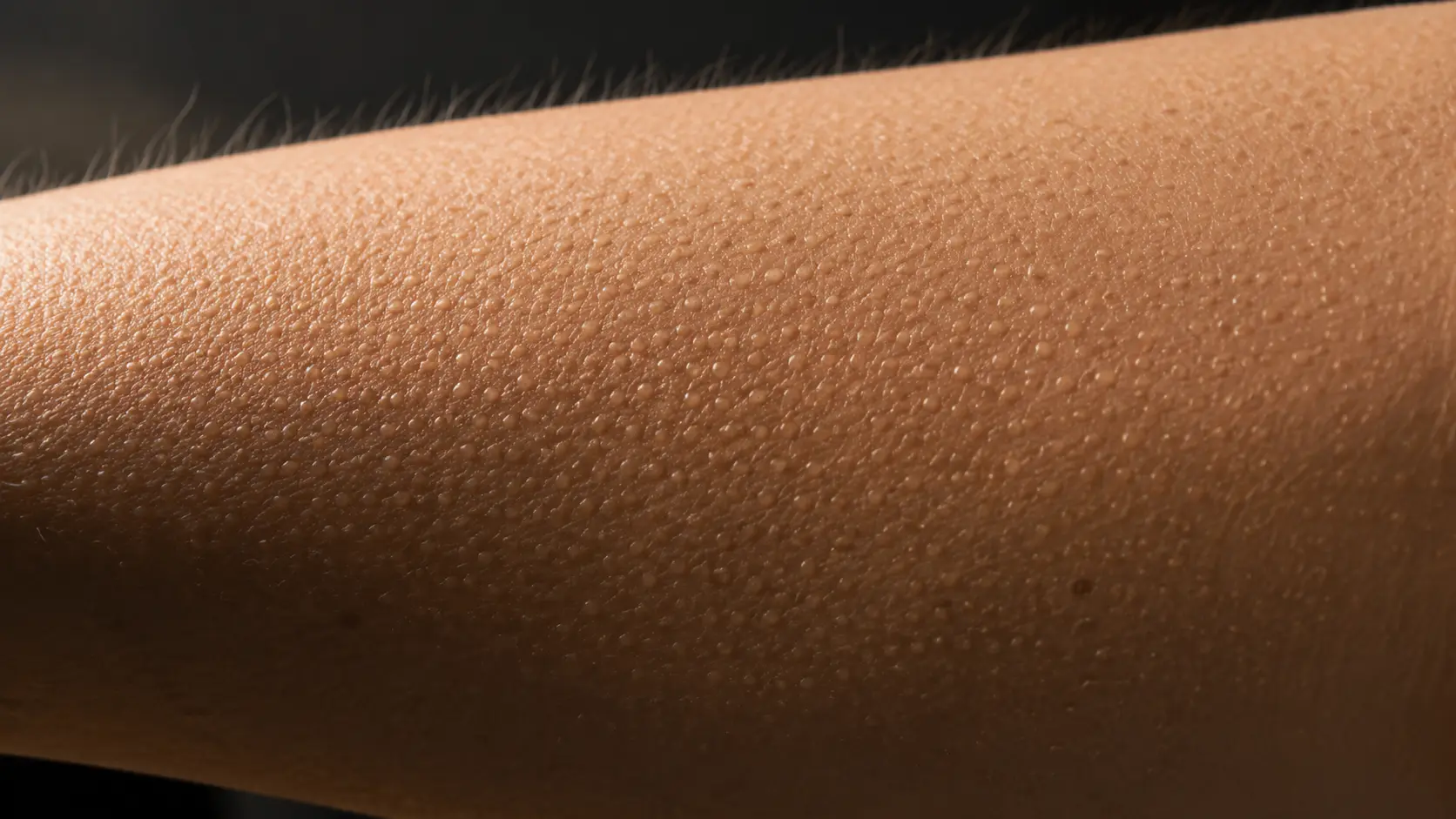
Goosebumps look like your skin suddenly deciding to texture itself. One second your arm is smooth; the next, hundreds of tiny bumps appear and the fine hairs lift as if they have received a secret instruction. The strange part is that the same thing can happen from cold air, fear, nostalgia, awe, or a song hitting exactly the right moment.

The short answer

Goosebumps are caused by the pilomotor response. Each hair follicle has a tiny smooth muscle attached to it called the arrector pili muscle. When your sympathetic nervous system activates, it releases chemical signals near those follicles. The arrector pili muscles contract, tug the hairs upright, and wrinkle the surrounding skin into little bumps. In fur-covered animals, that raised hair traps warm air or makes the animal look bigger. In humans, the effect is mostly a leftover reflex, but the wiring is still active because it belongs to the same fight-or-flight system that controls many useful automatic responses.

Close-up of skin with goosebumps on arm

Sympathetic nervous system activation from cold, fear, adrenaline, or strong emotion

Main trigger

Goosebumps are only a cold response or proof that hair is growing

What people think

The pilomotor response makes arrector pili muscles contract and pull hairs upright

What actually happens

No, goosebumps are harmless and normal across all conditions

Should you worry?

Sympathetic nervous system activation from cold, fear, adrenaline, or strong emotion

Main trigger

Goosebumps are only a cold response or proof that hair is growing

What people think

The pilomotor response makes arrector pili muscles contract and pull hairs upright

What actually happens

No, goosebumps are harmless and normal across all conditions

Should you worry?

Visual answer

How the Pilomotor Response Creates Goosebumps

From nerve signal to arrector pili contraction to hair standing up.

1

Sympathetic nervous system fires

Cold, fear, awe, music, or adrenaline activates your sympathetic nervous system, the same automatic system behind fight-or-flight responses.

2

Norepinephrine released

The chemical norepinephrine is released near hair follicles. This is the signal that starts the pilomotor response.

3

Arrector pili muscles pull

Each arrector pili muscle contracts. These are the tiny muscles that make hairs stand up.

4

Bump forms at surface

The follicle and nearby skin are tugged upward, forming the visible bump. In furry animals, the raised hair also puffs the coat.

Real reason

Tiny Muscles Are Pulling Your Hair Upright

The hidden actor is the arrector pili muscle. Every hair follicle has one of these tiny smooth muscles attached to it. You cannot control it directly, because it is wired into the autonomic nervous system rather than the voluntary muscles you use to move your arms or legs.

When your sympathetic nervous system switches on, it releases norepinephrine near those follicles. The arrector pili muscles contract. That contraction pulls the hair shaft more upright and tugs the surrounding skin into a small raised bump.

This whole reflex is called the pilomotor response or piloerection. It is the same basic mechanism behind the phrase 'the hairs on the back of my neck stood up.' The hair is not choosing to rise. A tiny muscle is pulling it.

For our distant ancestors who had much more body hair, this served two functions: puffed-up fur trapped more warm air against the skin in the cold, and made the animal look larger and more threatening to a predator. Humans do not have enough body hair for either effect to matter much anymore, but the reflex stayed because it is attached to a nervous system we still need.

Myth vs reality

Myth vs Reality

What people think

Goosebumps mean your hair is growing

Because goosebumps happen around hair follicles, it is easy to imagine the bump is a sign of hair growth. But the visible bump is immediate muscle contraction, not new hair appearing.

What actually happens

Goosebumps are a muscle reflex around existing hair follicles

The arrector pili muscles contract around hairs you already have. Some research suggests repeated cold-triggered activation can influence hair follicle stem cells over time, but a goosebump itself does not make a hair grow in that moment.

Triggers

What Triggers the Pilomotor Response

Cold temperature

Skin temperature sensors detect cold, and the sympathetic system activates the arrector pili muscles. In furry animals, raised hair helps trap insulating air.

Fear or threat

Adrenaline and sympathetic nerve signals prepare the body for danger. Raised hair once helped animals look larger.

Powerful music or emotional moments

Awe, suspense, memory, or musical release can activate the same arousal pathway even without cold or danger.

Hair standing up

The hairs stand up because arrector pili muscles pull on follicles. The muscles are tiny, involuntary, and attached at the base of individual hairs.

Quick answers

Common questions

What muscle causes goosebumps?

The arrector pili muscle causes goosebumps. Each one is a tiny smooth muscle attached to a hair follicle. When it contracts, it pulls the hair upright and creates a small bump in the surrounding skin.

What is the pilomotor response?

The pilomotor response is the automatic reflex that makes hairs stand up and creates goosebumps. It is also called piloerection and is controlled by the sympathetic nervous system.

Why do I get goosebumps from music?

Strong emotional arousal, awe, beauty, tension, release, activates the sympathetic nervous system just like cold or fear does. The arrector pili muscles respond to the same signal regardless of the cause.

Do goosebumps serve any useful purpose in humans?

In humans with little body hair, not really. The warming and intimidation effects that worked for our furry ancestors don't apply. Some researchers suggest the arrector pili muscles may play a role in hair follicle stem cell activation, but this is still being studied.

Can you get goosebumps voluntarily?

Most people cannot. The arrector pili muscles are controlled by the sympathetic nervous system, which is involuntary. A small number of people report being able to trigger them deliberately, but this is rare.

Why do the hairs on the back of my neck stand up when I'm scared?

The same mechanism, arrector pili contracting. The back of the neck is one of the more sensitive and noticeable areas. In animals, a raised neck mane is a clear threat signal. The nerve connections in that area are particularly strong.

Is it true goosebumps can help grow hair?

Not in the instant, everyday sense. A goosebump does not make a hair grow on the spot. Research from NIH-funded scientists at Harvard found that cold-induced goosebumps may help stimulate stem cells in hair follicles over time, but this is a secondary biological link, not the main reason goosebumps evolved.

Why do goosebumps go away on their own?

Once the sympathetic nervous system stimulus passes, the cold warms up, the fear subsides, the song ends, the chemical signal fades and the arrector pili muscles relax, letting the hairs lie back down.
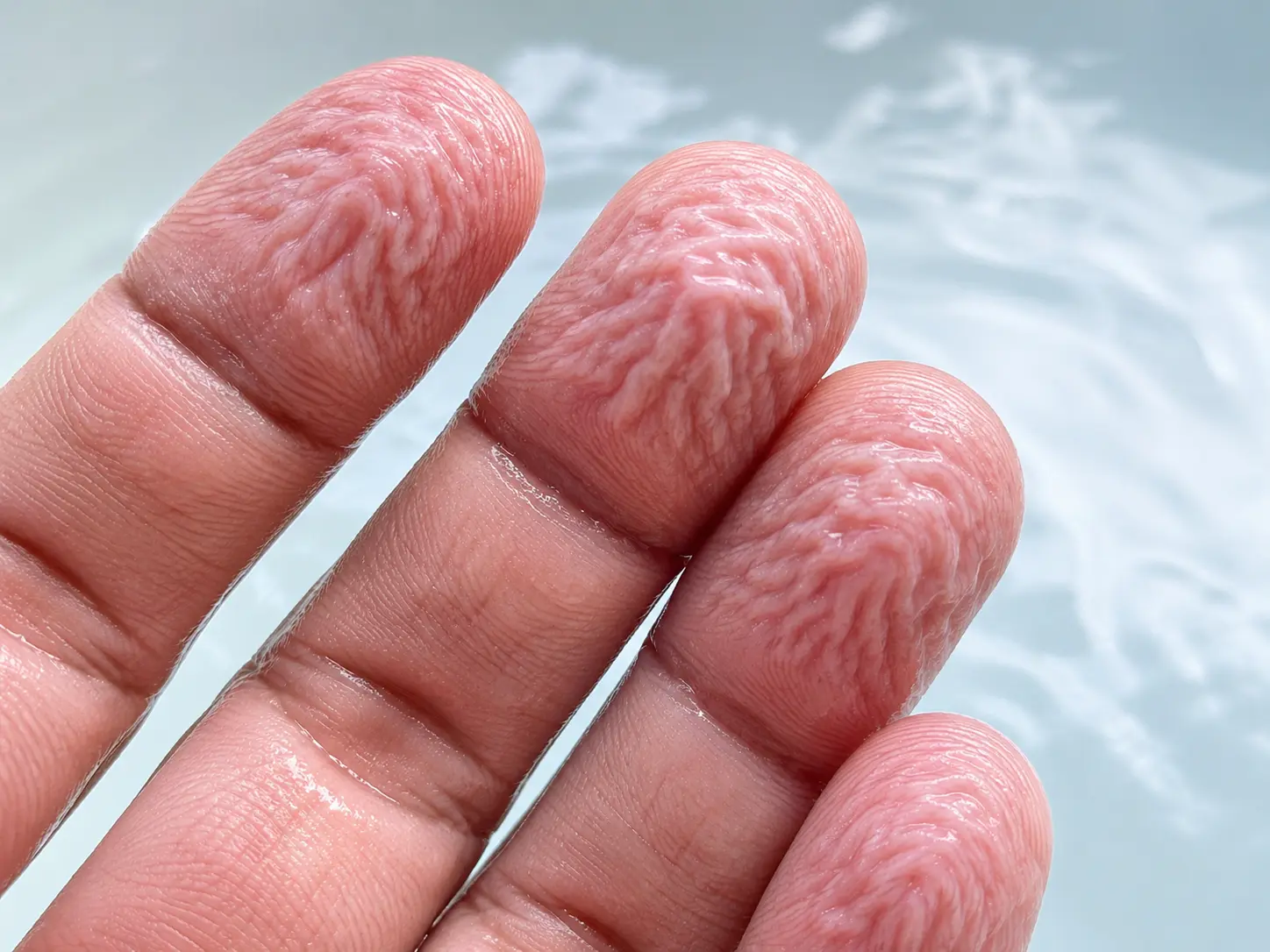
Why Do Fingers Wrinkle in Water?

Your next rabbit hole

Why Do Fingers Wrinkle in Water?

Both are automatic responses involving the nervous system

Skin & Nervous SystemRead next

Keep wondering

Questions that naturally come next

01Body & BrainWhat Happens to Your Body If You Don't Shower?

Without showering, sweat, dead skin cells, and natural oils accumulate on the skin, feeding the resident bacterial population and typically producing noticeable odor within one to three days, though the skin barrier itself often becomes more balanced over longer stretches. In the first day or two without washing, sweat and sebum build up on the skin's surface, and bacteria that normally live there begin breaking down sweat compounds into odor-causing byproducts, particularly in areas like the armpits and groin. Dead skin cells that would normally be washed away start to accumulate visibly. Over several days, oil production can paradoxically stabilize in some people, since skin no longer needs to overcompensate for oils stripped by frequent washing. However, without regular exfoliation and cleansing, clogged pores, breakouts, and skin irritation become more likely, and the buildup of bacteria and yeast can trigger fungal or bacterial skin issues, especially in warm, moist areas of the body.

02Body & BrainWhy Does Your Nose Run When It's Cold?

Cold air causes blood vessels in the nose to dilate and mucus production to increase as part of the nose's job of warming and humidifying inhaled air before it reaches the lungs, and cold temperatures also slow the tiny hair-like structures that normally move mucus backward, causing it to pool and drip forward instead. One of the nose's core functions is conditioning the air you breathe, warming it to body temperature and adding moisture before it reaches the sensitive tissue of the lungs. When cold, dry air enters the nasal passages, blood vessels in the nasal lining dilate, increasing blood flow to help warm the incoming air, and mucus glands increase production to add humidity. At the same time, cold temperatures slow the normal function of cilia, tiny hair-like structures that continuously sweep mucus backward toward the throat to be swallowed. With cilia moving more sluggishly in the cold, mucus accumulates faster than it can be cleared through its usual pathway, and gravity pulls the excess forward and out the front of the nose instead, producing the familiar cold-weather runny nose.

03Brain & BodyWhy Do We Yawn?

Yawning is weird because scientists still don't have one clean answer. The old idea, that your body needs more oxygen, has been mostly ruled out. What seems more likely is that yawning happens when your brain is shifting gears: moving from low activity to high, or the other way around. It may also help cool a warming brain by pulling in cooler air and increasing blood flow. It happens when you're tired, waking up, bored, or stressed. Every vertebrate animal does it, which tells us it has been around a very long time and probably matters, but exactly why is still being worked out.

Read around the idea

More questions with the same curious pull

Nearby doors from the TinyThat archive, chosen by topic, intent, and reader curiosity.

Random curiosity

Let TinyThat choose the next door

Jump sideways into another question from the archive, no category required.

I'm feeling curious

One good question

Get one fascinating question each week.

A short curiosity note from TinyThat. No noise, just one question worth keeping.