Visual answer
From Tickle to Blast: The Sneeze Sequence
Four steps from irritation in the nose to the full-body sneeze response.
Irritant detected in nasal lining
Dust, pollen, pepper, a pathogen, or cold air irritates the mucous membrane lining your nose.
Trigeminal nerve fires
Nerve endings send an electrical signal up the trigeminal nerve, the main sensory nerve of the face, to the sneeze center in the brainstem.
Brainstem launches coordinated response
Eyes close, deep breath fills the lungs, throat muscles seal, chest pressure builds, all involuntarily and in rapid sequence.
Air blast fires
The pressure releases explosively through the nose and mouth, carrying irritants out of the airways at high speed.
Real reason
Your Nose Has a Direct Line to a Reflex Center in Your Brainstem
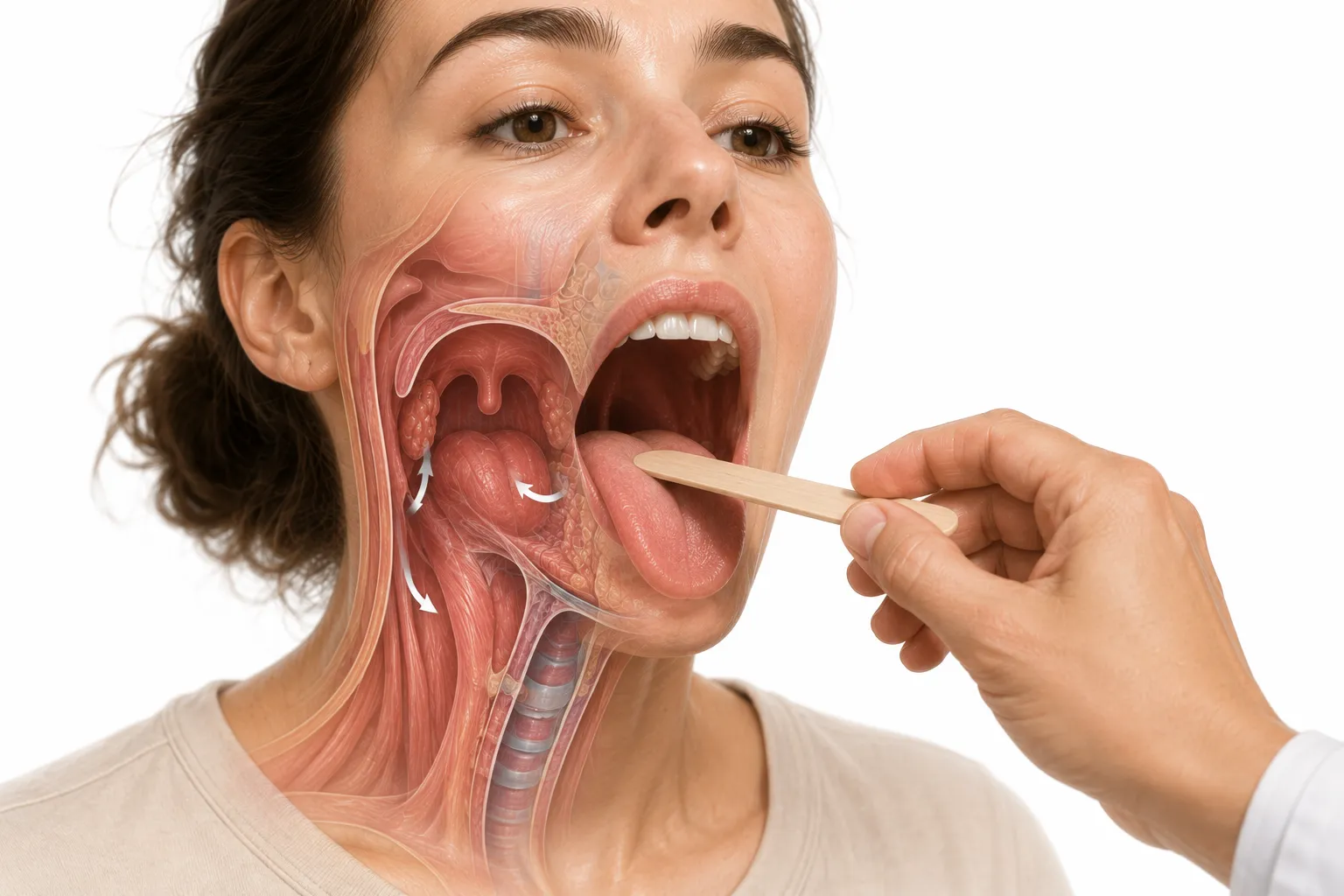
The inside of your nose is lined with delicate mucous membrane packed with nerve endings. These pick up on irritants, particles, allergens, chemical compounds, almost instantly. When they detect something, they send a signal up the trigeminal nerve, one of the main sensory nerves in your head.
That signal reaches a dedicated sneeze center in the brainstem. The brainstem coordinates a rapid, whole-body response: you inhale deeply, your eyes close, your throat seals, pressure builds in your chest and airways, then everything releases in one powerful blast.
The purpose is clear: get the irritant out before it travels deeper into your respiratory system. Your cilia, the tiny hair-like structures that keep your nasal passages clean, also get a reset with each sneeze. Research found that sneezing re-establishes the normal cilia movement pattern, which can be disrupted by congestion or infection.
Myth vs reality
Myth vs Reality
What people think
Your eyes will pop out if you sneeze with them open
Not true at all. Your eyes close when you sneeze because it's a reflex, the facial muscles involved in sneezing pull the eyelids shut. But there are no muscles holding your eyes in your head via your eyelids. They're held in place by the eye socket itself.
What actually happens
Your eyes are held in place by your skull, not your eyelids
Some people can sneeze with their eyes open. Their eyeballs stay put. The reflex is just your body coordinating a bunch of muscles at once, and the eyelids are part of that coordinated response.
Common triggers
What Makes You Sneeze
Allergens (pollen, dust, pet dander)
Immune system releases histamine, which inflames nasal lining and triggers the reflex
Infections (colds, flu)
Viruses directly irritate the nasal mucous membrane and trigger constant sneezing as a defense
Bright light (photic sneeze reflex)
Around 1 in 4 people sneeze when exposed to bright light, the trigeminal nerve signal seems to cross-activate the sneeze reflex
Quick answers
Common questions
Why do I sneeze in threes? +
There's no fixed rule, some people sneeze once, others in clusters. Multiple sneezes happen when the first blast doesn't fully clear the irritant, so the reflex fires again. How many is just individual variation.
Why do some people sneeze when they look at bright light? +
It's called the photic sneeze reflex and it's genetic. About 25% of people have it. The leading explanation is that bright-light signals in the visual cortex cross-activate the trigeminal nerve pathways, triggering the sneeze reflex by mistake.
Can you sneeze in your sleep? +
Very rarely. During REM sleep, muscle activity is significantly suppressed, which seems to inhibit the sneeze reflex. Most people don't sneeze while sleeping even if an irritant is present.
Is it true sneezes travel at over 100 mph? +
Often cited, but measurements vary. Studies have clocked sneezes at a wide range of speeds, the 100 mph figure is on the higher end and probably an overestimate. They're fast and carry droplets far, but the exact speed depends on the individual.
Why do I sneeze when I pluck my eyebrows? +
The trigeminal nerve has branches throughout the face including around the eye area. Plucking can stimulate those branches, and the signal can cross into the nasal sneeze-reflex pathways. It's an unexpected but real connection.
Does sneezing help with a cold? +
It's part of your body's effort to expel pathogens, but a cold is already inside your cells by the time you're sneezing. Sneezing helps clear mucus and reset nasal cilia, but it doesn't cure the infection. It does spread the virus to people nearby.