Visual answer
The Hiccup Sequence
Four steps from nerve irritation to that 'hic' sound.
Nerve irritation
Something, a full stomach, carbonation, fast eating, irritates the vagus or phrenic nerve that controls the diaphragm.
Diaphragm spasms
The muscle contracts suddenly and involuntarily, pulling downward and sucking air into the airways fast.
Glottis snaps shut
The glottis, the space between your vocal cords, closes abruptly to stop the rush of incoming air.
'Hic' sound
That sharp closure is what makes the hiccup sound. The whole cycle can repeat every few seconds until the irritation stops.
Real reason
A Nerve Gets Irritated and Your Diaphragm Freaks Out
Your diaphragm is a dome-shaped muscle that sits below your lungs. It moves down when you breathe in and up when you breathe out. The vagus nerve and phrenic nerve control it. When those nerves get irritated, the diaphragm spasms, it contracts suddenly without you asking it to.
That sudden inward jerk pulls air rushing into your throat. Your body responds by snapping the vocal cords shut. The abrupt closure of that air gap is what makes the 'hic' sound. It's basically a misfiring reflex, no useful purpose, just your nervous system reacting to an irritation.
The why is less clear than the how. There is no strong evidence that hiccupping serves a function in adults. It may be a leftover reflex from early development, some researchers have suggested fetal hiccupping could relate to training the breathing muscles, but this is not settled science.
Myth vs reality
Myth vs Reality
What people think
Holding your breath or getting scared will definitely cure hiccups
Everyone has a favorite folk remedy. Holding breath, paper bags, cold water, being startled, the list is long. Some may work for some people some of the time. None has solid scientific evidence behind it.
What actually happens
Most hiccups just stop on their own in a few minutes
The nerve irritation that caused the spasm tends to settle on its own. Breathing techniques that raise CO2 or activate the vagus nerve may help, but even without doing anything, most hiccups are gone in under 10 minutes.
Common triggers
What Triggers a Hiccup
Eating fast or too much
Swallowed air and a stretched stomach push up against the diaphragm, irritating nearby nerves
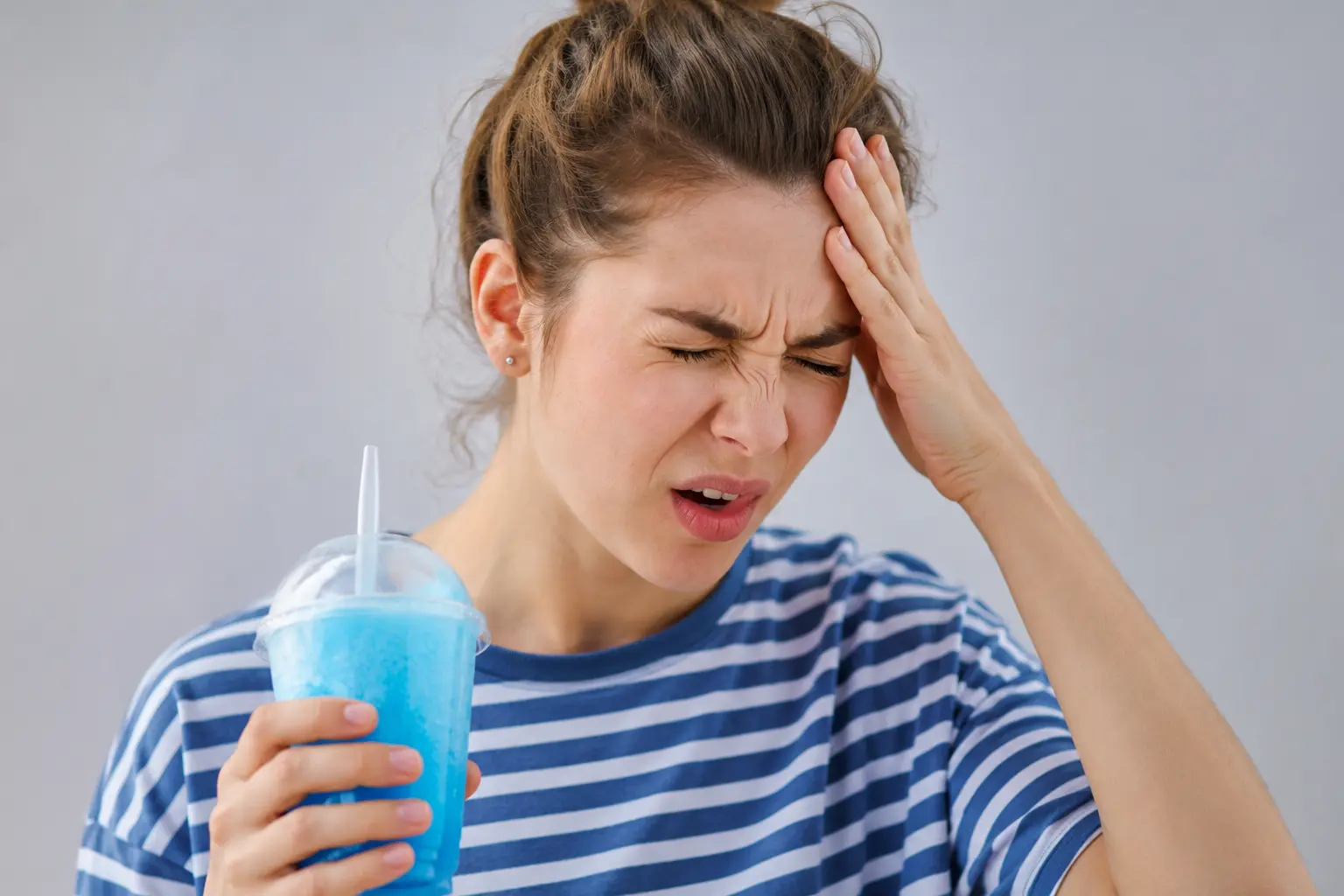
Fizzy drinks or alcohol
Carbonation distends the stomach rapidly; alcohol can directly irritate the vagus nerve
Sudden temperature changes
Eating very hot then very cold food, or breathing cold air, can trigger a reflex spasm
Quick answers
Common questions
Why can't I just stop hiccupping by deciding to? +
Hiccups are involuntary. The diaphragm spasm is triggered by nerve irritation, not by conscious control. You can try to change your breathing or stimulate the vagus nerve, but you can't directly command your diaphragm to stop misfiring.
Does holding your breath actually work? +
It might. Holding your breath raises CO2 levels in the blood, which may help reset the diaphragm's rhythm. It's not guaranteed, but it has a reasonable mechanism behind it compared to most folk cures.
Why do babies hiccup so much? +
Babies hiccup frequently, especially newborns. Their diaphragms are still maturing and more easily irritated. It's typically harmless. Feeding position and pace can help reduce how often it happens.
Can hiccups really last for years? +
Very rarely, yes. There are documented cases of persistent hiccups lasting years. These are caused by real damage or irritation to the vagus or phrenic nerve, and require medical investigation and treatment.
Why do I get hiccups when I drink alcohol? +
Alcohol can irritate the esophagus and stomach lining, and carbonated alcoholic drinks add gas that distends the stomach. Both affect the nerves near the diaphragm and can trigger spasms.
Is there any way to prevent hiccups? +
Eating slowly, avoiding gulping air, limiting fizzy drinks, and not overeating all reduce the likelihood. There is no guaranteed prevention since some hiccup episodes happen without an obvious cause.